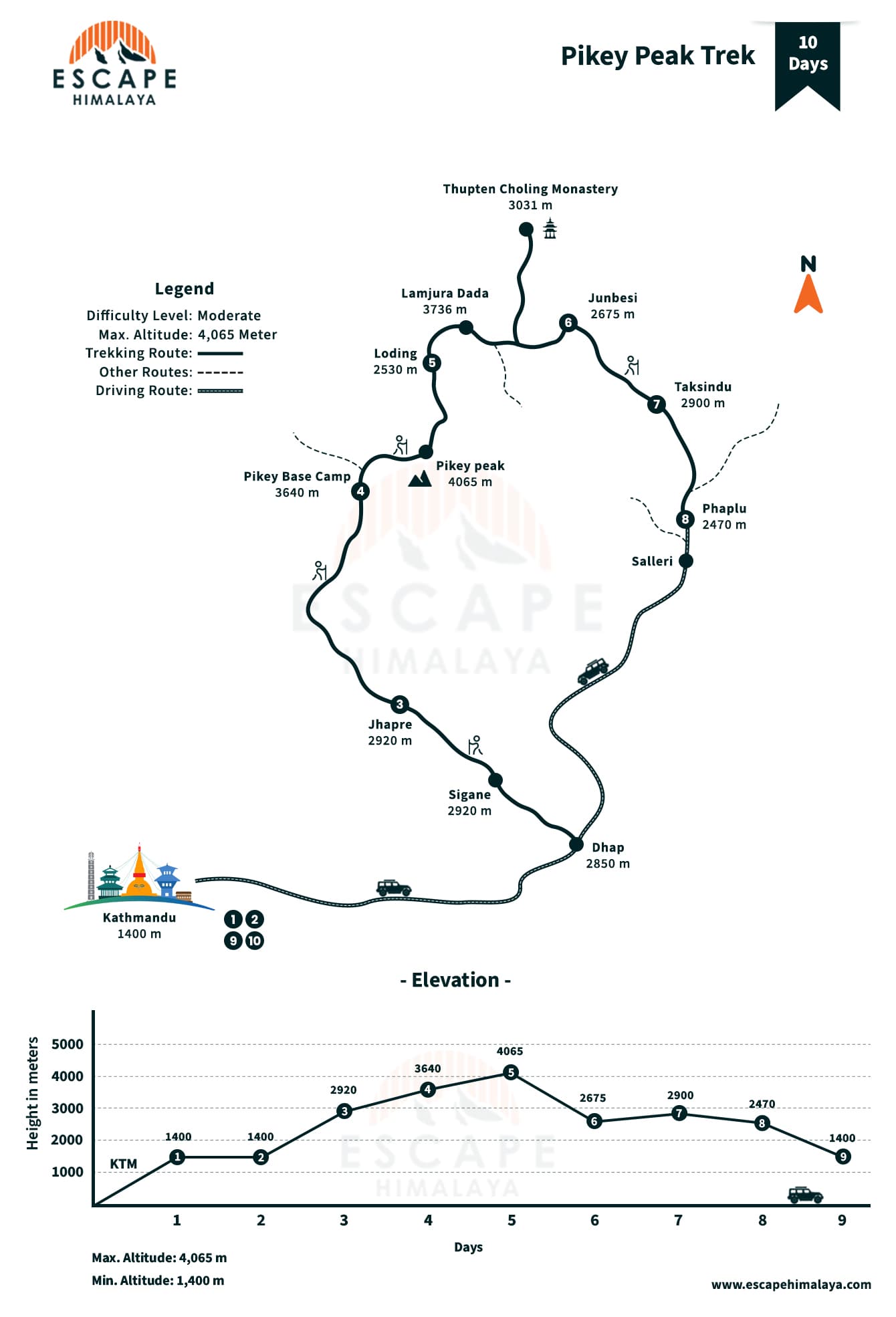
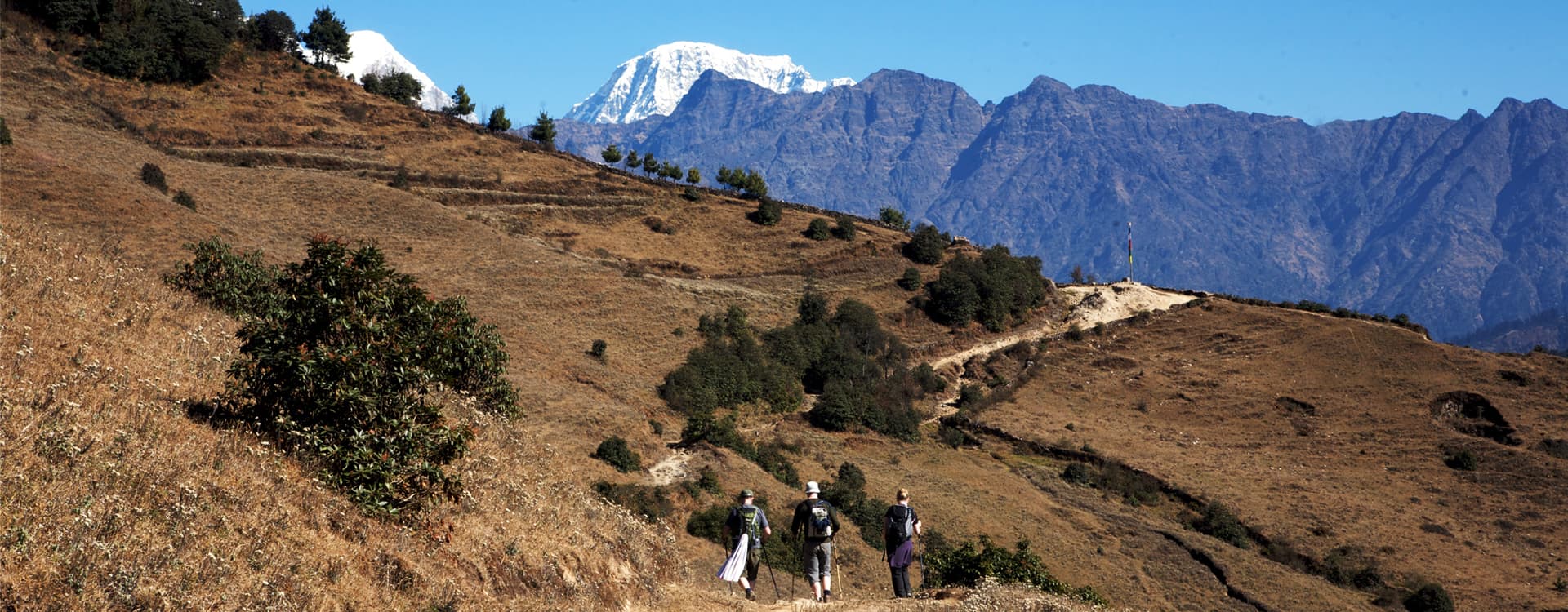
The Pikey Peak Trek sits quietly in Nepal's Solukhumbu region, far from the packed trails of Everest Base Camp. This is where you go when you want mountains without the madness. Nine days of walking through Sherpa villages, rhododendron forests, and up to a viewpoint that Sir Edmund Hillary himself praised as one of the finest in the Himalayas.
At 4,065 meters, Pikey Peak gives you front-row seats to the big names: Everest, Makalu, Kanchenjunga, Dhaulagiri, and Annapurna. The sunrise from the top is something else entirely. You watch the first light hit the highest mountains on earth, turning snow into gold. It's the kind of moment that makes you forget about sore legs and early wake-up calls.
The trek starts with a long drive from Kathmandu to Dhap, winding through terraced hills and small towns. Then you're on foot, walking through places like Japre, Junbesi, and Taksindu. Each village has its own character. Some have big monasteries where monks chant morning prayers. Others are just clusters of stone houses where families have lived for generations.
What sets this trek apart is how real it feels. The trails aren't crowded. The villages haven't turned into tourist traps. You stay in family-run teahouses where dinner means sitting around a wood stove with other trekkers, drinking butter tea, and swapping stories. The food is simple but good. Dal bhat keeps you fueled. Momos satisfy cravings. And there's always hot tea to warm cold hands.
The walking isn't too brutal. Some days you're climbing for hours. On other days, the trail rolls gently through forests. The altitude tops out just over 4,000 meters, which is high enough to feel it but not so high that you're gasping for air with every step. Most people with decent fitness handle it fine.
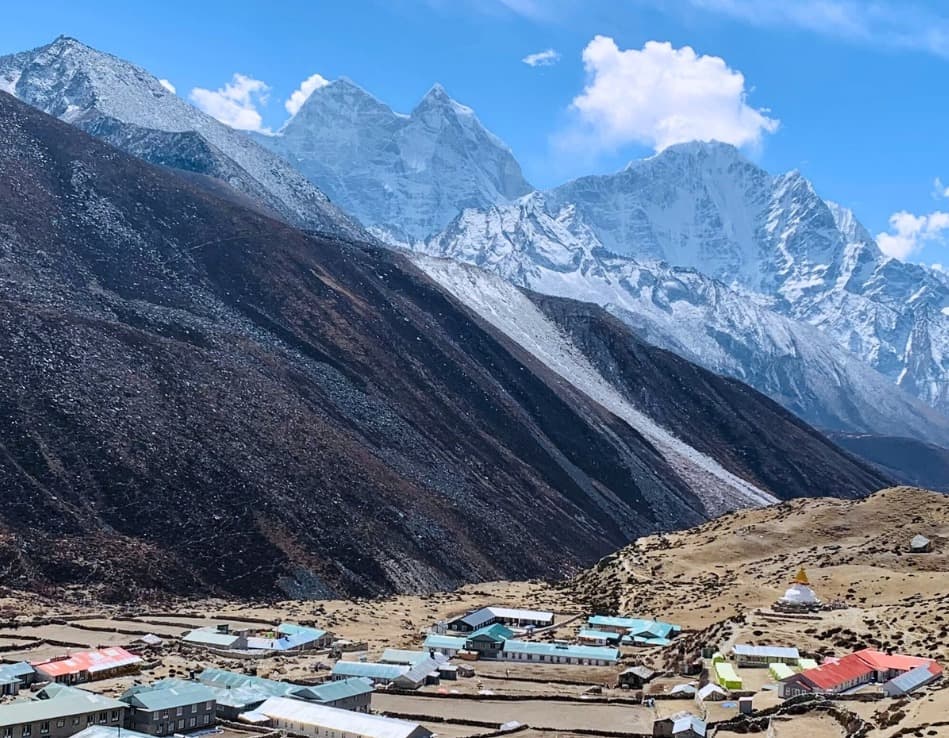
Buddhism is everywhere here. Prayer flags snap in the wind. Stone walls carved with mantras line the paths. Monasteries sit on hillsides, their white walls bright against green forests. You pass spinning prayer wheels and colorful stupas. The Sherpa people who live here treat these mountains as sacred, and you feel that reverence as you walk through.
Spring brings rhododendron blooms that turn the forests pink and red. Autumn offers crystal-clear skies perfect for mountain views. Winter means cold nights but empty trails. Each season gives you something different.
By the time you reach Pikey Peak and stand there watching the sun rise over the roof of the world, you get it. This trek delivers everything you want from the Himalayas, without the bullshit that comes with more famous routes.
Highlights
-
Mind-blowing sunrise views from Pikey Peak summit with Everest, Makalu, Kanchenjunga, and dozens more peaks spread across the horizon
-
Real Sherpa village experiences where you stay with families, eat home-cooked meals, and see how mountain life actually works
-
Thupten Chholing Monastery where hundreds of monks and nuns practice Buddhism daily and you can witness ancient ceremonies
-
Rhododendron forests that explode with color in spring and give shade on hot climbing days
-
Empty trails where you might walk for hours without seeing another tourist
-
Prayer flags, mani walls, chortens, and stupas creating a spiritual atmosphere throughout the entire route
-
Traditional yak herding settlements in high pastures where families still live the old way
-
Perfect mountain photography opportunities from countless viewpoints along the trail
What to Expect
The Pikey Peak Trek throws a mix of experiences at you, some expected and some surprising. Here's what actually happens out there.
Moderate Physical Effort Required
You don't need to be an athlete, but you can't be a couch potato either. Daily walking times run anywhere from three to seven hours depending on the day. The longest stretch covers about 14 kilometers with plenty of ups and downs. Your legs will feel it, especially on the climbs, but rest stops and lunch breaks give you time to recover. The highest point reaches 4,065 meters, which is actually lower than many Everest region treks. This makes dealing with altitude easier for most people. Bring trekking poles if your knees complain on downhills.
Weather That Changes by the Hour
Mountain weather does whatever it wants. Mornings start cold, sometimes freezing at higher camps. By midday, the sun warms things up enough that you're stripping off layers. Then afternoon clouds roll in and suddenly you're digging for that rain jacket. Pack layers you can add and remove easily. Temperatures swing wildly between day and night, especially up high where your water bottle might freeze overnight but you're sweating by noon.
Simple Mountain Lodging
Teahouses provide the basics and nothing more. You get a room with two beds, thin mattresses, pillows, and blankets that smell like wood smoke. Walls are usually plywood, so you hear everything from the next room. Bathrooms are shared and outside in some places. Hot showers exist but cost extra and the water temperature is questionable. Bring a good sleeping bag because those blankets only do so much when temperatures drop. The dining rooms become social hubs where everyone gathers around the stove after dark.
Spotty Communication
Your phone becomes a useless brick for most of the trek. Some teahouses offer WiFi for a fee, but it's slow and cuts out constantly. Cell service appears in random spots then disappears again. This digital blackout is actually refreshing once you get used to it. You're forced to talk to actual humans and pay attention to where you are instead of scrolling through feeds.
Real Cultural Moments
Unlike the Everest Base Camp route that's been commercialized to death, villages here still function as real communities. You see farmers working their fields, kids playing in dirt roads, and monks doing their thing whether tourists are around or not. These aren't staged cultural experiences. They're just people living their lives in the mountains. The interactions feel genuine because they are.
Daily Rhythm on the Trail
Most days follow a pattern. Wake up early when it's still cold and dark. Eat breakfast by headlamp. Start walking by seven or eight when there's enough light to see the trail. Stop for lunch at a teahouse around midday. Reach your destination by mid-afternoon, which gives you time to rest, explore the village, or just sit with tea and watch the mountains. Dinner happens early, usually around six. Then it's cards, conversation, or early bed because there's not much else to do once the sun sets.
Accommodation and Meals
Lodging throughout this trek means staying in teahouses run by Sherpa families. Rooms are basic, beds are twin-sized with foam mattresses and thick blankets. Bathrooms are shared, usually at the end of a hallway or outside. Hot showers cost extra when they're available at all. In Kathmandu before and after the trek, you stay in proper hotels with private bathrooms and hot water that actually works.
Food is surprisingly good and plentiful. Dal bhat is the star, a traditional plate of rice, lentil soup, and vegetable curry that comes with free refills. It's what keeps trekkers going day after day. Breakfast means porridge, eggs, toast, or Tibetan bread. Lunch and dinner menus include fried rice, chow mein, momos, soups, and even pizza though it's nothing like real pizza. Sherpa stew and thukpa noodle soup warm you up on cold days. Tea flows constantly, from regular milk tea to the salty butter tea that tastes weird at first but grows on you. Snacks like boiled potatoes, popcorn, and chocolate bars fill the gaps between meals.
Buddhism and the Sacred Trek
This trek takes you through a landscape shaped entirely by Buddhist faith. Every element carries spiritual meaning, from prayer flags to carved stones to the mountains themselves.
Prayer Flags Everywhere
Colorful flags stretch across passes, bridges, and village entrances. Each flag is printed with prayers that the wind releases into the world as the fabric fades and tears. The five colors represent sky, air, fire, water, and earth. Locals believe the fluttering flags spread compassion across the landscape.
Ancient Monasteries
Thupten Chholing Monastery is the biggest religious site on this route, home to over 200 monks and nuns. Prayer halls filled with murals, butter lamps, and golden statues create a powerful atmosphere. Morning and evening ceremonies fill the air with chanting and the deep sounds of prayer horns. Taksindu Monastery sits on a ridge with sweeping views, where monks maintain prayer schedules that start before dawn. Smaller village gompas serve local communities as gathering places for prayers and festivals.
Mani Walls and Sacred Stones
Long stone walls carved with "Om Mani Padme Hum" line sections of trail. You always pass these walls on the left side, keeping them to your right as a sign of respect. Individual carved stones appear along paths, placed by pilgrims or created by skilled carvers. Some bear intricate Buddhist symbols.
Chortens and Stupas
White-washed chortens mark important spots throughout the trek. These dome-shaped structures contain religious relics and serve as places for meditation. Locals walk clockwise around them, often spinning hand-held prayer wheels. The largest stupas have painted eyes on all four sides, representing Buddha's all-seeing wisdom.
Prayer Wheels in Motion
Villages feature rows of prayer wheels that locals spin as they walk past. Each cylinder contains scrolls printed with thousands of mantras. Spinning a wheel once equals reciting all the prayers inside. The wheels make a gentle clicking sound that becomes part of village life.
Daily Buddhist Practice
Families maintain small altars in their homes with Buddha statues, photos of the Dalai Lama, and offering bowls. They light incense morning and evening. Buddhist principles of compassion influence how people treat animals and each other. Mountains are considered homes of deities, not just geological features. Pikey Peak itself is sacred, and some locals make offerings before reaching the summit.