1. Best Time to Book Your Nepal Adventure Tour
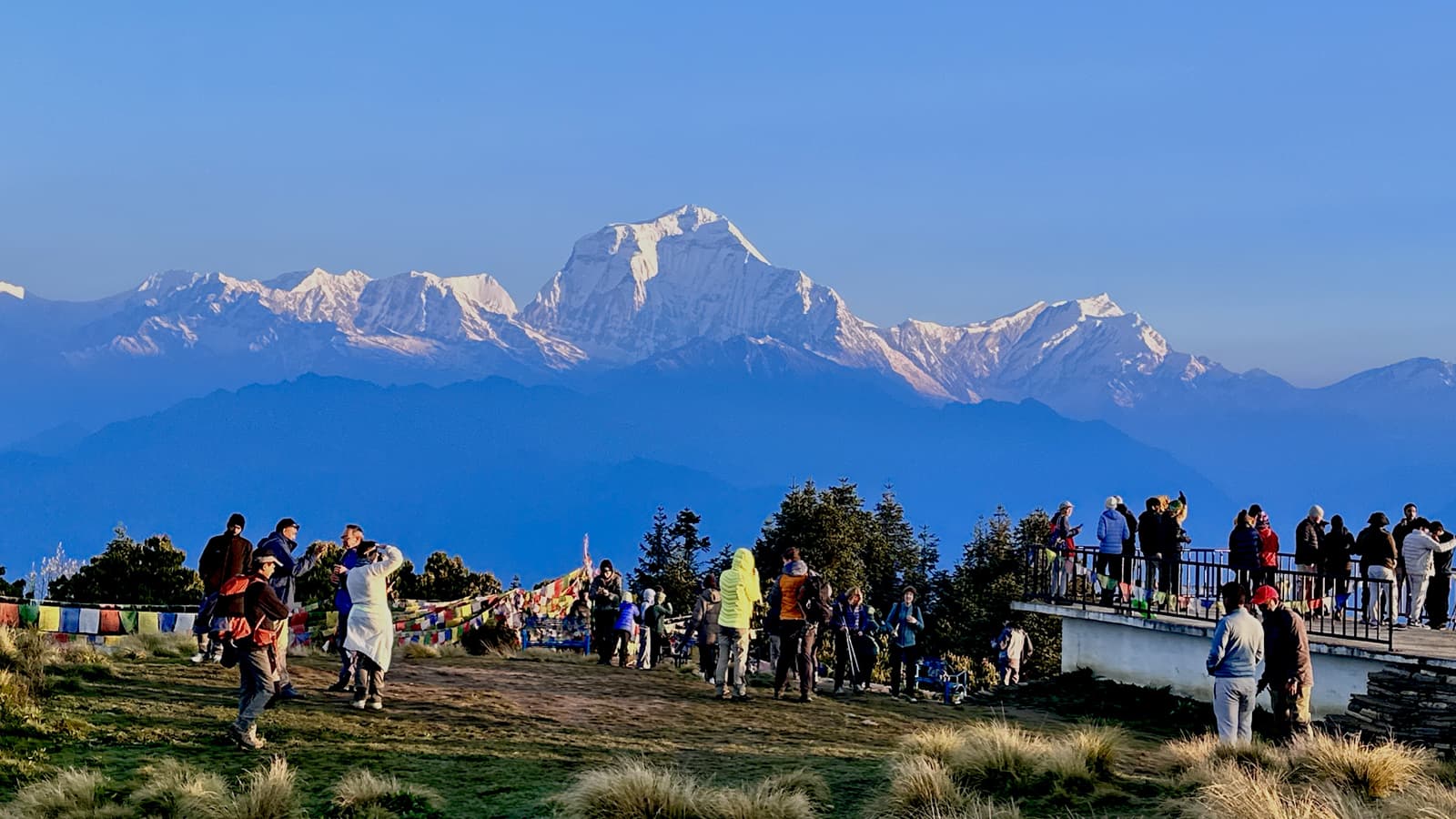
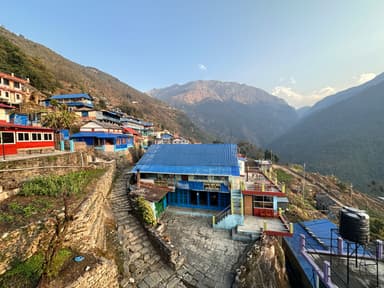
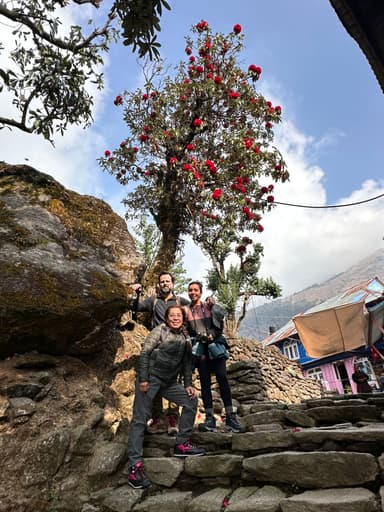
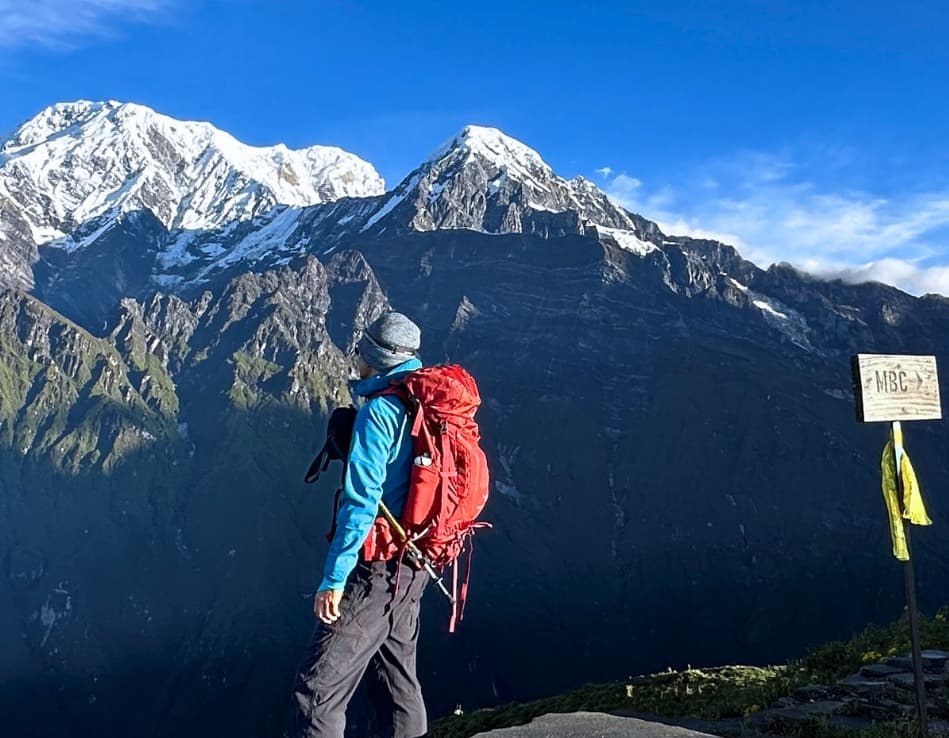
Nepal Adventure Tour is a great option for the whole year, but the months that offer the best reward are October to November and March to May. The autumn season provides a great opportunity to have clear skies and the most amazing mountain views from Poon Hill, whereas the spring will give you a colorful rhododendron forest along the Ghorepani trail. Wintertime (December to February): Winter is suitable for cultural tours, and jungle activities are also wonderful. The paths are less frequented, the air is fresh, and the snow-covered surroundings create a fairy-tale world, especially near Ghorepani 2, 850m. If you want to avoid the crowd and get a good price, you should go for the off-peak months of January, February, or the beginning of December.
2. Physical Fitness and Trek Difficulty
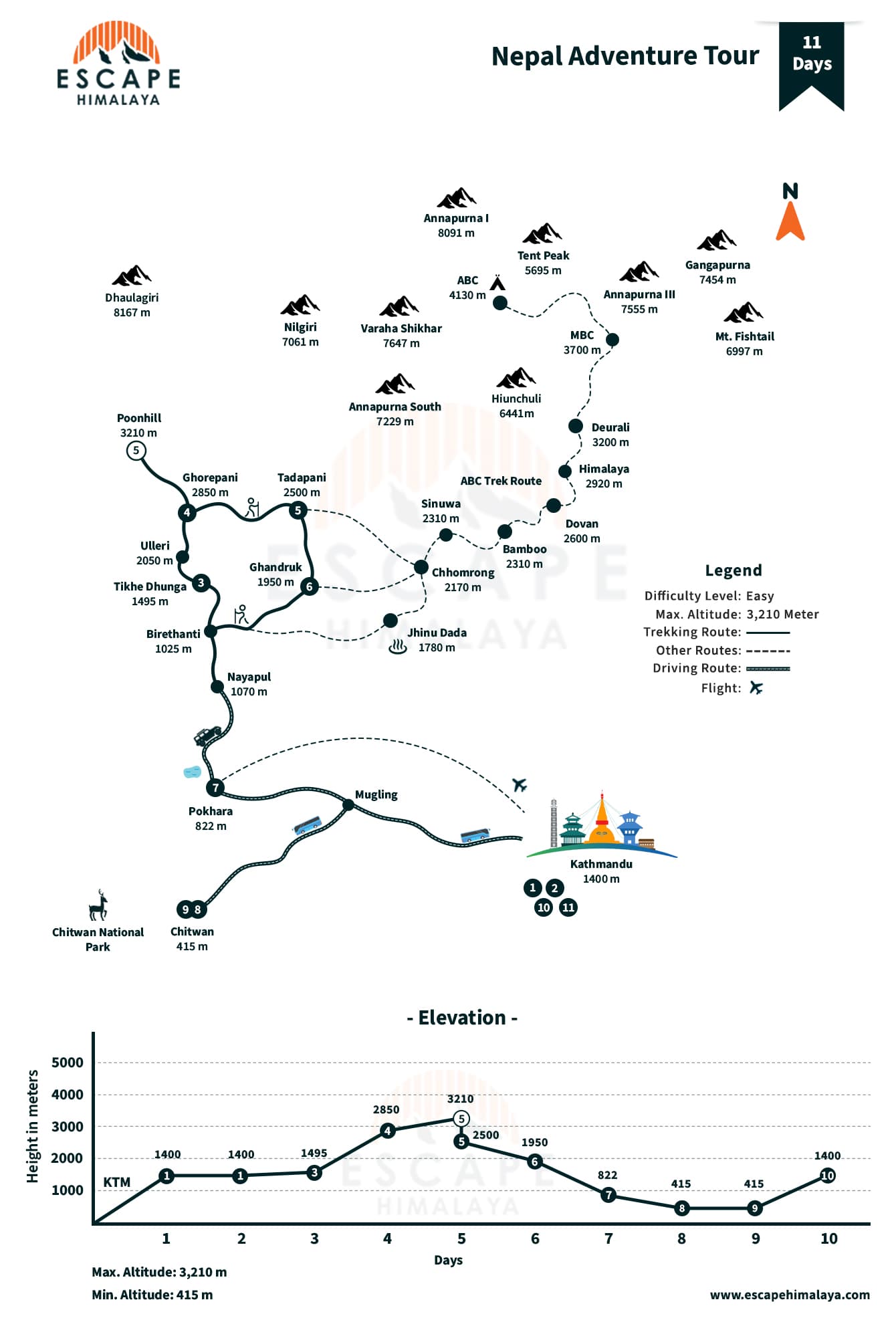
The level of this tour is easy to moderate, so it is good for first-timers and casual travelers as well. The most physically challenging part is Day 3 when the steep stone staircase from Tikhedhunga to Ulleri is climbed. After Day 3, the trails are still fairly comfortable with changes in elevation that are mainly gradual, and the paths are through forests. There is no need for prior trekking experience, but if you do a little bit of walking or light exercise on a regular basis, then your trek will be much more enjoyable. The maximum altitude on this trip is Poon Hill at 3, 210 meters, which means that local people do not have to take any rest day for acclimatization; hence, it is suitable for most healthy adults.
3. Permits and Documentation You'll Need
You will require two permits to finish the Poon Hill trek section of this trip: Annapurna Conservation Area Permit (ACAP) and a TIMS Card (Trekkers' Information Management System). Both can be purchased in Kathmandu or Pokhara and are a part of your package when you travel with Escape Himalaya. Regarding Chitwan National Park, there is a separate national park entry fee which is also included in your tour. It is a good idea to have your passport and copies of your permits with you when you go on the trail, as checkpoint officers may ask to see them several times along the way.
4. What to Expect at Chitwan National Park
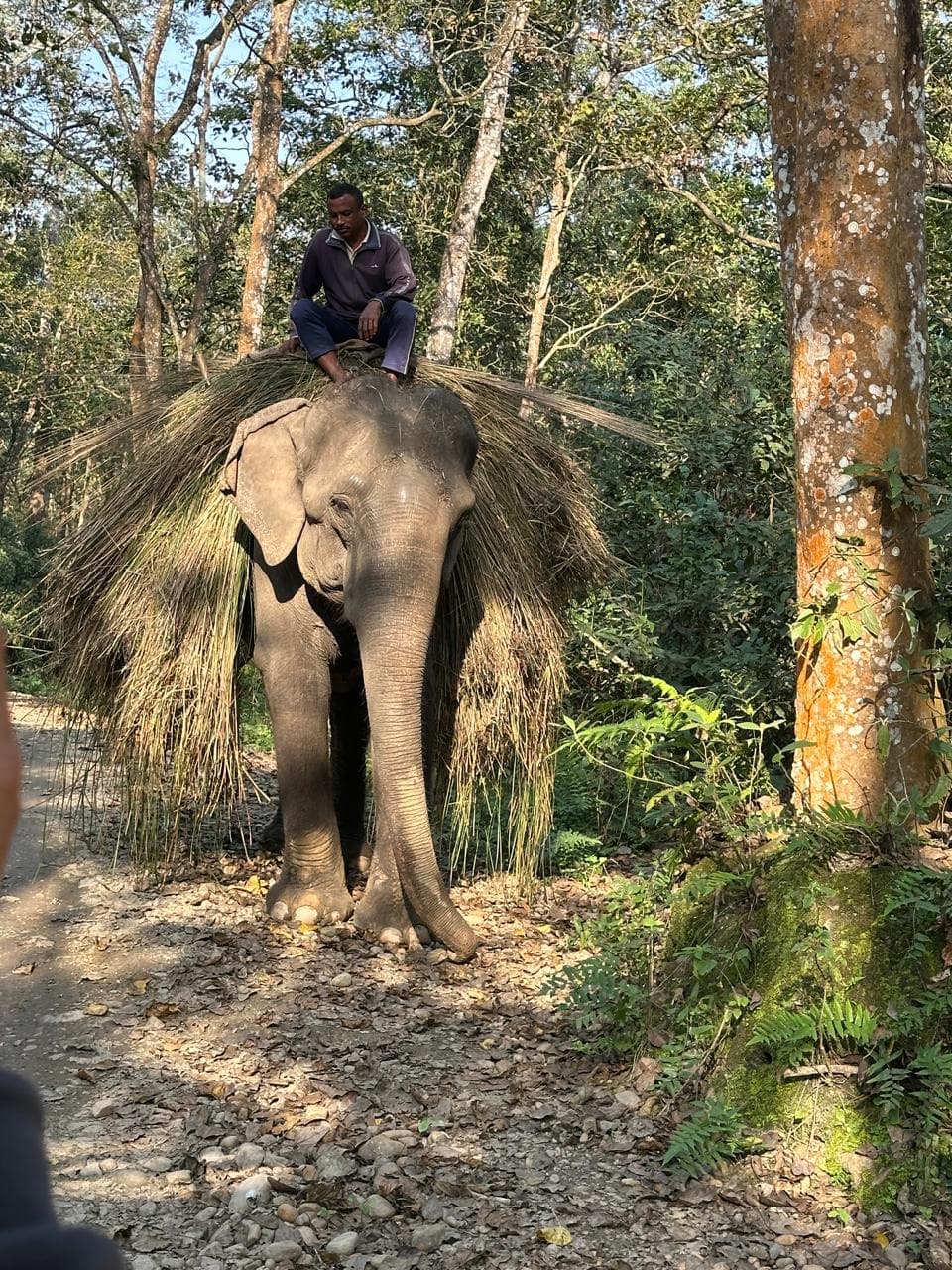
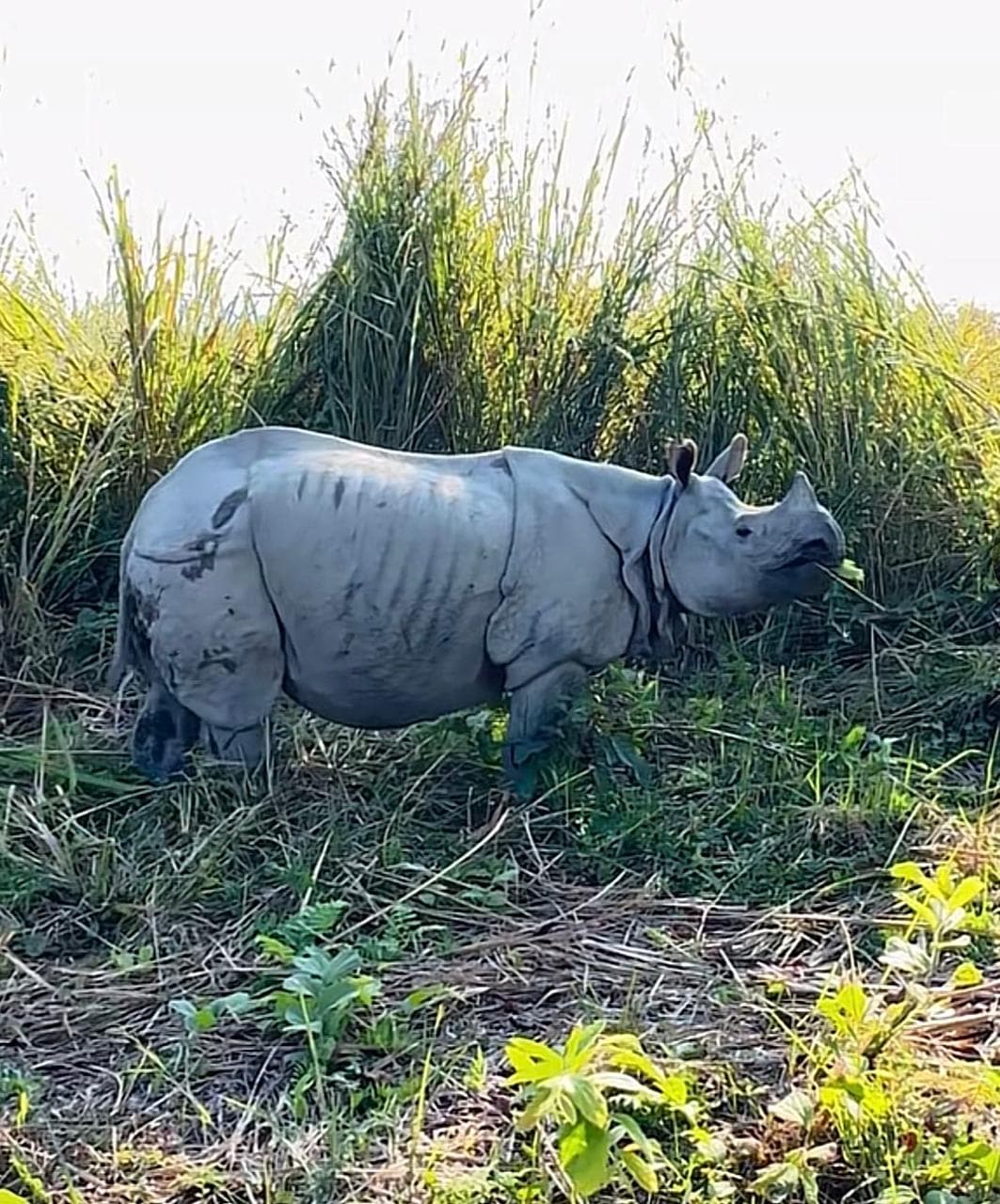
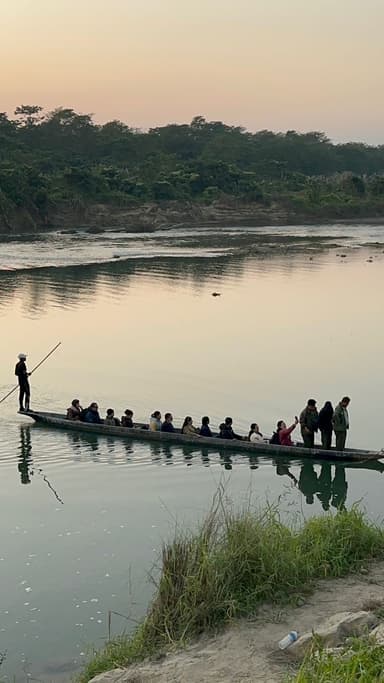
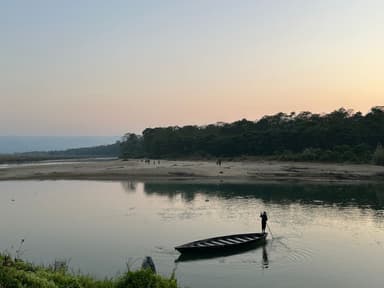
Chitwan National Park is considered a UNESCO World Heritage Site, and it is also one of the best wildlife reserves in Asia. During your jungle safari adventure here, you are likely to see the One-Horned Rhinoceros, Royal Bengal Tiger, elephants, gharial crocodiles, and many different types of birds. The Day 9 jeep safari journeys into the core jungle area, which is less accessible and thus has more frequent animal encounters. The canoe trip on the Rapti River is a nice change of pace, moving quietly through the foggy water while birds and crocodiles are resting close to the shore. Remember to wear light-colored clothes as animals could be scared away by loud colors.
5. Accommodation and Meals Along the Route
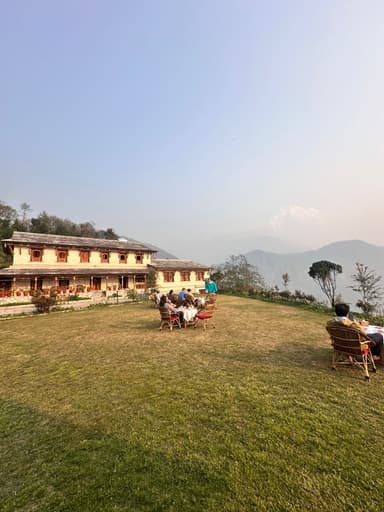
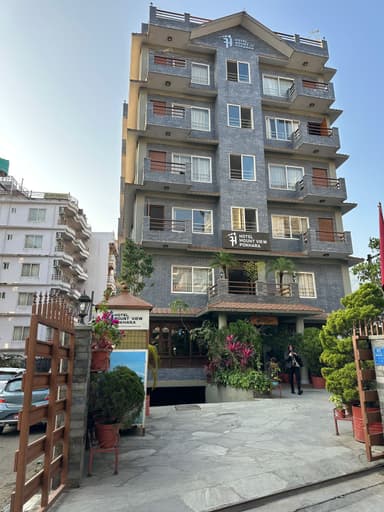
During your stay in Kathmandu and Pokhara, you shall be accommodated in comfortable 3-star hotels with facilities including en-suite bathrooms, hot showers, and WiFi. While trekking (Days 3, 6), you will mainly stay at neat and friendly teahouse guesthouses in villages like Ulleri, Ghorepani, Tadapani, and Ghandruk. Most teahouses provide twin-sharing rooms, western-style toilets, and hot showers (occasionally solar-heated). The food during the trekking will be wholesome and made on the spot; sustenance like dal bhat, noodle soups, pasta, and pancakes are some of the diet staples that keep you powered up for hiking daily. In Chitwan, the jungle lodge accommodation brings a cozy and authentic aspect to the wildlife experience.
6. Connectivity, Currency, and Money Tips
The official currency used in Nepal is the Nepalese Rupee (NPR). You will find ATMs in abundance in Kathmandu and Pokhara, while very few once you reach the trekking trail or Chitwan. We highly recommend that you carry sufficient local cash when you start Day 3. Credit cards can be used at some of the hotels in Kathmandu and Pokhara, but they are generally not accepted in the teahouses. The mobile network signal (Ncell and NTC) along the Poon Hill trail is quite good, but it might be very weak in the secluded areas of Chitwan. Most teahouses have WiFi for a small fee. You can easily exchange your USD and EUR for Nepalese Rupees at authorized money changers in Thamel, Kathmandu; stay away from the street exchangers who are not authorized.
7. Travel Insurance, Altitude, and Safety Tips
For a trip like this, having travel insurance that covers your emergency medical evacuation, trip cancellation, and loss of personal belongings is strongly advised. Although the maximum altitude of 3,210 m on this itinerary is generally risk-free and wouldn't cause acute mountain sickness to the majority of travelers, you might experience mild signs like headache or tiredness at Ghorepani; keep drinking lots of water and let your guide know if you feel sick. It is very important to drink only treated or bottled water for the entire duration of the trek. Escape Himalaya's trained local guides know first aid, know every trail thoroughly, and are well aware of all the emergency procedures, so your safety will be guaranteed from the time you meet them until the time you depart.
8. Make Your Nepal Adventure Tour Even More Memorable
The Nepal Adventure Tour is days in, and it already packs an amazing lot, but if you are eager to inject more thrill into your days, then dazzles with add-on activities that you can seamlessly mix with your journey.
Adrenaline junkies can literally jump off faith by bungee jumping at Pokhara, where a suspension bridge over a mesmerizing, deep gorge offers a breathtaking drop surrounded by snow-capped Himalayan peaks. If you are a water buff, just a few hours away from Kathmandu lies a roaring Trishuli River offering Class III-IV white-water rafting rapids which you can enjoy along with riverside camping under a blanket of stars.
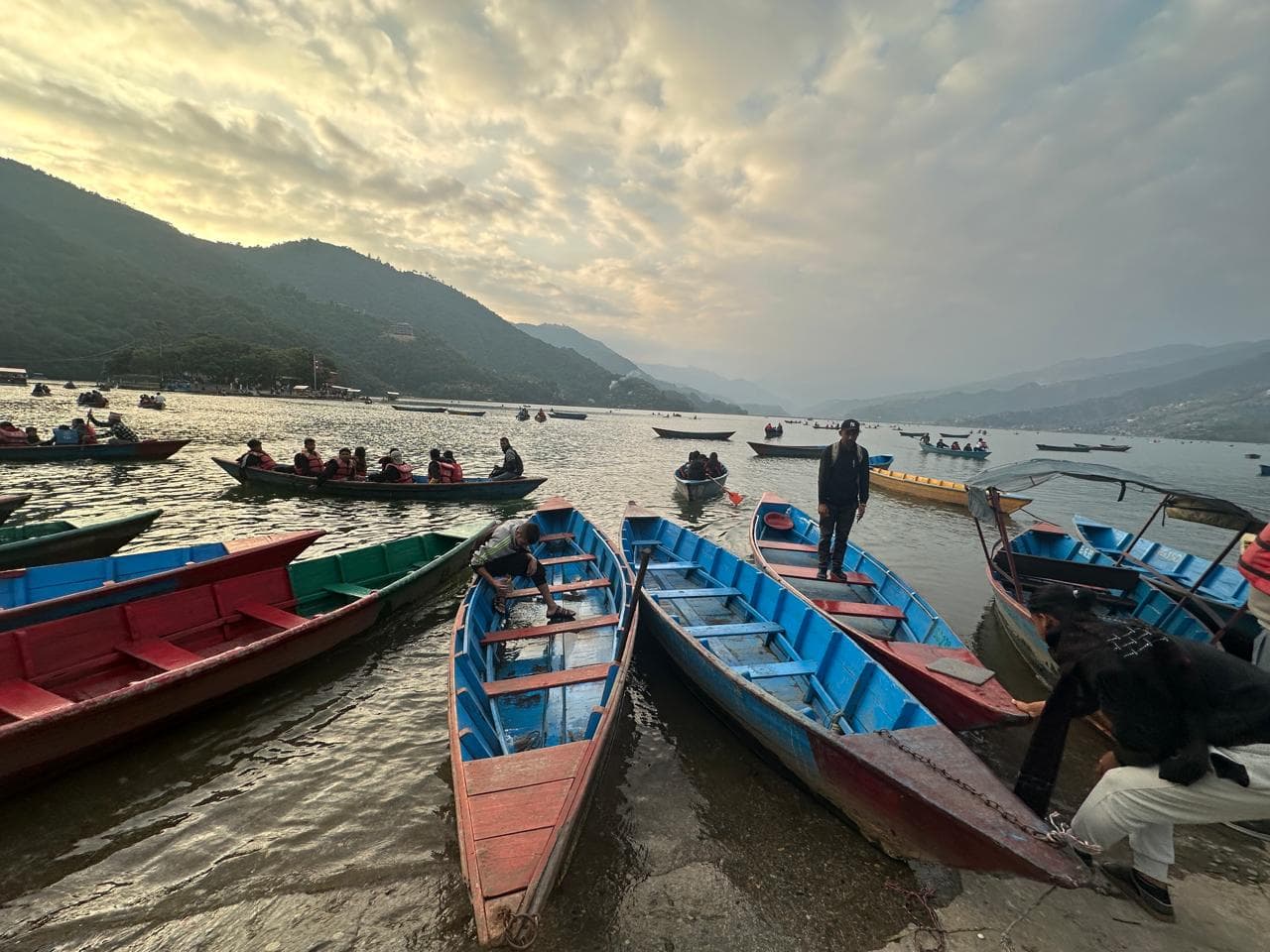
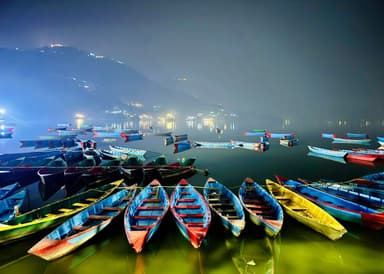
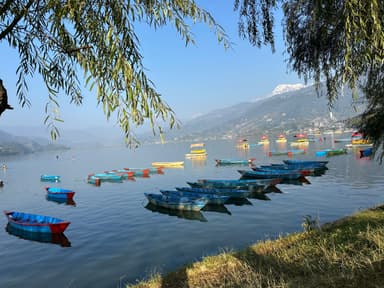
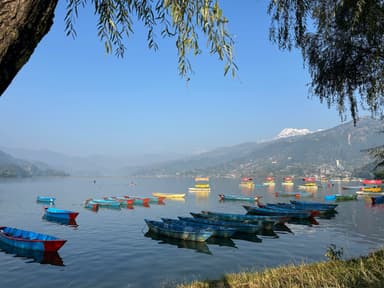
Those who want to take it easy can enjoy paragliding in Pokhara, which will give you an experience of flying silently over Phewa Lake and the Annapurna ranges just like a bird. On the other hand, a leisurely cycling tour around Pokhara combines fresh mountain air with authentic local village life. On your way to Pokhara, a short detour to the lovely hilltop Newari town of Bandipur will reward you with cobblestone streets, mountain views, and a cultural vibe that is rarely featured in tourist brochures.
Moreover, if you have a greater desire for hiking, the Dhampus and Australian Camp trail is an invigorating half-day trek through terraced fields and villages, allowing you up-close views of the Annapurna without the need for trekking experience. Naturally, the Chitwan jungle safari, which is already in your itinerary, can be extended or upgraded to include deeper forest jeep excursions, canoe rides, and an immersive evening with the local Tharu community.
Escape Himalaya team is ready to make your trip personalized with these activities and take care of your itinerary; simply let us know what you like most when you book.
Frequently Asked Questions
What is included in the Nepal Adventure Tour package?
The package covers all private vehicle transfers, three nights in a 3-star Kathmandu hotel with breakfast, one night in a 3-star Pokhara hotel with breakfast, two nights in a 3-star Chitwan property with full board, full board meals during the trek, the Kathmandu to Pokhara domestic flight, jeep transfers to and from the trekking trailhead, the Chitwan safari guide and all jungle activity entry fees, a licensed trekking guide and porter, a duffel bag, down jacket and sleeping bag, ACAP permit, and all government taxes.
Is the Nepal Adventure Tour suitable for beginners?
Yes. The maximum altitude is 3,210 meters at Poon Hill, well below the level where altitude sickness becomes a concern for most adults. No technical skills are required, and no prior trekking experience is needed. Daily walking runs 4 to 7 hours on well-marked trails. The steepest section is the staircase climb from Tikhedhunga to Ulleri on Day 3, which is demanding but fully manageable at a steady pace.
What wildlife can I see at Chitwan National Park?
Chitwan is home to the one-horned rhinoceros, Royal Bengal tiger, Asian elephant, sloth bear, leopard, gharial and mugger crocodile, and Gangetic dolphin. Over 500 bird species have been recorded within the park. The afternoon jeep safari on Day 9 goes into the core zone where tiger and rhino encounters are most frequent, while the morning canoe ride is the setting for the best crocodile and bird sightings.
What are the Gurung villages on the trek and why do they matter?
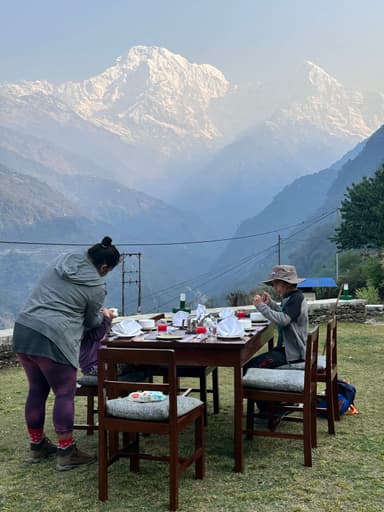
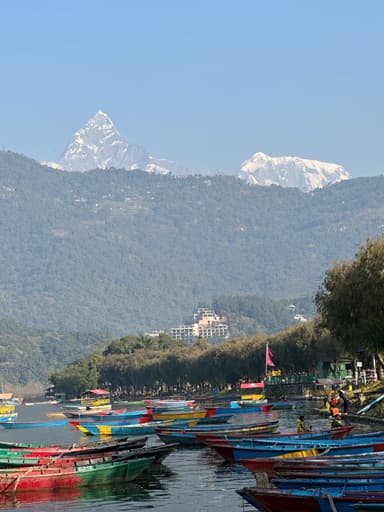
The villages of Ulleri, Ghorepani, Tadapani, and Ghandruk sit along the Poon Hill trail and reflect the traditional culture of the Annapurna foothills. Ghandruk is the most significant, with well-preserved Gurung stone architecture, a local cultural museum, and teahouse verandas facing directly toward Machhapuchhre and Annapurna South. The villages give the trekking section a cultural dimension that goes well beyond the viewpoint at Poon Hill.
What permits are required for the Nepal Adventure Tour?
The Annapurna Conservation Area Project permit (ACAP) and a TIMS card are required for the Poon Hill trek section. A separate Chitwan National Park entry fee applies for the safari days. All three are included in the Escape Himalaya package and arranged before the relevant sections begin.
What is the best time of year for this tour?
Spring (March to May) and autumn (October to November) are the primary windows. Spring delivers rhododendron bloom on the Ghorepani trail in April and stable weather for the Poon Hill sunrise. Autumn gives the clearest mountain views from Poon Hill and excellent wildlife visibility in Chitwan. Winter (December to January) offers quiet trails and sharp mountain views with cold nights at Ghorepani. Monsoon (June to August) is not recommended due to slippery trails and cloud cover over Poon Hill.
What is Poon Hill and what can I see from the top?
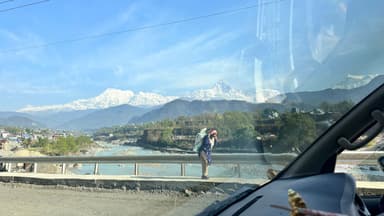
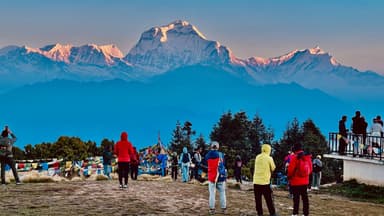
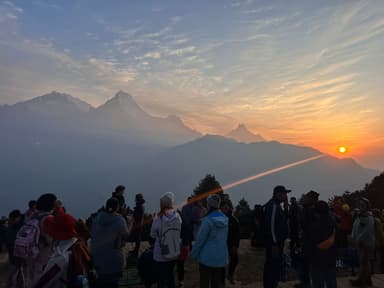
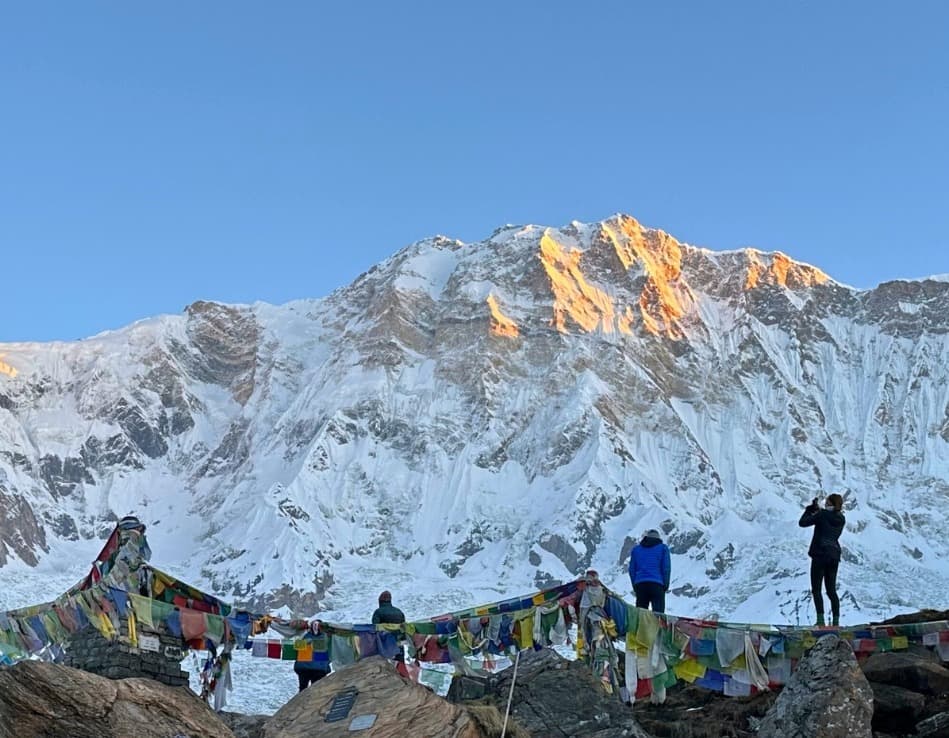
Poon Hill at 3,210 meters is a viewpoint above Ghorepani in the Annapurna Conservation Area. At sunrise, the panorama covers Annapurna I (8,091 m), Annapurna South (7,219 m), Dhaulagiri (8,167 m), Annapurna II (7,937 m), Machhapuchhre (6,993 m), Nilgiri (7,061 m), and Gangapurna (7,455 m) across nearly 180 degrees. The walk from Ghorepani takes about 45 minutes and starts before dawn.
Is a domestic flight between Kathmandu and Pokhara included?
Yes. The Kathmandu to Pokhara domestic flight on Day 3 is fully included in the package, along with all departure taxes. The flight takes approximately 25 minutes. The return from the trek back to Kathmandu via Pokhara and Chitwan is covered by private vehicle transfers, also included.
How much personal spending money do I need?
Budget approximately USD 100 to 180 per person for the full 11 days to cover hot showers on the trek (NPR 200 to 400 per shower), Wi-Fi at teahouses (NPR 300 to 500 per session), bottled water, snacks, and personal extras. Withdraw Nepali rupees in Kathmandu before the trek as ATMs are not available on the Poon Hill trail.
Can I do this tour as a solo traveler?
Yes. The minimum group size is 1 person, and Escape Himalaya regularly runs this tour for solo travelers. Solo guests receive a dedicated trekking guide for the Annapurna section and a safari guide in Chitwan. Joining a departure with other travelers is also possible for those who prefer company on the trail.
What hotel does Escape Himalaya use in Kathmandu?
The tour uses 3-star hotel accommodation in Thamel, Kathmandu, with breakfast included for all three nights. Thamel is the central tourist district with easy access to restaurants, gear shops, and currency exchange. Upgrades to 4-star or 5-star properties are available on request.
How fit do I need to be for the Nepal Adventure Tour?
Regular walking fitness is sufficient. The most demanding section is the stone staircase from Tikhedhunga to Ulleri on Day 3. After that, the trail is more gradual. Walking 45 to 60 minutes daily for a few weeks before departure, with some stair climbing added, is adequate preparation for most trekkers.
Can I add extra activities to the itinerary?
Yes. Common add-ons include white-water rafting on the Trishuli River (Class III to IV, accessible between Kathmandu and Pokhara), paragliding over Phewa Lake in Pokhara, bungee jumping at Pokhara's suspension bridge gorge, and a stop at Bandipur, a preserved Newari hilltop town on the Kathmandu to Pokhara route. Extended jeep safari time in Chitwan is also available. Contact the Escape Himalaya team before booking to discuss customization.
What is the Tharu village visit at Chitwan?
The evening program on Day 8 includes a guided walk through a nearby Tharu village where the guide explains the indigenous Tharu community's traditional architecture, farming practices, and relationship with the Chitwan forest. A Tharu cultural dance performance follows, covering the music and ceremonial dress of a community whose way of life in the Terai predates the national park by centuries.
What is the cancellation and booking policy?
A 20 percent deposit confirms the booking. This deposit is non-refundable if the trip is cancelled. If more than 20 percent has been paid, the cancellation fee remains 20 percent, and the balance is refunded via the original payment method. Postponement to a later date is available without additional charge if notified at least one day before the scheduled departure. Contact the Escape Himalaya team for any booking amendments.
Why Choose us?
At Escape Himalaya, every journey is supported by 10 more years of experience and professional trekking guides who have extensive knowledge of Nepal’s mountains, culture, and adventure destinations. Our team brings years of local experience in organizing trekking, tours, peak climbing, and Himalayan adventures, ensuring that every trip is carefully planned and professionally managed. We value the trust of our travelers and proudly share genuine customer reviews and feedback from previous adventurers who have experienced our services.
Through recent trip photos and real travel stories, guests can explore the authentic experiences and unforgettable moments created during our journeys. Safety is always our top priority, with proper trip preparation, experienced guides, altitude awareness, first-aid knowledge, and careful itinerary planning to support our travelers throughout their adventure. In case of unexpected situations, our team provides reliable emergency assistance and support coordination to ensure our guests feel secure and confident from arrival to departure