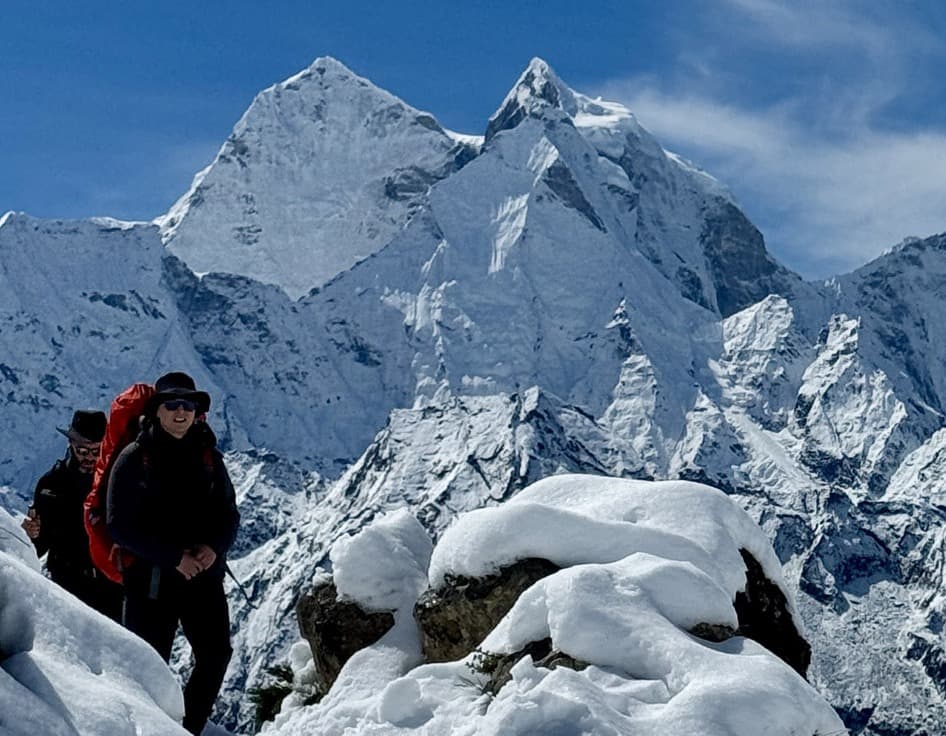
Planning a Luxury Everest View Trek? Here are the Top 10 key things to know for an awesome adventure:
- Season's Greetings: Pick the perfect time to go! Spring (March-May) and autumn/winter (Sept-Nov-Feb) offer clear skies and stunning views.
- Pack Smart: Travel light! Choose a comfortable backpack and pack only essentials for the changing weather.
- Go at Your Own Pace: Don't rush! Enjoy the scenery and listen to your body. Slow and steady wins the race.
- Train Like a Champ: Get in shape! Hiking at altitude requires some physical preparation.
- Mind Over Mountain: Be prepared for challenges! A positive attitude goes a long way.
- Fuel Your Hike: Eat healthy! Choose nutritious food to keep you energized throughout the trek.
- Gear Up for Success: Dress for the elements! Pack clothes and footwear suitable for mountain weather.
- Stay Hydrated: Drink plenty of water! Dehydration can be a problem at high altitudes.
- Plan Your Path: Find the right itinerary! Choose a route that matches your experience and desired duration.
- Respect the Locals: Be a good guest! Learn some basic Nepali phrases and be mindful of local customs.
Bonus Tip: Capture the memories! Take photos and videos to document your incredible journey.
Additional Cost Planning
Apart from the major costs of your Luxury Everest view trek package, you will need to budget for certain additional fees. Here's a simple plan to help you budget while still having a good time:
Trail Necessities:
- Hot Gas Showers: Tea houses provided a solar or gas shower, particularly at higher elevations.
- Charging Electronics: Tea houses allow you to charge your electronics for 24 hours, including Namche Bazar in your packages.
Food & Treats:
- Extra Meals: Depending on where you are, you may want to purchase more snacks or lunches, which cost between $5 and $12
- Drinks: Expect to spend $1-2 per bottle of water. Other drinks may be more expensive use a reusable bottle and filter your water to save money and prevent waste.
Staying Connected:
- Wi-Fi: While many guest houses offer Wi-Fi, they typically cost 300-500 rupees for 24 hours. If you need internet access, consider downloading maps and entertainment ahead of time.
Remember that prices might vary, so use these estimates as a guideline.
Consider your spending patterns for drinks, snacks, and gifts.
Note: Carry Nepali Rupees for incidental expenses. While some tea shops accept US dollars, possessing the local currency eliminates conversion problems and ensures you have the correct amounts for smaller transactions.
By budgeting for these things, you'll be better prepared to deal with unexpected costs and enjoy your Annapurna Base Camp route!
Dining on the Luxury Everest View Trek: From Classic Favorites to Local Delights
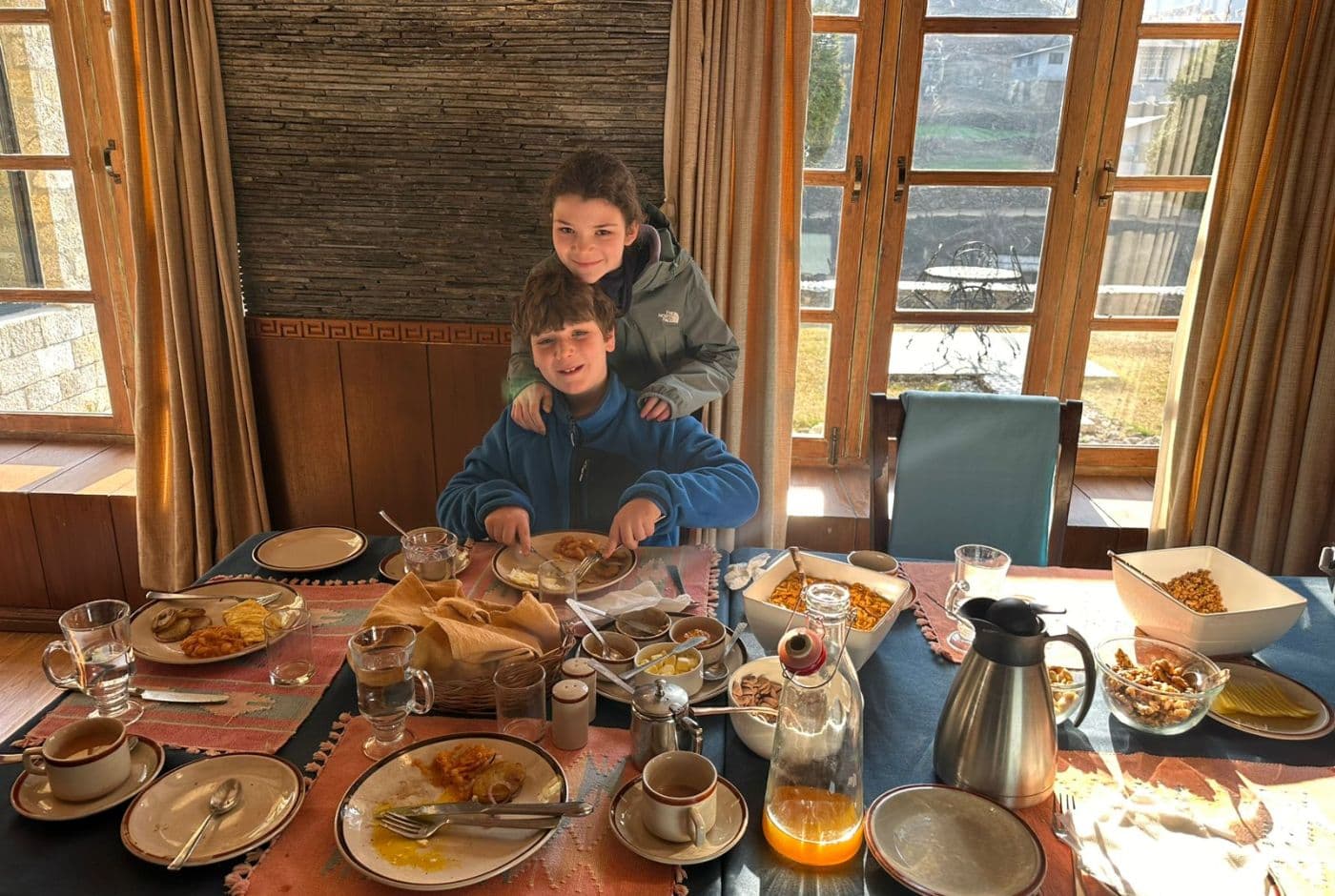
Lunch and dinner on the Everest View Luxury Trek or Everest Base Camp are a delicious adventure in themselves. Dal Bhat, a traditional Nepali cuisine, is a popular choice among trekkers due to its low cost and high-calorie content. But the variety does not end there. Tea houses cater to a wide range of tastes, with classic dishes such as fried rice, chicken curries, and even burgers and pizzas. Noodle enthusiasts can have stir-fried noodles or cheesy pasta meals.
After a day of hiking, dinner becomes a joyous occasion, with tea houses broadening their menus to include a broader selection of familiar favourites as well as local specialties. So, whether you crave a hearty Dal Bhat or a soothing slice of pizza, the EBC journey delivers a great and satisfying refill after each adventure-filled day.
Waking Up to Everest: What the Overnight Stay at Everest View Hotel Is Really Like
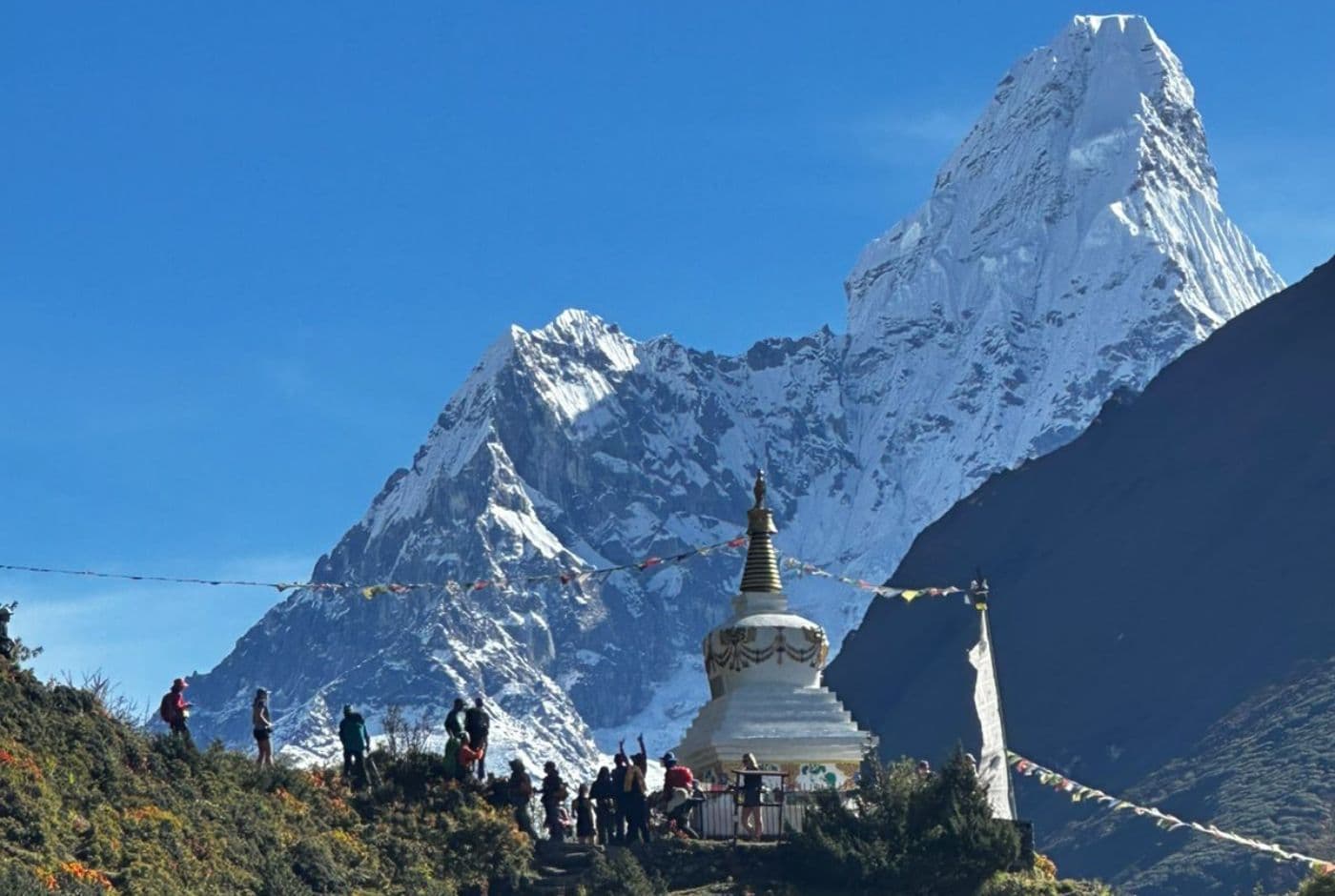
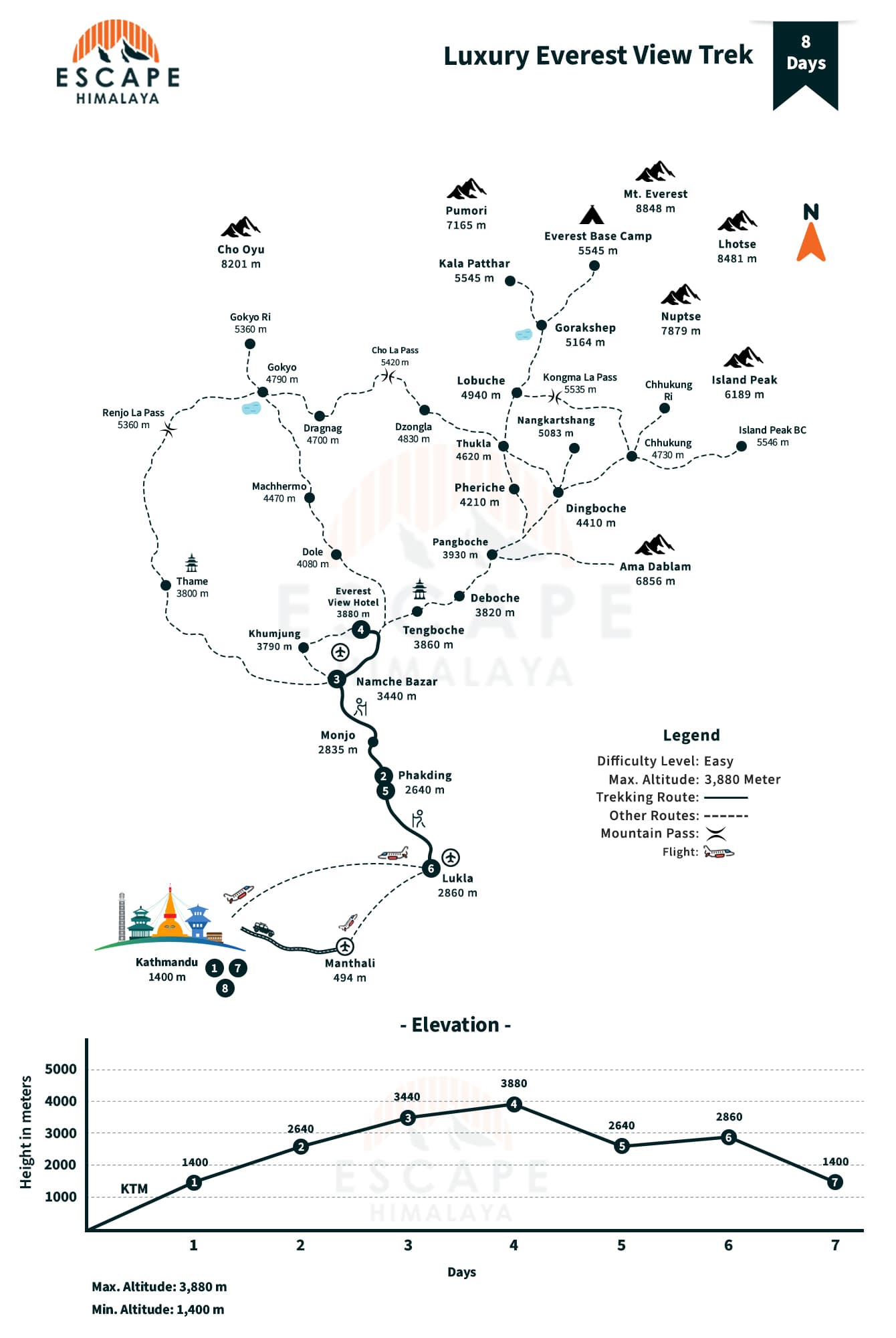
Opened in 1971 by Japanese entrepreneur Takashi Miyahara, Everest View Hotel sits at 3,880 meters in the Syangboche area above Namche Bazaar. It has held a Guinness World Record since 2004 as the highest-placed hotel in the world at 13,000 feet. The hotel has just 12 rooms, each designed with large floor-to-ceiling windows facing the mountain range. From your bed, the view covers Mount Everest at 8,849 meters, Ama Dablam at 6,812 meters, Lhotse at 8,516 meters, Nuptse at 7,861 meters, Thamserku at 6,608 meters, and Kongde Ri at 6,187 meters.
The best time to see the mountains clearly is between 6 am and 10 am, before the afternoon cloud builds over the valley. Most guests set an early alarm specifically for this window. The restaurant serves a mix of Nepali, Japanese, and Western food, and the sourcing is almost entirely local: yak meat from Sherpa suppliers in Namche, eggs from Sherpa household chickens, and vegetables carried by porters from the lower farms.
The Luxury Everest View Trek itinerary includes two nights in Namche Bazaar before the move to 3,880 meters. This is not just itinerary padding. Spending two nights at 3,440 meters before moving higher gives the body the adjustment it needs, and trekkers who arrive at the hotel having acclimatised properly sleep noticeably better and enjoy the views far more than those who rush the approach. For trekkers who want to go further into the Khumbu after the Everest View Hotel experience, the Everest Base Camp Luxury Trek continues the same standard of accommodation all the way to Base Camp.
Best Season for the Luxury Everest View Trek: When to Go and What to Expect
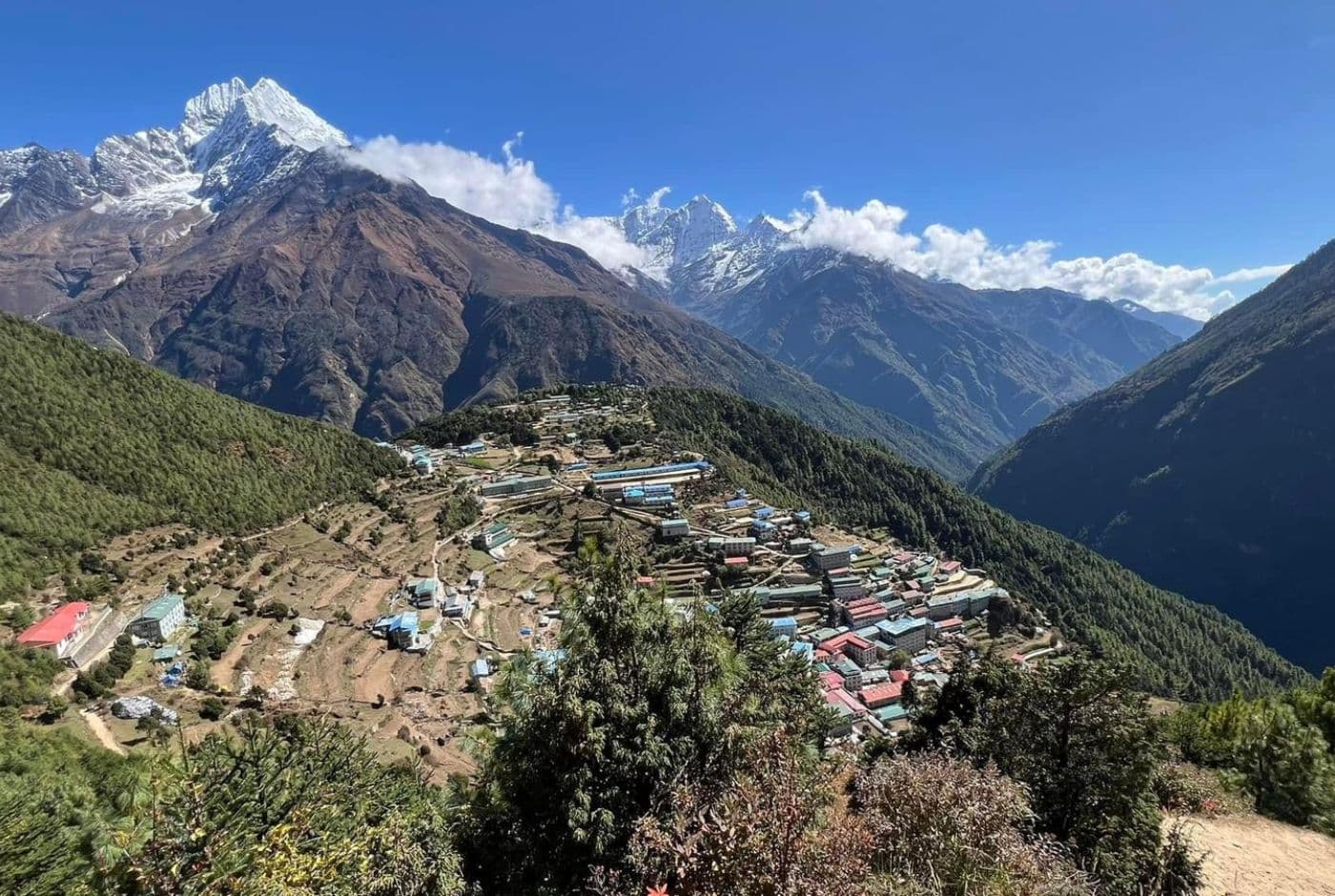
Spring (March to May) is the most popular time. The forest between Phakding and Namche is in rhododendron bloom, the Lukla weather window is stable on most mornings, and the mountain views from the hotel terrace are reliably clear. April and May see increasing footfall, so booking well in advance is essential. For trekkers who want a longer Khumbu experience in the same season, the Everest Base Camp Trek runs the full route through spring.
Autumn (October to November) delivers the clearest mountain views of the year. The air is sharp after the monsoon, visibility from the hotel terrace is excellent, and October is the single busiest trekking month in Nepal. November is quieter, a little colder, and equally good for mountain photography.
Winter (December to February) brings quiet trails and some of the best clear-sky mornings of the year at the hotel. Temperatures at 3,880 meters can drop to minus 15 degrees Celsius overnight. The Escape Himalaya package provides a minus 20-degree down jacket and a four-season sleeping bag, which handles the cold well.
Monsoon (June to September) is not recommended. Persistent cloud cover at the hotel's altitude often blocks the mountain views that are the whole point of this trek, and Lukla flights are frequently cancelled due to poor visibility. If travel during this period is unavoidable, September can occasionally deliver clear mornings toward the end of the month.
Is This Trek Right for You? Fitness Level and What to Expect on the Trail
The Luxury Everest View Trek is graded moderate, and for this route, that description is accurate rather than understated. Daily walking ranges from 3 to 6 hours, the trail is well-marked throughout, and the maximum altitude is 3,880 meters at the hotel. No technical skills, specialist equipment, or prior trekking experience is required.
The steepest section is the path from Namche Bazaar to Everest View Hotel on Day 4. It gains around 300 meters over 4 kilometres through forested ground and takes about 2 hours at a steady pace. This is the day most trekkers feel the altitude most noticeably, which is exactly why the two-night stay in Namche before this section matters.
The trek suits families with children, older trekkers, first-time Himalayan visitors, and anyone who walks regularly but has never trekked at altitude before. Trekking poles are worth bringing, particularly for the return from the hotel to Phakding on Day 5, which is a long descent on uneven ground.
For preparation, daily walks of 45 to 60 minutes for 4 to 6 weeks before departure, with some stair climbing mixed in, are enough to arrive in good shape for this route. For a similarly accessible short trek in the Annapurna region, the Short Annapurna Base Camp Trek is worth considering.
Altitude and Health: How the Itinerary Is Built to Keep You Safe
Altitude sickness can affect anyone regardless of fitness level, which is why the structure of the itinerary matters as much as the physical preparation. The Luxury Everest View Trek is designed with a gradual altitude gain that follows the generally accepted rule of not gaining more than 300 to 500 meters of sleeping altitude per day above 3,000 meters.
The progression runs: Lukla at 2,860 meters on Day 2, Namche Bazaar at 3,440 meters on Days 3 and 4, then Everest View Hotel at 3,880 meters on Day 4. The two nights in Namche are for acclimatization. The body adjusts at 3,440 meters before the final push to 3,880 meters, which makes a significant difference to how well trekkers sleep at the hotel and how the descent back to Phakding feels.
Early symptoms to know: a persistent headache, nausea, loss of appetite, or breathlessness when sitting still. Any of these should be mentioned to the guide immediately. Escape Himalaya's guides carry a pulse oximeter and check oxygen levels every evening. They also carry a first aid kit and altitude sickness medication. The guide's job is not just to navigate the trail but to monitor each trekker's health throughout.
Lukla Flight Details: What Trekkers Need to Know Before Departure
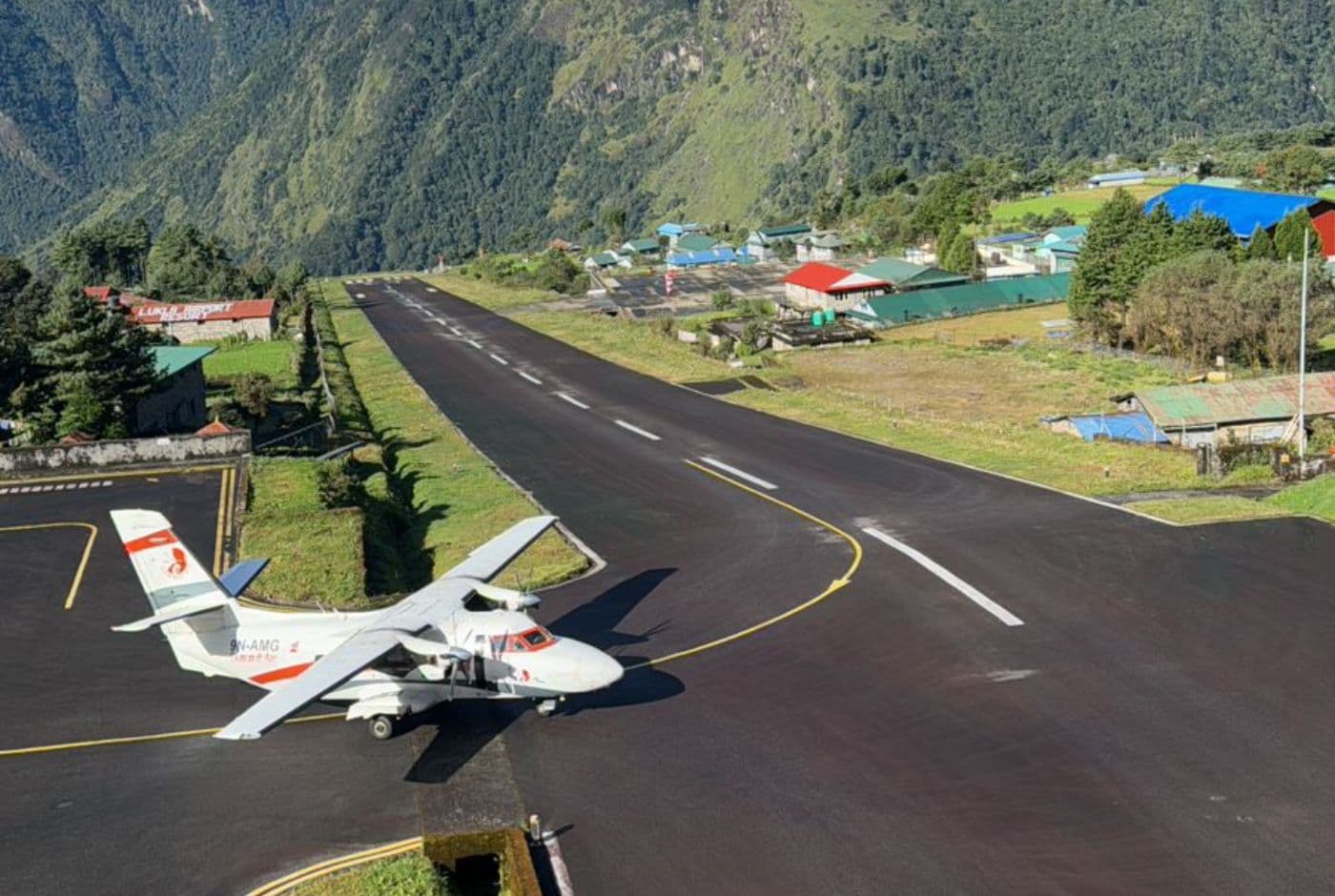
Tenzing Hillary Airport in Lukla sits at 2,860 meters with a 527-meter runway and a 12 per cent gradient. There is no radar and no night operations. Every flight operates on Visual Flight Rules only, meaning if visibility is not clear, nothing moves. This is the most important practical factor to understand before the trek starts.
Flight time from Kathmandu is 30 to 40 minutes. All flights operate between 6 am and 9 am, as afternoon weather at Lukla makes flying unsafe. During peak seasons (mid-March to mid-May and late September to late November), flights operate from Munthali Airport in Ramechhap, 132 kilometres from Kathmandu. This requires a vehicle departure from the hotel between 1 am and 2 am, a 5 to 6-hour drive, and a 15- to 20-minute flight to Lukla.
Escape Himalaya manages the full logistics for this transfer, including vehicle and driver coordination, so nothing needs to be arranged separately.
Baggage on the Lukla flight is limited to 10 kg checked and 5 kg hand-carried, strictly enforced. The 120-litre duffel bag provided by Escape Himalaya is the trekking bag carried by porters on the trail and does not go on the plane. Pack a separate 10 kg bag for the flight with clothing layers, personal documents, medication, and a camera. Trekkers who want to avoid the return Lukla flight entirely can also consider the Everest Base Camp Heli Return Trek, which flies back to Kathmandu by helicopter.
What Luxury Actually Means on This Trek: The Real Differences
The word luxury means different things in different contexts. In the Khumbu, it means access to accommodation, service, and comfort that most trekkers on the standard route simply do not have.
Yeti Mountain Home in Namche Bazaar is one of the most well-regarded lodges in the Khumbu region. Private rooms with attached bathrooms, quality bedding, a proper restaurant with mountain views, and a service level that bears no resemblance to a standard teahouse.
Nights here are genuinely comfortable at 3,440 meters.
Everest View Hotel adds the overnight at 3,880 meters in a 12-room property with direct Everest views from every window, a terrace restaurant, and heated common areas. It is not a five-star city hotel. It is a mountain property at an extraordinary altitude with everything it needs to be, and the view from the pillow is something most people do not forget.
Escape Himalaya's gear provision includes a minus 20-degree Celsius down jacket, a four-season sleeping bag, and a 120-litre duffel bag, all provided as part of the package. A licensed English-speaking guide covers the full journey, with one porter assigned per two trekkers and full welfare provision for all staff, including meals, accommodation, and insurance.
A standard Everest view package typically uses regular teahouses in Namche with shared bathrooms, makes the hotel a day trip rather than an overnight, and provides no gear. The difference in comfort across the five trekking days is significant. For trekkers who want the same luxury standard all the way to Base Camp, the Everest Base Camp Luxury Trek extends this experience across the full 15-day Khumbu route.
Cash, Connectivity, and Practical Details for the Trail
There is an ATM in Namche Bazaar, but it is not always reliable, and nothing is available above it. Withdraw enough Nepali rupees in Kathmandu before departure to cover all personal expenses for the five trekking days.
A rough daily budget: hot shower NPR 200 to 400, device charging NPR 100 to 300, Wi-Fi NPR 300 to 500 per session, bottled water USD 1 to 3, snacks and extras USD 5 to 10. Total personal spend for the trek.
Mobile network: NTC SIM cards perform better than Nell in the Khumbu. The signal is reliable in Lukla and Namche. Above Namche, it becomes patchy. Download offline maps before departure.
Excess luggage: Leave non-trekking bags at the Kathmandu hotel before the trek. Most hotels offer free storage. The Lukla flight has a strict 15 kg checked baggage limit, and overpacking the flight bag is one of the most common
Travel insurance: Mandatory. The policy must cover helicopter evacuation and medical treatment at altitude to at least 4,000 meters. Check the policy details before booking, not after. For a comprehensive packing list tailored to the Khumbu region, the Escape Himalaya Equipment Checklist covers everything you need for this trek.
Everest Luxury Trek Fundamentals
Prepare for the Everest View Trek with our comprehensive package, carefully planned to keep you comfortable and well-prepared throughout the trip.
We provide a 120-litre Duffel Bag for trek packing, a certified -20°C Down Jacket, and a four-season Sleeping Bag, ensuring warmth and coziness during chilly mountain nights.
FAQs: Luxury Everest View Trek
What is the Everest View Hotel, and why does the package include an overnight stay rather than a day trip?
Opened in 1971, Everest View Hotel sits at 3,880 meters and holds a 2004 Guinness World Record as the highest placed hotel in the world. It has 12 rooms, each with direct Everest views. An overnight stay gives trekkers both the late afternoon light on the peaks and the pre-dawn morning window before cloud builds after 10 am, which a day trip visit misses entirely.
Is this trek suitable for families with children?
The maximum altitude of 3,880 meters and daily walking of 3 to 6 hours on a well-marked trail make this one of the most family-friendly Everest region options available. Namche Bazaar's Saturday market, the Dudh Koshi River, and the local Sherpa community make the lower section particularly engaging for children. No technical skills or prior trekking experience needed.
What peaks are visible from the Everest View Hotel terrace?
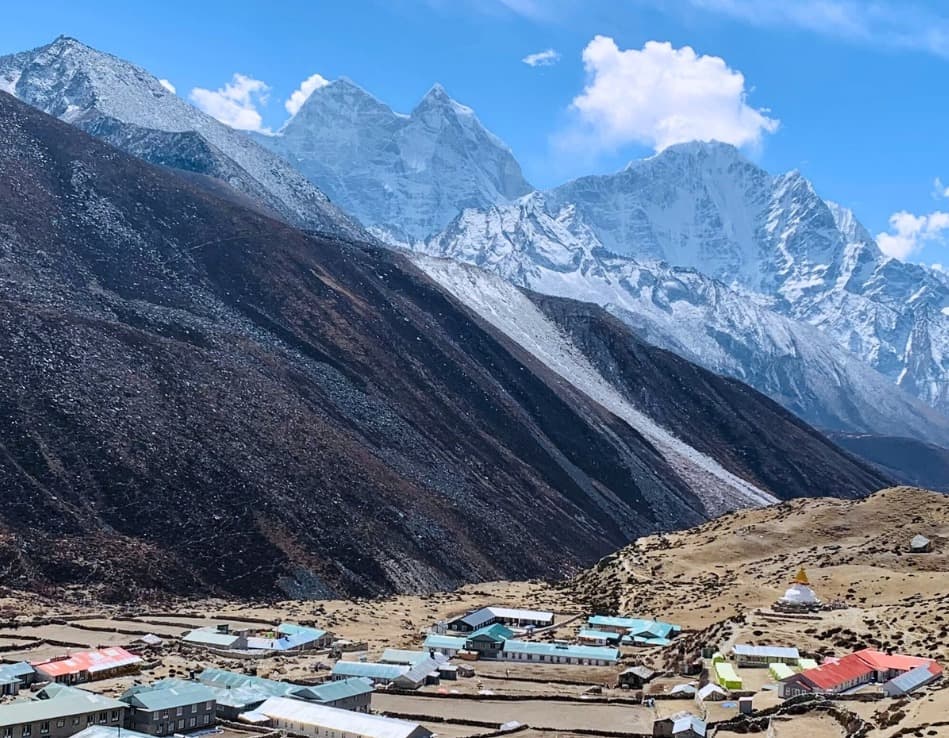
On a clear morning, the view covers Mount Everest (8,849 m), Ama Dablam (6,812 m), Lhotse (8,516 m), Nuptse (7,861 m), Thamserku (6,608 m), and Kongde Ri (6,187 m). The best viewing window is 6 am to 10 am before the afternoon cloud builds. On overcast days, the peaks are obscured, which is why the morning window matters and why the overnight stay is structured the way it is.
What can I do during two nights in Namche Bazaar?
Namche has more to offer than most trekkers expect. The Sherpa Culture Museum covers the 1953 Hillary and Tenzing expedition through artifacts and traditional architecture. The Saturday market draws Tibetan traders and local sellers. The Everest Photo Gallery is free to enter. Day hike options include Khumjung village and a walk up to the hotel for a preview before the overnight stay. Bakeries, coffee shops, and gear stores fill the evenings.
What happens if the Lukla flight is cancelled due to weather?
Lukla operates on visual flight rules only, so poor visibility grounds all flights. Escape Himalaya monitors conditions in real time and contacts trekkers before they leave the hotel if a delay is likely. Rescheduling is handled directly with the airline. Keeping one spare day at the start and end of the trip is the most practical way to handle this, particularly for the return flight before an international connection.
Is travel insurance mandatory, and what should it cover?
Yes, travel insurance is mandatory for all Escape Himalaya treks. The policy must cover helicopter evacuation and medical treatment at altitude to at least 4,000 meters, as well as flight cancellation and trip interruption. Read the policy details carefully before purchasing and confirm the altitude coverage limit before departure.
What is the difference between this package and a standard Everest view trek?
A standard Everest view package uses regular teahouses in Namche with shared bathrooms, treats the hotel as a day trip rather than an overnight, and includes no gear provision. This package uses Yeti Mountain Home in Namche, adds the overnight at Everest View Hotel, provides a minus 20-degree jacket and four-season sleeping bag, and includes a fully licensed guide and porter with complete welfare provision throughout.
Can I extend this trek to Everest Base Camp?
Yes, though it requires a different itinerary. The Luxury Everest View Trek ends at Namche Bazaar level. Escape Himalaya offers the Everest Base Camp Luxury Trek for trekkers who want to continue further into the Khumbu, as well as the standard Everest Base Camp Trek and the Everest Base Camp Heli Return Trek for different timelines and preferences.
What is the Sherpa Culture Museum in Namche, and is entry included?
The Sherpa Culture Museum was built using traditional Sherpa architecture and houses artifacts from the 1953 Everest expedition by Edmund Hillary and Tenzing Norgay, traditional clothing, tools, and objects reflecting Sherpa life before the tourism era. A visit takes around 45 minutes to one hour. Whether the entry is included in the package or charged separately should be confirmed with the team before departure.
How much spending money do I need for personal expenses on the trail?
Hot shower: NPR 200 to 400. Device charging: NPR 100 to 300. Wi-Fi: NPR 300 to 500 per session. Bottled water: USD 1 to 3. Snacks and extras: USD 5 to 10 per day. Total personal spend for the five trekking days runs approximately USD 80 to 150 per person. Withdraw cash in Kathmandu before departure, not at the Namche ATM.
What is the booking deposit and cancellation policy?
A 20 % deposit confirms the booking, and the remaining balance upon arrival secures the departure date. Cancellation terms vary by notice period: 30 days, 15 days, and 7 days before departure each carry different refund structures. Weather-related Lukla flight cancellations are handled separately from itinerary cancellations. Contact the Escape Himalaya team directly for the full policy details before booking.
What luggage goes on the Lukla flight and what stays in Kathmandu?
The Lukla flight allows 10 kg of checked baggage and 5 kg of hand carry, and the limits are enforced. The 120-litre duffel bag provided by Escape Himalaya is the trekking bag carried by porters on the trail and does not go on the plane. Pack a separate flight bag with clothing layers, personal documents, medication, and a camera. Leave non-trekking items in storage at the Kathmandu hotel. Most hotels offer this service free of charge for the trek duration.