No recent searches!

    Escape Himalaya
    • Certificate ofExcellence 2025
    • Whatsapp, Viber+977 9851006121
      • Everest Region
        • Everest Base Camp Trek - 14 Days
        • Everest Base Camp - Chola Pass - Gokyo Trek - 17 Days
        • Everest Base Camp Short Trek - 13 Days
        • Everest Base Camp Luxury Trek - 15 Days
        • Everest Base Camp Heli Shuttle Trek - 12 Days
        • Luxury Everest View Trek - 9 Days
        • Everest Panorama Trek - 9 Days
        • Everest Three High Passes Trek - 20 Days
        • Everest Base Camp Trek Heli Return to Kathmandu-11 Days - 11 Days
        • Everest Base Camp Trek for Seniors - 20 Days
        • Everest View Trek - 7 Days
      • Annapurna Region
        • Annapurna Base Camp Trek - 14 Days
        • Annapurna Circuit Trek - 14 Days
        • Mardi Himal Trek - 8 Days
        • Jomsom Muktinath Trek with Poon Hill - 9 Days
        • Short Annapurna Base Camp Trek - 6 Days Hike - 9 Days
        • Annapurna Circuit Tilicho Lake Trek - 17 Days
        • Annapurna Family Trek - 8 Days
        • Annapurna Base Camp Trek Heli Return to Pokhara - 10 Days
        • Annapurna Hot Spring Trek - 8 Days
        • Annapurna Trek with Chitwan Tour - 9 Days
        • Shortest Annapurna Base Camp Trek - 9 Days
      • Langtang Region
        • Langtang Valley Trek - 10 Days
        • Bhairav Kunda Trek - 14 Days
        • Helambu Trek - 8 Days
        • Langtang Helicopter Tour - 3 hrs
        • Langtang Gosainkunda Helambu Trek - 16 Days
        • Tamang Heritage Trail - 10 Days
        • Langtang Gosainkunda Trek - 13 days
      • Manaslu Region
        • Manaslu Circuit Trek - 14 Days
        • Manaslu Tsum Valley Trek Itinerary - 20 Days - 20 Days
        • Tsum Valley Trek - 13 days
      • Mustang Region
        • Upper Mustang Trek - 16 Days
        • Mustang Tiji Festival Trek - 18 Days
        • Lower Mustang Trek - 14 Days
        • Jomsom Muktinath Trek with Poon Hill - 9 Days
        • Upper Mustang Jeep Tour - 11 days
      • Dolpo Region
        • Upper Dolpo Trek - 25 Days
        • Lower Dolpo Trek - 18 Days
      • Summer Treks
        • Lower Dolpo Trek - 18 Days
        • Upper Mustang Trek - 16 Days
        • Lower Mustang Trek - 14 Days
        • Rara Lake Trek - 16 Days
        • Upper Dolpo Trek - 25 Days
        • Upper Mustang Jeep Tour - 11 days
      • Winter Treks Package
        • Short Annapurna Base Camp Trek - 6 Days Hike - 9 Days
        • Mardi Himal Trek - 8 Days
        • Australian Camp Short Trek in Pokhara - 5 Days
        • Annapurna Family Trek - 8 Days
        • Nepal Adventure Tour - 12 Days
        • Everest View Trek - 7 Days
        • Helambu Trek - 8 Days
      • Less Touristic Trails
        • Rara Lake Trek - 16 Days
        • Upper Dolpo Trek - 25 Days
        • Makalu Base Camp Trek - 21 days
        • Langtang Gosainkunda Helambu Trek - 16 Days
        • Pikey Peak Trek - 12 Days
        • Lower Dolpo Trek - 18 Days
        • Bhairav Kunda Trek - 14 Days
        • Kanchenjunga Trek - 22 days
        • Helambu Trek - 8 Days
      • Bhaktapur Patan Tour - 6 Hours
      • Kathmandu Day Tour - 6 Hours
      • Chitwan Jungle Safari Tour - 3 Days
      • Kathmandu Nagarkot Sightseeing Tour - 4 Days
      • Langtang Helicopter Tour - 3 hrs
      • Explore Nepal Tour - 10 Days
      • Bardia National Park Tour - 4 Days
      • Nepal Adventure Tour - 12 Days
      • Nepal Discover Tours - 6 Days
      • Everest Helicopter Tour - 3 Hours
      • Tour of Kathmandu's 7 UNESCO World Heritage Sites  - 1 days
      • Pisang Peak Climbing - 19 days
      • Lobuche Peak Climbing - 18 Days
      • Island Peak Climbing - 20 days
      • Tharpu Chuli Peak Climbing - 0 days
      • Naya Kanga Peak Climbing - 15 days
      • Mera Peak Climbing - 19 Days
      • Mera and Island Peak Climbing via Amphu Laptsa Pass - 23 days
      • Nepal Tibet Bhutan Tours - 13 days
      • Bhutan Experience Tour - 10 days
      • Nepal Bhutan Darjeeling Tour - 14 days
      • Glimpse Tours Bhutan - 8 days
      • Chomolhari Trek - 0 days
      • Laya Gasa Trek - 0 days
      • Druk Path Trek - 0 days
      • Simikot Kailash Lhasa Tour - 0 days
      • Nepal Tibet Bhutan Tours - 13 days
      • Tibet Everest Base Camp Tour - 11 days
      • Lhasa to Kathmandu Tours - 10 days
      • Everest Advanced BC Trek - 20 days
      • Lhasa Sightseeing Tours - 7 days
      • Saga Dawa Festival Tours - 14 days
      • Our Team
      • How to Book a Trip
      • Why Escape Himalaya
      • Terms and Conditions
      • Legal Documents
      • Nepal Tourist Visa Information
      • Travel Insurance
      • Equipment Checklist
      • Privacy Policy
    • Travel Guide
    • Contact Us
    Bookings are currently open for Himalayas during the 2026/27 season. Book Now
    • Home
    • Enquire us
    • Whatsapp
    • Search
    Escape Himalaya+977 9851006121Whatsapp, Viber
    Hotel Wood Apple

    Escape Himalaya - Adventure Tours and Trekking in Nepal more...

    Contact Us

    • +977-1 4980242
    • [email protected]
    • Khusibu, Kathmandu, Nepal
    Make an EnquiryCall Us
    Nepal Goverment
    Nepal Tourism Board
    TAAN
    NMA
    Trip Advisor
    Tour Radar
    Tour Radar

    Things to do in Nepal

    • Peak Climbing
    • Summer Treks
    • Winter Treks Package
    • Family Vacation
    • Wildlife Adventure
    • Helicopter Tours

    Company Profile

    • Our Team
    • How to Book a Trip
    • Why Escape Himalaya
    • Terms and Conditions
    • Legal Documents
    • Nepal Tourist Visa Information
    • Travel Insurance
    • Equipment Checklist
    • Privacy Policy

    Subscribe Newsletter

    To receive travel updates via email

    • 24/7 Whatsapp Contact
      +977-9851006121 (Raj),+977-9851363580 (Suman)
    • Send us mail
      [email protected], [email protected]
    • Services and Support
      Khusibu, Kathmandu, Nepal P.O. Box: 5596
    • Follow us on
    © 2015 - 2026 Escape Himalaya. All Rights Reserved.
    Card
    1. Home
    2. Nepal
    3. Trekking in Nepal
    4. Everest Region
    5. Everest Base Camp Trek for Seniors

    Everest Base Camp Trek for Seniors

    Everest Base Camp Senior Trek is a moderate type of hiking journey. It is suitable for senior citizens elderly and old age people. To go hiking to Everest Base Camp

    Trip Fact

    • DestinationNepal
    • Durations20 Days
    • Trip DifficultyModerate
    • ActivitiesTrekking
    • AccommodationHotels / Teahouses
    • MealsBreakfast, Lunch, Dinner
    • Mx.altitude5545m.
    • VehicleCar / Flight
    • Group SizeMin. 1 Pax

    Overview

    Highlights for Seniors Trekkers to Everest Base Camp

    1. Scenic Flight to Lukla: Experience one of the world's most thrilling flights with stunning aerial views of the Himalayas.

    2. Namche Bazaar: Acclimatize in this vibrant Sherpa town, exploring its markets, cafes, and viewpoints offering panoramic mountain vistas.

    3. Tengboche Monastery: Visit the spiritual heart of the Khumbu region, with its rich cultural heritage and backdrop of Ama Dablam.

    4. Sherpa Culture: Engage with the local Sherpa community, learning about their traditions, hospitality, and way of life.

    5. Diverse Landscapes: Trek through lush forests, picturesque villages, and high-altitude deserts, each offering unique natural beauty.

    6. Rest and Acclimatization Days: Enjoy extra rest days in places like Dingboche, allowing for gradual acclimatization and exploration of nearby areas.

    7. Kala Patthar Viewpoint: Achieve the rewarding climb to Kala Patthar for breathtaking views of Mount Everest and the surrounding peaks.

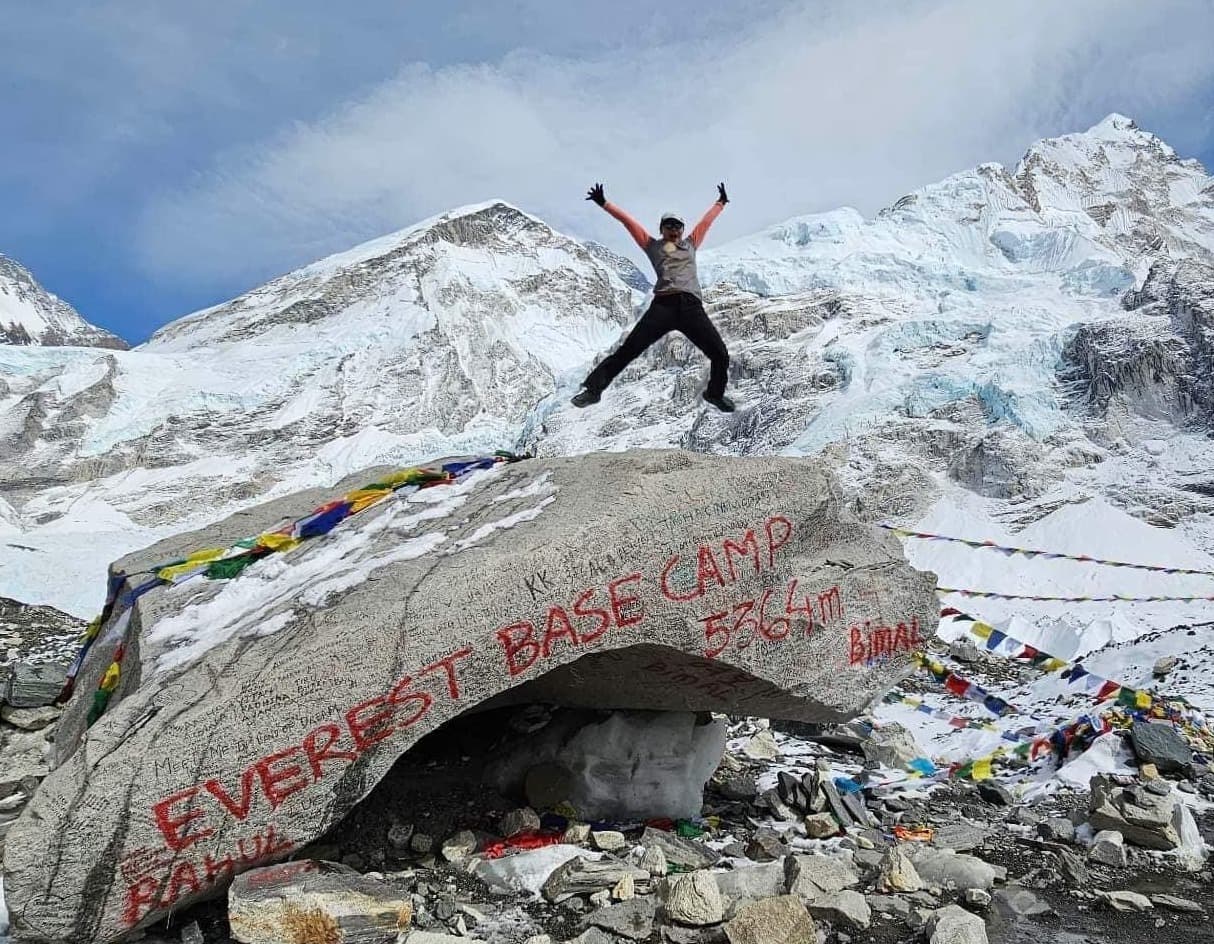
    8. Everest Base Camp: Reach the iconic destination, standing at the foot of the world's highest mountain and sharing the experience with fellow trekkers


    The Everest Base Camp Seniors Trek package has been rearranged and rescheduled to allow seniors and little kids to go through them quickly. This way, the whole family can have a picture together with Mount Everest in the background! It certainly makes for a good memory, even more so because of your whole family's involvement- and Escape Himalaya's Everest Trek for seniors and children allows this to become a pleasurable reality for you.

    Starting your journey, you will be experiencing the unique Nepali art and architecture in Kathmandu's UNESCO-listed world heritage sites. The sites offer an incredible feeling of Nepal's history and are richly decorated with wood, stone, and metal carvings. The intricacy of the old buildings, palaces, and temples highlights Nepal's dexterity and engulfs you in the country's monarchial days. Taking a scenic flight to Lukla, you would be presented with lovely sights of the emerald land terrain below. The views of the mountains from the flight make the journey to Lukla like a short adventure. Walking along the ebullient Dudh Koshi River, you would traverse to Namche via Phakding.

    The settlement at Namche is a lively hub of the Khumbu region and is also called "the Gateway to Everest. You would look at the stunning sights of the Ivory Mountains along your trails. Entering the Sagarmatha National Park, you would be walking along verdant acreages of alpine vegetation and might also catch glimpses of endangered animals the park has under protection. Hiking up to the Tengboche Monastery, you can explore and have a closer look at various places of worship in the mountains, interact, and see the everyday life of people living in such an isolated and remote area. The experience of this is quite humbling. You would follow the trail to the Everest base Camp via dainty villages like Dingboche, Thukla, Lobuche, and Gorakshep. Views of mountain peaks like Everest, Lhotse, Nuptse, Thamserku, Tawache, and Ama Dablam, among many others, emerge into the palette under the cerulean sky, providing you with spectacular views throughout the trail.

    Escape Himalaya's experienced and knowledgeable guides manage an incredible trip with old and young members of your family. Proper acclimatization and care will make your family's journey to the Everest Base Camp seniors reasonably possible. The Everest Trek for Seniors and Children package from Escape Himalaya provides the best services that incorporate all of the essences of the trek to give you ultimate satisfaction and the best trekking experience! You can also have alternate trekking options with our, which allows you to trek to the foot of the summit of Mount Everest. The also offers you the option of excursing through the passes letting you be captivated by its natural quintessence. The eslets you encounter the cerulean lakes at the bosom of the mountains. So join us in this adventure! You can also opt for a customizable itinerary as well if you wish a another trek where you can experience the natural pulchritude of the destinations while undergoing the most beautiful trekking journey.

    Why Seniors should consider Everest Base Camp Trek 

    The Everest Base Camp trek is ideal for seniors who seek adventure and stunning natural beauty. Those aged 60 and above can fully enjoy the trek with the right approach. Key factors include thorough medical check-ups, ensuring they are fit for high altitudes, and engaging in regular physical conditioning to build endurance. Hiring experienced guides and porters provides essential support and safety. Including extra acclimatization days in the itinerary allows for a safer and more comfortable journey. Comfortable accommodations and a proper diet help maintain energy levels throughout the trek. With careful planning and the right precautions, seniors can experience the iconic Everest Base Camp trek, marveling at the majestic Himalayas and enjoying the warm hospitality of the Sherpa people, making it the perfect adventure for senior travelers.

    Physical Fitness for Senior Trekkers

    The journey to Everest Base Camp for the seniors will be much more enjoyable, and the chances of completing the trek will be greater if one is in good physical shape. This trek basically includes 5-7 hours of hiking per day on rough, sometimes steep, terrain, often at a high altitude with low oxygen levels. One needs to get into routine cardio activities such as running, cycling, or swimming to be prepared. This should be combined with strength training, but more importantly, leg workouts. We also suggest including hill climbing or stair climbing in your workout regime to give you a feel for the trekking conditions. If you are really well-prepared, you will stay confident throughout, and that really makes this magnificent journey very special.

    Everest Base Camp Flight Ktm-Lukla

    The flight from Kathmandu to Lukla is one of the most scenic and exhilarating air journeys in the world, often serving as the gateway to the Everest region. Departing from Tribhuvan International Airport in Kathmandu, the flight covers approximately 138 kilometers and takes about 30 minutes. Operated by several domestic airlines, these flights typically use small, twin-engine aircraft designed to handle the short, mountainous runway of Lukla Airport. Known for its challenging approach and dramatic terrain, Lukla's Tenzing-Hillary Airport sits at an elevation of 2,860 meters (9,383 feet), surrounded by steep cliffs and high peaks. Flights are usually scheduled in the early morning to avoid the region's frequent afternoon clouds and unpredictable weather, which can lead to delays or cancellations. Despite these challenges, the flight offers breathtaking views of the Himalayan range, making it a memorable experience for trekkers and adventurers heading to the Everest Base Camp and other destinations in the Khumbu region.

    Trail And Important Acclimatization for Seniors Trekkers

    Everest Base Camp is a challenging yet rewarding journey through the heart of the Himalayas, offering spectacular views and a deep dive into Sherpa culture. The trek usually starts from Lukla, following the Dudh Koshi River valley through picturesque villages like Phakding and Namche Bazaar, the latter being a significant acclimatization stop. Trekkers typically spend two nights in Namche Bazaar (3,440 meters) to adjust to the altitude, exploring local markets and nearby viewpoints.

    The trail continues through Tengboche, famous for its monastery, then onto Dingboche (4,410 meters), where another acclimatization day is recommended. During this time, hikers can take short treks to higher altitudes, such as Nagarjun Hill or Chukhung Valley, to help their bodies adapt to the thinning air. As trekkers progress, they pass through Lobuche and Gorak Shep before reaching Everest Base Camp (5,364 meters).

    Accommodation and Food

    Accommodation and food along the Everest Base Camp (EBC) trekking trail cater to a wide range of trekkers, offering both basic and more comfortable options. Teahouses, which are small lodges found in every village along the trail, are the most common form of accommodation. These teahouses provide private rooms with twin beds, shared bathrooms, and communal dining areas. In popular stops like Namche Bazaar, Tengboche, Dingboche, and Gorak Shep, some teahouses offer more upscale amenities, such as hot showers, Wi-Fi, and electric blankets, though these come at a higher cost.

    Food on the trail is surprisingly varied, with teahouse menus offering both local Nepali dishes and Western favorites. Dal Bhat, a traditional meal of rice, lentil soup, and vegetables, is a staple and provides the necessary energy for trekking. Other common options include momos (dumplings), noodles, pasta, soups, and fried rice. Western dishes like pancakes, eggs, and pizzas are also available. 

    Vegetarian meals are recommended as meat might not always be fresh due to the lack of refrigeration. Trekkers are advised to drink plenty of fluids, with boiled or treated water being the safest option. Many teahouses sell bottled water, but using a refillable bottle and purification tablets is more eco-friendly and cost-effective. Overall, the teahouse experience offers a unique opportunity to interact with fellow trekkers and the local Sherpa community, enhancing the adventure.

    How Many Years Old  People do This Trek

    Senior trekkers, including those in their 75s and beyond, can successfully undertake the Everest Base Camp (EBC) trek with proper preparation and planning. Ensuring good physical health through regular cardiovascular exercise, strength training, and flexibility exercises is crucial. Seniors should consult with a doctor for a thorough medical check-up to confirm they are fit for high-altitude trekking, especially if they have pre-existing health conditions. Gradual acclimatization is vital to prevent altitude sickness, so following a slow and steady pace, taking extra rest days, and staying well-hydrated is essential. Trekking during the pre-monsoon (March to May) or post-monsoon (September to November) seasons when the weather is more stable can make the journey more manageable. Hiring a knowledgeable guide and possibly a porter can provide valuable support, reduce physical strain, and enhance the trekking experience. With the right preparation, equipment, and mental resilience, senior trekkers can enjoy the breathtaking scenery and unique cultural experiences of the EBC trek safely and successfully.

    Most important thing to consider: Travel Insurance

    Everest base camp trek for seniors is one of the most thrilling treks into the mountains of majesty! As you get ready for this most unforgettable journey, here comes the most important thing to consider: travel insurance. Independent trekking in mountain and rugged areas is not devoid of risks, which could mean injuries, falling suddenly ill, or even an emergency evacuation. Medical care can be very expensive, not to mention hard to access in such areas. These can add up quickly if you have an accident or experience some other mishap and don't have insurance. Having comprehensive travel insurance means you will know you're protected against the unpredictable, so you can have peace of mind as you enjoy the trekking experience.

    Physical Considerations Before Trek

    Preparing for the Trek is essential to ensure you have a safe and enjoyable experience. This trek takes you through varied landscapes, challenging terrains, and high altitudes, demanding both physical and mental preparation. Training for the trek should begin at least two to five months in advance, focusing on building cardiovascular endurance through running, swimming, or cycling. Strength training for your legs, core, and shoulders is also important, along with flexibility exercises like yoga or stretching to prevent injuries. Practice hiking on uneven terrain with a loaded backpack to simulate actual trekking conditions.
    Detail Itinerary

    Expand all +
    1Day 01

    Arrive at Tribhuwan International Airport, Kathmandu

    An airport representative from Escape Himalaya will welcome you as soon as you arrive at Tribhuwan International Airport in Kathmandu. The representative will also help you transfer to your hotel and give brief descriptions of the trek.

    Overnight stay at the hotel. Breakfast Included. 

    1. Max. Elevation:1336m.
    2Day 02

    Sightseeing Tour at Kathmandu valley

    You would be touring the Heritage Sites in Kathmandu Valley enlisted under the UNESCO World Heritage Site list that including the Kathmandu Durbar Square, the Swayambhunath Temple, the Bouddhanath Stupa, and the Pashupatinath Temple.

    Overnight stay at the hotel, breakfast included.

    1. Max. Elevation:1336m.
    3Day 03

    Fly to Lukla and trek to Phakding (2652m/8699ft), Duration: 3 hours

    The Lukla flight would require an early morning shuttle to the airport. The flight to Lukla is an unforgettable experience in itself. The airfield has a high evaluation, and the difference between the two ends of the runway is only approximately 60 meters. You would be trekking to Phakding through verdant landscapes with a breathtaking view of the Kusum Kangraru Mountain.

    Overnight stay in the guesthouse with breakfast, lunch, and dinner included.

    1. Max. Elevation:2800m.
    4Day 04

    Trek to Namche Bazaar (3440m/11283ft), Duration: 6 Hours

    You'll follow the Dudh Koshi River up through Himalayan pine and cedar forests to Namche Bazaar. Namche village is a historical trading station where Nepalese and Tibetan traders have exchanged salt, dried meat, and textiles since ancient times. Aside from being an excellent place to shop for traditional products, Namche is the principal commercial town in the Khumbu region, attracting Himalayan and lowland merchants. You will spend two days in Namche to acclimatize, tour local markets, and spend time with your teammates. During the hike, you can catch your first glimpse of Everest and its surrounding peaks.

    Overnight stay in the guesthouse with breakfast, lunch, and dinner included.

    1. Max. Elevation:3440m.
    5Day 05

    Namche Bazaar-Everest View Hotel–Namche, Duration: 4-5 Hours

    This day has been specifically chosen for acclimatization. You will travel to Syangboche Airport (3700m), which is said to be the world's highest airport, and then climb to Everest View Hotel for spectacular views of Everest, Lhotse, Ama Dablam, and Tawache, among other peaks. On the way back, you can also visit the Sherpa Culture Museum and the Everest Photo Gallery.

    Overnight stay in the guesthouse with breakfast, lunch, and dinner included.

    1. Max. Elevation:3810m.
    6Day 06

    Trek to Tengboche (3860m/12660ft), Duration: 6-7 hours

    An easy trail leads towards the view of Mount Everest, descending deep into the Dudh Koshi Valley at Phungki Thanka and from this point; it ascends the right flank of the Dudh Koshi Valley to Tengboche Monastery (3860m). The climb is lengthy but is more than adequately compensated by gorgeous views of Mount Ama Dablam and Everest.

    Overnight stay at the guesthouse, breakfast, lunch, and dinner included.

    1. Max. Elevation:3860m.
    7Day 07

    Trek to Dingboche (4410m/14464ft), Duration: 4-5 Hours.

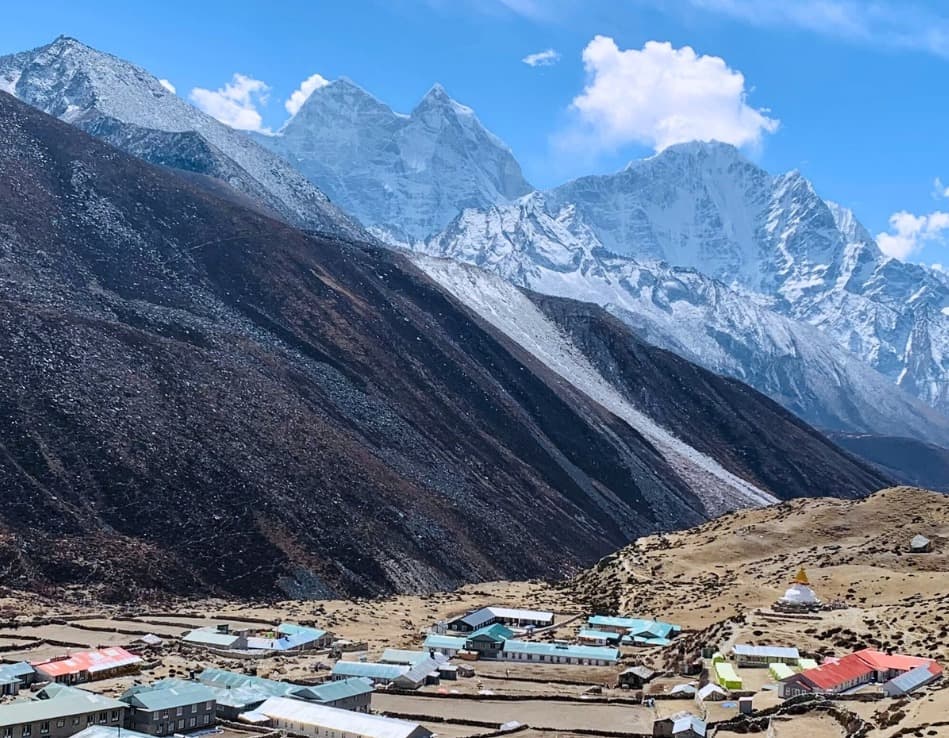
    Descending through a beautiful forest, you would be crossing the Imja Khola and trekking through the village of Pangboche (3900m). You will not lose altitude like on other days today. You can also enjoy views of Mount Ama Dablam, Lhotse, and other peaks while on the trek, continuing through green pastures to Dingboche- also known as the “summer valley”.

    Overnight stay at the guesthouse, breakfast, lunch, and dinner included.

    1. Max. Elevation:4410m.
    8Day 08

    Hike to Nagerjun (5100m/16728ft) and return Dingboche, Duration: 5-6 Hours

    This would be your second acclimatization day, requiring approximately 5-6 hours of trekking to an elevation of 5100m. After breakfast, you will climb Nagerjun (5100m), a hill on the Chhukung valley's sides that rises immediately above Dingboche.

    The primary goal is to ascend high and sleep low. The footpath climbs steeper at times, making for a physically demanding day. Ascending the hill at altitude could take up to 5 hours. Lobuche East (6119m), Lobuche West (6145m), Toboche Peak (6367m), Thamserku (6608m), Kangtega (6685m), and Ama Dablam (6856m) are all visible from this altitude. On a clear day, you can see Mount Makalu, the world's fifth-highest peak, as well as the Pheriche Valley below. 

    After a short pause, you will begin the descent back to Dingboche, which will take approximately 2 hours. After lunch, you will have a well-deserved rest, and as the afternoon temperatures drop fast as the sun sets over the mountain summits, you will stay in Dingboche for a second night.

    Overnight stay at the guesthouse with breakfast, lunch, and supper included.

    1. Max. Elevation:5100m.
    9Day 09

    Trek to Thukla (4620m/15153ft) Duration: 3-4 hours

    The path follows upriver and ends on a glacier. The path turns right and meets with the river again. You will be crossing a bridge over the river and will be heading to the village of Thukla.

    Overnight at a guesthouse, breakfast, lunch, dinner included.

    1. Max. Elevation:4620m.
    10Day 10

    Trek to Lobuche (4910m/16105ft), Duration: 3-4 Hours

    Trekking over the broad valley floor to Dughla, you will pass the Trekkers Aid Post at Pheriche (4240 m). This post is managed by Western volunteer doctors and is backed by the Himalayan Rescue Association, which provides hikers with medical care and consultation. Continuing up the valley, you will reach Lobuche's yak pastures.

    Overnight stay at the guesthouse with breakfast, lunch, and dinner included.

    1. Max. Elevation:4910m.
    11Day 11

    Trek to Gorekshep (5180m/16994ft), Duration: 3-4 Hours

    After a short climb through meadows, you may be able to see the Khumbu Glacier below. Straight ahead lies Kalapatthar, the ideal vantage point for seeing Mt. Everest's full south face and neighboring peaks. Trekking to Gorekshep will prepare you for tomorrow's Everest Base Camp Expedition at 5400 meters.

    Overnight stay at the guesthouse with breakfast, lunch, and dinner included.

    1. Max. Elevation:5810m.
    12Day 12

    Hike to Everest Base Camp (5364m/17594ft) and return Gorekshep (5181m/16994ft), Duration: 6-7 Hours

    You will be commencing your Everest Base Camp Trail today. There is not much elevation gain, but there are a lot of ups and downs and, combined with altitude, this can be tiring- but the journey is worth it. After approximately 3 hours of hiking, you will arrive at Base Camp and can enjoy views of the Khumbu Glacier and icefall, where the Everest expeditions began.

    Overnight at the guesthouse, breakfast, lunch, and dinner included.

    1. Max. Elevation:5364m.
    13Day 13

    Hiking to Kalapatthar (5545m/18188ft)-Gorekshep-Pheriche (4210m/13809ft), Duration: 6-7 Hours

    The day begins with a climb up to Kalapatthar (5545m), a great viewpoint for seeing Mount Everest and the beautiful Himalayan ranges. You would hike back to Gorekshep for a delicious breakfast before descending to Pheriche.

    Overnight stay at the guesthouse with breakfast, lunch, and dinner included.

    1. Max. Elevation:5545m.
    14Day 14

    Trek to Phorste (3680m/1270ft), Duration: 5-6 Hours

    Today, you are heading down to Phorste. Although you are traveling back down, you may encounter some challenging uphill hikes.

    Overnight stay at the guesthouse with breakfast, lunch, and dinner included.

    1. Max. Elevation:3680m.
    15Day 15

    Trek to Namche (3440m/11283ft), Duration: 4-5 Hours

    You will descend to Phorste Thanka on this day, complete a steep climb to Mong-la Danda, have a short climb down to Kyangjuma, and then follow a gentle trail to Namche.

    Overnight at the guesthouse, breakfast, lunch, and dinner included.

    1. Max. Elevation:3440m.
    16Day 16

    Trek to Phakding (2652m/8699ft), Duration: 4-5 Hours

    Today, you'll head to Phakding.

    Overnight at the guesthouse, breakfast, lunch, and dinner included.

    1. Max. Elevation:2650m.
    17Day 17

    Trek to Lukla (2800m/9184ft), Duration: 4-5 Hours

    The trek continues down the Dudh Koshi River to the little mountain airstrip at Lukla, where you will catch your aircraft back to Kathmandu.

    Overnight stay at a guesthouse in Lukla, breakfast, lunch, and dinner included.

    1. Max. Elevation:2800m.
    18Day 18

    Fly back to Kathmandu

    A 30-minute amazing scenic flight back to Kathmandu will be taken today.

    Overnight at the hotel in Kathmandu, breakfast included.

    1. Max. Elevation:1336m.
    19Day 19

    Leisure Day

    You can spend the day in Kathmandu, exploring or just relaxing at the hotel.

    Overnight at the Hotel, Breakfast included.

    1. Max. Elevation:1336m.
    20Day 20

    Farewell

    You will be dropped at the airport today by one of Escape Himalaya’s representatives, from where you will depart.

    1. Max. Elevation:1336m.

    If the provided schedule isn't suitable for you, we are able to create personalized travel arrangements according to your preferences and requirements.

    Customize My Trip

    Cost Details

    Cost Includes

    • All ground transports in private vehicle including airport transfers
    • Four nights accommodation with breakfast at a 3-star category hotel in Kathmandu
    • Kathmandu city tours including all entry fees, tour guide and private vehicle
    • Full board meals with tea/coffee (breakfast, lunch and dinner) during the trek
    • Best available twin sharing lodge to lodge accommodation during the trek; we provide private bathrooms with hot shower at Phakding, Namche and Lukla
    • Seasonal fruits during the trek
    • One highly experienced, helpful and friendly guide, porters (1 porter for 2 people) and their food, accommodation, salary, equipment, and accidental insurance for all staff
    • Round trip flight Kathmandu – Lukla and Lukla – Kathmandu including departure taxes
    • First aid medical kit
    • Sagarmatha National Park Permits fee
    • TIMS Fee- Trekkers' Information Management System (Please bring 2 passport size photos for permit)
    • Government taxes & office service charge

    Cost Excludes

    • Meals not specified in the 'Meal Inclusions' in the itinerary'
    • Travel insurance
    • International airfare
    • Nepal entry visa: you can obtain a visa easily upon your arrival at Tribhuwan International Airport in Kathmandu. (a multiple-entry tourist visa good for 30 days can be obtained by paying US $ 40 or equivalent foreign currency. Similarly, multiple-entry tourist visas for 90 days can be obtained by paying US $ 100. Please bring 2 copies of passport-size photos.)
    • Cold drinks Inc. coke, water, Fanta etc.
    • Snacks and other personal expenses
    • Hot shower during the trek except Phakding, Namche and Lukla
    • Personal trekking equipment
    • Tips and gratuities for trekking staff and drivers

    Dates & Availability

    • 28th Jan 2026From Kathmandu
      16th Feb 2026To Kathmandu
      guaranteed
      US $1530Per person
      Book Now
    • 6th Feb 2026From Kathmandu
      25th Feb 2026To Kathmandu
      guaranteed
      US $1530Per person
      Book Now
    • 10th Feb 2026From Kathmandu
      1st Mar 2026To Kathmandu
      guaranteed
      US $1530Per person
      Book Now
    • 16th Feb 2026From Kathmandu
      7th Mar 2026To Kathmandu
      guaranteed
      US $1530Per person
      Book Now
    • 19th Feb 2026From Kathmandu
      10th Mar 2026To Kathmandu
      guaranteed
      US $1530Per person
      Book Now
    • 22nd Feb 2026From Kathmandu
      13th Mar 2026To Kathmandu
      guaranteed
      US $1530Per person
      Book Now
    • 25th Feb 2026From Kathmandu
      16th Mar 2026To Kathmandu
      guaranteed
      US $1530Per person
      Book Now
    • 28th Feb 2026From Kathmandu
      19th Mar 2026To Kathmandu
      guaranteed
      US $1530Per person
      Book Now
    • 2nd Mar 2026From Kathmandu
      21st Mar 2026To Kathmandu
      guaranteed
      US $1530Per person
      Book Now
    • 11th Mar 2026From Kathmandu
      30th Mar 2026To Kathmandu
      guaranteed
      US $1530Per person
      Book Now
    • 15th Mar 2026From Kathmandu
      3rd Apr 2026To Kathmandu
      guaranteed
      US $1530Per person
      Book Now
    • 18th Mar 2026From Kathmandu
      6th Apr 2026To Kathmandu
      guaranteed
      US $1530Per person
      Book Now
    • 23rd Mar 2026From Kathmandu
      11th Apr 2026To Kathmandu
      guaranteed
      US $1530Per person
      Book Now
    • 25th Mar 2026From Kathmandu
      13th Apr 2026To Kathmandu
      guaranteed
      US $1530Per person
      Book Now
    • 27th Mar 2026From Kathmandu
      15th Apr 2026To Kathmandu
      guaranteed
      US $1530Per person
      Book Now
    • 28th Mar 2026From Kathmandu
      16th Apr 2026To Kathmandu
      guaranteed
      US $1530Per person
      Book Now
    • 29th Mar 2026From Kathmandu
      17th Apr 2026To Kathmandu
      guaranteed
      US $1530Per person
      Book Now
    • 30th Mar 2026From Kathmandu
      18th Apr 2026To Kathmandu
      guaranteed
      US $1530Per person
      Book Now
    • 31st Mar 2026From Kathmandu
      19th Apr 2026To Kathmandu
      guaranteed
      US $1530Per person
      Book Now
    • 3rd Apr 2026From Kathmandu
      22nd Apr 2026To Kathmandu
      guaranteed
      US $1530Per person
      Book Now
    • 5th Apr 2026From Kathmandu
      24th Apr 2026To Kathmandu
      guaranteed
      US $1530Per person
      Book Now
    • 6th Apr 2026From Kathmandu
      25th Apr 2026To Kathmandu
      guaranteed
      US $1530Per person
      Book Now
    • 8th Apr 2026From Kathmandu
      27th Apr 2026To Kathmandu
      guaranteed
      US $1530Per person
      Book Now
    • 12th Apr 2026From Kathmandu
      1st May 2026To Kathmandu
      guaranteed
      US $1530Per person
      Book Now
    • 14th Apr 2026From Kathmandu
      3rd May 2026To Kathmandu
      guaranteed
      US $1530Per person
      Book Now
    • 21st Apr 2026From Kathmandu
      10th May 2026To Kathmandu
      guaranteed
      US $1530Per person
      Book Now
    • 23rd Apr 2026From Kathmandu
      12th May 2026To Kathmandu
      guaranteed
      US $1530Per person
      Book Now
    • 27th Apr 2026From Kathmandu
      16th May 2026To Kathmandu
      guaranteed
      US $1530Per person
      Book Now
    • 29th Apr 2026From Kathmandu
      18th May 2026To Kathmandu
      guaranteed
      US $1530Per person
      Book Now
    • 30th Apr 2026From Kathmandu
      19th May 2026To Kathmandu
      guaranteed
      US $1530Per person
      Book Now
    • 12th May 2026From Kathmandu
      31st May 2026To Kathmandu
      guaranteed
      US $1530Per person
      Book Now

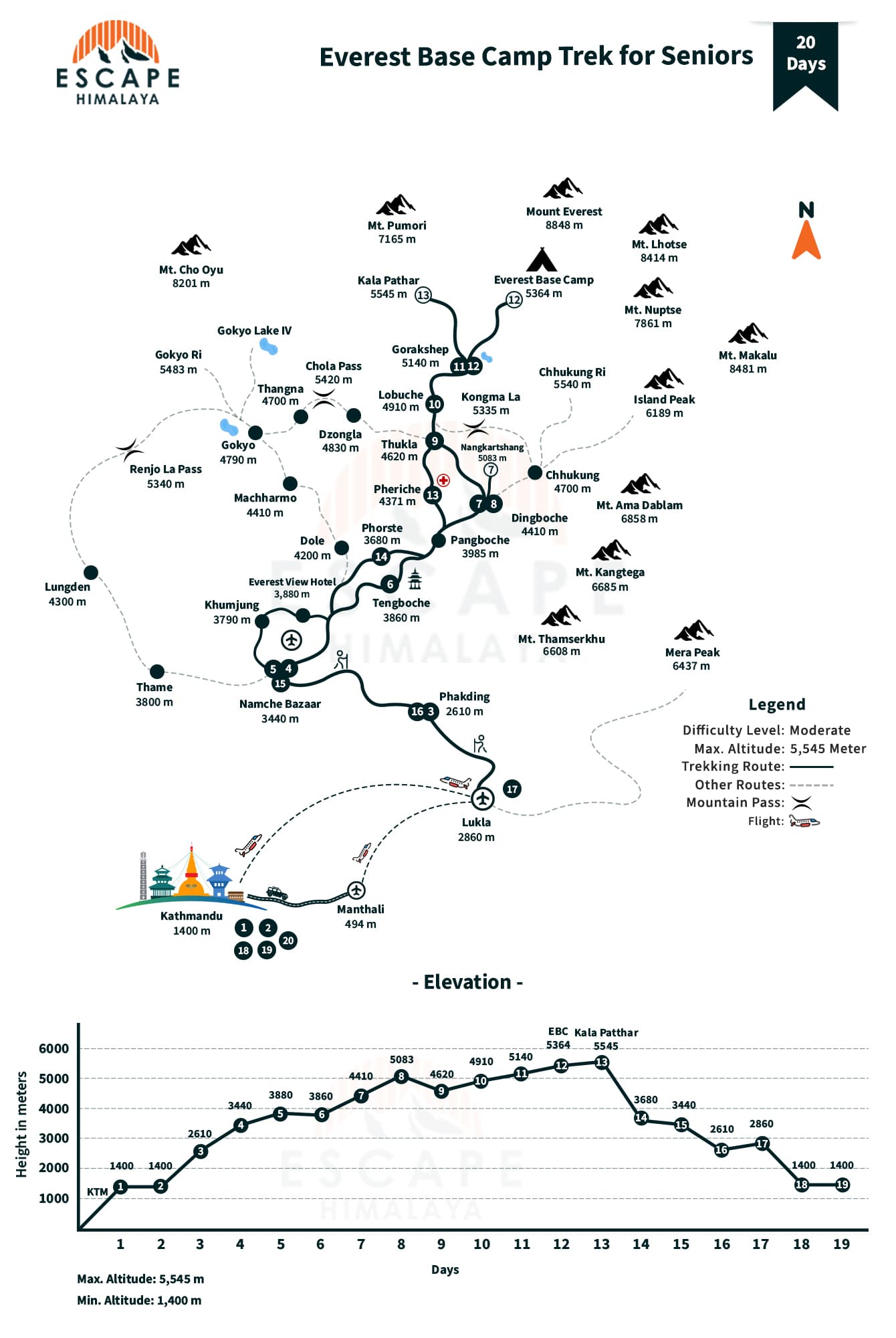
    Everest Base Camp Trek for Seniors Route Map

    Everest Base Camp Trek for Seniors Map

    Good to Know

    Everest Base Camp Seniors Trek Guide

    Planning an Everest Seniors Trek? Here are the Top 10 key things to know for an incredible adventure:

    • Season's Greetings: Pick the perfect time to go! Spring (March-May) and autumn (Sept-Nov) offer clear skies and stunning views.
    • Pack Smart: Travel light! Choose a comfortable backpack and pack only essentials for the changing weather.
    • Go at Your Own Pace: Don't rush! Enjoy the scenery and listen to your body. Slow and steady wins the race.
    • Train Like a Champ: Get in shape! Hiking at altitude requires some physical preparation.
    • Mind Over Mountain: Be prepared for challenges! A positive attitude goes a long way.
    • Fuel Your Hike: Eat healthy! Choose nutritious food to keep you energized throughout the trek.
    • Gear Up for Success: Dress for the elements! Pack clothes and footwear suitable for mountain weather.
    • Stay Hydrated: Drink plenty of water! Dehydration can be a problem at high altitudes.
    • Plan Your Path: Find a suitable itinerary! Choose a route that matches your experience and desired duration.
    • Respect the Locals: Be a good guest! Learn some basic Nepali phrases and be mindful of local customs.

    Bonus Tip: Capture the memories! Take photos and videos to document your incredible journey.

    Additional Cost Planning

    Apart from the significant costs of your trip package, you will need to budget for specific additional fees. Here's a simple plan to help you budget while still having a good time:

    Trail Necessities:

    • Hot Gas Showers: Tea houses may charge $5-7 for a warm shower, particularly at higher elevations.
    • Charging Electronics: Tea houses may allow you to charge your electronics for $4-6 per hour with solar power. Bringing a portable charger is convenient.

    Food & Treats:

    • Extra Meals: Depending on where you are, you may want to purchase more snacks or lunches, which cost between $5 and $20.
    • Drinks: Expect to spend $1-4 per water bottle. Other drinks may be more expensive, so use a reusable bottle and water filter to save money and prevent waste.

    Staying Connected:

    • Wi-Fi: While many guest houses offer Wi-Fi, they also provide Air-link and Everest-Link cards, which typically cost 700-800 rupees for 24 hours. If you need internet access, consider downloading maps and entertainment beforehand.

    Remember that prices might vary, so use these estimates as a guideline.

    Please look at your spending patterns for drinks, snacks, and gifts.

    Note: Carry Nepali Rupees for incidental expenses. While some tea shops accept US dollars, possessing the local currency eliminates conversion problems and ensures you have the correct amounts for smaller transactions.

    By budgeting for these things, you'll be better prepared to deal with unexpected costs and enjoy your Annapurna Base Camp route!

    Dining on the EBC Sinoir Trek: From Classic Favorites to Local Delights

    Lunch and dinner on the Everest Base Camp trek are a delicious adventure. Dal Bhat, a traditional Nepali cuisine, is popular among trekkers due to its low cost and high-calorie content. But the variety does not end there. Tea houses cater to various tastes, with classic dishes such as fried rice, chicken curries, burgers, and pizzas. Noodle enthusiasts can have stir-fried noodles or cheesy pasta meals.

    After a day of hiking, dinner becomes a joyous occasion, with tea houses broadening their menus to include a broader selection of familiar favorites and local specialties.  So, whether you crave a hearty Dal Bhat or a soothing slice of pizza, the EBC journey delivers a great and satisfying refill after each adventure-filled day.

    Equipment Packing for Everest Trekking:

    Prepare for your Everest Trek confidently, knowing you have all the necessary gear and essentials to make your journey safe, comfortable, and memorable. Ensuring what to pack and packing light is a key to the best hiking experience. You can go through our comprehensive Equipment Checklist to easily pack what you will need for your trek to Everest base camp.

    If you want to know about something more specific on what to bring or how to bring any equipment, let us know.

    Travellers‘ Reviews

    Write a Review
    • Sheryl Ang

      14th Dec 2024

      Gorgeous Views!

      Excellent trekking experience with Escape Himalaya to Kala Patthar! Everything went seamlessly, and my guide ensured we were safe and comfortable at all times, even in the high altitude. Will definitely choose EH again when I am back in Nepal for more hiking! The country is so beautiful and just has so much to offer!

      Read more +
    • Tony W

      18th Apr 2024

      Amazing Manaslu Circuit with Phurba & Ram

      Just back from a fantastic 2 week trek around the Manaslu Circuit including Larke Pass (5100m). The weather was perfect and the views were outstanding!!

      Our guide Phurba Sherpa was excellent. Super knowledgeable and helpful at all times and always made sure we had a fantastic trip.

      Our porter, Ram Badhadur Magar was also a rockstar. He was super professional and always arrived before us every day. He was also super friendly and helpful too.

      Thanks to Phurba, Ram for always smiling and for a fantastic trip. Would highly recommend them to anyone interested in trekking in Nepal

      Read more +
    • Kevin P

      3rd Apr 2024

      Everest base camp trek - Mar-Apr 2024

      My 60 year old pals set out in hope on this adventure. In late March. We had our guide Raj Kumar and two porterd Janak and Ramesh. All three were stars. We changed our schedule - no problem. I would not have made it without Raj. I cannot thank him enough. Janak often took my back pack on steep climbs where I was struggling. This is a truly majestic and spiritual trek and I would encourage using Escape Himalaya and request this team of guide and porters if you want to give yourself the best chance of finishing and making best use of your time.
      Read more +

    FAQS

    Expand All (16)

    Q1. Is a visa required for entry into Nepal?

    Yes, the majority of travelers to Nepal will need a visa. You can acquire one upon arrival at Tribhuvan International Airport in Kathmandu or at land border crossings. Alternatively, you have the option to apply for a visa beforehand at a Nepalese embassy or consulate in your home country.

    Q2. Will there be someone to pick me up at the airport when I arrive?

    Yes, Escape Himalaya offers airport pickup services for our clients. We recognize the significance of a seamless arrival and strive to guarantee a trouble-free beginning to your journey. When you reserve a trek or tour with us, you can coordinate with our team to schedule a representative to greet you at the airport upon your arrival.

    Look for our staff member holding a signboard bearing your name or the company's name for easy recognition. Providing us with your flight details ahead of time, including your flight number and estimated arrival time, enables us to make suitable arrangements for your pickup.

    Q3. As a solo traveler, are you able to join a group for your journey?

    Certainly! As a solo traveler, you're welcome to join one of the groups organized by Escape Himalaya. We frequently arrange group treks and tours that cater to individuals traveling alone. Joining a group not only allows you to meet other travelers but also offers the opportunity to share experiences and potentially lower costs.

    When reaching out to Escape Himalaya, simply inform us that you're a solo traveler interested in joining a group. We'll then provide details about available group departures and assist you in selecting a trek or tour that aligns with your preferences and travel dates.

    Q4. What are the types of hotel you use in Kathmandu?

    Generally, we use the best available 3-star, 4-star, and 5-star category hotels for travelers' accommodation in Kathmandu. Meanwhile, travelers can upgrade or prolong accommodation with us as required.

    The costs to prolong or upgrade hotel accommodation in Kathmandu may vary based on preferred hotel rates.

    Q5. Would it be possible for me to upgrade my accommodation to a luxury hotel in Kathmandu?

    Certainly! You have the option to upgrade your accommodation to a luxury hotel in Kathmandu. If you wish to elevate your stay from the standard 3-star hotel provided by Escape Himalaya, simply let us know, and we can arrange the upgrade for you. However, please bear in mind that availability and pricing for luxury hotels may fluctuate based on the hotel and the timing of your visit.

    Q6. Which destinations are commonly favored by tourists visiting Nepal?

    Nepal boasts breathtaking natural landscapes and a profound cultural legacy. Among the sought-after tourist spots are Kathmandu (the capital), Pokhara, Chitwan National Park, Lumbini (the birthplace of Lord Buddha), Bhaktapur, as well as the renowned trekking regions of Annapurna, Everest, Langtang, Manaslu, and Upper Mustang.

    Q7. Do we need a visa before coming to Nepal?

    Yes, most travelers need a visa to enter Nepal. However, the process for obtaining a visa depends on your nationality. You can either obtain a visa from the diplomatic consulate office of Nepal in your respective country or apply for an “On Arrival” visa at the entry checkpoints of Nepal. Please click this link to get more information on ways to issue a tourist visa. Also please see the visa fee here below:

    On-Arrival Visa Fee at Entry Points of Nepal:

    • 15 Days – 30 USD
    • 30 Days – 50 USD
    • 90 Days – 125 USD

    Indian nationals do not need to have a visa to enter Nepal however they need to bring an official document such as a Passport or Election card (issued by the Election Commission) that proves their identity.

    Q8. Which one is better: Group or Solo (private) trek?

    Escape Himalaya offers both group and solo trek to Everest Base Camp. However, to choose to join which tour style completely depends upon the traveler itself.

    If you are happy to meet people from other parts of the world and join in an experience of a lifetime with fellow travelers, then going for a group trek is also best.

    However, if you prefer freedom and flexibility, trekking solo (private) will give you the independence to set your own pace and choose your itinerary. You will have the flexibility to make spontaneous decisions. You will not be bound by a group schedule and choose to lead your journey as you wish and even modify the plan if needed.

    Q9. How challenging is trekking to Everest Base Camp?

    The trek to Everest Base Camp is moderate to challenging due to the high altitude, cold weather conditions, and the need for acclimatization. The trek involves several days of walking, and the terrain can be steep and rocky at times. Altitude sickness is a potential risk, so it's important to acclimatize properly, stay hydrated, and be aware of your body's signals.

    The trek usually takes around 12 days from Lukla to Everest Base Camp and back, covering approximately 130 kilometers (80 miles). The altitude at Everest Base Camp is over 5,300 meters (17,500 feet), and the thin air can make physical exertion more demanding.

    Even though the trek brings its challenges its adventurers, stunning landscapes and the sense of accomplishment that comes with reaching Everest Base Camp is worth every step taken. Proper preparation, including physical conditioning and acclimatization, is key to making the journey more manageable.

    Q10. When is the best time to go for Everest Base Camp trekking?

    The best time to go for Everest Base Camp trekking is during the pre-monsoon (spring) and post-monsoon (autumn) seasons. These are some of the ideal times for exploring the trails as they offer favorable weather conditions and stunning mountain scenery of Everest massif.

    Spring season which runs from late April to early June offers mild temperatures, blooming rhododendrons, and clear skies. It is a pre-monsoon as well as post-winter season so the weather is much more favorable and the mountain backdrop and the trails are much more enjoyable for trekking activities. Also, the trail to Everest Base Camp is vibrant with trekkers coming from all parts of the world to witness the glorious mountain scenery and lively trek route.

    Autumn season is another best time to do the Everest Base Camp Trek. It lasts from late September to early November and these periods offer stable and clear weather with cool temperatures. These periods also bring a large number of trekkers as the weather is relatively stable, with excellent visibility, offering breathtaking scenes of the Himalayan peaks.

    As per trekking during winter and summer/monsoon seasons, these are the least preferred times to do the trek. Winter season which is from November to early March, the weather is extremely cold, and thick layer of snow is another challenge. Nevertheless, one can tackle these challenges with the proper gear. Winter despite being an unfavorable time to do the trek, showcases one of the best vistas of the mountains with clear skies and a peaceful atmosphere with less crowd.

    Summer/Monsoon which lasts from June to September grants scenes of green landscapes with blooming flowers and vibrant vegetation along the trails. However, the challenge of flight delays and cancellations with rain is the great challenge of trekking in these times. If you are looking to trek with few crowds, it is the best time but you need to be prepared with the right gear, knowledge, and flexible schedule.

    Above all, despite what different season holds, trekkers are always requested to check in with an informed person for the latest weather information before planning a trip.

    Q11. How to prepare for Everest Base Camp trekking?

    As Everest Base Camp trekking is a moderate to challenging trekking activity, some sort of prior preparation is needed. That being said, you do not have to have trekking experiences. No prior experience is needed yet it is a bonus if you have any. Nevertheless, if you are a beginner or looking to trek Everest Base Camp, you can prepare by doing physical exercises and by being mentally prepared.

    For physical preparation, one can encompass cardiovascular exercises, strength training, and endurance workouts. Running, hiking, cycling, and swimming all help in improving cardiovascular condition by strengthening the heart, making it more efficient in pumping blood throughout the body. It also helps in enhancing lung function improving efficiency of oxygen exchange during physical exertion. As the air pressure is low in the mountain region, it is very important to acclimatize properly before continuing the journey. Moreover, cardiovascular activities help in ascending and descending more easily as Everest Base Camp trekking is mostly about hiking up and down.

    And as per mental preparedness, is equally important because trekking at high altitudes can be mentally challenging. So, develop a positive mindset and habit of being motivated. Also, one must be aware of their body and not ignore the issues if they are facing any.

    Along with physical and mental preparedness, trekking must also be familiar with their trekking gear beforehand. Oftentimes, new gear such as boots do not offer the same comfort as the old ones. Similarly, do not miss out on essential items such as trekking poles, sunglasses, and sunscreen as they are very precious throughout the trek. Prepare your gear as the trek gear recommended by the trek operators.

    Remember to start your preparation well in advance to gradually build up your fitness and make necessary arrangements. It is crucial to be well-informed and be prepared for a safe, enjoyable, and smooth trek.

    Q12. How to deal with mountain sickness during Everest Base Camp Trekking?

    There are challenges on any high-altitude treks. While challenges such as rugged paths, ascents, and descents are there, another crucial one is altitude sickness. Although not everybody suffers from it, one needs to become prepared and aware of it. One of the easiest ways to get altitude sickness is by not properly acclimatizing while ascending higher altitudes. Thus, it is essential to trek gradually. Symptoms like headache, nausea, vomiting fatigue, dizziness, and shortness of breath should not be ignored. If someone is suffering from it, talk to your guide, take the doctor's consulted medication if you have any, and if possible do not hike up until you feel better. However, if the trekkers are not feeling well even after performing all the preventive measures, they must be evacuated from the location. For evacuation, emergency rescue helicopters are available and your trek operator will assist you in managing it. When symptoms get severe it is very important to seek professional medication attention. That being said, it is crucial to not panic, you are with our expert and experienced trek guide. They will be assisting you until help is reached. Moreover, trekkers need to follow guide instructions as they are familiar with the trail, its nature, and the conditions.

    Q13. How to avoid altitude sickness during Everest Base Camp trekking?

    A few things one can do to avoid altitude sickness would be to ignore processed foods and drink alcoholic or soft drinks on the trail. Alongside, approaching the journey gradually is another way to avoid mountain sickness. Likewise, follow the plan, drink plenty of water, avoid foods that upset your stomach, and most importantly do not rush the journey. Similarly, do not ignore any symptoms and immediately take action if you feel uncomfortable. By following these guidelines and being attentive to your body's responses, you can significantly reduce the risk of altitude sickness during the Everest Base Camp trek.

    Q14. Is travel insurance necessary for Everest Base Camp Trek?

    It is highly recommended for travelers to have travel insurance before beginning their Everest Base Camp Trek. As we know, it is a high-altitude trek involving certain risks thus having travel insurance ensures travelers with coverage for any unforeseen conditions. Henceforth, please purchase nice travel insurance that covers medical emergencies and evacuation as well as trip interruptions. We suggest trekkers purchase a policy that covers any altitude over 5000 meters. And lastly, please do good research about policies before purchasing it.

    Q15. How much extra money we should bring for the Everest Base Camp Trek?

    The amount of extra money you should carry for the Everest Base Camp trek depends on various factors including your spending nature and trek duration. Your extra cash will be going towards snacks, drinking water, hot showers, electricity, and WIFI. We suggest you prepare about 2500-3000 Nepalese rupees per day while on the trek. Moreover, credit cards are rarely accepted so it is recommended to travel with enough Nepalese rupees. You can exchange your currency at the nearest exchange shops near your hotel area or at the airport.

    Q16. Are there any alternative routes to Everest Base Camp Trek?

    Yes, there are alternative routes and variations to the Everest Base Camp trek that offer different perspectives, landscapes, and experiences. Classic Everest Base Camp trek with a drive to Phaplu is one of the serene ways to approach EBC. One can also explore other delights of the Everest region by incorporating three high passes. Or one can simply add Gokyo Lake with the Everest Base Camp trek and enjoy the turquoise glacial lake and enthralling Cho La pass. Similarly, to taste the luxury of the mountains, you can simply check out our Everest Base Camp Luxury Trek. Our expert team at Escape Himalaya is available to share our valuable insights and assistance in planning your beautiful journey.

    You may also Like

    • Everest Base Camp Trek
      12 reviews
      from $1420

      Everest Base Camp Trek

      13 Nights 14 Days
    • Everest Base Camp - Chola Pass - Gokyo Trek
      04 reviews
      from $1375

      Everest Base Camp - Chola Pass - Gokyo Trek

      16 Nights 17 Days
    • Everest Base Camp Short Trek
      07 reviews
      from $1150

      Everest Base Camp Short Trek

      12 Nights 13 Days