No recent searches!

    Escape Himalaya
    • Certificate ofExcellence 2025
    • Whatsapp, Viber+977 9851006121
      • Everest Region
        • Everest Base Camp Trek - 14 Days
        • Everest Base Camp - Chola Pass - Gokyo Trek - 17 Days
        • Everest Base Camp Short Trek - 13 Days
        • Everest Base Camp Luxury Trek - 15 Days
        • Everest Base Camp Heli Shuttle Trek - 12 Days
        • Luxury Everest View Trek - 9 Days
        • Everest Panorama Trek - 9 Days
        • Everest Three High Passes Trek - 20 Days
        • Everest Base Camp Trek Heli Return to Kathmandu-11 Days - 11 Days
        • Everest Base Camp Trek for Seniors - 20 Days
        • Everest View Trek - 7 Days
      • Annapurna Region
        • Annapurna Base Camp Trek - 14 Days
        • Annapurna Circuit Trek - 14 Days
        • Mardi Himal Trek - 8 Days
        • Jomsom Muktinath Trek with Poon Hill - 9 Days
        • Short Annapurna Base Camp Trek - 6 Days Hike - 9 Days
        • Annapurna Circuit Tilicho Lake Trek - 17 Days
        • Annapurna Family Trek - 8 Days
        • Annapurna Base Camp Trek Heli Return to Pokhara - 10 Days
        • Annapurna Hot Spring Trek - 8 Days
        • Annapurna Trek with Chitwan Tour - 9 Days
        • Shortest Annapurna Base Camp Trek - 9 Days
      • Langtang Region
        • Langtang Valley Trek - 10 Days
        • Bhairav Kunda Trek - 14 Days
        • Helambu Trek - 8 Days
        • Langtang Helicopter Tour - 3 hrs
        • Langtang Gosainkunda Helambu Trek - 16 Days
        • Tamang Heritage Trail - 10 Days
        • Langtang Gosainkunda Trek - 13 days
      • Manaslu Region
        • Manaslu Circuit Trek - 14 Days
        • Manaslu Tsum Valley Trek Itinerary - 20 Days - 20 Days
        • Tsum Valley Trek - 13 days
      • Mustang Region
        • Upper Mustang Trek - 16 Days
        • Mustang Tiji Festival Trek - 18 Days
        • Lower Mustang Trek - 14 Days
        • Jomsom Muktinath Trek with Poon Hill - 9 Days
        • Upper Mustang Jeep Tour - 11 days
      • Dolpo Region
        • Upper Dolpo Trek - 25 Days
        • Lower Dolpo Trek - 18 Days
      • Summer Treks
        • Lower Dolpo Trek - 18 Days
        • Upper Mustang Trek - 16 Days
        • Lower Mustang Trek - 14 Days
        • Rara Lake Trek - 16 Days
        • Upper Dolpo Trek - 25 Days
        • Upper Mustang Jeep Tour - 11 days
      • Winter Treks Package
        • Short Annapurna Base Camp Trek - 6 Days Hike - 9 Days
        • Mardi Himal Trek - 8 Days
        • Australian Camp Short Trek in Pokhara - 5 Days
        • Annapurna Family Trek - 8 Days
        • Nepal Adventure Tour - 12 Days
        • Everest View Trek - 7 Days
        • Helambu Trek - 8 Days
      • Less Touristic Trails
        • Rara Lake Trek - 16 Days
        • Upper Dolpo Trek - 25 Days
        • Makalu Base Camp Trek - 21 days
        • Langtang Gosainkunda Helambu Trek - 16 Days
        • Pikey Peak Trek - 12 Days
        • Lower Dolpo Trek - 18 Days
        • Bhairav Kunda Trek - 14 Days
        • Kanchenjunga Trek - 22 days
        • Helambu Trek - 8 Days
      • Bhaktapur Patan Tour - 6 Hours
      • Kathmandu Day Tour - 6 Hours
      • Chitwan Jungle Safari Tour - 3 Days
      • Kathmandu Nagarkot Sightseeing Tour - 4 Days
      • Langtang Helicopter Tour - 3 hrs
      • Explore Nepal Tour - 10 Days
      • Bardia National Park Tour - 4 Days
      • Nepal Adventure Tour - 12 Days
      • Nepal Discover Tours - 6 Days
      • Everest Helicopter Tour - 3 Hours
      • Tour of Kathmandu's 7 UNESCO World Heritage Sites  - 1 days
      • Pisang Peak Climbing - 19 days
      • Lobuche Peak Climbing - 18 Days
      • Island Peak Climbing - 20 days
      • Tharpu Chuli Peak Climbing - 0 days
      • Naya Kanga Peak Climbing - 15 days
      • Mera Peak Climbing - 19 Days
      • Mera and Island Peak Climbing via Amphu Laptsa Pass - 23 days
      • Nepal Tibet Bhutan Tours - 13 days
      • Bhutan Experience Tour - 10 days
      • Nepal Bhutan Darjeeling Tour - 14 days
      • Glimpse Tours Bhutan - 8 days
      • Chomolhari Trek - 0 days
      • Laya Gasa Trek - 0 days
      • Druk Path Trek - 0 days
      • Simikot Kailash Lhasa Tour - 0 days
      • Nepal Tibet Bhutan Tours - 13 days
      • Tibet Everest Base Camp Tour - 11 days
      • Lhasa to Kathmandu Tours - 10 days
      • Everest Advanced BC Trek - 20 days
      • Lhasa Sightseeing Tours - 7 days
      • Saga Dawa Festival Tours - 14 days
      • Our Team
      • How to Book a Trip
      • Why Escape Himalaya
      • Terms and Conditions
      • Legal Documents
      • Nepal Tourist Visa Information
      • Travel Insurance
      • Equipment Checklist
      • Privacy Policy
    • Travel Guide
    • Contact Us
    Bookings are currently open for Himalayas during the 2025/26 season. Book Now
    • Home
    • Enquire us
    • Whatsapp
    • Search
    Escape Himalaya+977 9851006121Whatsapp, Viber
    Hotel Wood Apple

    Escape Himalaya - Adventure Tours and Trekking in Nepal more...

    Contact Us

    • +977-1 4980242
    • [email protected]
    • Khusibu, Kathmandu, Nepal
    Make an EnquiryCall Us
    Nepal Goverment
    Nepal Tourism Board
    TAAN
    NMA
    Trip Advisor
    Tour Radar
    Tour Radar

    Things to do in Nepal

    • Peak Climbing
    • Summer Treks
    • Winter Treks Package
    • Family Vacation
    • Wildlife Adventure
    • Helicopter Tours

    Company Profile

    • Our Team
    • How to Book a Trip
    • Why Escape Himalaya
    • Terms and Conditions
    • Legal Documents
    • Nepal Tourist Visa Information
    • Travel Insurance
    • Equipment Checklist
    • Privacy Policy

    Subscribe Newsletter

    To receive travel updates via email

    • 24/7 Whatsapp Contact
      +977-9851006121 (Raj),+977-9851363580 (Suman)
    • Send us mail
      [email protected], [email protected]
    • Services and Support
      Khusibu, Kathmandu, Nepal P.O. Box: 5596
    • Follow us on
    © 2015 - 2025 Escape Himalaya. All Rights Reserved.
    Card
    Three Passes Trek
    1. Home
    2. Nepal
    3. Trekking in Nepal
    4. Everest Region
    5. Everest Three High Passes Trek

    Everest Three High Passes Trek

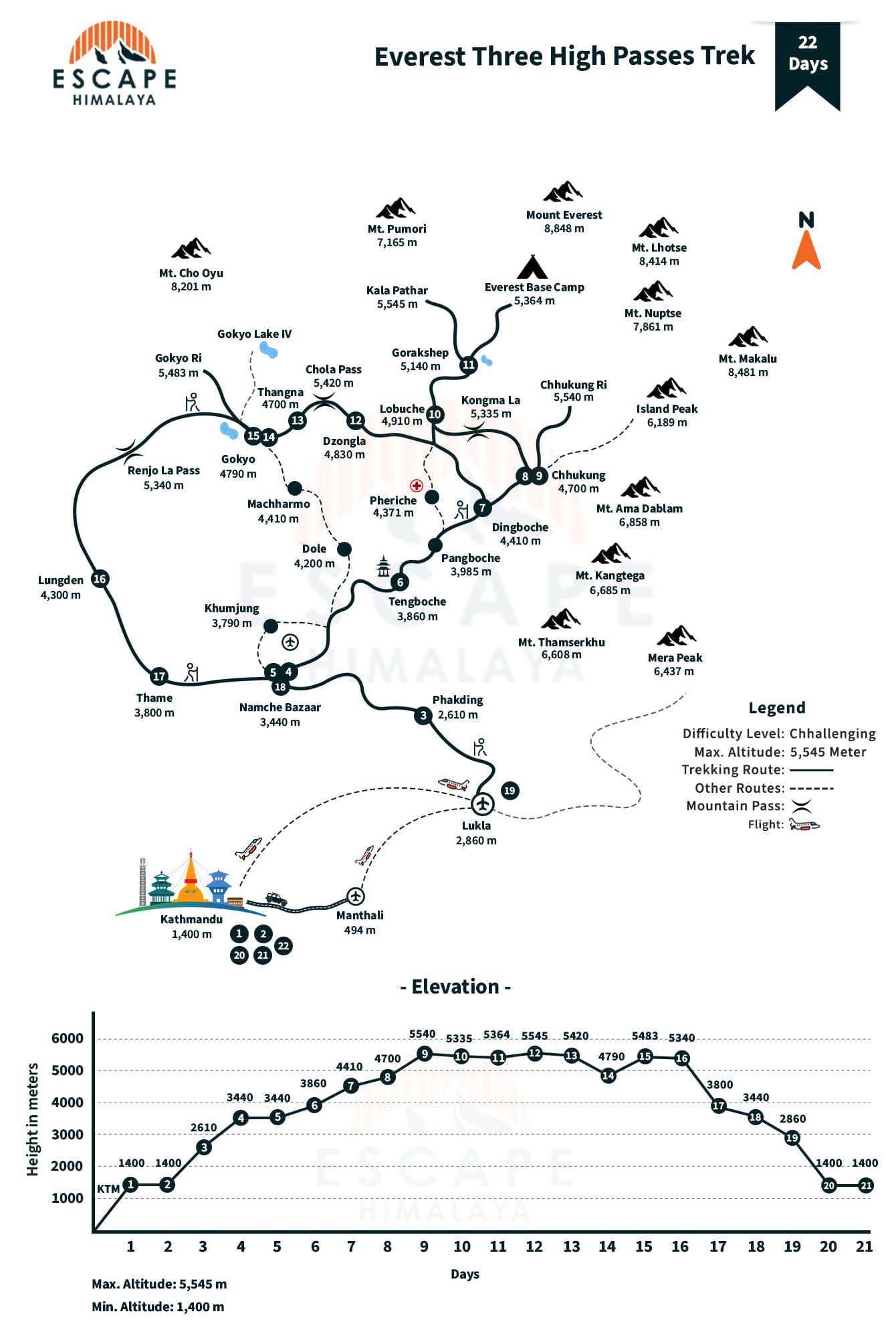
    The Everest Three Passes Trek offers breathtaking views of Everest and surrounding peaks, including Lhotse and Makalu. It challenges trekkers with three notable high mountain passes: Kongma La, Cho La, and Renjo La.

    Trip Fact

    • DestinationNepal
    • Durations20 Days
    • Trip DifficultyChallenging
    • ActivitiesTrekking
    • AccommodationHotels / Teahouses
    • MealsBreakfast, Lunch, Dinner
    • Mx.altitude5545m.
    • VehicleCar / Flight
    • Group SizeMin. 1 Pax

    Everest Three High Passes Trek Highlights

    • Breathtaking Views of Mount Everest and surrounding peaks
    • Crossing Three High Passes: Kongma La, Cho La, and Renjo La
    • Gokyo Lakes and the View from Gokyo Ri
    • Cultural Experience in Sherpa Villages
    • Adventure of Glacier Crossings and Rugged Terrain
    • Less Crowded Trails for a More Solitary Experience
    • Diverse Wildlife and Flora in Sagarmatha National Park
    • Challenging Yet Rewarding Trekking Adventure

    Overview

    Experience journeying across the captivating three high passes in the Everest region of Nepal in one setting! Everest Three High Passes Trek is an adventure that lets you comprehensively scale three high passes in Khumbu.

    The three stunning high passes, Kongma La Pass, Cho La Pass, and Renjo La Pass, are spectacular viewpoints in the Everest region. Crossing them will be like traversing along a celestial terrain enveloped in snow. It is one of the most exciting journeys with the best views of mountains and cerulean glaciers. Walking across the icy landscape of the high passes presents a thrilling exhilaration that only comes with this challenge. You'll face the high elevations and the rocky terrains as two main challenges on the Everest High Passes Trek. The mountains' grand landscapes and snow-covered terrains present a challenge, unlike anything you have experienced. The journey is worth all the challenging aspects because the views from all these passes are fantastic! Further, an all-encompassing panorama of landscapes and nearby ivory peaks from the top of these passes makes it a worthwhile experience!

    The Everest High Passes Trek includes Everest Base Camp with a hike to Kala Patthar, crossing three monumental high passes, and climbing up to the Gokyo Ri. It takes you along a less-traveled trail to the Everest Base Camp following Kongma La Pass. You would be exposed to giant Himalayas like Mount Everest, Lhotse, Cho Oyu, Makalu, and many more! The impressive sights of the mountains are genuinely prepossessing to look at. You will enjoy the unique taste of nature and culture throughout the trek as you go to far-off ethnic settlements. This way, you are offered an opportunity to look closely at the authentic Sherpa traditions and rituals. Moreover, the vibrant and dainty villages, monasteries, chortens, and gumbas across the journey will enhance your trekking experience.

    Escape Himalaya lets you experience this ostentatious trek adventure of safely crossing three passes of Nepal. Meanwhile, interacting with the locals and traversing the high Himalayan terrains makes it mesmerizing. With azure lakes, beautiful sceneries, snowy landscapes, ethnic villages, and high passes, the Everest Three High Passes Trek is an adventure like never before. If you are looking for alternate packages for this trip, you can do the Everest Chola Pass Trek. Likewise, you can also go on a Gokyo Lake Trek with Renjo La Pass. There is much more to introduce yourself with trekking in the Himalayas. We can make it a remarkable experience if you want to have it as you have wished. So join us for an adventure of a lifetime!

    Best Time For Everest Three Passes Trek 

    The best time for the Everest Three Passes Trek is during spring (March to May) and autumn (September to November). These seasons offer the most stable weather conditions, with clear skies, moderate temperatures, and minimal rainfall. Trekking during spring means you'll experience mild temperatures and stunning views of blooming rhododendrons in lower altitudes, while higher elevations offer crisp weather and clear visibility of the towering peaks. Autumn is equally ideal, with crisp, dry days and minimal cloud cover, providing the perfect conditions for trekking through the high passes.

    During these months, you’ll also avoid the extreme cold of winter (December to February), when temperatures can drop below freezing, especially at higher altitudes, making the trek much more challenging. The summer monsoon (June to August) is generally not recommended due to heavy rain, which can make the trails slippery and increase the risk of landslides. Therefore, spring and autumn are considered the prime trekking seasons.

    Physical Fitness for Three Passes

    The Everest Three Passes Trek is a physically demanding journey that requires solid physical fitness. Endurance is crucial, as you'll be trekking long hours each day, often between 6 to 8 hours. Good cardiovascular fitness will help you manage the sustained effort over multiple days. Strength in your legs is essential for the steep ascents and descents, especially when crossing the high passes, like Kongma La, Cho La, and Renjo La.

    Additionally, stamina to adapt to high altitudes is key. The trek takes you above 5,500 meters (18,000 feet), where oxygen levels are lower, so physical fitness aids in better acclimatization and reduces the risk of altitude sickness. Finally, mental toughness is essential for enduring the challenging terrain, weather, and the demanding nature of the trek. Training with cardio, strength exercises, and hiking on varied terrain will ensure you're physically prepared for this incredible adventure.

    Why Choose Everest Three Passes Trekking 

    The Everest Three Passes Trek is a challenging and rewarding adventure, offering breathtaking views of Everest and surrounding peaks, including Lhotse, Makalu, and Cho Oyu. It takes you through diverse landscapes, from lush forests to rugged alpine terrain, and requires crossing three high passes Kongma La, Cho La, and Renjo La each providing a unique challenge and sense of achievement. Along the way, you'll experience the rich culture of Sherpa villages, including Namche Bazaar and Dingboche, where you can immerse yourself in local traditions and Buddhist practices. The trek is less crowded than the Everest Base Camp route, offering a more remote and peaceful experience. With stunning scenery, physical challenges, and cultural exploration, the Everest Three Passes Trek is the perfect choice for trekkers seeking an unforgettable Himalayan adventure.

    Highest Views This Trip 

    The Everest Three Passes Trek offers some of the most spectacular mountain views in the world. Trekking through high passes like Kongma La, Cho La, and Renjo La, you'll be treated to breathtaking vistas of Mount Everest, Lhotse, Makalu, and Cho Oyu. The trek also offers stunning views of Ama Dablam, the dramatic Khumbu Icefall, and Island Peak. With its diverse landscapes, rugged terrain, and unbeatable panoramas, this trek provides an unparalleled opportunity to experience the grandeur of the Everest region, making it an unforgettable adventure for avid trekkers and mountain enthusiasts.

    About Lukla Airport

    Flights from Kathmandu to Lukla are the primary gateway for trekkers heading to the Everest region, offering a quick yet thrilling way to begin the adventure to Everest Base Camp. The flight typically lasts around 25-30 minutes and covers the 138-kilometer distance between Tribhuvan International Airport (KTM) in Kathmandu and Tenzing-Hillary Airport (LUA) in Lukla, one of the most exciting and challenging airports in the world, known for its steep, short runway nestled in the mountains.

    Three main airlines serve this route Tara Airlines, Summit Airlines, and  Sita Air. These flights generally depart in the morning, with the first flights around 6:00 AM, and typically run until 10:00 AM. However, due to the unpredictable weather conditions in the Himalayas, flights can often be delayed or canceled, particularly in winter and during the monsoon season. It’s important to allow for flexibility in your schedule and have contingency plans in case of flight disruptions.

    Weight Limit For Lukla Flight

    The weight limit for flights from Kathmandu to Lukla is typically 15 kilograms (33 pounds) per person for checked luggage. This limit is strictly enforced by the airlines due to the small size of the aircraft and the limited cargo capacity. Passengers are allowed to carry additional weight in the form of hand luggage, but this is usually restricted to 5 kilograms (11 pounds). If you exceed the weight limit, you may be required to pay additional fees or arrange for the excess baggage to be sent by another means, such as via a porter or a cargo flight.

    Preparing for the flight to Lukla requires careful attention to weight limits, Airlines said only 15kg for each person including hand carry bag as excess luggage can pay extra charges, making it essential to pack efficiently.
    Detail Itinerary

    Expand all +
    1Day 01

    Arrive at Tribhuwan International Airport, Kathmandu

    You may arrive at the airport at any time. One of Escape Himalaya's representatives will be there to welcome you and help you get transferred to your hotel. You will also be given more information about plans and programs further. As you do not have any other planned activities for the day, you may relax at the hotel for the remainder of the time.

    1. Max. Elevation:1336m.
    2. AccommodationHotel
    2Day 02

    Fly to Lukla and Trek to Phakding (2,652m/8,699ft).Walking Distance: 8 km, Duration: 3 Hours

    An early morning flight to the airport for the Lukla flight will be taken today. The short flight to Lukla is a fantastic journey and presents drastic sceneries of mountains and emerald hills. The airfield at Lukla is located at a high elevation, and the difference between the two ends of the runway is an exceptional 60 meters only. After landing at Lukla, you will trek to Phakding on a trail adorned with green forests and verdant woodlands. The view of the holy Kusum Kangraru Mountain also comes into sight while on the trail. With alpine vegetation lining the trails, you would be arriving at Phakding.

    1. Max. Elevation:2800m.
    2. MealsBreakfast, Lunch, and Dinner Included
    3. AccommodationGuesthouse
    3Day 03

    Trek to Namche Bazaar (3,440m/11,283ft). Walking Distance: 10-12 km, Duration: 6 Hours

    Following the exuberant flow of the Dudh Koshi River, you will be ascending through Himalayan pine and cedar trees to the hub of the Khumbu region- the village of Namche Bazaar. Namche Bazaar is a historic trading point where Nepali and Tibetan traders exchanged salt, dried meat, and textiles in ancient times. Besides being a splendid destination to shop for traditional crafts, Namche remains the central trading post in the Khumbu region that attracts Himalayan and lowland merchants. You will spend two nights at Namche for acclimatization, visit local markets, and spend time with your team.

    1. Max. Elevation:3440m.
    2. MealsBreakfast, Lunch, and Dinner Included
    3. AccommodationGuesthouse
    4Day 04

    Namche Bazaar and Everest View Hotel Hike (3,440m/11,283ft). Walking Distance: 8 km, Duration: 4 Hours

    This day is especially sectioned for acclimatization. You will hike to the Syangboche Airport. It is one of the highest-located airports in the world. Continuing to climb up to the Everest View Hotel, you would be presented with views of ivory peaks like Everest, Lhotse, Ama Dablam, Taboche Himal, and more. You can also visit the Sherpa Cultural Museum and the Everest Photo Gallery on the way back.

    1. Max. Elevation:3880m.
    2. MealsBreakfast, Lunch, and Dinner Included
    3. AccommodationGuesthouse
    5Day 05

    Trek to Tengboche (3,860m/12,660ft). Walking Distance: 10 to 11 km, Duration: 6 Hours

    A relatively uniform and easy trail leads to magnificent views of Mount Everest as you descend deep into the Dudh Koshi Valley at Phungki Thanka. From this point, it ascends to the right flank of the Valley of Dudh Koshi towards the Tengboche Monastery. A spiritual hub of the Khumbu region, the Tengboche Monastery is a perfect destination that enhances the trekking journey. The view of Ama Dablam and Mount Everest from Tengboche is gorgeous on a clear day.

    1. Max. Elevation:3860m.
    2. MealsBreakfast, Lunch, and Dinner Included
    3. AccommodationGuesthouse
    6Day 06

    Trek to Dingboche (4,410m/14,464ft). Walking Distance: 11 to 12 km, Duration: 6 Hours

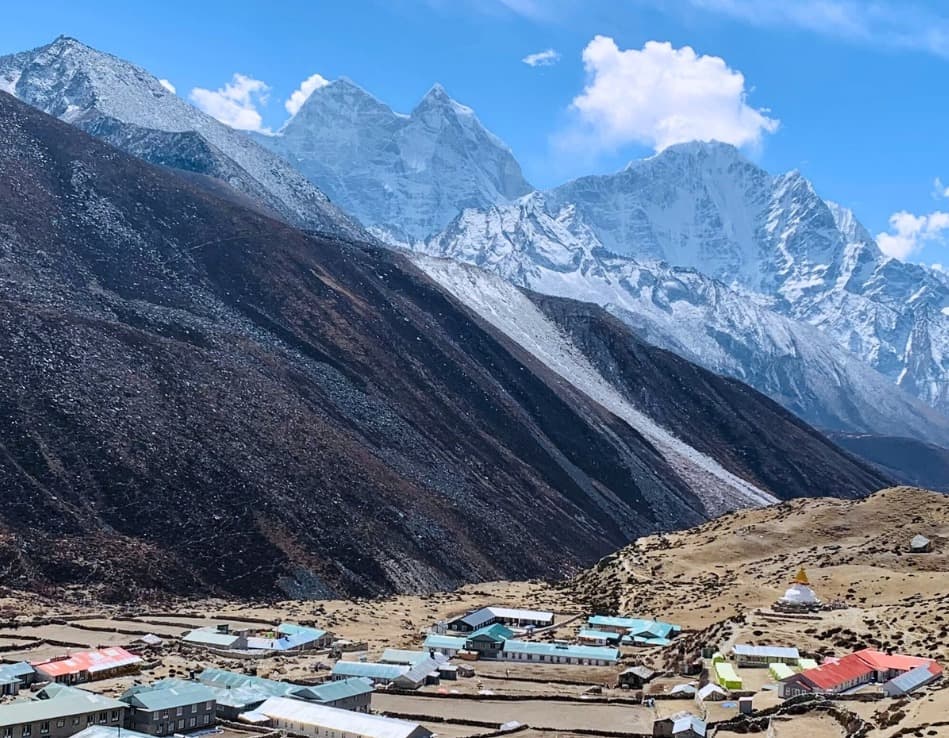
    Today, you will descend through a beautiful forest of rhododendrons and pine and cross the Imja Khola to reach the village of Pangboche. While on the trail, you can enjoy views of mountain peaks like the Ama Dablam and Mount Lhotse. The trail leads through verdant pastures to Dingboche. The Sherpa village of Dingboche is called the "Summer Valley" and lies in the Chhukung Valley. Situated at an altitude of 4,410 meters, Dingboche has a kilometer of a stone wall built using different sizes that covers the entire Imja Valley. These stones are removed to plow the soil and end up being piled one over the other, creating kilometers of walls.

    1. Max. Elevation:4410m.
    2. MealsBreakfast, Lunch, and Dinner Included
    3. AccommodationGuesthouse
    7Day 07

    Trek to Chhukung (4,700m/15,416ft). Walking Distance: 4.5 km, Duration: 2 Hours

    You will trek to Chhukung from Dingboche today. It takes approximately two hours, and the trail is adorned with views of giant mountain peaks. On the trail, you will likely encounter domestic Himalayan animals like yaks and mules grazing on the lush grassland that lines the trail. The rhododendron trees also provide some natural shade, and their pretty blossoms make the journey pleasant. Chhukung is a lodge village serving trekkers and climbers and lies on the northern slopes of Lhotse and Nuptse Peaks by the Lho and Nup Glacier. The Imja Khola flows through the Chhukung Valley, and the area was traditionally used as a yak pasture with no permanent settlements. As the Imja Tse (Island Peak) Climbing has gained popularity, the valley serves several lodges as an acclimatization point for climbers.

    1. Max. Elevation:4700m.
    2. MealsBreakfast, Lunch, and Dinner Included
    3. AccommodationGuesthouse
    8Day 08

    Hiking to Chhukung Ri (5,540m/18,17ft), Duration: 6 Hours

    Following a uniform trail, you will hike to Chhukung Ri today. Chhukung Ri is a rocky peak, similar to Kala Patthar, rising above the village of Chhukung to 5550 meters. It requires no technical climbing skills, and the summit of Chhukung Ri has astounding views of Imja Tse, Ama Dablam, Lhotse, and more. Returning to Chhukung, you can enjoy the sceneries and the majestic landscape.

    1. Max. Elevation:5540m.
    2. MealsBreakfast, Lunch, and Dinner Included
    3. AccommodationGuesthouse
    9Day 09

    Trek to Lobuche (4,910m/16,104ft) via Kongma La Pass (5,335m/17,498ft). Walking Distance: 10-11 km, Duration: 7-8 Hours

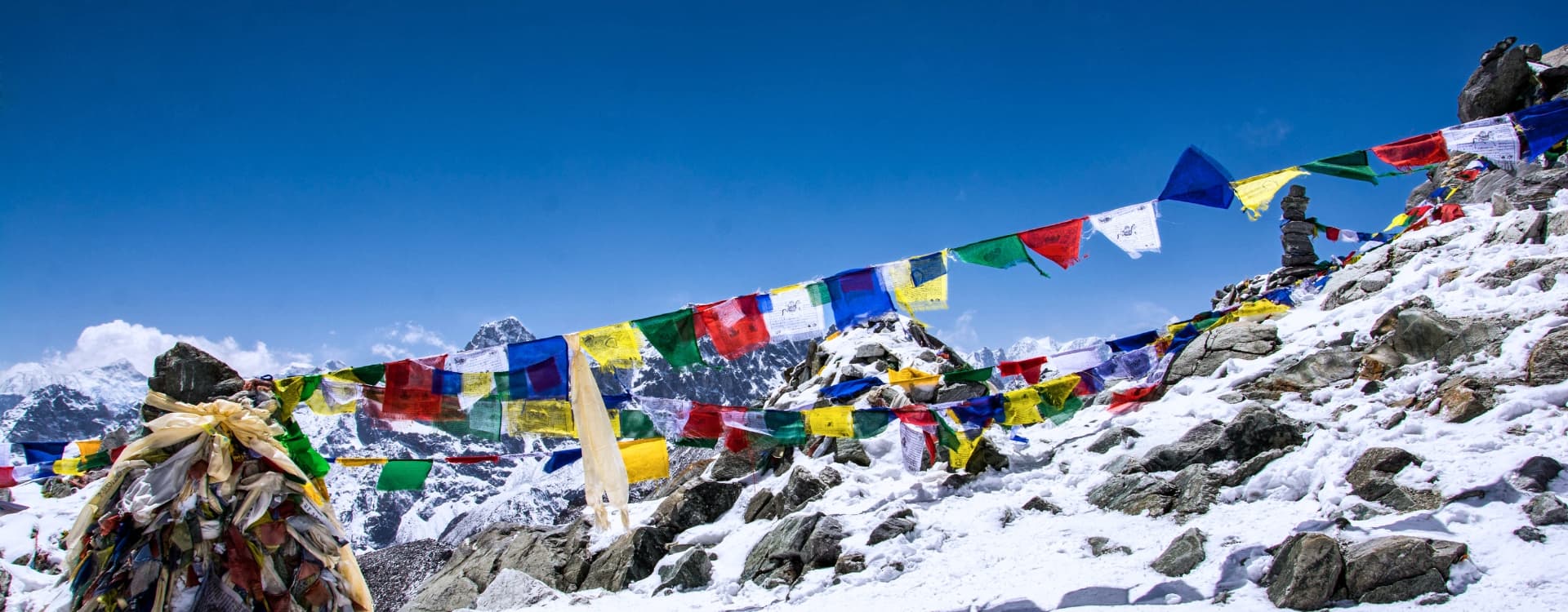
    Starting at the first light from Chhukung today, you will conquer the first high pass of the trek. You would move further into the journey by carrying plenty of water, snacks, and a packed lunch, as no shops are on the way. Enjoying the area's remoteness, you would be trekking amid natural quintessence. You can choose to go via any of the possible trails- either taking a climb over the hill northwest of Chhukung over the moraine of the Nuptse Glacier or you might want to walk back down the valley to Bibre and follow a high trail above the Niyang Khola. Just ahead of these trails are great views of the Island Peak and the jagged rocks of the Amphu Lapcha. Ascending along the east side of the Niyang Khola, you would turn west and walk through the trail, entering a wide basin dotted with small frozen lakes. The trail rises above the loose screen reaching the Kongma La Pass. After 5 hours of leaving Chhukung, you would be coming to the Kongma La Pass, and upon reaching the top; you can see cairns wrapped in prayer flags marking the Passes. Behind you, you could look at the icy lakes below, encompassed by the Khumbu Glacier. The final descent is the most challenging trek stage, and climbing the moraines on the far side results in the trail turning north through the glacier to Lobuche.

    1. Max. Elevation:4910m.
    2. MealsBreakfast, Lunch, and Dinner Included
    3. AccommodationGuesthouse
    10Day 10

    Trek to Everest Base Camp (5,364m/17,594ft) and Return to Gorekshep (5,181m/16,994ft), Duration: 8 Hours

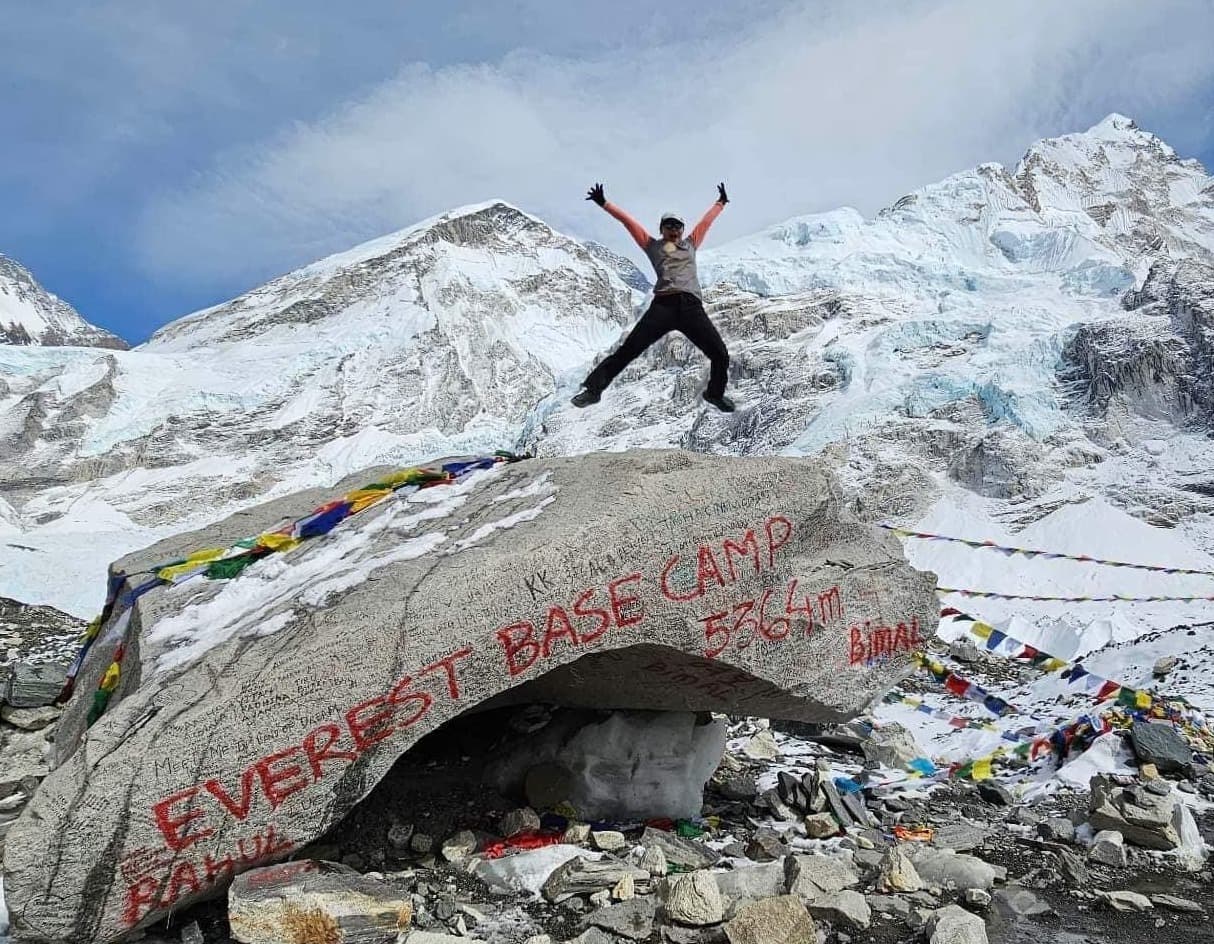
    After a short climb through the meadows, looking down at the Khumbu Glacier is a fantastic sight. Straight ahead is Kala Patthar, one of the best vantage points to view the entire south face of Mount Everest and many of its surrounding peaks. A walk for a couple of hours ends, reaching Gorekshep and continuing the journey to Everest Base Camp. There isn't a lot of elevation gain today, but the trails still roll up and down. Combined with the physical exhaustion, it can be a pretty tiring journey. After approximately 3 hours of trekking, you will arrive at the Everest Base Camp. You can enjoy magnificent views of the Khumbu Glacier and the Icefall around the base camp, where the Everest expedition begins.

    1. Max. Elevation:5364m.
    2. MealsBreakfast, Lunch, and Dinner Included
    3. AccommodationGuesthouse
    11Day 11

    Hike to Kala Patthar (5,545m/18,188ft) – Gorekshep and Trek to Dzongla (4,830m/15,840ft). Walking Distance: 13 to 14 km, Duration: 7 Hours

    Today starts with an early hike up to Kala Patthar. It is one of the best viewpoints, where you can witness spectacular views of Mount Everest and a panoramic vista of the surrounding Himalayan peaks. "Kala Patthar" means "Black Rock" in Nepali, located on Mt Pumori's southern ridges. The world's highest webcam, the Mount Everest webcam, is also located here. Then, trekking back to Gorekshep, you will have a hot breakfast and descend to Dzongla.

    1. Max. Elevation:5545m.
    2. MealsBreakfast, Lunch, and Dinner Included
    3. AccommodationGuesthouse
    12Day 12

    Trek to Dragnak/Thangnak (4,700m/15,415ft) via Chola Pass (5,420m/17,780ft). Walking Distance: 10 km, Duration: 7 Hours

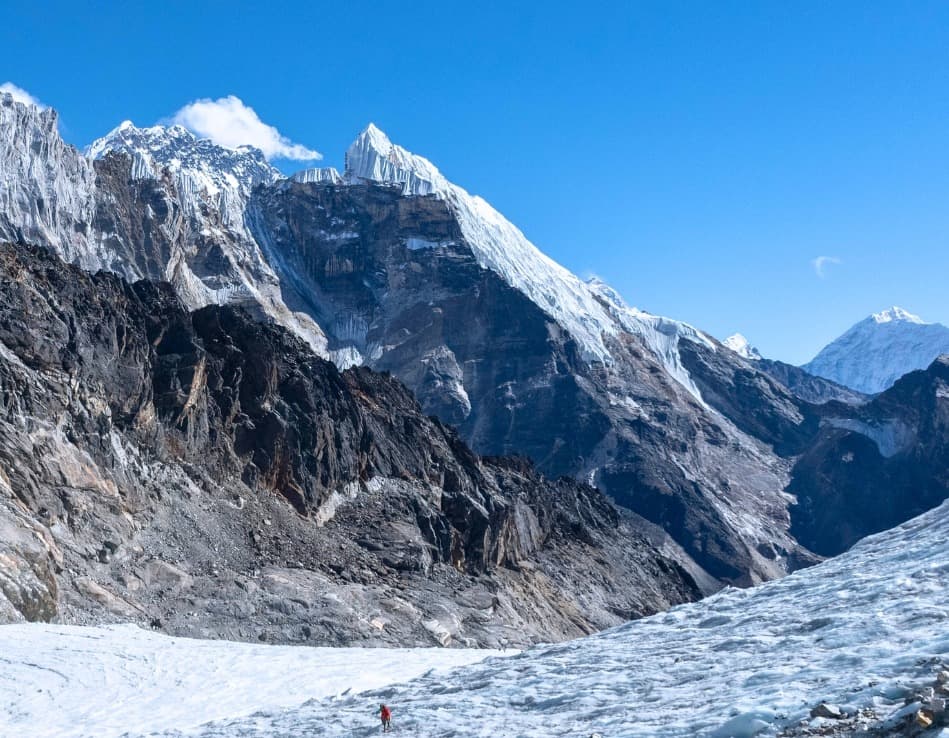
    Starting the day you will cross Chola Pass today. Crossing over the pass, you will descend to Thangnak. Chola Pass is a summit pass connecting the village of Dzongla to the eastern village of Thangnak. The glacier's edge can be unstable sometimes, and you need crampons on top of the slippery glaciers.

    1. Max. Elevation:5420m.
    2. MealsBreakfast, Lunch, and Dinner Included
    3. AccommodationGuesthouse
    13Day 13

    Trek to Gokyo Lakes (4,790m/15,710ft), Walking Distance: 6 km, Duration: 3 Hours

    You would be trekking to the Gokyo lakes on this day. Crossing over the Ngozumpa Glacier (the largest glacier in the Himalayas), you will pass the village of Gokyo, which stands by the third lake and has the backdrop of the Cho Oyu mountain, setting a fantastic sight for the eyes! The view from this juncture is simply out-of-this-world. After lunch, you may want to explore Dudh Pokhari Lake. The Gokyo lakes are oligotrophic and are the world's highest-located freshwater lake systems comprising six primary lakes, of which Lake Thonak Cho is the largest. The sapphire waters of the lakes are amazing to witness. The Gokyo Lakes are considered sacred by both Hindu and Buddhist people. Hundreds of pilgrims take a holy bath in the lakes during the celebration of the Janai Purnima festival, which usually falls in August.

    1. Max. Elevation:4790m.
    2. MealsBreakfast, Lunch, and Dinner Included
    3. AccommodationGuesthouse
    14Day 14

    Hiking to Gokyo Ri (5,483m/19,083ft) and Back to Gokyo Lake. Walking Distance: 4km, Duration: 3-4 Hours

    This day is sanctioned for acclimatization. A steep climb early in the morning takes you up to the Gokyo Ri. There are stunning views of the Gokyo Valley, the Ngozumpa Glacier, and a panoramic view of the Everest Himalayas from Gokyo Ri. The views of peaks like Everest, Lhotse, Nuptse, Makalu, Cho Oyu, Cholatse, and Gyachung Kang are ethereal from the top. At the base of Gokyo Ri is a small hamlet of a few stone houses, one of the highest-located settlements in the world. In the afternoon, you would be trekking back to the camp.

    1. Max. Elevation:5483m.
    2. MealsBreakfast, Lunch, and Dinner Included
    3. AccommodationGuesthouse
    15Day 15

    Trek to Lunden (4,300m/14,104ft) via Renjo La Pass (5,340m/17,843ft). Walking Distance: 11 km, Duration: 7 Hours

    The crossing of the Renjo la Pass will be exciting today and challenging as you descend into the remote northern valley where access is restricted. As you move further, the landscape becomes progressively like the Tibetan Valleys that lie beyond the border. There is a chance that you might encounter Tibetan traders descending from the Nangpa La Pass, the one that leads through the Himalayas from Tibet. They also have caravans of wooly yaks laden with goods with them.

    1. Max. Elevation:4300m.
    2. MealsBreakfast, Lunch, and Dinner Included
    3. AccommodationGuesthouse
    16Day 16

    Trek to Thame (3,800m/13,464ft), Duration: 4 Hours

    After breakfast today, you will trek down to Thame for more views of incredible peaks. You may meet Tibetan traders' encampments along the way for pictures of a rare lifestyle. About 150 meters above the village is Thame Monastery. Peaceful in its serene environment, the monastery is a picturesque site situated among many homes of the monks. It is perched on the side of the hill, overlooking the valley. This is also the site of the spring celebration of the Mani Rimdu festival, held in the middle of May each year.

    1. Max. Elevation:3800m.
    2. MealsBreakfast, Lunch, and Dinner Included
    3. AccommodationGuesthouse
    17Day 17

    Trek to Namche Bazaar (3,440m/11,283ft). Walking Distance: 9.5 km, Duration: 4 Hours

    You will continue your trek to Namche Bazaar today, following a flat and uniform trail that descends to the first resting place from Thame. Namche Bazaar is a famous rendezvous point for Tibetan and Nepali traders where they used to exchange salt and dried meat back in the old days.

    1. Max. Elevation:3440m.
    2. MealsBreakfast, Lunch, and Dinner Included
    3. AccommodationGuesthouse
    18Day 18

    Trek to Lukla (2,800m/9,184ft). Walking Distance: 18 to 19 km, Duration: 7 Hours

    Today, the trekking trail continues towards the Dudh Koshi River to the small mountain airstrip at Lukla, where you will catch your return flight to Kathmandu.

    1. Max. Elevation:2800m.
    2. MealsBreakfast, Lunch, and Dinner Included
    3. AccommodationGuesthouse
    19Day 19

    Fly back to Kathmandu

    You will take a plane back to Kathmandu today. The flight journey lasts 30 minutes and offers impressive aerial views of the terrain and mountains from the airplane window.

    1. Max. Elevation:1336m.
    2. MealsBreakfast Included
    3. AccommodationHotel
    20Day 20

    Farewell

    One of Escape Himalaya's representatives will drop you off at the airport approximately three hours before your scheduled flight. You will depart with the most remarkable memories of an incredible journey in the Himalayas.

    1. Max. Elevation:1336m.
    2. MealsBreakfast Included

    If the provided schedule isn't suitable for you, we are able to create personalized travel arrangements according to your preferences and requirements.

    Customize My Trip

    Cost Details

    Cost Includes

    • All ground (airport/hotel) transfers by private vehicles
    • Two nights accommodation with breakfast at a 3-star category hotel in Kathmandu
    • Full board meals (Breakfast, Lunch, Dinner) with tea/coffee during the trek
    • Seasonal fruits - after dinner snacks during the trek
    • Best available twin-sharing lodges for accommodation during the trek (We provide attached bathrooms with hot showers at Lukla, Phakding, and Namche.)
    • One highly experienced, helpful, and certified guide with porters to carry luggage (1 porter for two people), including their food, accommodation, salary, equipment, and accidental insurance
    • Round-trip flight Kathmandu - Lukla and Lukla - Kathmandu, including departure taxes
    • Escape Himalaya Duffle Bag, Down Jacket, and Sleeping Bag during the trek
    • Escape Himalaya T-shirt, Trekking Map, and Trip Achievement Certificate
    • A comprehensive first-aid medical kit
    • Sagarmatha National Park Permit and Khumbu Pasang Lhamu Rural Municipality Entrance Permit Fees
    • All government taxes & office service charges

    Cost Excludes

    • Lunch and Dinner while in Kathmandu
    • Travel Insurance
    • International Airfare
    • Nepal Entry Visa (You can obtain a visa upon your arrival at Tribhuwan International Airport in Kathmandu. A multiple-entry tourist visa suitable for 30 days can be obtained by paying USD 50 or equivalent foreign currency. Similarly, multiple-entry tourist visas for 90 days can be obtained by paying USD 125. Please bring two copies of passport-size photos.)
    • Cold drinks including coke, water, Fanta, etc.
    • Snacks and other personal expenses
    • Hot showers during the trek except in Phakding, Namche, and Lukla
    • Personal Trekking Equipment
    • Wi-Fi / Internet during the trek
    • Tips and gratuities for trekking staff and drivers

    Dates & Availability

    • 16th Dec 2025From Kathmandu
      4th Jan 2026To Kathmandu
      guaranteed
      US $1820Per person
      Book Now
    • 18th Dec 2025From Kathmandu
      6th Jan 2026To Kathmandu
      guaranteed
      US $1820Per person
      Book Now
    • 19th Dec 2025From Kathmandu
      7th Jan 2026To Kathmandu
      guaranteed
      US $1820Per person
      Book Now
    • 20th Dec 2025From Kathmandu
      8th Jan 2026To Kathmandu
      guaranteed
      US $1820Per person
      Book Now
    • 21st Dec 2025From Kathmandu
      9th Jan 2026To Kathmandu
      guaranteed
      US $1820Per person
      Book Now
    • 23rd Dec 2025From Kathmandu
      11th Jan 2026To Kathmandu
      guaranteed
      US $1820Per person
      Book Now
    • 25th Dec 2025From Kathmandu
      13th Jan 2026To Kathmandu
      guaranteed
      US $1820Per person
      Book Now
    • 3rd Jan 2026From Kathmandu
      22nd Jan 2026To Kathmandu
      guaranteed
      US $1820Per person
      Book Now
    • 5th Jan 2026From Kathmandu
      24th Jan 2026To Kathmandu
      guaranteed
      US $1820Per person
      Book Now
    • 6th Jan 2026From Kathmandu
      25th Jan 2026To Kathmandu
      guaranteed
      US $1820Per person
      Book Now
    • 8th Jan 2026From Kathmandu
      27th Jan 2026To Kathmandu
      guaranteed
      US $1820Per person
      Book Now
    • 9th Jan 2026From Kathmandu
      28th Jan 2026To Kathmandu
      guaranteed
      US $1820Per person
      Book Now
    • 10th Jan 2026From Kathmandu
      29th Jan 2026To Kathmandu
      guaranteed
      US $1820Per person
      Book Now
    • 12th Jan 2026From Kathmandu
      31st Jan 2026To Kathmandu
      guaranteed
      US $1820Per person
      Book Now
    • 13th Jan 2026From Kathmandu
      1st Feb 2026To Kathmandu
      guaranteed
      US $1820Per person
      Book Now
    • 15th Jan 2026From Kathmandu
      3rd Feb 2026To Kathmandu
      guaranteed
      US $1820Per person
      Book Now
    • 16th Jan 2026From Kathmandu
      4th Feb 2026To Kathmandu
      guaranteed
      US $1820Per person
      Book Now
    • 17th Jan 2026From Kathmandu
      5th Feb 2026To Kathmandu
      guaranteed
      US $1820Per person
      Book Now
    • 20th Jan 2026From Kathmandu
      8th Feb 2026To Kathmandu
      guaranteed
      US $1820Per person
      Book Now
    • 23rd Jan 2026From Kathmandu
      11th Feb 2026To Kathmandu
      guaranteed
      US $1820Per person
      Book Now
    • 24th Jan 2026From Kathmandu
      12th Feb 2026To Kathmandu
      guaranteed
      US $1820Per person
      Book Now
    • 25th Jan 2026From Kathmandu
      13th Feb 2026To Kathmandu
      guaranteed
      US $1820Per person
      Book Now
    • 28th Jan 2026From Kathmandu
      16th Feb 2026To Kathmandu
      guaranteed
      US $1820Per person
      Book Now
    • 29th Jan 2026From Kathmandu
      17th Feb 2026To Kathmandu
      guaranteed
      US $1820Per person
      Book Now
    • 4th Feb 2026From Kathmandu
      23rd Feb 2026To Kathmandu
      guaranteed
      US $1820Per person
      Book Now
    • 11th Feb 2026From Kathmandu
      2nd Mar 2026To Kathmandu
      guaranteed
      US $1820Per person
      Book Now
    • 18th Feb 2026From Kathmandu
      9th Mar 2026To Kathmandu
      guaranteed
      US $1820Per person
      Book Now
    • 21st Feb 2026From Kathmandu
      12th Mar 2026To Kathmandu
      guaranteed
      US $1820Per person
      Book Now
    • 23rd Feb 2026From Kathmandu
      14th Mar 2026To Kathmandu
      guaranteed
      US $1820Per person
      Book Now
    • 24th Feb 2026From Kathmandu
      15th Mar 2026To Kathmandu
      guaranteed
      US $1820Per person
      Book Now
    • 25th Feb 2026From Kathmandu
      16th Mar 2026To Kathmandu
      guaranteed
      US $1820Per person
      Book Now

    Everest Three High Passes Trek Route Map

    Everest Three High Passes Trek Map

    Good to Know

    Everest Base Camp Highpases Trek Essential Guide

    Planning an Everest Base Camp High Passes Trek? Here are the Top 10 key things to know for an awesome adventure:

    • Season's Greetings: Pick the perfect time to go! Spring (March-May) and autumn (Sept-Nov) offer clear skies and stunning views.
    • Pack Smart: Travel light! Choose a comfortable backpack and pack only essentials for the changing weather.
    • Go at Your Own Pace: Don't rush! Enjoy the scenery and listen to your body. Slow and steady wins the race.
    • Train Like a Champ: Get in shape! Hiking at altitude requires some physical preparation.
    • Mind Over Mountain: Be prepared for challenges! A positive attitude goes a long way.
    • Fuel Your Hike: Eat healthy! Choose nutritious food to keep you energized throughout the trek.
    • Gear Up for Success: Dress for the elements! Pack clothes and footwear suitable for mountain weather.
    • Stay Hydrated: Drink plenty of water! Dehydration can be a problem at high altitudes.
    • Plan Your Path: Find the right itinerary! Choose a route that matches your experience and desired duration.
    • Respect the Locals: Be a good guest! Learn some basic Nepali phrases and be mindful of local customs.

    Bonus Tip: Capture the memories! Take photos and videos to document your incredible journey.

    Additional Cost Planning

    Apart from the major costs of your Everest HighPasses trek package, you will need to budget for certain additional fees. Here's a simple plan to help you budget while still having a good time:

    Trail Necessities:

    • Hot Gas Showers: Tea houses may charge $5-7 for a warm shower, particularly at higher elevations.
    • Charging Electronics: Tea houses may allow you to charge your electronics for $3-7 per hour usually solar-powered from Tengboche. Bringing a portable charger is convenient.

    Food & Treats:

    • Extra Meals: Depending on where you are, you may want to purchase more snacks or lunches, which cost between $5 and $12
    • Drinks: Expect to spend $1-4 per bottle of water. Other drinks may be more expensive, so use a reusable bottle and filter your water to save money and prevent waste.

    Staying Connected:

    • Wi-Fi: While many guest houses offer Wi-Fi, they provide Air-link & Everest-Link cards, typically costing 700-800 rupees for 24 hours. If you need internet access, consider downloading maps and entertainment ahead of time.

    Remember that prices might vary, so use these estimates as a guideline.

    Consider your spending patterns for drinks, snacks, and gifts.

    Note: Carry Nepali Rupees for incidental expenses. While some tea shops accept US dollars, possessing the local currency eliminates conversion problems and ensures you have the correct amounts for smaller transactions.

    By budgeting for these things, you'll be better prepared to deal with unexpected costs and enjoy your Annapurna Base Camp route!

    Dining on the Everest High passes Trek: From Classic Favorites to Local Delights

    Lunch and dinner on the Everest high pass trek to Everest Base Camp are a delicious adventure in themselves. Dal Bhat, a traditional Nepali cuisine, is a popular choice among trekkers due to its low cost and high-calorie content. But the variety does not end there. Tea houses cater to a wide range of tastes, with classic dishes such as fried rice, chicken curries, and even burgers and pizzas. Noodle enthusiasts can have stir-fried noodles or cheesy pasta meals.

    After a day of hiking, dinner becomes a joyous occasion, with tea houses broadening their menus to include a broader selection of familiar favorites as well as local specialties.  So, whether you crave a hearty Dal Bhat or a soothing slice of pizza, the EBC journey delivers a great and satisfying refill after each adventure-filled day.

    Everest Base Camp Chola Pass Trek Fundamentals:

    Prepare for the Everest High Passes Trek with our full package, carefully planned to keep you comfortable and prepared during the entire trip.

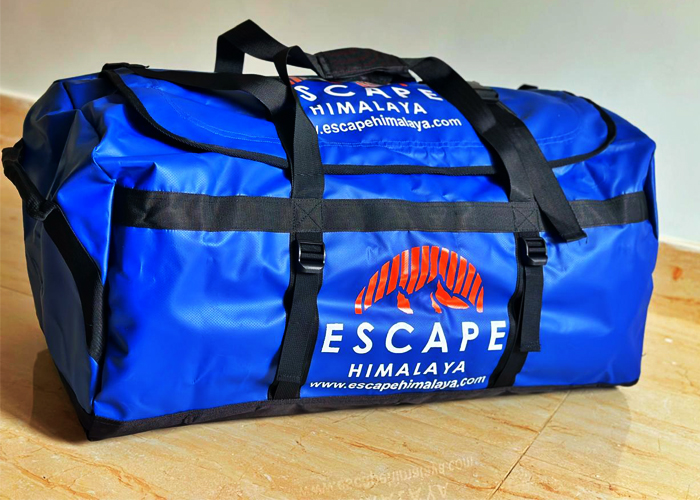
    We provide a 120-liter Duffel Bag for trek packing, a certified -20°C Down Jacket, and a four-season Sleeping Bag, ensuring warmth and coziness during chilly mountain nights.

    Trekking Duffel Bag

    A duffle bag, also known as a kit bag is a cylindrical-shaped carrying bag having a top closure generally made of either natural fabric or other sturdy fabric (usually canvas). It has a handle or a shoulder strap to carry which makes it easy for the porter to carry it. Duffle bags are commonly used for traveling, sports, and outdoor activities or even for temporary storage. They are used for carrying clothing, personal items, and electronics or sports gear during travel. The size of the duffle bag varies according to one's needs and requirements. They come in different sizes from small bags to large travel duffle bags capable of holding required gear during travel. Generally, duffle bags are used to carry loads up to 15 kg in all trek which varies according to the size and materials to be carried during the travel, as well as the carrying limit of the porter. Duffle bags are suitable for trekking due to their comfort and accessibility as it is flexible and portable which makes them easy to carry. It is an excellent choice to carry for traveling due to its versatility and ease of handling.

    Trekking Duffle Bag
    Trekking Duffle Bag


    We arrange the duffle bags that hold up to 120 liters of storage capacity and are also waterproof which helps in the rainy environment by protecting the materials inside the bag. Generally, these duffle bags are carried by the porter during the trek and you can carry a small or medium carrying bag for yourself to carry personal materials and gadgets with you. Please be assured that your luggage and suitcase will be securely managed and safeguarded at our hotel while you enjoy your trek and will promptly return to you once you complete your trek.

    Down Jacket

    A down jacket, also known as a puffer jacket is a quilted coat filled with soft feathers either from a duck or goose. Down jackets are more popular for cold climates and especially useful in mountains and higher altitudes. They are generally preferred by hikers, trekkers, and backpackers for being extremely comfortable due to their lightweight and compressibility making it easy to pack without occupying a lot of space. It has an excellent warmth-to-weight ratio, best for maintaining body heat essential for trekking in cold climates and higher altitudes.

    It is also ideal for wearing and sleeping in during high-altitude treks, providing excellent insulation and good comfort. Please ensure to return it once the trek is completed so it can be preserved for the next adventures.

    Sleeping Bag

    Sleeping bags are essential gear for travelers and trekkers which provide good comfort and protection in various climatic conditions and altitudes. Most of our treks and tours require a sleeping bag as it keeps you warm by trapping the heat around you from your body.

    The sleeping bags we use are mummy-shaped with a zip up and down that keeps the top tight around you. It is used in cold and wet climates in high altitudes( -20°C to  -25°C maximum temperature) giving you protection, and comfort and as well it is also lightweight and compact which it easy to carry on long treks. The sleeping bag is returned after the trek as it helps us to maintain our gear for future adventurers.

    At Escape Himalaya, we provide a detailed checklist of essential trekking gear, ensuring that you're fully equipped for your Himalayan adventure. 

    HEAD

    • Sun Hat or Scarf
    • Lightweight Balaclava or Warm Fleece Hat
    • Sunglasses with UV Protection
    • Headband or ear covers

    FEET

    • Thin, Lightweight Inner Socks
    • Thick, Warm Wool Hiking Socks
    • Sturdy Hiking Boots
    • Camp Shoes (Sneakers/Sandals)
    • Gaiters
    • Spare Laces
    • Microspikes

    HANDS

    • Lightweight Gloves
    • Heavyweight Gloves or Mittens
    • Hand Warmers

    LOWER BODY

    • Undergarments
    • Hiking Shorts
    • Lightweight Cotton Long Pants
    • Light & Expedition Weight Thermal Bottoms
    • Fleece Pants
    • Waterproof Shell Pants

    ACCESSORIES

    • Backpack (30-50 LTR)
    • Headlamp
    • First Aid Kit
    • Large Plastic Bag
    • Trekking Poles
    • Water Bottle
    • Toiletries
    • Lip Balm
    • Water Purification Tablets
    • Dry Bags/Ziploc Bags
    • Earplugs
    • Guide and Porter
    • Chargers
    • Bag Covers
    • Raincoat
    • Personal Care Kit
    • Sunscreen
    • Moisturizer

    Personal Hygiene Items

    • Wet Wipes
    • Tissues
    • Handwash
    • Blister Plasters
    • Portable Hand Sanitizer

    ADDITIONAL ITEMS

    • Maps and Guides
    • Snacks/Energy Bars
    • Camera
    • Notebook/Pen

    Prepare for your EBC Luxury Trek with confidence, knowing that you have all the necessary gear and essentials to make your journey safe, comfortable, and memorable.


    Travellers‘ Reviews

    Write a Review
    • Sheryl Ang

      14th Dec 2024

      Gorgeous Views!

      Excellent trekking experience with Escape Himalaya to Kala Patthar! Everything went seamlessly, and my guide ensured we were safe and comfortable at all times, even in the high altitude. Will definitely choose EH again when I am back in Nepal for more hiking! The country is so beautiful and just has so much to offer!

      Read more +
    • Tony W

      18th Apr 2024

      Amazing Manaslu Circuit with Phurba & Ram

      Just back from a fantastic 2 week trek around the Manaslu Circuit including Larke Pass (5100m). The weather was perfect and the views were outstanding!!

      Our guide Phurba Sherpa was excellent. Super knowledgeable and helpful at all times and always made sure we had a fantastic trip.

      Our porter, Ram Badhadur Magar was also a rockstar. He was super professional and always arrived before us every day. He was also super friendly and helpful too.

      Thanks to Phurba, Ram for always smiling and for a fantastic trip. Would highly recommend them to anyone interested in trekking in Nepal

      Read more +
    • Kevin P

      3rd Apr 2024

      Everest base camp trek - Mar-Apr 2024

      My 60 year old pals set out in hope on this adventure. In late March. We had our guide Raj Kumar and two porterd Janak and Ramesh. All three were stars. We changed our schedule - no problem. I would not have made it without Raj. I cannot thank him enough. Janak often took my back pack on steep climbs where I was struggling. This is a truly majestic and spiritual trek and I would encourage using Escape Himalaya and request this team of guide and porters if you want to give yourself the best chance of finishing and making best use of your time.
      Read more +

    FAQS

    Expand All (16)

    Q1. Do we need a visa before coming to Nepal?

    Yes, most travelers need a visa to enter Nepal. However, the process for obtaining a visa depends on your nationality. You can either obtain a visa from the diplomatic consulate office of Nepal in your respective country or apply for an “On Arrival” visa at the entry checkpoints of Nepal. Please click this link to get more information on ways to issue a tourist visa. Also please see the visa fee here below:

    On-Arrival Visa Fee at Entry Points of Nepal:

    • 15 Days – 30 USD
    • 30 Days – 50 USD
    • 90 Days – 125 USD

    Indian nationals do not need to have a visa to enter Nepal however they need to bring an official document such as a Passport or Election card (issued by the Election Commission) that proves their identity.

    Q2. Which one is better: Group or Solo (private) trek?

    Escape Himalaya offers both group and solo trek to Everest Base Camp. However, to choose to join which tour style completely depends upon the traveler itself.

    If you are happy to meet people from other parts of the world and join in an experience of a lifetime with fellow travelers, then going for a group trek is also best.

    However, if you prefer freedom and flexibility, trekking solo (private) will give you the independence to set your own pace and choose your itinerary. You will have the flexibility to make spontaneous decisions. You will not be bound by a group schedule and choose to lead your journey as you wish and even modify the plan if needed.

    Q3. Is a visa required for entry into Nepal?

    Yes, the majority of travelers to Nepal will need a visa. You can acquire one upon arrival at Tribhuvan International Airport in Kathmandu or at land border crossings. Alternatively, you have the option to apply for a visa beforehand at a Nepalese embassy or consulate in your home country.

    Q4. Will there be someone to pick me up at the airport when I arrive?

    Yes, Escape Himalaya offers airport pickup services for our clients. We recognize the significance of a seamless arrival and strive to guarantee a trouble-free beginning to your journey. When you reserve a trek or tour with us, you can coordinate with our team to schedule a representative to greet you at the airport upon your arrival.

    Look for our staff member holding a signboard bearing your name or the company's name for easy recognition. Providing us with your flight details ahead of time, including your flight number and estimated arrival time, enables us to make suitable arrangements for your pickup.

    Q5. As a solo traveler, are you able to join a group for your journey?

    Certainly! As a solo traveler, you're welcome to join one of the groups organized by Escape Himalaya. We frequently arrange group treks and tours that cater to individuals traveling alone. Joining a group not only allows you to meet other travelers but also offers the opportunity to share experiences and potentially lower costs.

    When reaching out to Escape Himalaya, simply inform us that you're a solo traveler interested in joining a group. We'll then provide details about available group departures and assist you in selecting a trek or tour that aligns with your preferences and travel dates.

    Q6. What are the types of hotel you use in Kathmandu?

    Generally, we use the best available 3-star, 4-star, and 5-star category hotels for travelers' accommodation in Kathmandu. Meanwhile, travelers can upgrade or prolong accommodation with us as required.

    The costs to prolong or upgrade hotel accommodation in Kathmandu may vary based on preferred hotel rates.

    Q7. Would it be possible for me to upgrade my accommodation to a luxury hotel in Kathmandu?

    Certainly! You have the option to upgrade your accommodation to a luxury hotel in Kathmandu. If you wish to elevate your stay from the standard 3-star hotel provided by Escape Himalaya, simply let us know, and we can arrange the upgrade for you. However, please bear in mind that availability and pricing for luxury hotels may fluctuate based on the hotel and the timing of your visit.

    Q8. Which destinations are commonly favored by tourists visiting Nepal?

    Nepal boasts breathtaking natural landscapes and a profound cultural legacy. Among the sought-after tourist spots are Kathmandu (the capital), Pokhara, Chitwan National Park, Lumbini (the birthplace of Lord Buddha), Bhaktapur, as well as the renowned trekking regions of Annapurna, Everest, Langtang, Manaslu, and Upper Mustang.

    Q9. How challenging is trekking to Everest Base Camp?

    The trek to Everest Base Camp is moderate to challenging due to the high altitude, cold weather conditions, and the need for acclimatization. The trek involves several days of walking, and the terrain can be steep and rocky at times. Altitude sickness is a potential risk, so it's important to acclimatize properly, stay hydrated, and be aware of your body's signals.

    The trek usually takes around 12 days from Lukla to Everest Base Camp and back, covering approximately 130 kilometers (80 miles). The altitude at Everest Base Camp is over 5,300 meters (17,500 feet), and the thin air can make physical exertion more demanding.

    Even though the trek brings its challenges its adventurers, stunning landscapes and the sense of accomplishment that comes with reaching Everest Base Camp is worth every step taken. Proper preparation, including physical conditioning and acclimatization, is key to making the journey more manageable.

    Q10. When is the best time to go for Everest Base Camp trekking?

    The best time to go for Everest Base Camp trekking is during the pre-monsoon (spring) and post-monsoon (autumn) seasons. These are some of the ideal times for exploring the trails as they offer favorable weather conditions and stunning mountain scenery of Everest massif.

    Spring season which runs from late April to early June offers mild temperatures, blooming rhododendrons, and clear skies. It is a pre-monsoon as well as post-winter season so the weather is much more favorable and the mountain backdrop and the trails are much more enjoyable for trekking activities. Also, the trail to Everest Base Camp is vibrant with trekkers coming from all parts of the world to witness the glorious mountain scenery and lively trek route.

    Autumn season is another best time to do the Everest Base Camp Trek. It lasts from late September to early November and these periods offer stable and clear weather with cool temperatures. These periods also bring a large number of trekkers as the weather is relatively stable, with excellent visibility, offering breathtaking scenes of the Himalayan peaks.

    As per trekking during winter and summer/monsoon seasons, these are the least preferred times to do the trek. Winter season which is from November to early March, the weather is extremely cold, and thick layer of snow is another challenge. Nevertheless, one can tackle these challenges with the proper gear. Winter despite being an unfavorable time to do the trek, showcases one of the best vistas of the mountains with clear skies and a peaceful atmosphere with less crowd.

    Summer/Monsoon which lasts from June to September grants scenes of green landscapes with blooming flowers and vibrant vegetation along the trails. However, the challenge of flight delays and cancellations with rain is the great challenge of trekking in these times. If you are looking to trek with few crowds, it is the best time but you need to be prepared with the right gear, knowledge, and flexible schedule.

    Above all, despite what different season holds, trekkers are always requested to check in with an informed person for the latest weather information before planning a trip.

    Q11. How to prepare for Everest Base Camp trekking?

    As Everest Base Camp trekking is a moderate to challenging trekking activity, some sort of prior preparation is needed. That being said, you do not have to have trekking experiences. No prior experience is needed yet it is a bonus if you have any. Nevertheless, if you are a beginner or looking to trek Everest Base Camp, you can prepare by doing physical exercises and by being mentally prepared.

    For physical preparation, one can encompass cardiovascular exercises, strength training, and endurance workouts. Running, hiking, cycling, and swimming all help in improving cardiovascular condition by strengthening the heart, making it more efficient in pumping blood throughout the body. It also helps in enhancing lung function improving efficiency of oxygen exchange during physical exertion. As the air pressure is low in the mountain region, it is very important to acclimatize properly before continuing the journey. Moreover, cardiovascular activities help in ascending and descending more easily as Everest Base Camp trekking is mostly about hiking up and down.

    And as per mental preparedness, is equally important because trekking at high altitudes can be mentally challenging. So, develop a positive mindset and habit of being motivated. Also, one must be aware of their body and not ignore the issues if they are facing any.

    Along with physical and mental preparedness, trekking must also be familiar with their trekking gear beforehand. Oftentimes, new gear such as boots do not offer the same comfort as the old ones. Similarly, do not miss out on essential items such as trekking poles, sunglasses, and sunscreen as they are very precious throughout the trek. Prepare your gear as the trek gear recommended by the trek operators.

    Remember to start your preparation well in advance to gradually build up your fitness and make necessary arrangements. It is crucial to be well-informed and be prepared for a safe, enjoyable, and smooth trek.

    Q12. How to deal with mountain sickness during Everest Base Camp Trekking?

    There are challenges on any high-altitude treks. While challenges such as rugged paths, ascents, and descents are there, another crucial one is altitude sickness. Although not everybody suffers from it, one needs to become prepared and aware of it. One of the easiest ways to get altitude sickness is by not properly acclimatizing while ascending higher altitudes. Thus, it is essential to trek gradually. Symptoms like headache, nausea, vomiting fatigue, dizziness, and shortness of breath should not be ignored. If someone is suffering from it, talk to your guide, take the doctor's consulted medication if you have any, and if possible do not hike up until you feel better. However, if the trekkers are not feeling well even after performing all the preventive measures, they must be evacuated from the location. For evacuation, emergency rescue helicopters are available and your trek operator will assist you in managing it. When symptoms get severe it is very important to seek professional medication attention. That being said, it is crucial to not panic, you are with our expert and experienced trek guide. They will be assisting you until help is reached. Moreover, trekkers need to follow guide instructions as they are familiar with the trail, its nature, and the conditions.

    Q13. How to avoid altitude sickness during Everest Base Camp trekking?

    A few things one can do to avoid altitude sickness would be to ignore processed foods and drink alcoholic or soft drinks on the trail. Alongside, approaching the journey gradually is another way to avoid mountain sickness. Likewise, follow the plan, drink plenty of water, avoid foods that upset your stomach, and most importantly do not rush the journey. Similarly, do not ignore any symptoms and immediately take action if you feel uncomfortable. By following these guidelines and being attentive to your body's responses, you can significantly reduce the risk of altitude sickness during the Everest Base Camp trek.

    Q14. Is travel insurance necessary for Everest Base Camp Trek?

    It is highly recommended for travelers to have travel insurance before beginning their Everest Base Camp Trek. As we know, it is a high-altitude trek involving certain risks thus having travel insurance ensures travelers with coverage for any unforeseen conditions. Henceforth, please purchase nice travel insurance that covers medical emergencies and evacuation as well as trip interruptions. We suggest trekkers purchase a policy that covers any altitude over 5000 meters. And lastly, please do good research about policies before purchasing it.

    Q15. How much extra money we should bring for the Everest Base Camp Trek?

    The amount of extra money you should carry for the Everest Base Camp trek depends on various factors including your spending nature and trek duration. Your extra cash will be going towards snacks, drinking water, hot showers, electricity, and WIFI. We suggest you prepare about 2500-3000 Nepalese rupees per day while on the trek. Moreover, credit cards are rarely accepted so it is recommended to travel with enough Nepalese rupees. You can exchange your currency at the nearest exchange shops near your hotel area or at the airport.

    Q16. Are there any alternative routes to Everest Base Camp Trek?

    Yes, there are alternative routes and variations to the Everest Base Camp trek that offer different perspectives, landscapes, and experiences. Classic Everest Base Camp trek with a drive to Phaplu is one of the serene ways to approach EBC. One can also explore other delights of the Everest region by incorporating three high passes. Or one can simply add Gokyo Lake with the Everest Base Camp trek and enjoy the turquoise glacial lake and enthralling Cho La pass. Similarly, to taste the luxury of the mountains, you can simply check out our Everest Base Camp Luxury Trek. Our expert team at Escape Himalaya is available to share our valuable insights and assistance in planning your beautiful journey.

    You may also Like

    • Everest Base Camp Trek
      12 reviews
      from $1420

      Everest Base Camp Trek

      13 Nights 14 Days
    • Everest Base Camp - Chola Pass - Gokyo Trek
      04 reviews
      from $1340

      Everest Base Camp - Chola Pass - Gokyo Trek

      16 Nights 17 Days
    • Everest Base Camp Short Trek
      07 reviews
      from $1150

      Everest Base Camp Short Trek

      12 Nights 13 Days