Fitness & Physical Preparation
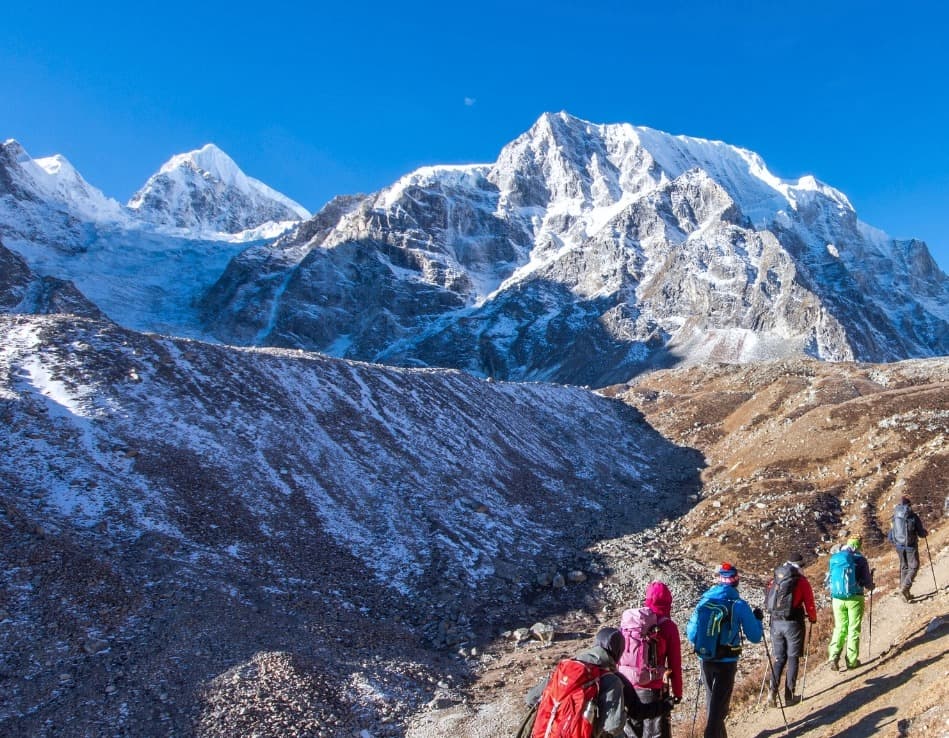
The Manaslu Tsum Valley Trek is rated moderate to challenging. Individual days in the Tsum Valley are relatively gentle and cultural in character, but the approach through the Budhi Gandaki gorge involves long days on rough, uneven trail, and the Larke La Pass crossing is a serious high-altitude undertaking requiring 9–10 hours of sustained effort. Prior multi-day trekking experience is strongly recommended, particularly experience with consecutive long days at altitude.
Recommended preparation in the 2–3 months before departure: regular hiking with a loaded daypack on hilly terrain, stair training for knee strength, and cardiovascular conditioning through running or cycling. The most important attribute for this trek is not raw fitness but consistent endurance, the ability to walk steadily for 6–8 hours day after day at increasing altitude.
Altitude Sickness (AMS): What You Need to Know
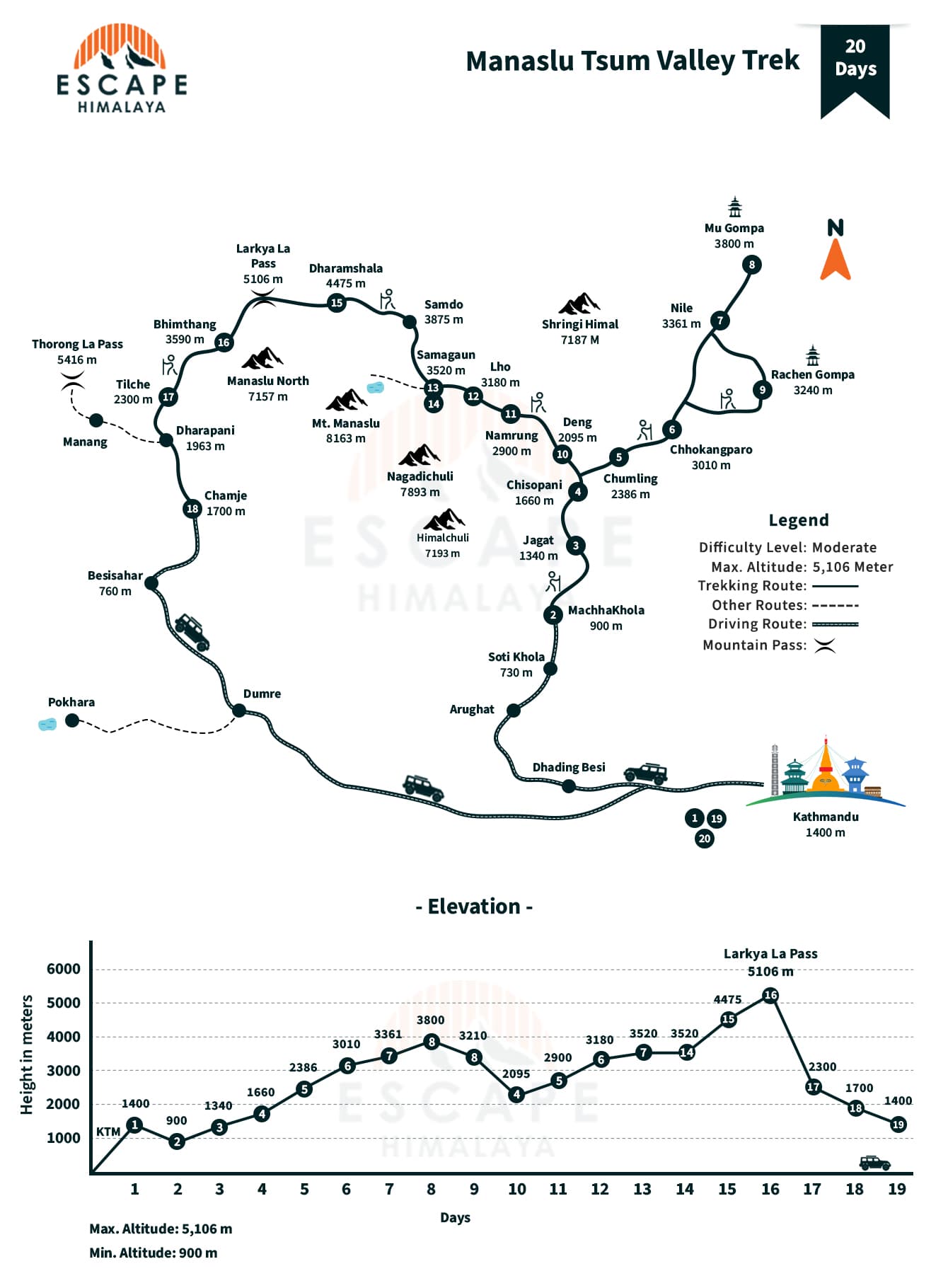
The Manaslu Tsum Valley Trek reaches 5,160 metres at Larke La Pass, with the acclimatisation hike toward Manaslu Base Camp pushing to approximately 4,800 metres. Acute Mountain Sickness (AMS) is a genuine risk above 3,000 metres and is not predicted by fitness level or prior lowland performance. The trek itinerary is structured with rest days at Mu Gompa and Samagaon to allow proper physiological adaptation, and no single day gain exceeds the recommended 500 metre rule above 3,000 metres.
Your guide monitors blood oxygen levels with a pulse oximeter at each high-altitude overnight stop. Any trekker showing moderate or severe AMS symptoms that do not resolve with rest and hydration will descend immediately; this decision is the guide's to make and is non-negotiable. Diamox (acetazolamide) may be recommended by your GP as a preventive measure. Consult your doctor at least four weeks before departure.
Permits: A Special Note for the Tsum Valley
The Tsum Valley is a restricted area requiring a special permit that is separate from the standard Manaslu permits. This permit must be obtained in Kathmandu before the trek begins, requires a minimum of two trekkers per group, and mandates a licensed guide at all times inside the restricted zone. Solo trekking in the Tsum Valley is not permitted by Nepali law. Escape Himalaya handles all permit logistics on your behalf; all four required permits (MCAP, Manaslu Restricted Area, Tsum Valley Special Permit, and ACAP) are included in the package price.
Best Seasons to Trek
Spring (March to May) and Autumn (September to November) are the ideal seasons for the Manaslu Tsum Valley Trek. Spring brings the spectacular bloom of rhododendrons at lower elevations (the lower Budhi Gandaki gorge in April is extraordinary), longer daylight hours, and stable weather for the Larke La crossing. Autumn delivers crystal-clear skies, outstanding mountain visibility, and the best conditions for photography throughout the valley.
The monsoon season (June to August) brings significant rainfall to the lower gorge, a high risk of landslides on the approach road, and leeches on the lower trail. It is not recommended. Winter (December to February) is possible for experienced trekkers, but Larke La Pass can become dangerously icy and is sometimes impassable. We recommend mid-October for the optimum combination of stable weather, clear skies, and manageable pass conditions.
The Approach Drive, Kathmandu to Soti Khola
Unlike the Everest and Annapurna regions, the Manaslu trek begins with a road journey rather than a flight. The drive from Kathmandu to Soti Khola takes approximately 7–8 hours on a mix of paved highway and rough mountain road, passing through the town of Arughat. The drive is scenic and interesting, but can be bumpy and dusty in the dry season. We use private jeeps for all transfers, which are more comfortable and flexible than the local bus options. Earplugs and a neck pillow are useful additions to your daypack for the drive.
Tea House & Guesthouse Accommodation
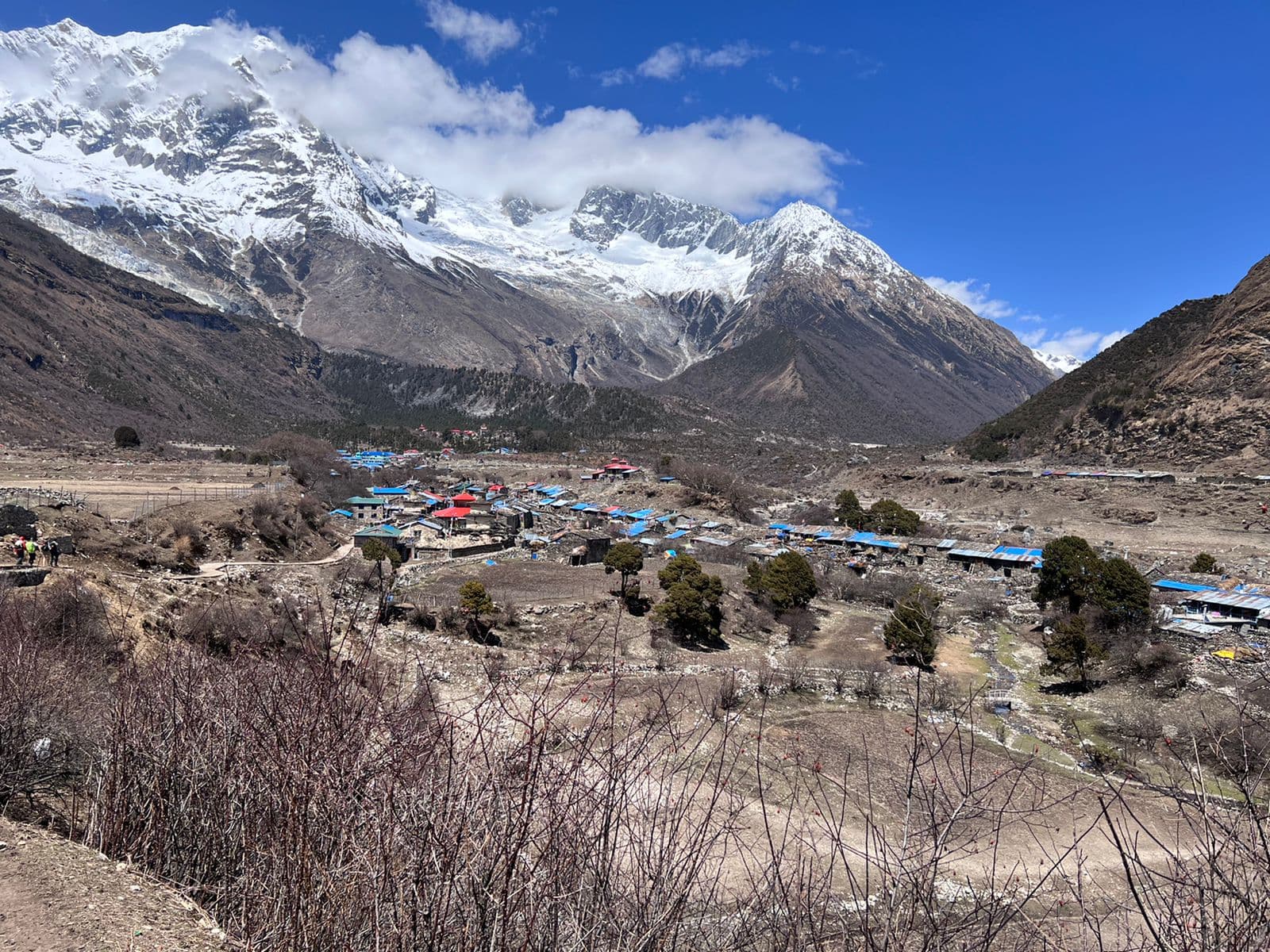
Tea houses and guesthouses in the Manaslu and Tsum Valley regions are more basic than those in the Everest and Annapurna circuits. In the Tsum Valley especially, accommodation is simple: small rooms, shared bathrooms, limited menu options, and no guarantee of hot showers or phone charging. The guesthouses are clean and family-run, and the food, dal bhat, noodle soup, fried rice, and chapati, is consistently good. Higher up, at Samdo and Dharamshala, facilities are the most basic of the entire route.
Above Jagat, Wi-Fi is unreliable or nonexistent. A Nepal SIM card with data (NTC works reasonably well up to Namrung) provides limited but useful connectivity. Download offline maps, entertainment, and any reading material before you leave Kathmandu.
Responsible Travel in a Restricted Area
The Tsum Valley's restricted status exists partly to protect its unique cultural heritage from the environmental and social impacts of mass tourism. Escape Himalaya asks all trekkers to respect this by following Leave No Trace principles throughout, carrying out all non-biodegradable waste, respecting photography boundaries inside monasteries and nunneries, asking permission before photographing local people, and purchasing souvenirs directly from local artisans rather than middlemen. We pay all crew members fair wages above the national minimum, provide adequate gear and insurance, and never use child porters.
Frequently Asked Questions (FAQs)
1. How is the Manaslu Tsum Valley Trek different from the standard Manaslu Circuit Trek?
The standard Manaslu Circuit Trek follows the main Budhi Gandaki gorge north to Samagaon and over Larke La Pass without entering the Tsum Valley. The Manaslu Tsum Valley Trek adds a 5–6 day detour into the restricted Tsum Valley, visiting the ancient monastery complex at Mu Gompa and the nunnery at Rachen Gompa. This addition makes the overall trek 20 days rather than the typical 14–16 for the circuit alone, and significantly increases the cultural depth and remoteness of
The experience.
2. Do I need prior trekking experience for this trek?
Prior multi-day trekking experience is strongly recommended. The Larke La Pass crossing (Day 20) is a serious, full-day effort at high altitude on rough terrain, and several other days involve 7–8 hours of continuous walking. If you have completed a previous multi-day trek in Nepal, the Alps, or comparable terrain, and have good cardiovascular fitness, you are well positioned. If this is your first multi-day trek, we recommend starting with a shorter Annapurna or Langtang itinerary before attempting Manaslu.
3. Is solo trekking permitted in the Tsum Valley?
No. The Tsum Valley is a government-designated restricted area requiring a minimum group of two trekkers accompanied by a licensed guide at all times. Solo trekking permits are not issued for this zone. If you are travelling alone, Escape Himalaya can arrange for you to join a compatible small group for the Tsum Valley section, or pair you with another solo trekker on a similar itinerary. Contact us to discuss options.
4. What permits are required and are they all included?
Four permits are required for this trek: the Manaslu Conservation Area Permit (MCAP), the Manaslu Restricted Area Permit, the Tsum Valley Special Restricted Area Permit, and the Annapurna Conservation Area Permit (ACAP) for the final section at Dharapani. All four permits are fully included in the Escape Himalaya package price. Your guide carries all documentation and manages all checkpoint registrations throughout the trek.
5. How remote is the Tsum Valley? What facilities are available?
The Tsum Valley is genuinely remote. Tea houses and guesthouses exist at each overnight stop, but facilities are basic, shared bathrooms, simple menus, limited electricity, and no reliable internet. There are no medical clinics above Chumling and no road access. Your guide carries a full first aid kit and a pulse oximeter, and helicopter evacuation can be arranged in a genuine emergency (covered by your travel insurance). The remoteness is, for most trekkers, a large part of the appeal.
6. What is the Larke La Pass crossing actually like?
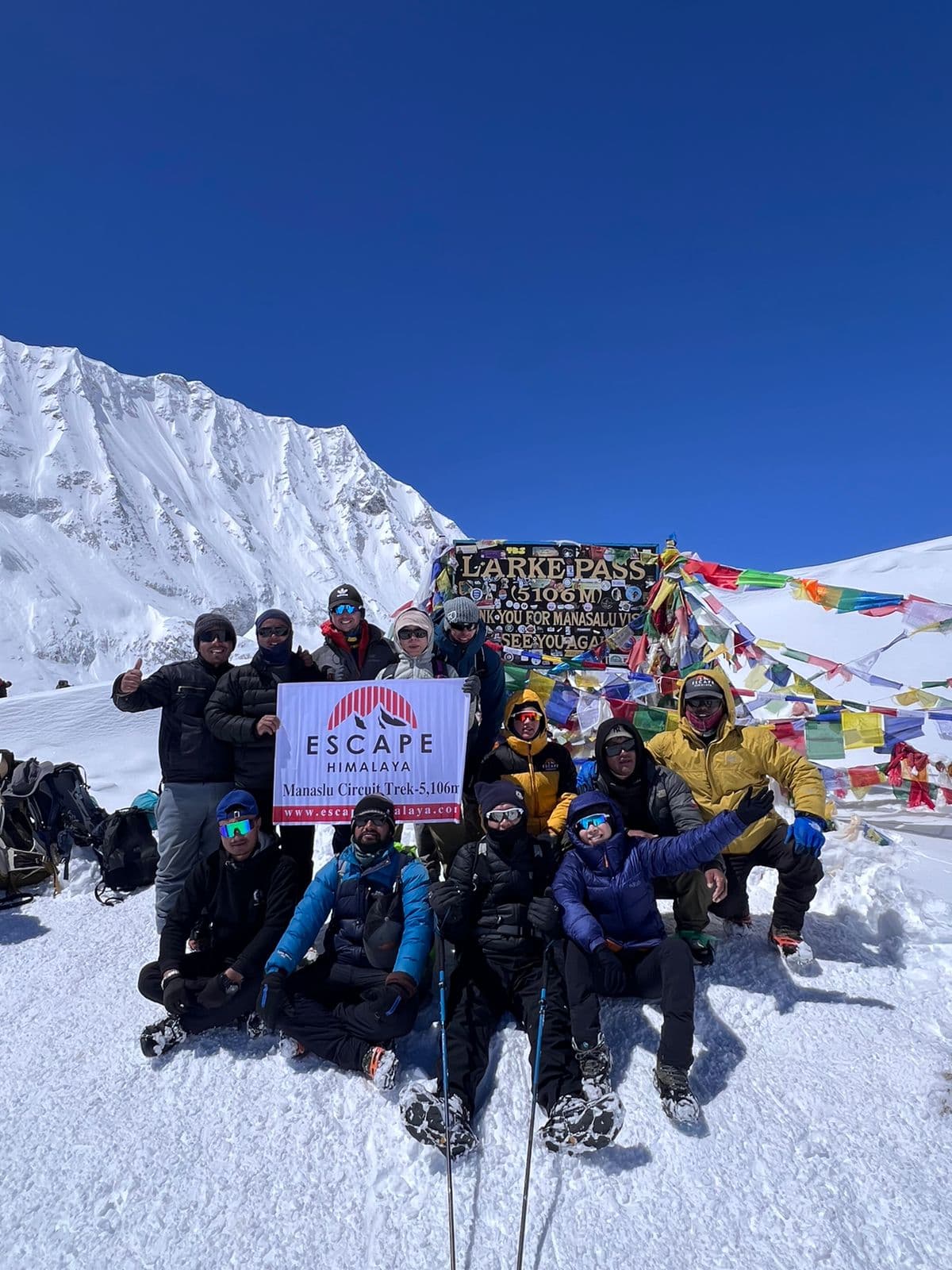
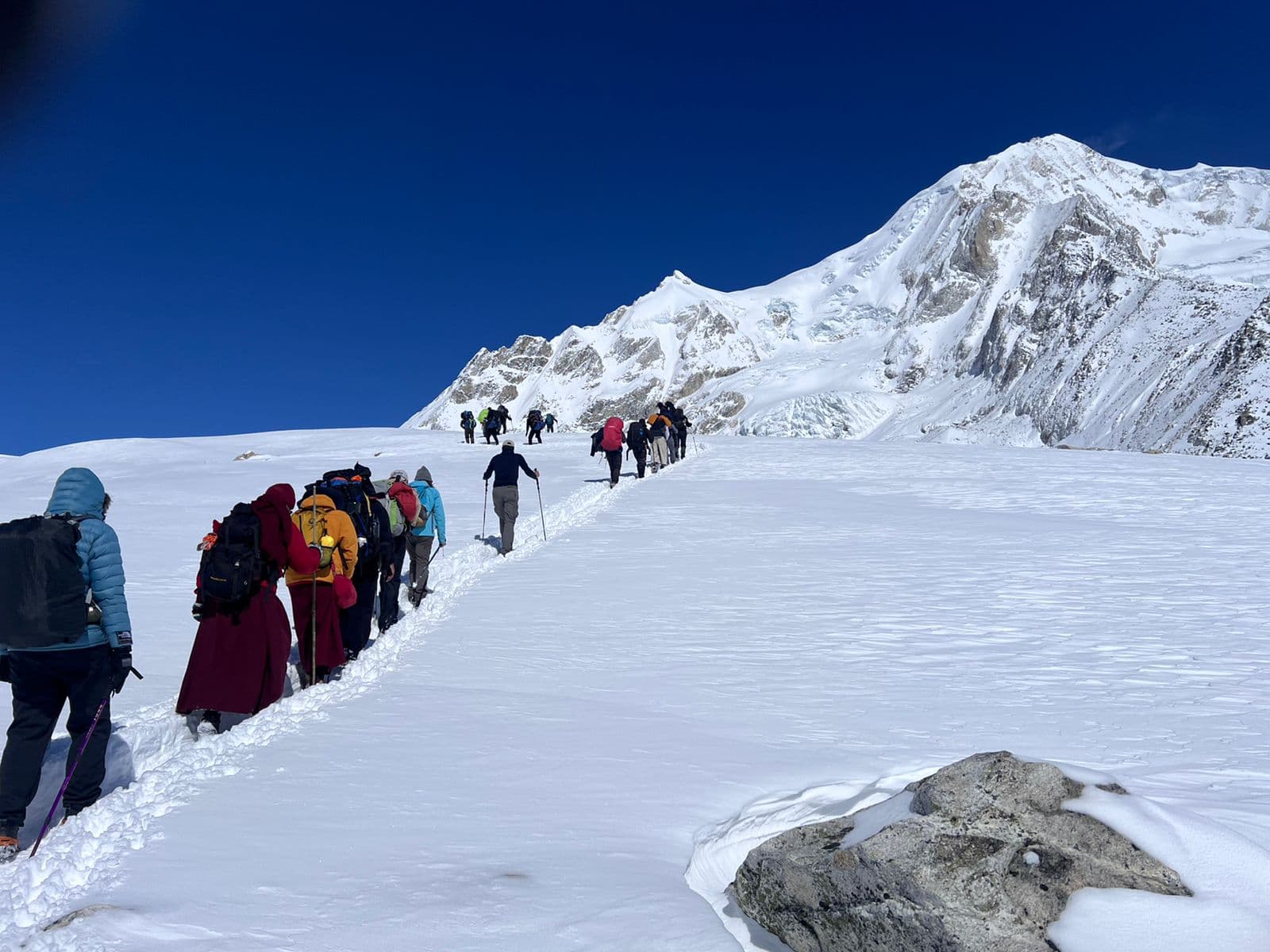
The Larke La crossing is the most demanding single day of the trek. Departure from Dharamshala is at 4–5 am in darkness and sub-zero cold. The ascent to the pass at 5,160 metres takes 4–5 hours over moraine and glacier, with crampons recommended in early spring or late autumn when ice is present (available from Escape Himalaya on request). The pass itself is a wide, flat saddle with panoramic views of Manaslu, Himlung, and the Annapurna range. The descent to Bimthang is steep and long, 3–4 hours, but the valley below is among the most beautiful in Nepal. Total day: 9–10 hours.
7. What insurance do I need?
Travel insurance with high-altitude trekking coverage to a minimum of 6,000 metres is mandatory. The policy must include helicopter evacuation cover, in a genuine medical emergency in the Tsum Valley or upper Manaslu region, helicopter rescue is the only rapid exit, and costs can exceed USD 5,000. We recommend World Nomads, True Traveller, or Battleface for Nepal-specific coverage that includes trekking above 4,000 metres. Ensure the policy also covers trip cancellation and emergency repatriation.
8. When is the best time to see the Tsum Valley at its most beautiful?
Late September through early November delivers the clearest skies and best mountain visibility for the Tsum Valley. Spring (late March to May) offers rhododendron bloom at lower elevations and a greener, more lush lower valley. For the cultural experience at Mu Gompa and Rachen Gompa, any clear day is equally rewarding, the monasteries are active year-round. If you can target October, the combination of clear skies, stable weather for Larke La, and golden autumn light across the high valley is outstanding.
9. Can the itinerary be customised?
Yes. Escape Himalaya specialises in tailor-made itineraries for the Manaslu region. We can add days in the Tsum Valley for deeper cultural exploration, extend the acclimatisation period at Samagaon for a more comfortable Larke La crossing, combine the trek with a Chitwan jungle safari or Pokhara extension, or arrange a helicopter exit from Samagaon or Samdo for trekkers with limited time. Contact our team to discuss your specific requirements.
10. How do I book and what is the deposit?
Book directly via the Escape Himalaya website or contact us by email or WhatsApp. A deposit of 20% of the package price confirms your reservation, with the balance due 30 days before departure. We accept bank transfer, major credit cards, and PayPal. Permit processing for the Tsum Valley requires your passport details at least 30 days in advance of the trek start date, please factor this into your booking timeline.