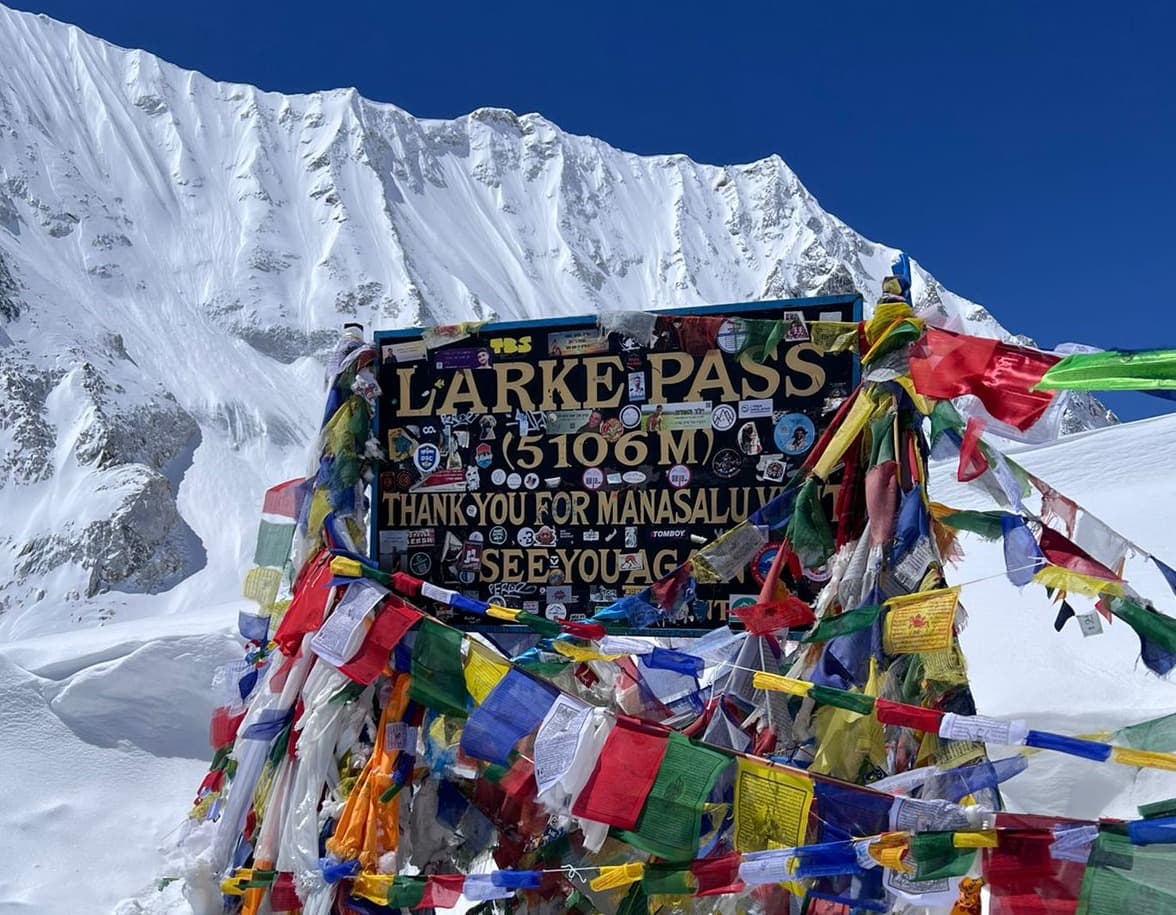
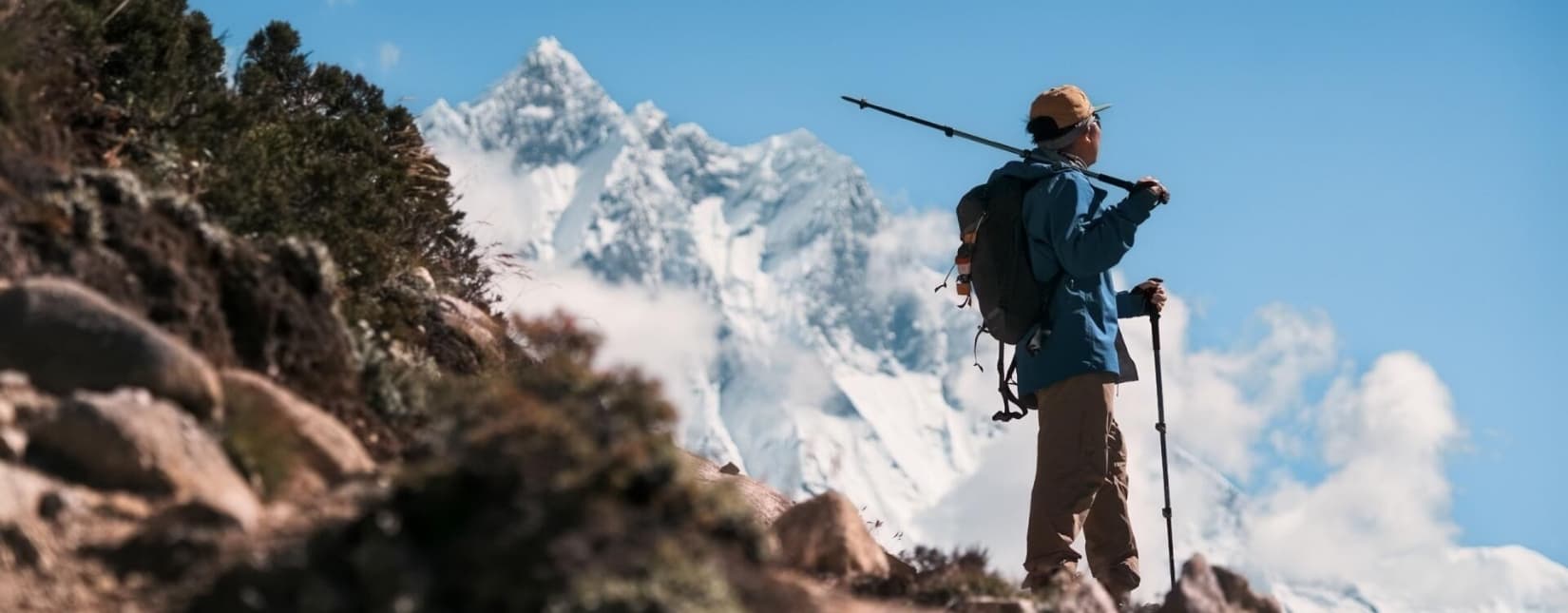
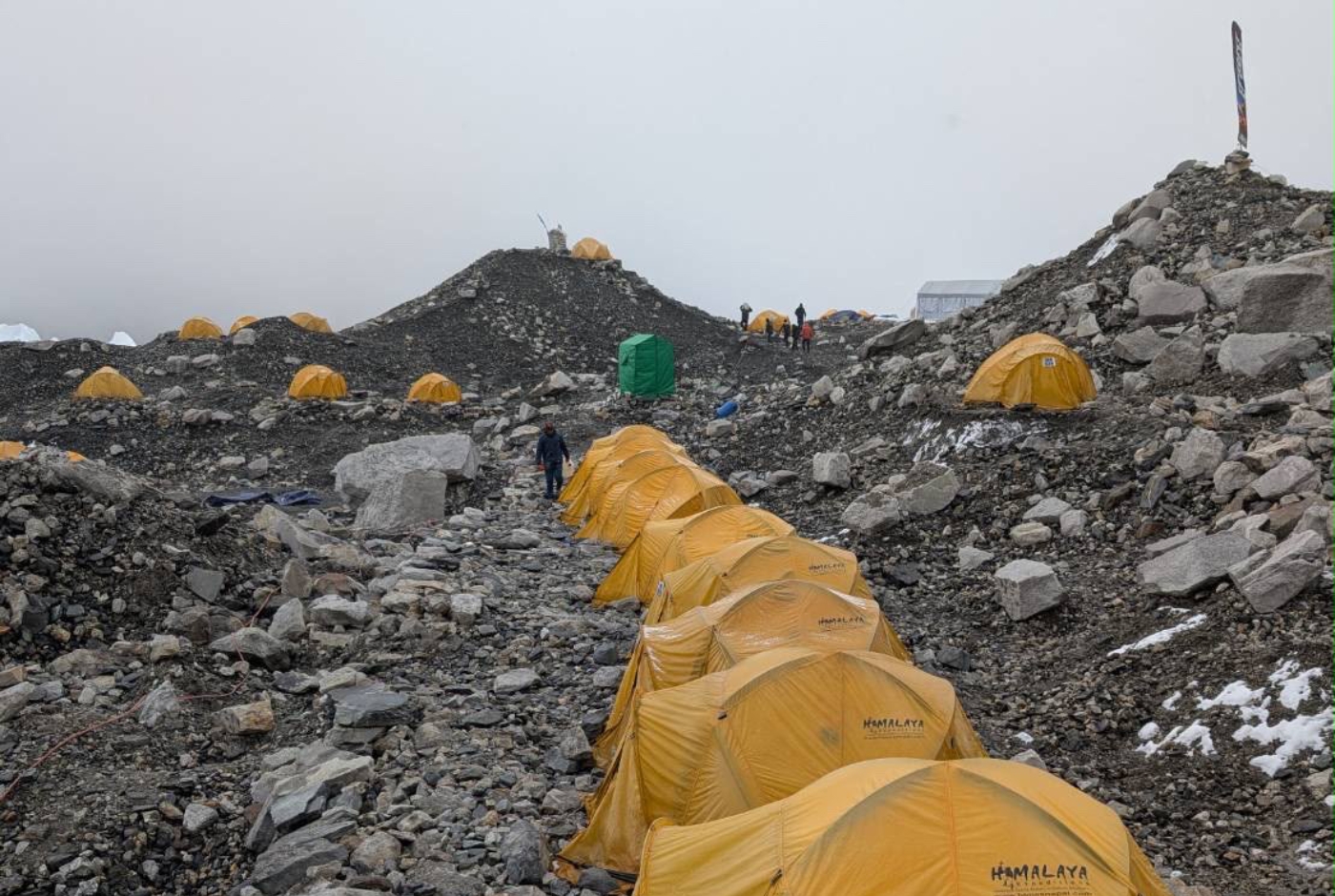
Every year on 29 May, a small group of runners lines up at 5,300-plus metres above sea level, at the foot of the Khumbu Icefall, and starts running. Not on a closed city street with cheering crowds every kilometre, but down a rocky Himalayan trail, past yak trains and prayer flags, through some of the thinnest air a human being can move through at speed. This is the Tenzing-Hillary Everest Marathon, and it is widely recognised as the highest marathon in the world.
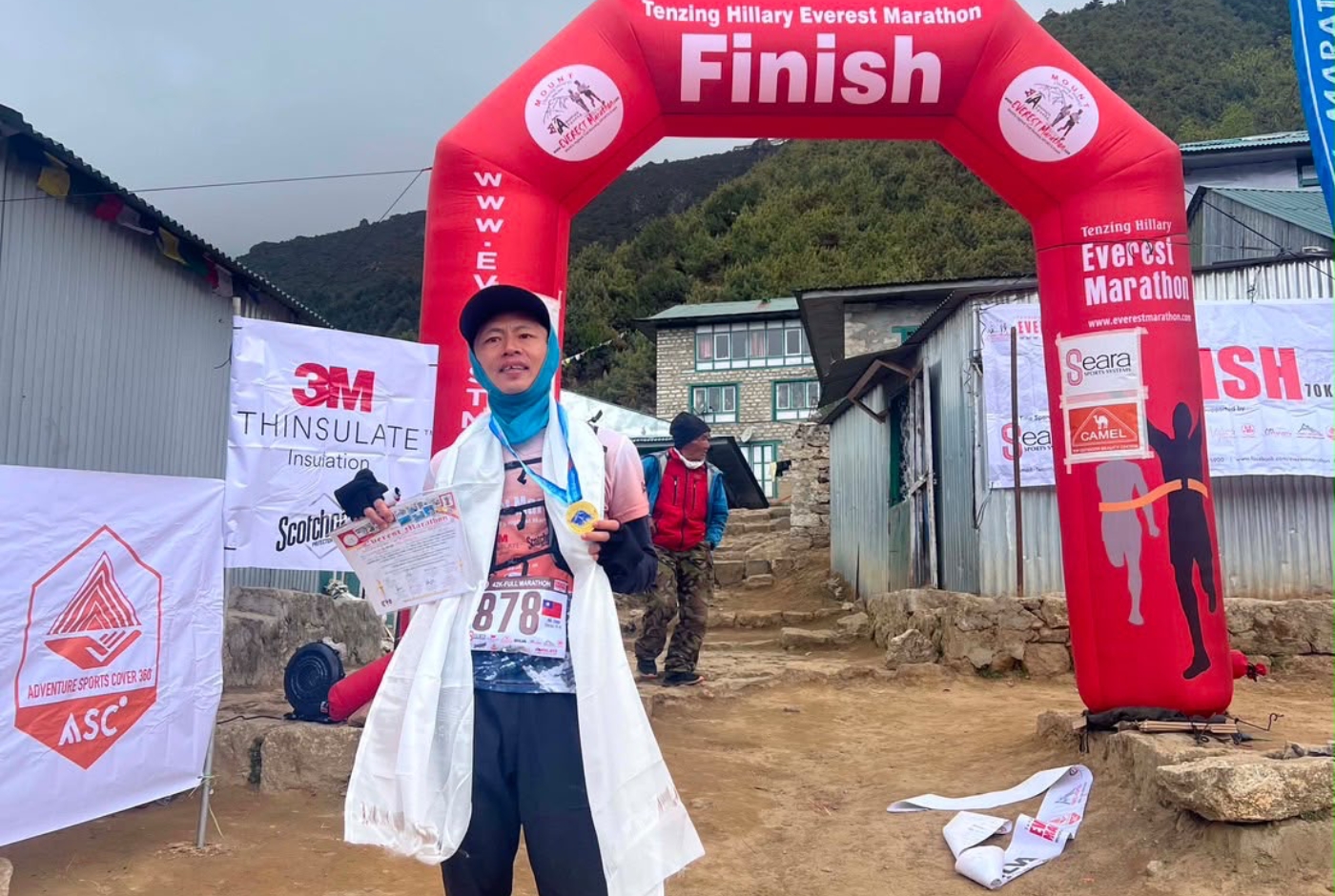
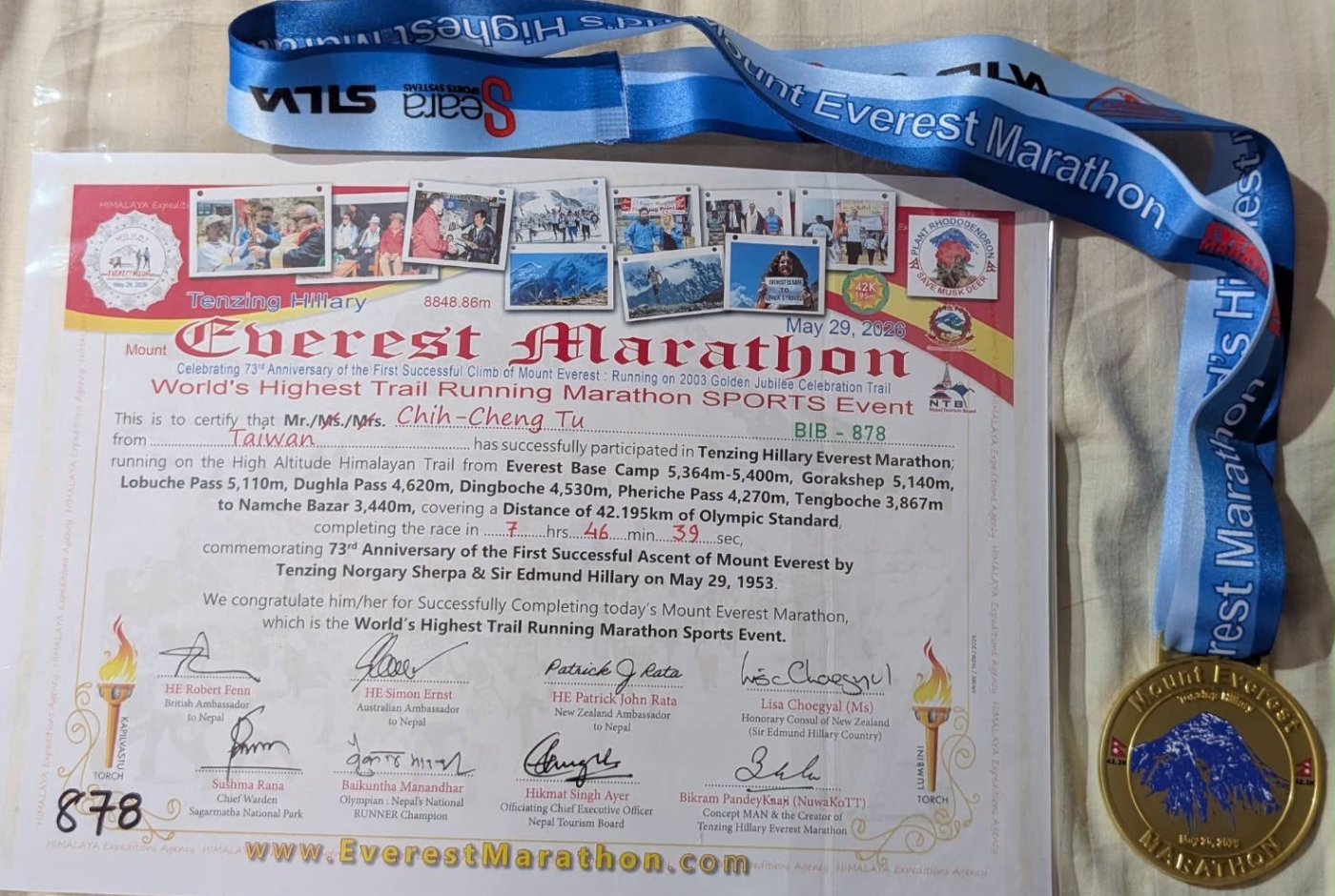
At Escape Himalaya, we've supported trekkers and runners through the Khumbu for years, and one race result has stayed with our team: a Taiwanese client, Mr. Chih-Cheng Tu, crossed the finish line at Namche Bazaar in 7 hours, 46 minutes and 39 seconds - a result reported to us as his country's second-best time in the event. We'll tell that story properly further down. First, everything a prospective runner actually needs to know: what this race is, why it's brutally different from a normal marathon, how people train for it, what it costs, and how the logistics actually work.
What Is the Everest Marathon?
The Tenzing-Hillary Everest Marathon is an annual trail race held every 29 May in Nepal's Khumbu region, starting near Everest Base Camp and finishing at Namche Bazaar. It commemorates the first successful ascent of Mount Everest by Tenzing Norgay Sherpa and Sir Edmund Hillary on 29 May 1953, and is officially recognised by the Government of Nepal.
It isn't a single race so much as a family of three: a 70 km ultramarathon, a 42.195 km full marathon, and a roughly 21 km half marathon, all run on the same high mountain trails on the same day. Unlike a city marathon, entry isn't just a case of turning up on race morning - runners are required to trek into the mountains over roughly ten days beforehand, both to reach the start line and to acclimatize enough to run safely at altitude.
History of the Tenzing-Hillary Everest Marathon
The idea of running a marathon in the shadow of Everest predates the branded "Tenzing-Hillary" event. An event generally referred to as the Everest Marathon was pioneered by Jan Turner and Tony Hunt in the mid-1980s, and a version of that original race - now marketed separately as "The Original Everest Marathon" - is still held in the same region today. The Nepal government issued a commemorative postage stamp recognising the marathon in 1987, and repeated the honour in 2014.
The race most people mean today when they search "Everest Marathon," however, is the Tenzing-Hillary Everest Marathon, organised as a distinct, officially branded event that takes its name directly from the two men who first reached Everest's summit. Its own promotional material describes recent editions as "anniversary" editions counted from an early-2000s starting point, following what's sometimes referred to as the Golden Jubilee Everest Marathon held around the 50th anniversary of the 1953 ascent.
Because different organisers, articles and databases use "Everest Marathon" and "Tenzing-Hillary Everest Marathon" somewhat interchangeably, and because edition numbering varies between sources, we'd rather be upfront about that ambiguity than invent a tidy year-by-year history. If you're comparing race options, the practical point is this: confirm which specific event and organiser a package refers to, since route details, dates and support arrangements can differ.
One more piece of history worth knowing: after Nepal's 2015 earthquake, a new official survey (conducted jointly with China) recalculated Everest's height at 8,848.86 metres, slightly higher than the previously accepted 8,848 metres. Recent editions of the marathon have referenced this "new higher Everest" in their marketing.
Why Is the Everest Marathon Considered the World's Highest Marathon?
Because its start line, at or near Everest Base Camp, sits above 5,300 metres - roughly a thousand metres higher than the summit of Mont Blanc, and well above the altitude where most people start to feel the effects of reduced oxygen even standing still, let alone running. No other marathon-distance running event in the world starts this high. That's the whole basis of the "world's highest marathon" claim, and it's the reason almost everything about training, pacing and safety has to be rethought compared with a road marathon.
When Is the Everest Marathon Held?
The Tenzing-Hillary Everest Marathon is held annually on 29 May, the anniversary of the 1953 first ascent of Everest - a date also marked in Nepal as International Sagarmatha (Everest) Day. Because the race date is fixed to the calendar date rather than a particular day of the week, and because trekking itineraries built around it can shift slightly year to year, always confirm the current edition's exact dates and any registration deadlines directly with the race organiser before booking flights.
Everest Marathon Route
The Full Marathon route runs almost entirely downhill from Everest Base Camp to Namche Bazaar, following established trekking trails through the Khumbu Valley - but "downhill" on a Himalayan trail means loose rock, stone steps, suspension bridges and long descents that punish the legs, not a gentle glide. Before race day, Full Marathon runners also typically climb to Kala Patthar, a famous viewpoint above Gorakshep, for the panoramic views of Everest, Nuptse and Lhotse the region is known for - this climb is part of the pre-race trek rather than the timed race itself.
Published elevation figures for specific points along this route vary slightly between sources - partly because GPS and older survey measurements don't always agree, and partly because "Everest Base Camp" itself shifts a little from season to season as the Khumbu Glacier moves. Where we give a figure below, it's the organiser's own stated figure or a commonly cited approximation; we've noted where sources disagree.
Everest Marathon Distance and Race Categories
- Full Marathon - 42.195 km: The standard Olympic marathon distance, run from Everest Base Camp to Namche Bazaar via Gorakshep, Dingboche (with a loop at Bibre), and Kyanjuma.
- Half Marathon - approximately 21 km: Starts at Dingboche, roughly the halfway point of the full course, and finishes at the same Namche Bazaar line. The distance is set slightly over the standard 21.0975 km as a nod to numerology in Buddhist tradition connected to the number seven; check the official race material for the full explanation.
- Ultra-Trail Marathon Everest (UTME) - 70 km: The extreme end of the event, also run from Everest Base Camp to Namche Bazaar, but over a longer, more demanding course for experienced ultra-distance and mountain runners.
All three categories share the same finish line and roughly the same window of support infrastructure, but they are very different undertakings in terms of fitness, technical trail experience and time on feet required.
Everest Marathon Elevation and Altitude
This is the single biggest difference between this race and any road marathon. At 5,300+ metres, the air contains roughly half the oxygen available at sea level. Every runner, no matter how fit, is working with a meaningfully reduced aerobic capacity from the moment the gun goes off.
What that means in practice:
- Thin air and reduced oxygen slow pace dramatically compared to sea-level marathon times, even for elite runners - the course records are extraordinary specifically because of this.
- Steep, technical descents on rock, scree and moraine put unusual strain on quads, ankles and knees compared with flat road running.
- Suspension bridges and uneven trail surfaces demand constant attention - this is not a course where you can zone out and just run.
- Cold at altitude, particularly at the start and in shaded sections, versus stronger sun and warmth lower down, means layering decisions matter.
- Cumulative fatigue from the trek itself: runners arrive at the start line after roughly a week or more of trekking and acclimatizing, not fresh off a taper week at home.
We're not going to give medical advice here beyond the general and obvious: altitude affects everyone differently, acute mountain sickness is a real risk at these elevations regardless of fitness level, and every runner should get a medical check before travelling and follow the guidance of race doctors and trek leaders without exception during the event.
How Difficult Is the Everest Marathon?
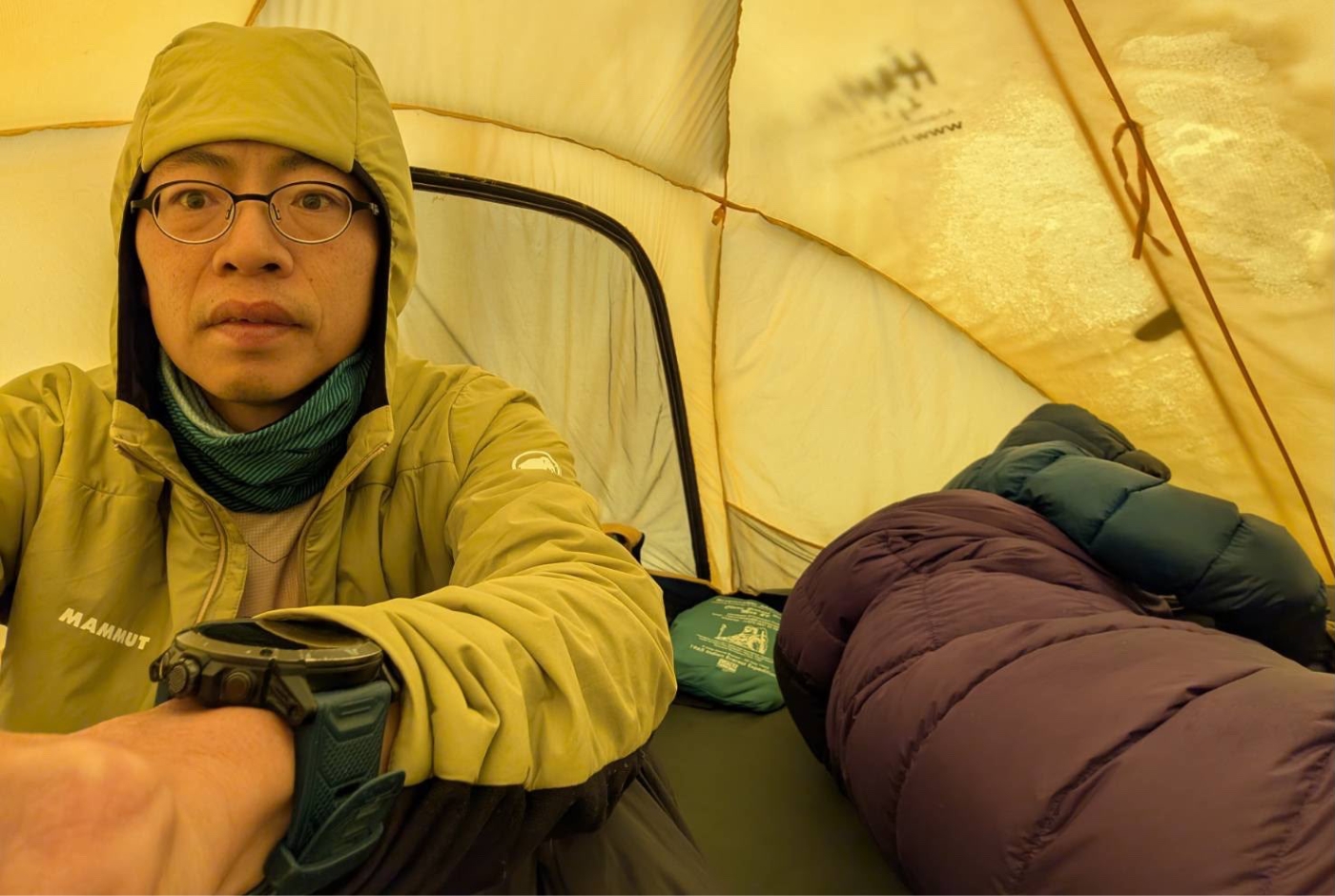
It's fair to say this race is harder than a comparable-distance road marathon for almost every runner, but "harder" isn't a single-axis comparison. A road marathon tests sustained aerobic output on a predictable, flat surface. The Everest Marathon tests altitude tolerance, downhill technical running ability, and endurance on unpredictable terrain - while also demanding that runners first complete a multi-day trek just to reach the start line in a fit state to race.
Course records make the comparison concrete: Deepak Rai's course record of 3 hours 28 minutes 27 seconds, while extraordinary, is roughly an hour slower than the men's world marathon record set on a flat, sea-level, closed road course. That gap says a lot about how much altitude and terrain cost even the strongest runners here. For a mid-pack recreational runner, finishing times of 6–9 hours for the 42.195 km distance are common and entirely respectable given the conditions - which is part of why we wanted to feature Mr. Tu's finish time later in this article: hours on their own don't tell the full story unless you understand what the course actually asks of a runner.
Everest Marathon Training
Training for this race is less like training for a road marathon and more like training for a mountain ultra with a hard aerobic ceiling. A practical approach usually blends:
- Base endurance running - building a consistent weekly mileage base well before the trip, as you would for any marathon.
- Trail-specific running - as much time as possible on uneven, rocky, or root-covered trails rather than pavement, to build ankle stability and trail-reading instinct.
- Downhill-specific conditioning - repeated hill or stair descents to strengthen quads and connective tissue against the eccentric loading of a long downhill course; this is one of the most overlooked parts of training for this race.
- Uphill strength and hiking fitness - even on a mostly downhill race, the approach trek involves significant daily ascent, so leg and cardiovascular strength for climbing matters too.
- Long-distance hiking with a daypack - to build the general endurance and comfort needed for the multi-day trek preceding the race.
- General strength training - particularly for the posterior chain, hips and core, to protect joints on long descents.
- Practising your race-day nutrition and hydration strategy in training, not for the first time on the mountain.
There's no single "correct" plan, and fitness level, running background and prior altitude experience all change what's realistic. If you're new to trail or mountain running, building that base well ahead of a marathon-length technical descent is worth prioritising over simply adding more flat road miles.
Acclimatization for Everest Marathon
Acclimatization isn't optional at these altitudes - it's the difference between a safe, enjoyable trip and a genuinely dangerous one. The general principle used across Everest region trekking, and reflected in marathon trekking packages, is a gradual ascent with planned rest days at key altitudes (commonly around Namche Bazaar and again near Dingboche) to let the body adjust before pushing higher toward Base Camp.
We won't present one single itinerary as the only correct way to acclimatize - different operators build slightly different rest-day schedules, and your own itinerary should always come from your trek operator and be discussed with their medical team. What matters is that whatever itinerary you choose gives you real rest days at altitude, not just travel days with a lighter walking schedule.
Everest Marathon Weather in May
Late May, around the race date, sits at the tail end of Nepal's pre-monsoon spring trekking season, and conditions vary a great deal by altitude and time of day:
- Lower valleys (below roughly 3,400 m): generally mild and pleasant, with daytime warmth and clear morning skies, though afternoon cloud or light rain becomes more likely as the monsoon approaches.
- Mid-altitude (roughly 3,400–4,000 m): cooler, with stronger sun and UV exposure at elevation even when temperatures feel moderate; wind tends to pick up from early-to-mid afternoon.
- High altitude near Base Camp (above roughly 5,000 m): cold mornings and nights, often well below freezing, strong daytime sun that can feel deceptively warm in still air, and a real possibility of late-season snowfall.
- General pattern: clear mornings that can cloud over by afternoon, meaning race starts (7:00 am) typically catch the best visibility of the day.
Mountain weather is inherently variable and can change quickly regardless of season, so pack for a wider temperature range than the averages suggest, and treat any specific temperature figures - including the ones above - as general guidance rather than a forecast.
What to Pack for Everest Marathon
Running gear:
- Trail running shoes with good grip (broken in well before the trip)
- Moisture-wicking running clothes suited to a wide temperature range
- Race-day layers you can shed quickly as the trail descends and warms
Trekking gear:
- Sturdy, broken-in trekking boots for the approach trek
- Trekking poles
- A daypack for trekking days (main luggage is porter-carried)
Cold-weather gear:
- Down jacket
- Windproof/waterproof outer layer
- Thermal base layers
- Warm hat, gloves, buff or scarf
- A 4–5 season sleeping bag suited to sub-zero nights at altitude
Personal items:
- Sunglasses with strong UV protection
- High-SPF sunscreen (30–50) and lip balm
- Headlamp/torch
- Reusable water bottle
Medical/safety items:
- Personal first-aid kit and any personal prescription medication
- Diarrhoea and altitude-related medication as advised by your doctor (do not self-prescribe altitude medication without medical guidance)
- Proof of travel and medical insurance that covers high-altitude trekking and emergency evacuation
Documents/electronics:
- Passport and visa documentation
- Printed and digital copies of insurance and permit paperwork
- Camera, spare batteries or a power bank (charging costs extra at teahouses)
Baggage on the trek is generally limited to around 15 kg per person including your sleeping bag, since porters carry it throughout - pack accordingly and leave non-essential items at your hotel in Kathmandu.
Everest Marathon Itinerary
There's no single official itinerary, and the right structure depends on the operator and package. But every credible Everest Marathon trip follows the same underlying logic: fly into the mountains, trek up gradually with acclimatization days built in, race, then trek and fly back out. A typical structure looks roughly like this:
- 1. Kathmandu - arrival, gear check, race briefing and bib collection
- 2. Fly to Lukla, trek to Phakding
- 3. Trek to Namche Bazaar
- 4. Acclimatization day in Namche (with a short walk for altitude adjustment)
- 5. Trek to Tengboche / Deboche
- 6. Trek to Dingboche
- 7. Acclimatization day in Dingboche
- 8. Trek to Lobuche
- 9. Trek to Gorakshep, side trip toward Kala Patthar and Everest Base Camp
- 10. Rest/preparation day at or near Base Camp
- 11. Race day - Base Camp to Namche Bazaar
- 12. Rest day in Namche
- 13. Trek back to Lukla
- 14. Fly back to Kathmandu, celebration dinner
Total trip length across current organiser packages ranges from as short as about 4 days (for those joining the group only at Base Camp - a logistically demanding option in its own right) up to around 19–22 days for full lodge, luxury or combination itineraries. Exact day counts, rest-day placement and package inclusions vary by operator and by year, so treat this as a structural guide rather than a fixed schedule.
Our Client's Everest Marathon Story: Mr. Chih-Cheng Tu from Taiwan
Most of what's written about the Everest Marathon online is generic - dates, distances, stock photography. What's harder to find is an honest account of what it actually looks like when a real client takes this race on. That's where we can add something the "ultimate guide" articles can't: an actual result, from an actual Escape Himalaya client.
Mr. Chih-Cheng Tu, from Taiwan, completed the Everest Marathon's 42.195 km Full Marathon in 7 hours, 46 minutes and 39 seconds - confirmed as the second-fastest recorded time by a Taiwanese runner in the event's history.
To put that in context: the outright course record, set by an elite Nepali mountain runner with a lifetime of altitude conditioning, stands at 3 hours 28 minutes. The fastest recorded non-Nepali time sits at around 4 hours 50 minutes. Finishing the same 42.195 km distance from Everest Base Camp to Namche Bazaar in under 8 hours, on rocky trekking trail, after days of trekking up to over 5,300 metres, at temperatures that swing from freezing pre-dawn cold to strong high-altitude sun, is a serious endurance performance by any standard - and securing Taiwan's second-best time in the race's history places Mr. Tu among a very small group of runners from his country to have taken this course on at that pace.
What Makes the Everest Marathon Different From a Normal Marathon?
Neither format is objectively "better" - they're built to test different things, and plenty of strong road marathoners find the Everest Marathon humbling for reasons that have nothing to do with running fitness.
Who Can Participate in the Everest Marathon?
The organiser's own stated qualification criteria are, in their words, straightforward: participants should be physically fit, with running experience preferable for the Full Marathon category. In practice, given the altitude and terrain involved, most operators - Escape Himalaya included - would add that meaningful trail or hiking experience, a realistic sense of your own altitude tolerance (ideally tested on a previous high-altitude trek), and a pre-trip medical check are all sensible prerequisites beyond the official minimum. Specific age limits, medical declarations, or other entry requirements can change by edition, so always check the current year's official registration requirements directly.
How to Get to Everest Base Camp for the Marathon
The standard route starts with an international flight into Kathmandu, followed by a short domestic flight to Lukla - the small mountain airstrip that is the gateway to the Khumbu region. In some recent years, due to seasonal air traffic congestion at Kathmandu's main airport, Lukla flights during peak trekking season have operated instead from Manthali Airport in Ramechhap district, roughly a 4–5 hour drive from Kathmandu; whether this applies in any given year depends on current civil aviation arrangements, so confirm this with your operator closer to your travel dates rather than assuming either routing.
From Lukla, it's a multi-day trek following the standard Everest Base Camp trekking route through Phakding, Namche Bazaar, Tengboche, Dingboche, Lobuche and Gorakshep before reaching Base Camp itself - the same route used by Everest Base Camp trekkers year-round, which is why marathon logistics and standard EBC trek logistics overlap so heavily.
Non-runners - friends or family who simply want to trek to Base Camp and support a runner or watch the event - are generally welcome to join as trekking-only group members, subject to the same permits and acclimatization schedule as runners. All trekkers in the Khumbu region require the relevant local permits and Sagarmatha National Park entry fees, which reputable operators arrange as part of a package.
Everest Marathon Cost
Cost for this event comes in at least two separate layers, and it's worth keeping them distinct:
- Official race entry/registration, charged by the race organiser, which covers your place in the event itself.
- Trekking and travel package costs, charged by a trekking operator (or bundled together by an organiser offering both), which cover flights, guides, porters, accommodation, food, permits and support during the approach trek and race.
Currently listed organiser package pricing spans a wide range depending on comfort level and logistics - from roughly USD 999 for a short join-at-Base-Camp option with no acclimatization trek included, up to several thousand dollars for full lodge-based itineraries, and considerably more again for helicopter-supported or luxury options. None of these figures should be treated as fixed: prices, inclusions and exact dates are set per edition and change year to year, so always confirm current pricing directly with the race organiser or your trekking operator, and separately budget for items typically excluded from package prices - Nepal visa fees, international flights, travel and medical insurance, and personal spending such as tipping, laundry, wifi and hot showers at teahouses.
Everest Marathon Safety and Altitude Considerations
Safety at this event rests on the same fundamentals as any high-altitude Khumbu trek, applied with extra care because of the exertion of racing:
- Acclimatization comes first - no race time is worth skipping rest days on the approach trek.
- Altitude sickness can affect fit and unfit people alike; know the warning signs and report them to trek staff immediately rather than pushing through.
- Hydration and pacing matter more here than on a road marathon, where dehydration and altitude effects compound each other.
- Weather can change fast - carry the layers you're told to carry, even if the morning looks clear.
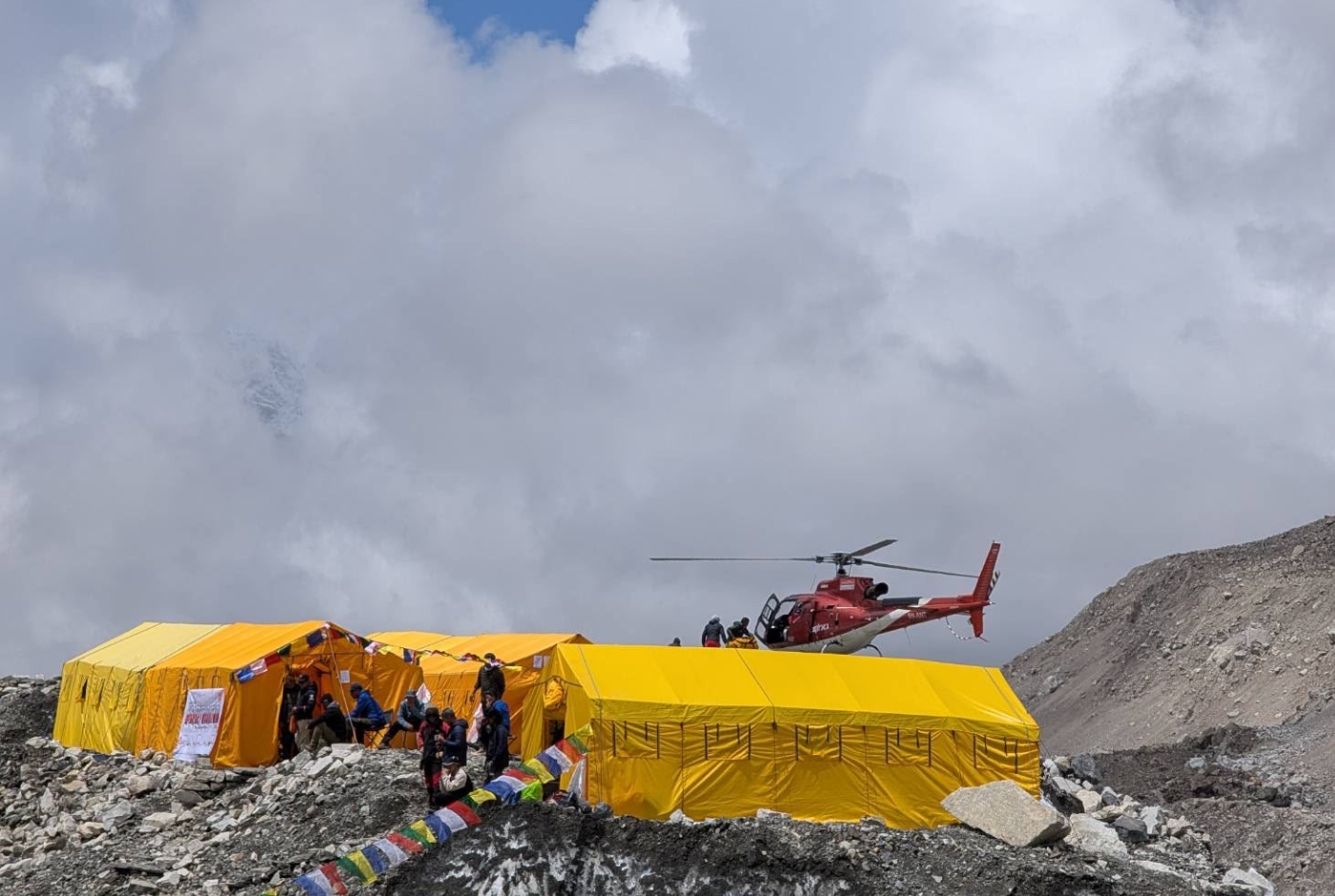
- Medical support and evacuation: race organisers typically provide trek doctors and checkpoint medical support, with helicopter evacuation available at extra cost in emergencies - which is exactly why comprehensive travel and medical insurance covering high-altitude activity and evacuation is non-negotiable, not optional.
- Listen to race officials and your guides. Checkpoint cut-off times and marshal instructions exist because of real safety considerations on this terrain, not bureaucracy.
None of this is medical advice, and it isn't a substitute for a pre-trip consultation with your doctor, especially if you have any pre-existing heart, lung or other condition that could be affected by altitude.
Best Time to Prepare for the Everest Marathon
Preparation timelines depend heavily on your starting fitness and trail experience, but as a general guide:
- 3–6 months is a realistic minimum for a runner who already has a solid aerobic running base and some hiking or trail experience, focused on adding downhill-specific and altitude-relevant training.
- 6–12 months is a more comfortable window for runners newer to trail running, or those wanting to build hiking endurance and strength from a lower baseline before tackling both the trek and the race.
There's no universal number here - what matters more than the exact month count is being honest with yourself about your current fitness and trail experience, and building a plan (ideally with input from a coach or experienced trail runner) around where you're actually starting from.
Why Choose a Local Nepal Trekking Company?
A lot of what makes or breaks an Everest Marathon trip has nothing to do with race day itself - it's the logistics around it. Flights to Lukla are notoriously weather-dependent, acclimatization schedules need real local judgement to adjust on the fly, and permits, porters, accommodation and emergency contingencies all need to be managed by people who know the region and its current conditions, not just its general reputation.
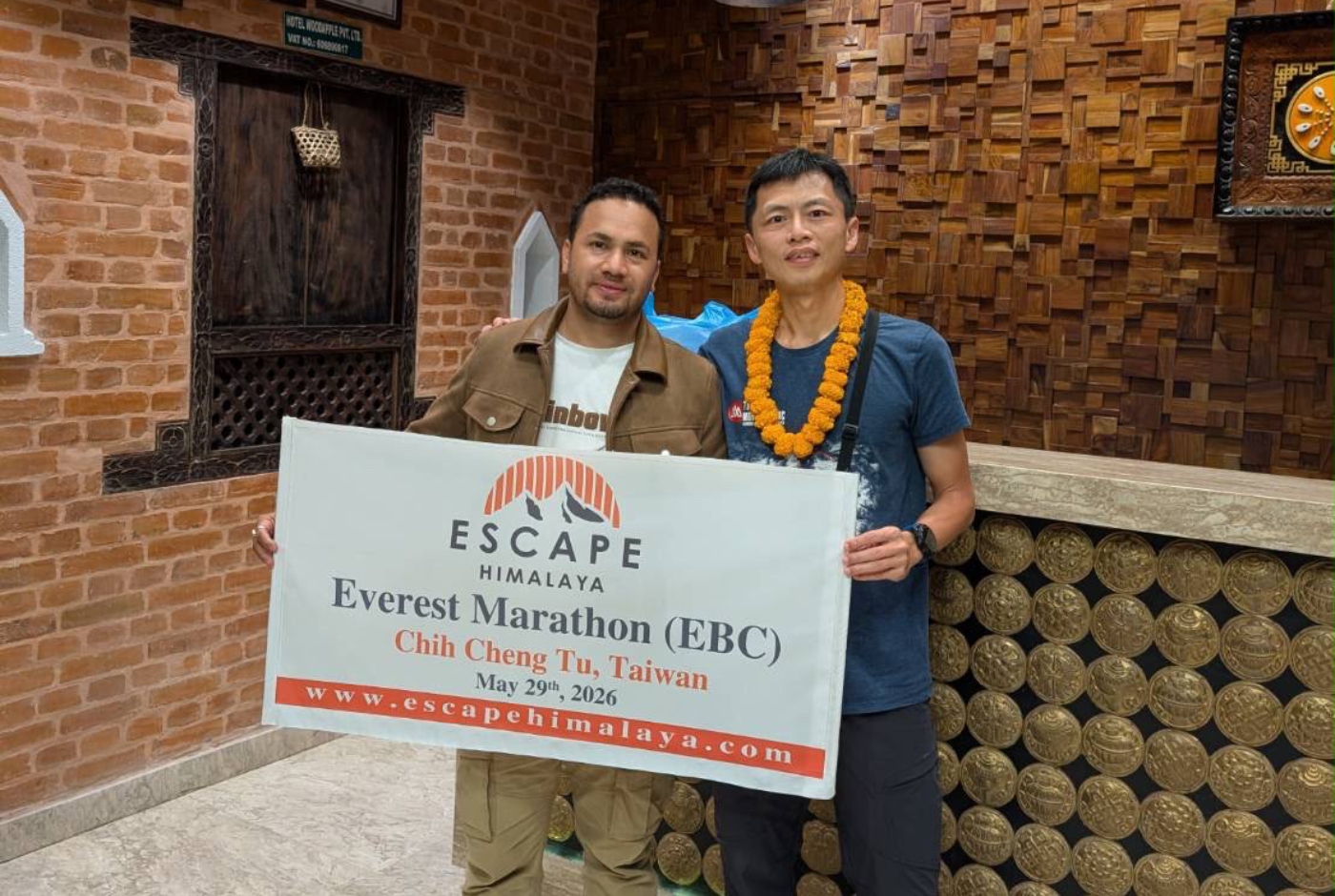
That's the practical value a Nepal-based operator like Escape Himalaya brings: on-the-ground staff who can react to a delayed Lukla flight the same morning it happens, trek leaders and Sherpa crews who know the current state of teahouses and trails at every stop, established relationships for arranging permits and park fees correctly, and a support structure - including guides trained in first aid and altitude monitoring - built specifically around the demands of this route. We won't claim to be the only operator capable of running a good Everest Marathon trip; there are several reputable ones. What we can say is that we've supported clients through this exact route and race, including runners like Mr. Tu, and that experience shapes how we plan every itinerary we build.
Everest Marathon Frequently Asked Questions
1. What is the Everest Marathon?
An annual trail marathon held every 29 May from Everest Base Camp to Namche Bazaar in Nepal's Khumbu region, commemorating the first ascent of Everest in 1953.
2. Where does the Everest Marathon start?
The Full Marathon starts at Everest Base Camp, at roughly 5,356 to 5,364 metres depending on the source. The Half Marathon starts lower, at Dingboche.
3. Where does the Everest Marathon finish?
All categories finish at Namche Bazaar, at roughly 3,440 to 3,466 metres.
4. How many kilometers is the Everest Marathon?
The Full Marathon is the standard 42.195 km. There is also a roughly 21 km Half Marathon and a 70 km Ultra-Trail Marathon Everest (UTME).
5. How high is the Everest Marathon?
The Full Marathon starts above 5,300 metres, making it the highest marathon-distance running event in the world.
6. Why is it called the world's highest marathon?
Because no other marathon-length running event starts at a comparably extreme altitude.
7. When is the Everest Marathon held?
Every year on 29 May, the anniversary of the first ascent of Everest.
8. Can beginners participate in the Everest Marathon?
The official criteria call for being physically fit, with running experience preferable. Trail experience and prior altitude exposure are strongly advisable.
9. How difficult is the Everest Marathon?
Harder than a comparable road marathon for most runners, due to altitude, technical terrain, and the multi-day trek required to reach the start line.
10. How long does it take to complete the Everest Marathon?
The course record is 3 hours 28 minutes; many recreational finishers take roughly 6 to 9 hours, within a 16-hour overall cut-off.
11. What is the Everest Marathon route?
From Everest Base Camp through Gorakshep, Lobuche and Dingboche (with a loop at Bibre), then Tengboche/Pangboche and Kyanjuma to Namche Bazaar.
12. Do you need to trek to Everest Base Camp before the race?
Yes, runners trek in over roughly a week or more beforehand to reach the start line and acclimatize.
13. How do runners acclimatize for the Everest Marathon?
Through a gradual ascent with planned rest days, typically around Namche Bazaar and again near Dingboche.
14. What is the weather like during the Everest Marathon?
Cold at Base Camp, milder in lower valleys, generally clearer mornings, and always subject to rapid mountain-weather change.
15. What should I pack for the Everest Marathon?
Trail running shoes, cold-weather trekking gear, sun protection, a personal medical kit, and travel/medical insurance documentation.
16. How do I register for the Everest Marathon?
Through the official race organiser's current registration channels, which change by edition.
17. How much does the Everest Marathon cost?
Packages currently range from roughly USD 999 to several thousand dollars depending on itinerary, excluding visa, flights and insurance.
18. Can family members accompany runners?
Yes, non-running trekkers are generally welcome to join the trek and support runners.
19. Is altitude sickness a concern during the Everest Marathon?
Yes, it is a real risk at these elevations for anyone, which is why acclimatization, trek doctors and evacuation insurance are standard.
20. Can a trekking company arrange the Everest Marathon trip?
Yes, most runners book through a trekking operator that bundles flights, permits, accommodation and support into a package.
21. What is the difference between the Everest Marathon and the Everest Base Camp Trek?
The Everest Base Camp Trek has no race component. The Everest Marathon follows much of the same route but adds a timed race from Base Camp to Namche Bazaar.
22. How should I train for the Everest Marathon?
With a blend of endurance running, trail and downhill-specific conditioning, uphill hiking fitness, and strength work.
23. What is the Everest Marathon half marathon?
A roughly 21 km category starting at Dingboche and finishing at Namche Bazaar.
24. Is there an ultra marathon at Everest?
Yes, the 70 km Ultra-Trail Marathon Everest (UTME), also run from Everest Base Camp to Namche Bazaar.
25. How can I arrange an Everest Marathon trip from Kathmandu?
By booking with a Nepal-based trekking operator that handles the Lukla flight, permits, acclimatization itinerary and race logistics as one package.
If you're seriously considering the Everest Marathon, the honest advice is to start with the terrain and the altitude, not the finish-line photo. Build real trail and downhill fitness, respect the acclimatization schedule your operator gives you, and treat the race itself as the final stage of a much bigger mountain journey rather than a standalone event. That's the approach that got Mr. Tu, and every runner we've supported, safely to Namche Bazaar.
Race dates, categories, cut-off times, pricing and registration requirements change by edition. Always verify current details directly with the official race organiser before booking.