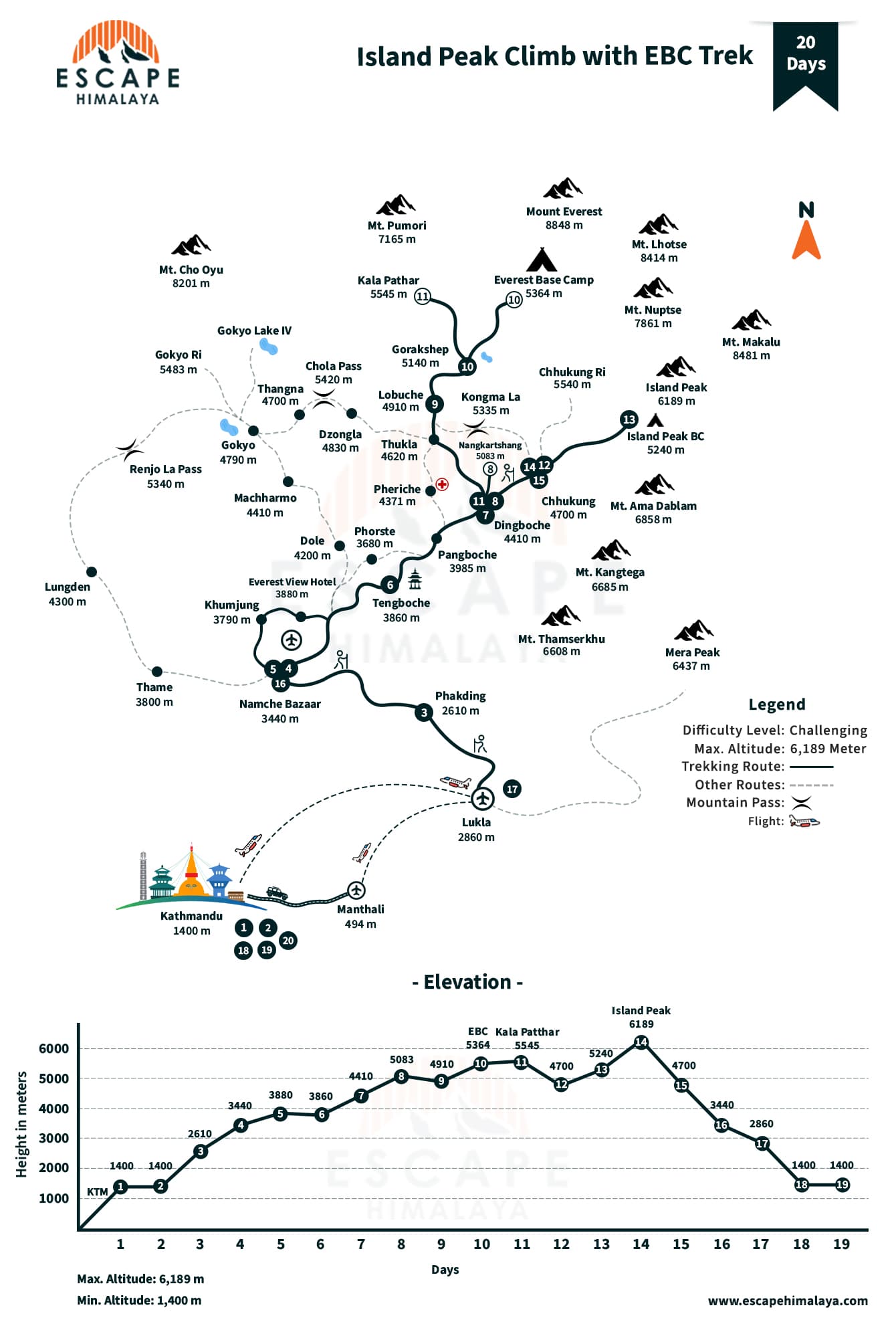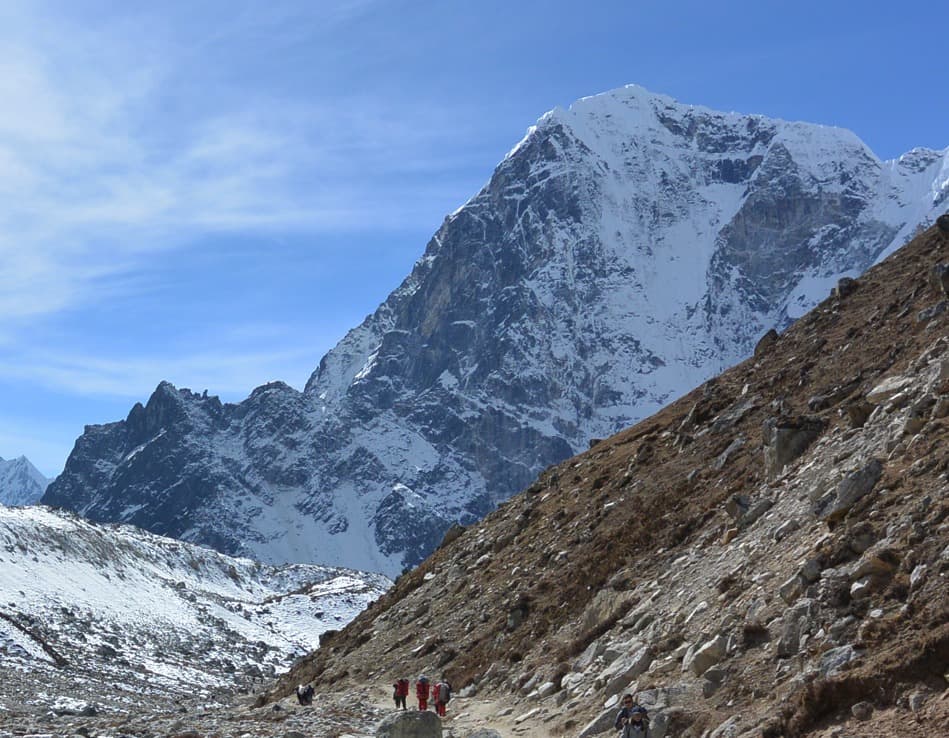
The Everest Base Camp trek combined with the Island Peak climb is one of the most rewarding adventures in the Himalayas, blending classic high-altitude trekking with a true taste of mountaineering. The journey begins in Kathmandu and continues with a scenic flight to Lukla, followed by days of walking through traditional Sherpa villages, crossing suspension bridges, and gradually ascending through Namche Bazaar, Tengboche, and Dingboche as your body adapts to the altitude.
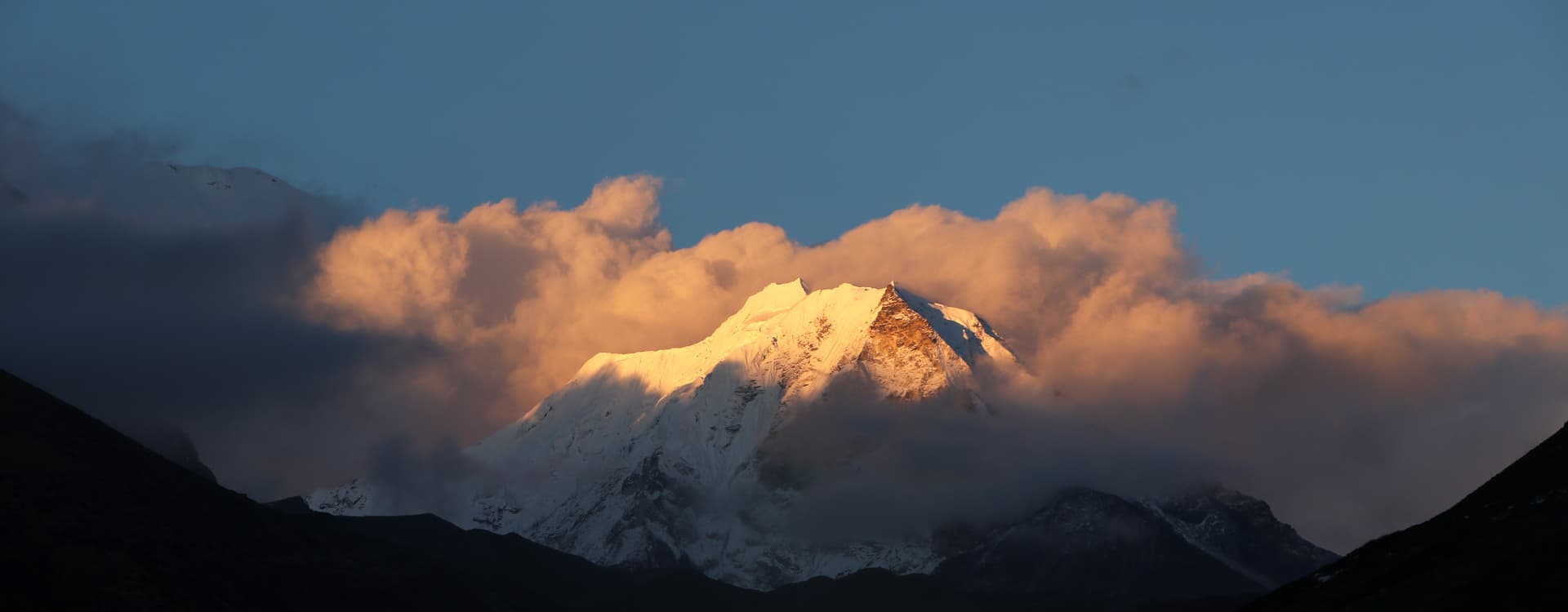
Reaching Everest Base Camp at 5,364 meters and hiking to Kala Patthar offer unforgettable views of Everest and the surrounding giants, while also preparing you physically for the climb ahead. After learning essential skills such as crampon use, rope work, and ice-axe techniques at base camp, you attempt Island Peak in the early morning hours, navigating steep snow and ice slopes to reach the summit. From the top, sweeping Himalayan views of Everest, Lhotse, Makalu, and Ama Dablam reward every effort. Beyond the challenge, the experience is enriched by warm Sherpa hospitality, teahouse stays, and immersion in Himalayan culture, making this 18–20 day expedition both demanding and deeply memorable.
Summit day starts incredibly early, usually around 2 or 3 AM. You climb in darkness, headlamp lighting the way ahead. The round trip takes 10 to 12 hours. Your body and mind both get tested. You clip onto fixed ropes, work up steep snow, and push through exhaustion. Then you reach the top. The view makes everything worthwhile. Everest, Lhotse, Makalu, Ama Dablam, and more peaks than you can count fill the horizon.
What makes this trip memorable goes beyond the physical challenge. You're experiencing Himalayan life firsthand and staying in family-run teahouses, eating dal bhat with locals, chatting with Sherpas about their lives. The Sherpa people have incredible stories. Their ancestors have called these mountains home for generations. Their warmth and hospitality add depth to the adventure.
The entire expedition takes 18-20 days. That might sound long, but a rapid altitude change is dangerous. You spend extra nights at key locations like Namche and Dingboche. Your body needs time to produce more red blood cells and adapt. This "climb high, sleep low" method is essential for success.
Expect cold weather, thin air, and tired legs. Some days you'll feel strong. On other days, you'll question your sanity. That's normal. But with good training, a positive attitude, and experienced guides to support you, this goal is achievable. Whether you're an experienced trekker trying mountaineering or someone pushing personal boundaries, this expedition delivers memories that last forever.