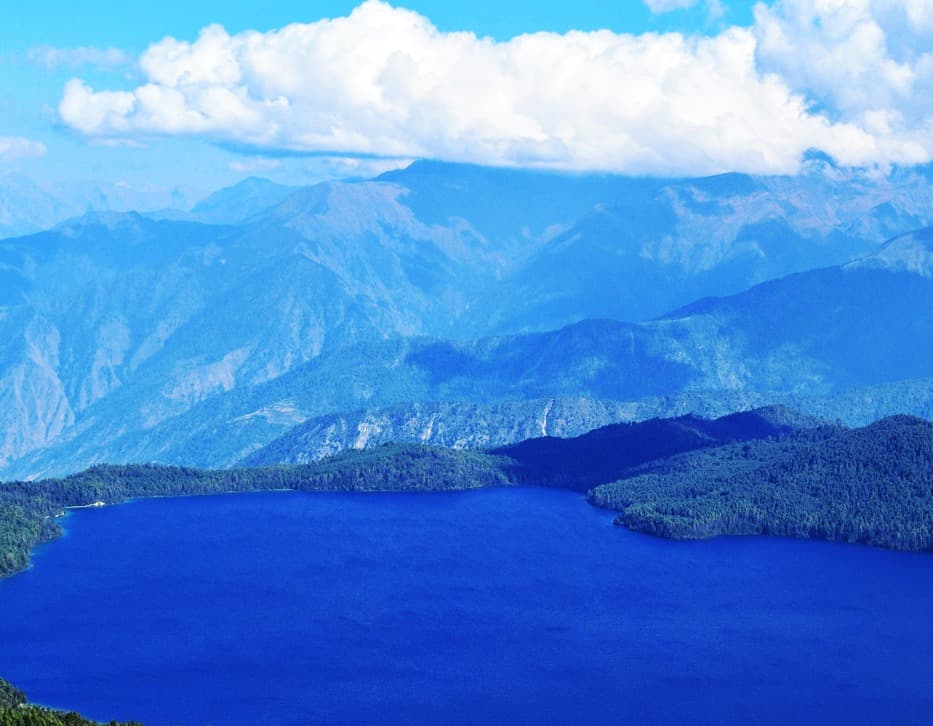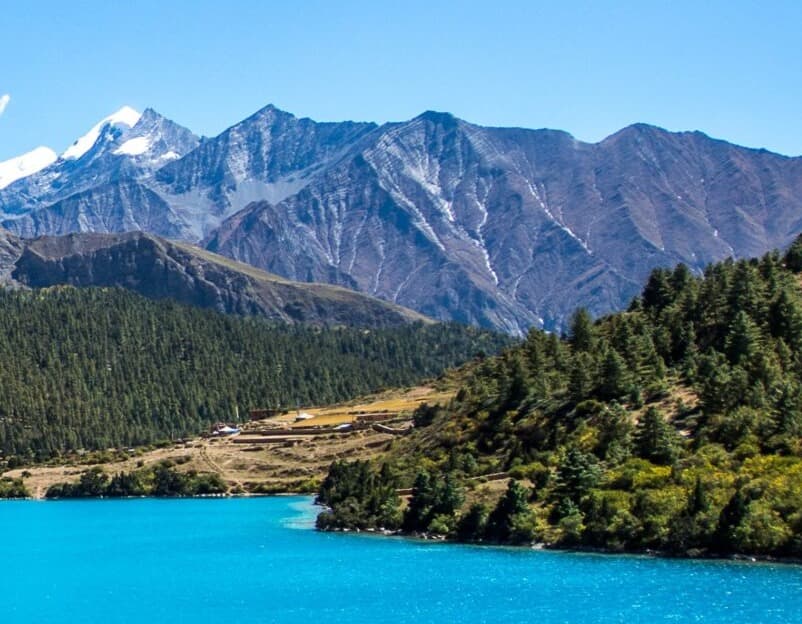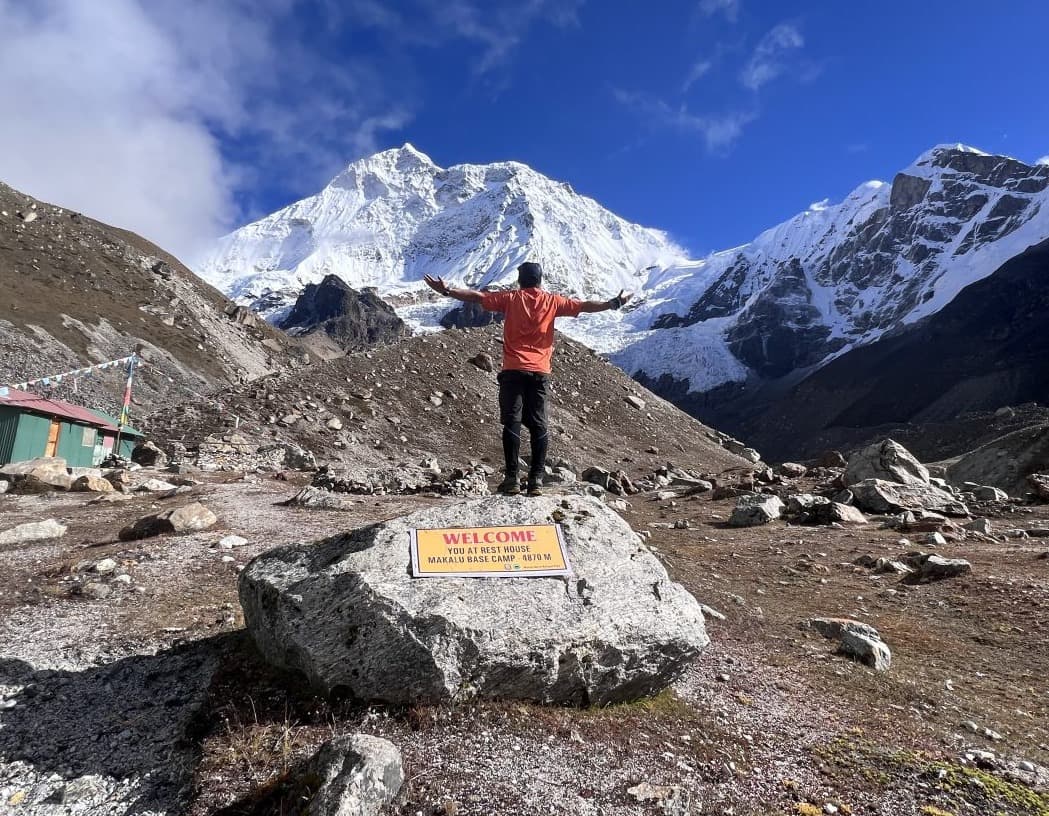
The Kanchenjunga Base Camp Trek is one of the most famous trekking destinations for travelers who like undergoing the off-the-beaten-trails trekking journeys in Nepal. Experiencing the sublimity of the third highest mountain on Earth, with its elevation of 8586 meters, the Kanchenjunga Base Camp Trek is one of the most beautiful trekking journeys in the world. Standing in the border of Nepal and India, Mount Kanchenjunga is beautiful to look at, covered in the snowy patina of ivory. The trekking trails are also decorated beautifully with the chartreuse of emerald foliages and lush verdant trees and wooded acreages. Because of this, the trekking journey has an amazing natural quintessence about its green environments ornamented beguilingly with water-bodies and dainty villages along with the majestic views of the mountain.
The word “Kanchenjunga” is derived from the conjecture of five words in the Tibetan language that mix together to give you the single word of context. It translates to “the Five treasures of the snow”, and the mountain peak is worshipped by many inhabitants of the villages and settlements both in Nepal and in India. It lies in the eastern part of Nepal and was open to trekking only in 1988. Comparatively, trekking in the northern base camp presents more surprising views and a wide variance of the sceneries than the southern base camp. Trekking to the Kanchenjunga Base Camp, you would be presented with magnificent views of the surrounding peaks as well, like Everest, Lhotse, Makalu and many more. The palatial beauty of the trekking trails is also an added advantage for trekkers because of it simply marvelous natural quiddities. While making your way to the Kanchenjunga trekking in Nepal, you would also be coming across many village sand settlements along the way, and you would then be able to experience the day to day life of the local people and observe their unique customs and cultures and their rituals at the remote secluded part of the Himalayas.
Beginning the Kanchenjunga Base Camp Trek, you would be flying to Taplejung from Kathmandu and will continue to trek to the settlement of Mitlung. Walking on narrow amethyst trails, you would be passing through different vast areas of vibrant plant life brimming with the vegetation of cardamom shrubs and rhododendron trees. As you reach Chirwa, you would be presented with the sights of the mystical forests and wonderful woodlands that posses many different types of flora and fauna idiosyncratic to this region of Nepal. Trudging along some more beautiful cardamom meadows, you would be approaching the dainty village of Sukathum.
Ornamented beguilingly with the vibrancy of the jaded landscape, you would be trekking along the trails that pass through the verdant forests rich with the growth of fir, oak, rhododendron, and bamboos that all provide a wonderful green canopy to the travelers. As you reach Gyabla, a Tibetan settlement, you would be able to experience the Tibetan cultures and traditions of the people residing there. En-route to Ghunsa, you will pass through terraces of farms wet with the plantations of potatoes, wheat, barley and buckwheat. The sight is ravishing to see, especially since the view of the Kanchenjunga Peak shadows the natural telicity of the area. You would be acclimatizing here in your trekking journey.
Before trekking to Kanchenjunga North Base Camp lying at the height of 5388 m, we will traverse along moraines set north-west of the Kanchenjunga Glacier to reach Lhonak where the excellent mountain views are quite captivating. Reaching the Kanchenjunga North Base Camp, the spectacular Kanchenjunga or Wedge Peak, cerulean Kanchenjunga trekking map and several other peaks will greet you, making it one of the most memorable experiences of your life. Also, we will traverse along several high passes like Mirgin La (4725m) and Sinion La (4460m) which is quite a challenging experience.
Escape Himalaya has carefully designed this Kanchenjunga Trek itinerary to enthrall travelers with unforgettable Himalayan vistas and the opportunity to walk through the subtropical lowlands adorned with striking rural landscapes. You can also have a glimpse of the rare animals that reside within the Kanchenjunga Conservation Area while on journey. The Kanchenjunga Trek incorporates all of the beautiful natural and cultural quintessence of the remote region in Nepal. Come join us in this daresome adventure where you can experience aesthetically pleasing magnificence of the mountains, alluring natural winsomeness and have a closer look at the culture, lifestyle and traditions of the people in the Kanchenjunga Base Camp Trek Package with us! You can also opt for our Makalu Base Camp Trek as well.
Best Time For Kenchenjunga Trek
The Kanchenjunga trek is during autumn (September to November) and spring (March to May).
Autumn (September to November): This is the most popular time for trekking, offering stable weather, clear skies, and mild temperatures. It’s ideal for great mountain views and comfortable trekking conditions.
Spring (March to May): Spring also provides favorable weather with clear skies and moderate temperatures. The landscape is lush with blooming flowers, making it a scenic time to trek.
Both seasons avoid the extreme cold of winter and the heavy monsoon rains, making them the best for the Kanchenjunga trek.
Difficulty Level of the Kanchenjunga Trek
The Kanchenjunga trek is one of Nepal's most challenging and rewarding trekking routes. Known for its remote location and rugged terrain, it’s perfect for experienced trekkers looking for an off-the-beaten-path adventure. The trek reaches altitudes over 5,000 meters (16,404 feet), increasing the risk of altitude sickness, so acclimatization is key. The journey usually lasts 3 to 4 weeks, requiring excellent physical fitness and mental resilience. The terrain is steep and varied, with narrow ridges, tough ascents, and descents, which makes it physically demanding. The weather can be unpredictable, especially at higher altitudes, with snow, rain, and strong winds, adding to the challenge. The Kanchenjunga trek also takes you through remote regions with limited facilities, so trekkers need to be self-sufficient. Although challenging, this trek offers stunning mountain views, unique culture, and solitude, making it a truly unforgettable experience for seasoned trekkers.
Why Choose A Kanchenjunga Trek In Nepal
The Kanchenjunga Trek is an exceptional adventure for seasoned trekkers seeking a remote, off-the-beaten-path experience in Nepal. Unlike the crowded trails of Everest and Annapurna, this trek offers solitude and pristine natural beauty. The route takes you through diverse landscapes, including lush forests, alpine meadows, and dramatic glacial valleys, with panoramic views of Kanchenjunga, Makalu, and even Everest.
For culture enthusiasts, the trek passes through remote Rai, Limbu, and Sherpa villages, allowing trekkers to immerse themselves in local traditions and customs. The rich biodiversity of the region, including rare species like the Red Panda and Himalayan Monal, makes it a paradise for wildlife lovers. With rugged terrain, high altitudes, and a trek duration of 3-4 weeks, Kanchenjunga is a physically demanding challenge ideal for experienced trekkers. If you're looking for an adventurous, unique trek away from the crowds, the Kanchenjunga Trek.
Should I Train For The Kanchenjunga Base Camp Trek
Training for the Kanchenjunga Base Camp Trek is essential due to its challenging terrain, steep ascents, and high altitude. To prepare, focus on cardio exercises like running or hiking to improve endurance. Strength training for legs, core, and upper body will help with long days on uneven terrain. Include hill workouts or stair climbing to simulate elevation changes. If possible, practice altitude training to adjust to reduced oxygen levels.
Regular hiking with a weighted backpack will help you get used to carrying gear over long distances. Additionally, building mental resilience is important, as the trek lasts 3-4 weeks and is physically and mentally demanding. Proper training ensures a safer, more enjoyable trek and increases your chances of success on the Kanchenjunga Trek.