No recent searches!

    Escape Himalaya
    • Certificate ofExcellence 2025
    • Whatsapp, Viber+977 9851006121
      • Everest Region
        • Everest Base Camp Trek - 14 Days
        • Everest Base Camp - Chola Pass - Gokyo Trek - 17 Days
        • Everest Base Camp Short Trek - 13 Days
        • Everest Base Camp Luxury Trek - 15 Days
        • Everest Base Camp Heli Shuttle Trek - 12 Days
        • Luxury Everest View Trek - 9 Days
        • Everest Panorama Trek - 9 Days
        • Everest Three High Passes Trek - 20 Days
        • Everest Base Camp Trek Heli Return to Kathmandu-11 Days - 11 Days
        • Everest Base Camp Trek for Seniors - 20 Days
        • Everest View Trek - 7 Days
      • Annapurna Region
        • Annapurna Base Camp Trek - 14 Days
        • Annapurna Circuit Trek - 14 Days
        • Mardi Himal Trek - 8 Days
        • Jomsom Muktinath Trek with Poon Hill - 9 Days
        • Short Annapurna Base Camp Trek - 6 Days Hike - 9 Days
        • Annapurna Circuit Tilicho Lake Trek - 17 Days
        • Annapurna Family Trek - 8 Days
        • Annapurna Base Camp Trek Heli Return to Pokhara - 10 Days
        • Annapurna Hot Spring Trek - 8 Days
        • Annapurna Trek with Chitwan Tour - 9 Days
        • Shortest Annapurna Base Camp Trek - 9 Days
      • Langtang Region
        • Langtang Valley Trek - 10 Days
        • Bhairav Kunda Trek - 14 Days
        • Helambu Trek - 8 Days
        • Langtang Helicopter Tour - 3 hrs
        • Langtang Gosainkunda Helambu Trek - 16 Days
        • Tamang Heritage Trail - 10 Days
        • Langtang Gosainkunda Trek - 13 days
      • Manaslu Region
        • Manaslu Circuit Trek - 14 Days
        • Manaslu Tsum Valley Trek Itinerary - 20 Days - 20 Days
        • Tsum Valley Trek - 13 days
      • Mustang Region
        • Upper Mustang Trek - 16 Days
        • Mustang Tiji Festival Trek - 18 Days
        • Lower Mustang Trek - 14 Days
        • Jomsom Muktinath Trek with Poon Hill - 9 Days
        • Upper Mustang Jeep Tour - 11 days
      • Dolpo Region
        • Upper Dolpo Trek - 25 Days
        • Lower Dolpo Trek - 18 Days
      • Summer Treks
        • Lower Dolpo Trek - 18 Days
        • Upper Mustang Trek - 16 Days
        • Lower Mustang Trek - 14 Days
        • Rara Lake Trek - 16 Days
        • Upper Dolpo Trek - 25 Days
        • Upper Mustang Jeep Tour - 11 days
      • Winter Treks Package
        • Short Annapurna Base Camp Trek - 6 Days Hike - 9 Days
        • Mardi Himal Trek - 8 Days
        • Australian Camp Short Trek in Pokhara - 5 Days
        • Annapurna Family Trek - 8 Days
        • Nepal Adventure Tour - 12 Days
        • Everest View Trek - 7 Days
        • Helambu Trek - 8 Days
      • Less Touristic Trails
        • Rara Lake Trek - 16 Days
        • Upper Dolpo Trek - 25 Days
        • Makalu Base Camp Trek - 21 days
        • Langtang Gosainkunda Helambu Trek - 16 Days
        • Pikey Peak Trek - 12 Days
        • Lower Dolpo Trek - 18 Days
        • Bhairav Kunda Trek - 14 Days
        • Kanchenjunga Trek - 22 days
        • Helambu Trek - 8 Days
      • Bhaktapur Patan Tour - 6 Hours
      • Kathmandu Day Tour - 6 Hours
      • Chitwan Jungle Safari Tour - 3 Days
      • Kathmandu Nagarkot Sightseeing Tour - 4 Days
      • Langtang Helicopter Tour - 3 hrs
      • Explore Nepal Tour - 10 Days
      • Bardia National Park Tour - 4 Days
      • Nepal Adventure Tour - 12 Days
      • Nepal Discover Tours - 6 Days
      • Everest Helicopter Tour - 3 Hours
      • Tour of Kathmandu's 7 UNESCO World Heritage Sites  - 1 days
      • Pisang Peak Climbing - 19 days
      • Lobuche Peak Climbing - 18 Days
      • Island Peak Climbing - 20 days
      • Tharpu Chuli Peak Climbing - 0 days
      • Naya Kanga Peak Climbing - 15 days
      • Mera Peak Climbing - 19 Days
      • Mera and Island Peak Climbing via Amphu Laptsa Pass - 23 days
      • Nepal Tibet Bhutan Tours - 13 days
      • Bhutan Experience Tour - 10 days
      • Nepal Bhutan Darjeeling Tour - 14 days
      • Glimpse Tours Bhutan - 8 days
      • Chomolhari Trek - 0 days
      • Laya Gasa Trek - 0 days
      • Druk Path Trek - 0 days
      • Simikot Kailash Lhasa Tour - 0 days
      • Nepal Tibet Bhutan Tours - 13 days
      • Tibet Everest Base Camp Tour - 11 days
      • Lhasa to Kathmandu Tours - 10 days
      • Everest Advanced BC Trek - 20 days
      • Lhasa Sightseeing Tours - 7 days
      • Saga Dawa Festival Tours - 14 days
      • Our Team
      • How to Book a Trip
      • Why Escape Himalaya
      • Terms and Conditions
      • Legal Documents
      • Nepal Tourist Visa Information
      • Travel Insurance
      • Equipment Checklist
      • Privacy Policy
    • Travel Guide
    • Contact Us
    Bookings are currently open for Himalayas during the 2025/26 season. Book Now
    • Home
    • Enquire us
    • Whatsapp
    • Search
    Escape Himalaya+977 9851006121Whatsapp, Viber
    Hotel Wood Apple

    Escape Himalaya - Adventure Tours and Trekking in Nepal more...

    Contact Us

    • +977-1 4980242
    • [email protected]
    • Khusibu, Kathmandu, Nepal
    Make an EnquiryCall Us
    Nepal Goverment
    Nepal Tourism Board
    TAAN
    NMA
    Trip Advisor
    Tour Radar
    Tour Radar

    Things to do in Nepal

    • Peak Climbing
    • Summer Treks
    • Winter Treks Package
    • Family Vacation
    • Wildlife Adventure
    • Helicopter Tours

    Company Profile

    • Our Team
    • How to Book a Trip
    • Why Escape Himalaya
    • Terms and Conditions
    • Legal Documents
    • Nepal Tourist Visa Information
    • Travel Insurance
    • Equipment Checklist
    • Privacy Policy

    Subscribe Newsletter

    To receive travel updates via email

    • 24/7 Whatsapp Contact
      +977-9851006121 (Raj),+977-9851363580 (Suman)
    • Send us mail
      [email protected], [email protected]
    • Services and Support
      Khusibu, Kathmandu, Nepal P.O. Box: 5596
    • Follow us on
    © 2015 - 2025 Escape Himalaya. All Rights Reserved.
    Card
    1. Home
    2. Nepal
    3. Trekking in Nepal
    4. Less Touristic Trails
    5. Makalu Base Camp Trek

    Makalu Base Camp Trek

    Trip Fact

    • DestinationNepal
    • Durations17 days
    • Trip DifficultyStrenuous
    • ActivitiesTrekking
    • AccommodationHotels / Teahouses
    • MealsBreakfast, Lunch, Dinner
    • Mx.altitude5000m.
    • VehicleCar / Flight
    • Group SizeMin. 2 Pax

    Makalu Base Camp Trek Highlights

    •        Stand at the base of Mount Makalu (8,485m), the world's fifth highest mountain, surrounded by breathtaking views of Everest, Lhotse, and Baruntse
    •        Cross four dramatic mountain passes in one day including Shipton La Pass (4,257m), walking past sacred turquoise lakes like Kalo Pokhari
    •        Trek through Makalu Barun National Park, home to rare wildlife like red pandas, snow leopards, Himalayan black bears, and musk deer
    •         Experience spring rhododendron blooms that paint entire forests in vibrant reds, pinks, and whites (March-April treks)
    •         Explore the remote and untouched Barun Valley, one of Nepal's most pristine wilderness areas with hanging glaciers and thundering waterfalls
    •        Visit sacred Shiva and Parvati Caves perched high on cliff faces, important pilgrimage sites offering incredible valley views
    •         Walk through traditional Sherpa and Rai villages like Tashigaon, experiencing authentic mountain culture far from tourist crowds
    •         Enjoy an off-the-beaten-path adventure with far fewer trekkers than popular routes like Everest or Annapurna Base Camp


    Overview

    The Makalu Base Camp Trek lets you experience the grandeur of trekking close to the fifth-tallest mountain in the world, Mount Makalu, with its elevation of 8485 meters. The Makalu Base Camp Trek is one of the off-the-beaten-path trekking trails, and all throughout the journey, you would be presented with magnificent views of colossal mountains like Everest (8848m), Lhotse (8,516m), Chamlang (7,319m), Baruntse (7,220m), and many more. Combining the ethereality of the land terrain along with the views of the mountain peaks provides you with one of the most beautiful trekking trails in the world. The chartreuse land topography of the trekking journey, adorned with beguiling lush forests and silver jovial rivers flowing ebulliently across the emerald terrain, is a sight straight out of a picturesque postcard.

    It provides a surreal sense of adventure to its travelers. You would be coming across the beautiful River Valleys of Barun and Arun while trekking to the base camp of Makalu Mountain Peak. The Makalu Base Camp, lying in an elevation of 5000 meters, falls under the perimeters of the Makalu Barun National Park, which is home to many of the region’s unique and amazing flora and fauna. Many endangered animals like the Red Panda, the Himalayan Black Bear, Clouded Leopards, Musk Deer, and Snow Leopards have made the National Park their habitat. Along with these wonderful animals, you can also have encounters with varieties of orchids blooming fluorescently in the park, 15 different types of oaks, and many wide variety of other fodder trees and jaded foliage in the trekking trails through the park. The natural quintessence of the Makalu Base Camp Trek is breathtaking.

    Beginning your trekking journey, you would be flying to the village of Tumlingtar, the fight filled with beautiful sights of the emerald terrains below. Driving to the settlement of Num, you would be subjected to beautiful views of the surrounding area with its vibrancy of terraced farmlands brimming with plantations of rice and mustard and many small rivers and streams flowing their course in the amethyst terrain. Traversing across the mirthful Arun River via a suspension bridge, you would be walking across fields of golden corn and buckwheat until you reach the village of Sedua. Trekking further to Tashigaun, you would be trudging through stony steps embedded in the land, reaching Kauma Kharka. The settlement of Kauma Kharka presents striking views of Mount Makalu and its surrounding peaks from its vantage point. On your way to Mumbuk, you will be able to observe huge Mani Walls festooned with prayer flags and amazing views of mountain peaks like Chamlang, Peak 7, and Peak 6. You will also be coming across the dainty villages of Kike La (4,127m) and Tutu La (4,075m).

    As you will travel the ravishing trekking trail of the Makalu Base Camp Trek, you would be presented with magnificent views of Peak 4 (6720 m) and the Pyramid Peak (7168 m), among many other,s along the journey. The views of the mountain peaks are simply the most beautiful sights as they are accompanied by the green of the terra firma below them. From the Makalu Base Camp (5000m), the awe-inspiring scenes of the south face of Makalu and the views of the Baruntse Peak, Peak 6 and 7, along with the majestic view of Mount Everest, is entirely enthralling and amazing to witness. The trekking trail also lets you hike along cerulean glaciers, cyan lakes and verdant mystical forests.

    You would also be walking across many passes, including Shipton La (4229m), set at the southern side of Makalu, where you can witness stunning views of the ivory Himalayan Ranges and will get to experience the remote areas of the country. The Makalu Base Camp Trek will be an unforgettable experience that Escape Himalaya presents to you. Escape Himalaya provides an excellent rendering of services to its customers, and we make sure that our customers are getting the optimal context on their trekking journeys. The Makalu Base Camp Trek package is designed carefully, keeping the satisfaction of our customers in mind, and at the same time, the package also incorporates all of the beautiful natural and cultural quintessence of the remote region in a relatively short amount of time. Come join us in this ravishing adventure where you can experience the aesthetically pleasing magnificence of the mountains, alluring natural winsomeness, and have a closer look at the culture, lifestyle, and traditions of the people in the Makalu Base Camp Trek Package with us! You can also choose alternate options for trekkin,g like our Kanchenjunga Trek package. We also provide you with the service of a customizable itinerary as well which can be rearranged to suit your needs and requirements should you wish to do so.

    Best Time to Trek Makalu Base Camp

    Spring (March to May) and autumn (September to November) are the best times for this trek. Spring brings those incredible rhododendron blooms that turn entire forests bright red, pink, and white. The weather remains stable, and temperatures are comfortable for walking. Autumn gives you the clearest skies for mountain views after the monsoon washes everything clean. Skip monsoon season (June to August) because trails turn into mud pits, leeches appear everywhere at lower spots, and clouds hide all the peaks you came to see. Winter (December to February) is brutally cold at high camps, snow blocks the passes, and most teahouses shut down completely.

    How Difficult is This Trek Really?

    This trek is genuinely challenging, and there's no point pretending otherwise. You'll walk 5 to 7 hours most days on steep trails, cross several high passes, and deal with thin air at nearly 5,000 meters. If you've trekked above 3,000 meters before, you'll have a much easier time. First time hiking in the Himalayas? Consider starting with Everest Base Camp or Annapurna Circuit instead. The biggest challenges are the altitude effects, those long 7 to 8-hour walking days, and being really far from any roads or hospitals. Good physical shape helps, but mental toughness matters just as much for getting through the hard days.
     

    Detail Itinerary

    Expand all +
    1Day 01

    Arrival In Kathmandu and Overnight Stay

    Your plane lands at Tribhuvan International Airport, and there's a representative from Escape Himalaya waiting near arrivals with your name on a sign. After that long flight, seeing someone there just for you feels really good. The drive to your hotel takes about thirty minutes through Kathmandu's bustling streets. Horns honking everywhere, prayer flags hanging between buildings, fruit sellers on every corner, and motorcycles squeezing through impossible gaps in traffic. It's loud, colorful, and completely chaotic in the best way.

    Your hotel is in Thamel, the main tourist area. Check in, take a quick nap, then head out if you're feeling up to it. Thamel's alleys are packed with shops selling trekking gear, singing bowls, pashmina scarves, and basically anything a tourist might want. Incense smoke mixes with the smell of momo cooking at street stalls. There's a cafe every few steps if you need coffee. 

    Your trekking guide comes by the hotel in the evening. Bring your questions because this is your chance to ask everything. Worried about how high you're going? Not sure if your boots will work? This is when you find out. Your guide goes through the whole plan day by day and checks your gear to see if you need to buy or rent anything tomorrow.

    1. AccommodationHotel
    2Day 02

    Fly to Tumlingtar, Drive to Seduwa

    Early wake-up call because mountain flights go when the weather's good, which means morning. Your plane lifts off from Kathmandu, and the city sprawls below, then turns into terraced hillsides, and then suddenly you're flying next to the Himalayas. Those forty-five minutes to Tumlingtar fly by fast when you're staring out the window at rivers cutting through valleys, villages stuck to impossible slopes, and snow peaks stretching forever.

    Tumlingtar airport is tiny compared to Kathmandu. One small building, that's it. Your trekking crew is waiting, and everyone loads into a tough-looking jeep. The drive to Seduwa follows the Arun River through areas that feel like time stopped decades ago. Women carry huge loads using straps across their foreheads. Kids kick balls around on dirt roads. Farmers work fields cut into hillsides so steep that it looks impossible. The suspension bridge over the Arun River bounces and sways when the jeep crosses. Part of you wants to look down at the river rushing below, part of you really doesn't. Seduwa sits right at the entrance to Makalu Barun National Park. You'll register your permits at the checkpoint here. A local family runs the teahouse where you're staying tonight. They cook dinner over a wood fire, and the whole place smells like dal bhat and smoke.

    1. MealsBreakfast, Lunch, and Dinner Included
    2. AccommodationGuesthouse
    3Day 03

    Seduwa to Tashigaon (2,070m)

    Roosters wake you up way too early, and wood smoke from cooking fires drifts through the village. Today, you actually start walking into the mountains for real. The trail begins easy, winding through farmland where people grow rice, corn, and millet on every flat spot they can find. You'll walk through small villages where kids run up to practice English and giggle at their own jokes.

    Higher up, you enter a rhododendron forest. If you're here in March or April, these trees bloom in red, pink, and white flowers, covering everything. It looks unreal. Even without flowers, walking through these old forests feels special. The path grows steeper, and stone steps appear, worn smooth by decades of porters hauling loads. Five or six hours of steady walking brings you to Tashigaon, sitting on a ridge at 2,070 meters. This Sherpa village is the last place where people live year-round. Houses are built from stone with slate roofs. Prayer flags snap from every roofline. There's a small monastery up the hill where monks do evening prayers. Worth going if you're not completely wiped from the day's walk.


    1. MealsBreakfast, Lunch, and Dinner Included
    2. AccommodationGuesthouse
    4Day 04

    Tashigaon to Khongma Dada (3,560m)

    Today's tough. You're climbing fifteen hundred meters, and your legs will definitely know it by dinner. The trail goes straight up into thick forest right from the start. Moss hangs everywhere, and the air smells wet and earthy. Your guide sets a slow, steady pace. This is mountain time now, not city time. You'll learn what Nepalis call "bistari bistari" which means slowly, slowly. Try to rush, and you'll burn out fast. Slow and steady gets you there.

    Around mid-morning, you reach Chipla, which is basically just a couple of tea shops where you can catch your breath. The climbing continues through changing forest types. Rhododendrons give way to fir trees and juniper as you go higher. Your breathing gets harder. The air's thinner up here, and that's just how it is. You pass several flat meadow areas called kharkas where yak herders camp during summer. As you get close to Khongma Dada, the forest opens up, and suddenly, there are the mountains. Six or seven hours after leaving Tashigaon, you reach the ridge at 3,560 meters. The guesthouse looks pretty rough, but the views are worth every painful step. Prayer flags make a constant snapping sound in the wind, never stopping. If you've got energy left, walk to the viewpoint before dark. Makalu and Chamlang catch the last sunlight and turn golden orange against the sky. You'll sleep well tonight knowing that the big climb is done.

    1. MealsBreakfast, Lunch, and Dinner Included
    2. AccommodationGuesthouse
    5Day 05

    Kongma Dada to Dobate via Shipton La Pass (3,860m)

    Four mountain passes in one day sounds completely crazy until you actually do it. Then it becomes your favorite story. You start before sunrise because there's a lot of ground to cover. The first climb takes you to Khongma La at 3,890 meters. A huge stone wall covered in hundreds of prayer flags marks the spot. The flags make this constant flapping noise. Someone once said it sounds like the mountains breathing, and that's exactly right.

    Quick drop down, then you're climbing again toward a second pass that doesn't even have a name. The landscape up here feels wild and raw. Just rocks and wind. Then you reach Kalo Pokhari, which means Black Lake, though the water is actually this bright turquoise blue. Hindus consider this lake sacred, and sometimes you'll see offerings left by the water. The push up to Shipton La Pass (4,257 meters) is the hardest part of the day. Eric Shipton, that famous British explorer from the 1950s, was the first to map routes through here. The views from the top stretch forever in every direction. There's a small teahouse serving hot tea and simple food. That tea tastes better than any tea you've ever had.

    But you're not finished. After lunch, you keep going past two more lakes before climbing Keke La, the fourth pass. From there, the trail drops steeply through rhododendron forest down to Dobate. Your knees hurt, your feet hurt, but you also feel amazing. Seven or eight hours after starting, that basic teahouse at Dobate (3,860m) looks like paradise. Tonight you'll sleep that deep, satisfied sleep that comes from pushing yourself hard and making it through.

    1. MealsBreakfast, Lunch, and Dinner Included
    2. AccommodationGuesthouse
    6Day 06

    Dobate to Yangle Kharka (3,630m)

    The trail drops steeply from Dobate this morning through misty fir forest. The path gets slippery, so watch your footing. About ninety minutes down, you reach the Barun River, a powerful glacial stream running milky white from all the ice feeding it upstream.

    Here's where things get interesting. There's a big landslide zone you have to cross. Don't stress about it, though. Thousands of trekkers cross safely every year, and your guide knows the safe way through. Still, you'll want to move quickly and quietly because rocks can come loose from the cliffs above. Once past the landslide, the trail follows the river up through wilderness that feels completely untouched. Waterfalls pour down from glaciers way up high. The forest grows thick with bamboo, birch, and rhododendron, all mixed. Birds call from somewhere in the trees. If you're lucky, you might spot Himalayan tahr (wild mountain goats) on the rocky slopes. Five or six hours brings you to Yangle Kharka, a few teahouses sitting in a dramatic U-shaped valley. Rock walls shoot straight up for thousands of meters, creating this natural bowl. Way up on the cliff, you can see caves that are important pilgrimage sites. You can visit them tomorrow.

    1. MealsBreakfast, Lunch, and Dinner Included
    2. AccommodationGuesthouse
    7Day 07

    Yangle Kharka, Rest Day

    Calling this a rest day is misleading, since you won't just be sitting around. This is for acclimatization. The idea is to climb high during the day and sleep low to help your body adjust before going even higher. Think of it like training your body to work with less oxygen.

    Most groups hike up to the Shiva and Parvati Caves, which are perched high on the cliff above camp. Takes two or three hours to climb a steep trail with fixed ropes in some sections. Inside the caves, you'll find religious icons, flower offerings, burning incense, and the smell of butter lamps. Many believe these caves were where the Hindu gods Shiva and Parvati meditated. Whether you believe that or not, the atmosphere feels different up there. Plus, the views are incredible. You can see the entire Barun Valley spread out below like a map. If that climb sounds too hard, there are easier walks along the valley floor where you can explore without going too high. The main thing is to keep moving and drink lots of water. Your guide watches everyone for signs of altitude sickness and knows what to look for. Tonight, get your stuff ready and rest up because the next few days take you into the heart of Makalu country.

    1. MealsBreakfast, Lunch, and Dinner Included
    2. AccommodationGuesthouse
    8Day 08

    Yangle Kharka to Langmale Kharka (4,410m)

    The upper Barun Valley shows itself today. The trail follows the river up through scrubby juniper bushes and stubby rhododendrons at first. Within an hour, you pass Nghe Kharka, a tiny spot with one super basic teahouse where some groups stop for tea. Higher up, the landscape changes completely. This is ice and rock territory now.

    Huge granite walls tower on both sides, streaked with ice and snow. Glaciers hang off slopes that look impossible. Every so often, you'll hear this deep boom sound when ice breaks off and crashes down from the glaciers. The big peaks fill the skyline now. Peak 4, Peak 6, Peak 7, and the massive Chamlang. They're not distant anymore. They surround you, making you feel wonderfully small. The trail crosses several moraine fields, which are basically piles of rocks and boulders left behind by ancient glaciers. Some of these boulders are as big as houses.

    Five or six hours gets you to Langmale Kharka at 4,410 meters. This is your last stop before base camp. Peak 7 rises right behind the teahouses. Its south face rises more than 2,000 meters in a single continuous wall. Prayer flags on a big stone wall snap constantly in the wind. The air feels noticeably thinner here. Just walking to the dining room leaves you breathing hard. That's completely normal. Drink plenty of water, move slowly, let your body catch up. Tomorrow you reach base camp.

    1. MealsBreakfast, Lunch, and Dinner Included
    2. AccommodationGuesthouse
    9Day 09

    Langmale Kharka to Makalu Base Camp (4,870m)

    This is the day you've been dreaming about since you decided to do this trek. You wake before dawn, force down some breakfast, and start walking at first light. The trail runs alongside the massive Barun Glacier, weaving between rocky areas and ice chunks. All the plants and trees are gone now. This high desert is just rock, ice, and sky.

    About an hour in, you pass a spot called Shershong. From here, things get tougher. Climbing over loose rocks, following stone piles that mark the way. The glacier makes weird, nearby groaning and cracking sounds. It's creepy but also really cool. Your breathing gets really hard now, and you'll need to stop and rest often. That's just how it goes at almost five thousand meters. The air up here has about half the oxygen compared to down at sea level.

    Then after four or five hours of steady climbing, you round a final rocky ridge, and there it is. Makalu's south face. It stops you completely. The mountain's south face rises 3,600 meters in one shot. A wall of rock, ice, and snow that doesn't look physically possible. Makalu Base Camp sits at 4,870 meters in a rocky basin. Prayer flags everywhere, blowing in the wind. A few stone shelters and really basic teahouses provide shelter. From here, you can also see Mount Everest to the west, plus Lhotse, Baruntse, and a whole parade of other giant peaks. Take your time. Soak it all in. Take a thousand photos. You're standing at the base of the fifth-highest mountain on Earth.

    1. MealsBreakfast, Lunch, and Dinner Included
    2. AccommodationGuesthouse
    10Day 10

    Exploring Makalu Base Camp

    You have a full day to explore however you want. How you spend it depends on how you're feeling. Some people feel surprisingly good and hike higher to viewpoints around 5,200 or 5,300 meters for even better views. Others walk to Barun Pokhari, a glacial lake an hour or two away, where the turquoise water reflects the peaks.

    You can also check out the glacier up close. Walk carefully toward its edge to see the deep cracks and ice formations. Your guide will show you safe routes and which areas to avoid. If climbing expeditions are here (spring and autumn are climbing seasons), you'll see their bright colored tents scattered around. Talking with climbers getting ready for summit attempts gives you a fascinating look into high-altitude mountaineering.

    The morning light on Makalu is spectacular. The rising sun hits the ice on top and creates this glow that photographers go crazy for. Have your camera ready before dawn. Throughout the day, clouds build up and swirl around the peaks, creating dramatic scenes. At this altitude, even simple things exhaust you quickly. Your heart pounds just from walking around. Mild headaches are common. That's your body working overtime to grab oxygen from the thin air. Rest whenever you need to. Stay hydrated. Don't push yourself too hard. This moment, being here in one of the world's most spectacular mountain places, is what matters.

    1. MealsBreakfast, Lunch, and Dinner Included
    2. AccommodationGuesthouse
    11Day 11

    Makalu Base Camp to Yangle Kharka (3,630m)

    Leaving base camp brings mixed feelings. Part of you wants to stay longer in this incredible place. Another part is ready for thicker air and warmth. The way down follows the same rocky path you climbed two days ago. Going down is easier on your lungs, but you need to stay focused because loose rocks can easily twist an ankle.

    You'll notice breathing gets way easier as you drop lower. By the time you reach Langmale Kharka for a tea break, your body already feels recharged. Continuing down the valley, past those rock piles and through plants that gradually get thicker. Six or seven hours of walking gets you back to Yangle Kharka. The teahouses seemed pretty basic a few days ago. Now they feel comfortable and welcoming. Tonight, you can relax knowing you did what you came here to do. You reached Makalu Base Camp. That's seriously worth celebrating.

    1. MealsBreakfast, Lunch, and Dinner Included
    2. AccommodationGuesthouse
    12Day 12

    Yangle Kharka to Dobate (3,860m)

    The return journey really begins today. The trail drops from Yangle Kharka through forest you recognize now, alongside the roaring Barun River. You'll cross that landslide zone again. Having done it once, you'll feel way more confident this time. Then comes the climb up to Dobate. Two or three hours going uphill through the rhododendron forest. Your legs definitely remember all the work they've been doing.

    The views looking back down the valley are beautiful, with glimpses of the mountains you just left. Even though the overall direction is downward from here, this uphill section reminds you that trekking works both ways. Five or six hours total brings you to Dobate, where you'll spend your last night at high altitude. Tomorrow brings the long drop down and crossing those four passes one final time.

    1. MealsBreakfast, Lunch, and Dinner Included
    2. AccommodationGuesthouse
    13Day 13

    Dobate to Danda Kharka (2,100m)

    Get ready mentally because this is a huge day. You're dropping almost 1,800 meters. The morning starts with climbing back up to Shipton La Pass and crossing those four passes again. You know what's coming this time and the climb feels less scary. At Shipton La you'll stop for lunch at the teahouse and take one last look at the high peaks.

    After lunch it's downhill. All the way down. Hours and hours of steady dropping through Khongma Dada and continuing through changing forest types. Rhododendrons reappear, then oak trees, and the air gets warmer and more humid as you lose height. Your knees will be complaining loudly. This is when trekking poles really earn their keep. Those stone steps that were tough going up are even tougher coming down.

    Seven or eight hours later you finally reach Danda Kharka at 2,100 meters. The teahouses here are basic, but what really matters is that thick oxygen-rich air. You'll sleep incredibly well tonight. Your body can finally relax after almost two weeks at altitude. Some people say this is hands down the best sleep of the whole trek.

    1. MealsBreakfast, Lunch, and Dinner Included
    2. AccommodationGuesthouse
    14Day 14

    Danda Kharka to Seduwa (1,500m)

    The mountains are behind you now and you're heading back into the world of villages, farms, and normal daily life. The trail winds down through forest for the first couple of hours until you reach Unshisa meadow, then continues to Chipla, where tea houses have refreshments. From there, it's a familiar walk back to Tashigaon, where you'll stop for lunch.

    Being back in Tashigaon feels surreal after everything you've experienced. After lunch, the trail goes down through terraced farmland where farmers work their fields the same way they always have. Kids wave and shout greetings as you pass. Rural Nepali life keeps its steady rhythm, providing a grounding contrast to the wild mountain world you just left. After five or six hours, you arrive back to Seduwa, where your trek officially ends.

    Tonight is celebration time. You've completed the Makalu Base Camp Trek! The teahouse will prepare a special dinner, and this is the traditional time to tip your guides and porters, thanking them for all their hard work and support. That hot shower you've been fantasizing about for two weeks? Tonight it's finally real, and it's going to feel absolutely fantastic.

    1. MealsBreakfast, Lunch, and Dinner Included
    2. AccommodationGuesthouse
    15Day 15

    Seduwa to Tumlingtar (460m)

    After breakfast, you'll pack your bags one last time and load everything into the waiting jeep. The drive back to Tumlingtar takes six or seven hours, retracing those same bumpy mountain roads from Day 2. Now, though, everything looks different. You recognize villages. Remember that particular bend in the road. Spot the suspension bridge you crossed. The landscape hasn't changed, but you have.

    The jeep bounces along past farmers working their fields, kids walking to school, and women carrying huge loads on their backs. You'll stop for lunch at a roadside restaurant, probably eating dal bhat one more time. As the road drops toward Tumlingtar, the temperature climbs noticeably. By the time you reach town at 460 meters, the air feels almost tropical compared to that thin, cold atmosphere at base camp. The guesthouse in Tumlingtar is simple but has electricity when the power is working and running water. Spend the evening organizing your gear and getting ready for tomorrow's flight back to Kathmandu.

    1. MealsBreakfast, Lunch, and Dinner Included
    2. AccommodationGuesthouse
    16Day 16

    Fly Back to Kathmandu (1,400m)

    Morning comes early for the flight to Kathmandu. These small mountain planes only fly when weather windows are clear, which usually means first thing in the morning. As you lift off from Tumlingtar's small airport, you get one final aerial view of the region you just spent two weeks in. That forty-five-minute flight gives you time to process everything you experienced.

    Landing in Kathmandu feels like entering a completely different world. A representative will meet you at the airport and transfer you to your hotel. The rest of the day is yours to do absolutely nothing if that's what you want. Most trekkers take a long, hot shower, get a massage for tired muscles, and catch up on sleep. Others head to Thamel for shopping, buying souvenirs, trekking gear, or those beautiful handmade items you were too exhausted to appreciate on Day 1.

    In the evening, many groups get together for a farewell dinner at one of Kathmandu's good restaurants. This is your chance to share photos, exchange contact information, and relive the best moments from the trek over good food and cold beer. The trek is over, but the memories and friendships you made will last way longer.

    1. MealsBreakfast Included
    2. AccommodationHotel
    17Day 17

    Farewell/Departure

    Your final morning in Nepal arrives too quickly. Depending on your flight time, you might have a few hours for last-minute activities. Haven't visited Swayambhunath (the Monkey Temple) or Durbar Square yet? This morning is your last chance. Both are UNESCO World Heritage sites and give you a deeper appreciation of Nepal's rich cultural heritage. Otherwise, use this time for any final shopping or just sit in a cafe and watch Kathmandu wake up.

    About three hours before your flight, a representative from Escape Himalaya will come to your hotel to escort you to the airport. They'll help you with check-in and make sure all your paperwork is sorted. As you wait for your boarding call, take a moment to think about what you've accomplished. You trekked to Makalu Base Camp, one of Nepal's most remote and challenging destinations. You crossed high passes, walked beside glaciers, slept at nearly 5,000 meters, and stood at the base of the world's fifth-highest mountain. Not many people can say they've done that.

    The Himalayas have a way of changing people. You came to Nepal for adventure, and you're leaving with something more. A deeper understanding of your own capabilities, memories that will last a lifetime, and a strong desire to come back. Safe travels, and thank you for choosing Escape Himalaya to guide you on this remarkable journey.


    1. MealsBreakfast Included

    If the provided schedule isn't suitable for you, we are able to create personalized travel arrangements according to your preferences and requirements.

    Customize My Trip

    Cost Details

    Dates & Availability

    • 31st Dec 2025From Kathmandu
      16th Jan 2026To Kathmandu
      guaranteed
      US $2500Per person
      Book Now
    • 3rd Jan 2026From Kathmandu
      19th Jan 2026To Kathmandu
      guaranteed
      US $2500Per person
      Book Now
    • 5th Jan 2026From Kathmandu
      21st Jan 2026To Kathmandu
      guaranteed
      US $2500Per person
      Book Now
    • 7th Jan 2026From Kathmandu
      23rd Jan 2026To Kathmandu
      guaranteed
      US $2500Per person
      Book Now
    • 9th Jan 2026From Kathmandu
      25th Jan 2026To Kathmandu
      guaranteed
      US $2500Per person
      Book Now
    • 11th Jan 2026From Kathmandu
      27th Jan 2026To Kathmandu
      guaranteed
      US $2500Per person
      Book Now
    • 13th Jan 2026From Kathmandu
      29th Jan 2026To Kathmandu
      guaranteed
      US $2500Per person
      Book Now
    • 15th Jan 2026From Kathmandu
      31st Jan 2026To Kathmandu
      guaranteed
      US $2500Per person
      Book Now
    • 17th Jan 2026From Kathmandu
      2nd Feb 2026To Kathmandu
      guaranteed
      US $2500Per person
      Book Now
    • 19th Jan 2026From Kathmandu
      4th Feb 2026To Kathmandu
      guaranteed
      US $2500Per person
      Book Now
    • 22nd Jan 2026From Kathmandu
      7th Feb 2026To Kathmandu
      guaranteed
      US $2500Per person
      Book Now
    • 27th Jan 2026From Kathmandu
      12th Feb 2026To Kathmandu
      guaranteed
      US $2500Per person
      Book Now
    • 28th Jan 2026From Kathmandu
      13th Feb 2026To Kathmandu
      guaranteed
      US $2500Per person
      Book Now
    • 30th Jan 2026From Kathmandu
      15th Feb 2026To Kathmandu
      guaranteed
      US $2500Per person
      Book Now
    • 31st Jan 2026From Kathmandu
      16th Feb 2026To Kathmandu
      guaranteed
      US $2500Per person
      Book Now
    • 2nd Feb 2026From Kathmandu
      18th Feb 2026To Kathmandu
      guaranteed
      US $2500Per person
      Book Now
    • 5th Feb 2026From Kathmandu
      21st Feb 2026To Kathmandu
      guaranteed
      US $2500Per person
      Book Now
    • 9th Feb 2026From Kathmandu
      25th Feb 2026To Kathmandu
      guaranteed
      US $2500Per person
      Book Now
    • 11th Feb 2026From Kathmandu
      27th Feb 2026To Kathmandu
      guaranteed
      US $2500Per person
      Book Now
    • 12th Feb 2026From Kathmandu
      28th Feb 2026To Kathmandu
      guaranteed
      US $2500Per person
      Book Now
    • 14th Feb 2026From Kathmandu
      2nd Mar 2026To Kathmandu
      guaranteed
      US $2500Per person
      Book Now
    • 15th Feb 2026From Kathmandu
      3rd Mar 2026To Kathmandu
      guaranteed
      US $2500Per person
      Book Now
    • 17th Feb 2026From Kathmandu
      5th Mar 2026To Kathmandu
      guaranteed
      US $2500Per person
      Book Now
    • 21st Feb 2026From Kathmandu
      9th Mar 2026To Kathmandu
      guaranteed
      US $2500Per person
      Book Now
    • 23rd Feb 2026From Kathmandu
      11th Mar 2026To Kathmandu
      guaranteed
      US $2500Per person
      Book Now
    • 25th Feb 2026From Kathmandu
      13th Mar 2026To Kathmandu
      guaranteed
      US $2500Per person
      Book Now
    • 27th Feb 2026From Kathmandu
      15th Mar 2026To Kathmandu
      guaranteed
      US $2500Per person
      Book Now
    • 28th Feb 2026From Kathmandu
      16th Mar 2026To Kathmandu
      guaranteed
      US $2500Per person
      Book Now
    • 2nd Mar 2026From Kathmandu
      18th Mar 2026To Kathmandu
      guaranteed
      US $2500Per person
      Book Now
    • 4th Mar 2026From Kathmandu
      20th Mar 2026To Kathmandu
      guaranteed
      US $2500Per person
      Book Now
    • 6th Mar 2026From Kathmandu
      22nd Mar 2026To Kathmandu
      guaranteed
      US $2500Per person
      Book Now

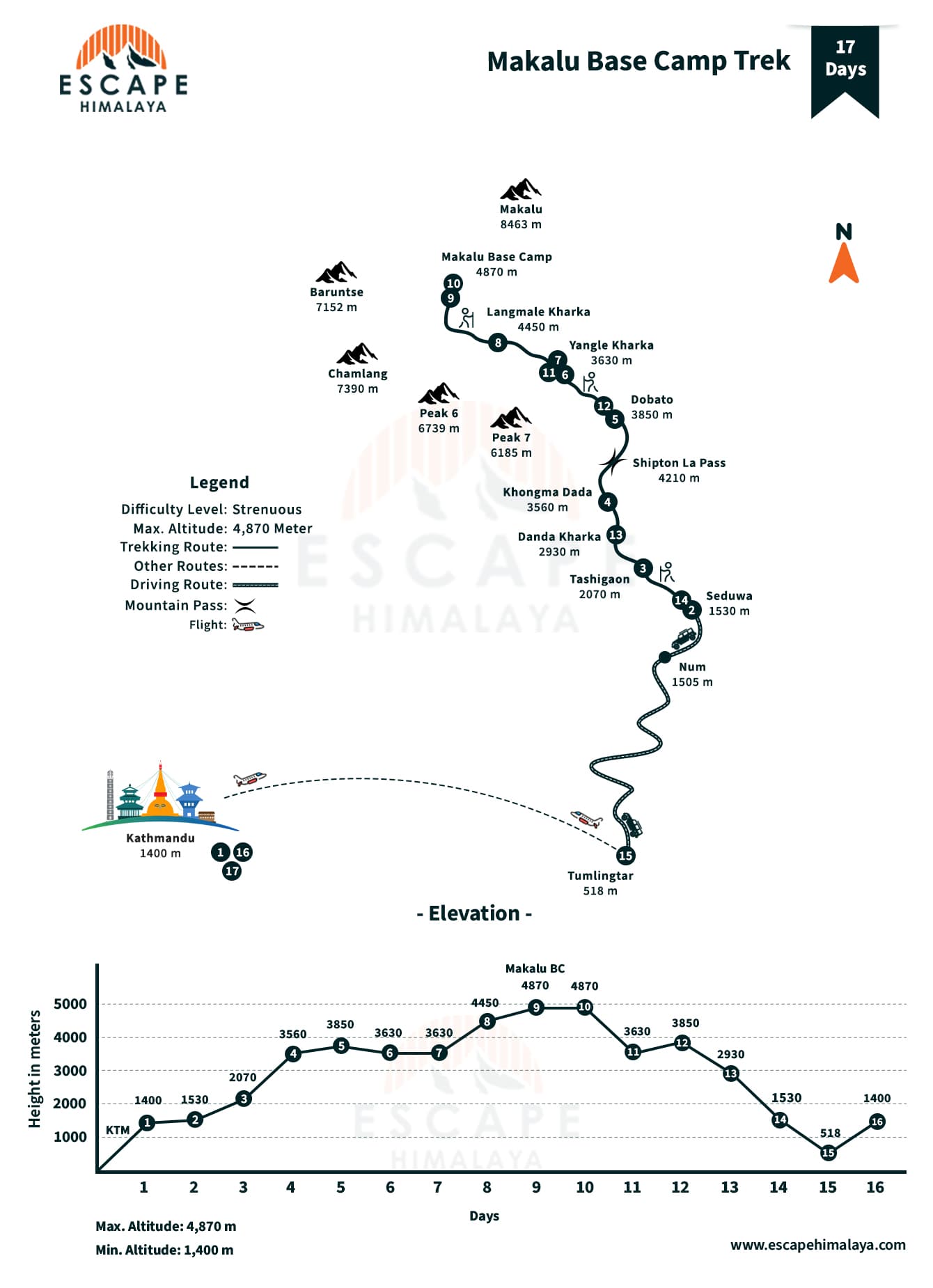
    Makalu Base Camp Trek Route Map

    Makalu Base Camp Trek Map

    Good to Know

    Understanding Altitude Sickness

    When you go up high too quickly, your body struggles with less oxygen, and you get altitude sickness. Most people get headaches, feel sick, get dizzy, have trouble sleeping, or don't want to eat. It happens to almost everyone up there. The solution is simple: go slow. That's why rest days are built into the schedule, and your guide keeps telling you "bistari bistari" (slowly slowly). Drink 3 to 4 liters of water every day at high altitude. Don't drink alcohol at all. Don't try to keep pace with faster hikers. Everyone's body adapts differently, no matter how fit they are. If you feel worse instead of better, going back down is the only thing that helps.

    What Are Teahouses Actually Like?

    Teahouses are basic mountain lodges with small rooms that have two beds and thin mattresses. You'll room with your trek partner, and the walls are paper-thin, so bring earplugs. Lower down, you get regular toilets and maybe a hot shower for extra money. Higher up, it's squat toilets and washing from a bucket. Above 4,000 meters, bathrooms are outside, and there's no shower available. Everyone hangs out in the dining room around the wood stove because that's the only warm place. Charging your phone gets more expensive the higher up you go, sometimes as much as 500 rupees per device. WiFi is available in a few places, but it's super slow and barely works.

    Food During the Trek

    Dal bhat (rice with lentil soup and veggies) becomes your go-to meal. The saying "dal bhat power, 24 hours" is absolutely true because it fills you up and gives you energy. You can also get fried noodles, fried rice, momos (dumplings), thukpa (noodle soup), and pancakes for breakfast. Menu choices get smaller as you climb higher. At base camp, your options are minimal. Everything takes longer to cook at high temperatures because water boils at a lower temperature. Above Yangle Kharka, everything is vegetarian since there's no refrigeration. Never drink water straight from taps or streams. Use boiled water, purification tablets, or a filter bottle instead of buying plastic bottles everywhere.

    What to Pack

    Start with thermal underwear as your base layer, add fleece or a down jacket in the middle, and finish with a waterproof jacket and pants on top. Bring a down jacket rated for minus 10 Celsius and a sleeping bag rated for minus 15 Celsius, as teahouse blankets aren't warm enough at high camps. Break in your boots completely before leaving home to avoid blisters. Trekking poles save your knees big time on downhill sections. A headlamp is essential for early-morning starts and when the electricity cuts out. Pack good sunscreen, sunglasses, and a hat because the sun is intense at altitude. Porters carry 15kg for two people, so don't bring unnecessary stuff.

    Permits You'll Need

    You need two permits: Makalu Barun National Park Entry Permit (about $30) and a TIMS card (around $20). Escape Himalaya takes care of all the paperwork for you. Just give them copies of your passport and some photos. Your guide will register these permits at checkpoints along the way. The money from permits helps fund conservation work in the park and keeps track of trekkers for safety. Everything gets handled for you, so there's no hassle with bureaucracy or running around government offices.

    Staying Connected

    Your phone works in lower villages like Seduwa and Tashigaon if you have Ncell, but the signal dies completely higher up. Some teahouses have WiFi, but it costs money and barely functions. At high altitude, forget about the internet altogether. Your guide has a satellite phone for emergencies, especially if someone needs a helicopter rescue. Tell your family before you go that they won't hear from you for long stretches. Some people bring GPS trackers that send location updates through satellite so family can see where you are without needing cell service.

    Travel Insurance is Not Optional

    You absolutely must have insurance that covers trekking up to 6,000 meters and helicopter rescue. Regular travel insurance doesn't cover high-altitude trekking at all. You need to add coverage for adventure sports. A helicopter rescue from way up high costs $5,000 to $10,000, and they won't even send the helicopter without confirmed insurance. Read your policy carefully to make sure it covers the altitude you're reaching and the activities you're doing. Some won't cover you if you trek without a guide, but you have one, so that's fine. Keep insurance papers with you and leave copies with family.

    Your Guide and Porter Team

    Your guide does way more than just show you the trail. They sort out permits, book rooms, order food, talk to teahouse owners, provide information about the area, monitor altitude, and make essential safety calls. Porters carry the heavy loads (15kg for two people), so you only need a light daypack. These guys are incredibly tough and often hike in sandals while carrying weights that would crush most of us. Escape Himalaya treats their porter team really well, with proper gear and fair conditions, which, sadly, isn't standard practice everywhere in Nepal's trekking scene.

    Respecting Local Culture

    The Sherpa and Rai families live in the Makalu region and have their own ways of doing things. Walk clockwise around stupas and prayer wheels, and spin the wheels clockwise too. Take your shoes off before going into temples or monasteries. Ask before taking photos of people, especially monks or during religious events. Cover your shoulders and knees in villages. Don't kiss or hold hands in public because that's considered inappropriate here. If someone offers you tea or food in their home, say yes because refusing is rude. Pack out every bit of trash you create because there's no garbage system up there. Skip bottled water when you can, since plastic bottles often litter the trails.

    Additional Tips for Success

    Start training at least two months early with cardio work and hiking with a weighted pack. Break in your boots during training hikes so you know they won't give you blisters. Pack smart, but don't leave out essential gear trying to go ultralight. Your mental game matters as much as your physical fitness. Some days will be tough when you're exhausted and feeling the effects of the altitude. Remember that the tough parts don't last, but the memories and pride in what you did will stick with you forever. Be cool about basic rooms and simple food because that's just part of remote mountain trekking. Listen to what your body tells you and trust your guide's judgment if they say you need to go back down.


    Travellers‘ Reviews

    Write a Review
    • Sheryl Ang

      14th Dec 2024

      Gorgeous Views!

      Excellent trekking experience with Escape Himalaya to Kala Patthar! Everything went seamlessly, and my guide ensured we were safe and comfortable at all times, even in the high altitude. Will definitely choose EH again when I am back in Nepal for more hiking! The country is so beautiful and just has so much to offer!

      Read more +
    • Tony W

      18th Apr 2024

      Amazing Manaslu Circuit with Phurba & Ram

      Just back from a fantastic 2 week trek around the Manaslu Circuit including Larke Pass (5100m). The weather was perfect and the views were outstanding!!

      Our guide Phurba Sherpa was excellent. Super knowledgeable and helpful at all times and always made sure we had a fantastic trip.

      Our porter, Ram Badhadur Magar was also a rockstar. He was super professional and always arrived before us every day. He was also super friendly and helpful too.

      Thanks to Phurba, Ram for always smiling and for a fantastic trip. Would highly recommend them to anyone interested in trekking in Nepal

      Read more +
    • Kevin P

      3rd Apr 2024

      Everest base camp trek - Mar-Apr 2024

      My 60 year old pals set out in hope on this adventure. In late March. We had our guide Raj Kumar and two porterd Janak and Ramesh. All three were stars. We changed our schedule - no problem. I would not have made it without Raj. I cannot thank him enough. Janak often took my back pack on steep climbs where I was struggling. This is a truly majestic and spiritual trek and I would encourage using Escape Himalaya and request this team of guide and porters if you want to give yourself the best chance of finishing and making best use of your time.
      Read more +

    FAQS

    Expand All (12)

    Q1. Is a visa required for entry into Nepal?

    Yes, the majority of travelers to Nepal will need a visa. You can acquire one upon arrival at Tribhuvan International Airport in Kathmandu or at land border crossings. Alternatively, you have the option to apply for a visa beforehand at a Nepalese embassy or consulate in your home country.

    Q2. Will there be someone to pick me up at the airport when I arrive?

    Yes, Escape Himalaya offers airport pickup services for our clients. We recognize the significance of a seamless arrival and strive to guarantee a trouble-free beginning to your journey. When you reserve a trek or tour with us, you can coordinate with our team to schedule a representative to greet you at the airport upon your arrival.

    Look for our staff member holding a signboard bearing your name or the company's name for easy recognition. Providing us with your flight details ahead of time, including your flight number and estimated arrival time, enables us to make suitable arrangements for your pickup.

    Q3. As a solo traveler, are you able to join a group for your journey?

    Certainly! As a solo traveler, you're welcome to join one of the groups organized by Escape Himalaya. We frequently arrange group treks and tours that cater to individuals traveling alone. Joining a group not only allows you to meet other travelers but also offers the opportunity to share experiences and potentially lower costs.

    When reaching out to Escape Himalaya, simply inform us that you're a solo traveler interested in joining a group. We'll then provide details about available group departures and assist you in selecting a trek or tour that aligns with your preferences and travel dates.

    Q4. What are the types of hotel you use in Kathmandu?

    Generally, we use the best available 3-star, 4-star, and 5-star category hotels for travelers' accommodation in Kathmandu. Meanwhile, travelers can upgrade or prolong accommodation with us as required.

    The costs to prolong or upgrade hotel accommodation in Kathmandu may vary based on preferred hotel rates.

    Q5. Would it be possible for me to upgrade my accommodation to a luxury hotel in Kathmandu?

    Certainly! You have the option to upgrade your accommodation to a luxury hotel in Kathmandu. If you wish to elevate your stay from the standard 3-star hotel provided by Escape Himalaya, simply let us know, and we can arrange the upgrade for you. However, please bear in mind that availability and pricing for luxury hotels may fluctuate based on the hotel and the timing of your visit.

    Q6. Which destinations are commonly favored by tourists visiting Nepal?

    Nepal boasts breathtaking natural landscapes and a profound cultural legacy. Among the sought-after tourist spots are Kathmandu (the capital), Pokhara, Chitwan National Park, Lumbini (the birthplace of Lord Buddha), Bhaktapur, as well as the renowned trekking regions of Annapurna, Everest, Langtang, Manaslu, and Upper Mustang.

    Q7. Do we need a visa before coming to Nepal?

    Yes, most travelers need a visa to enter Nepal. However, the process for obtaining a visa depends on your nationality. You can either obtain a visa from the diplomatic consulate office of Nepal in your respective country or apply for an “On Arrival” visa at the entry checkpoints of Nepal. Please click this link to get more information on ways to issue a tourist visa. Also please see the visa fee here below:

    On-Arrival Visa Fee at Entry Points of Nepal:

    • 15 Days – 30 USD
    • 30 Days – 50 USD
    • 90 Days – 125 USD

    Indian nationals do not need to have a visa to enter Nepal however they need to bring an official document such as a Passport or Election card (issued by the Election Commission) that proves their identity.

    Q8. Which one is better: Group or Solo (private) trek?

    Escape Himalaya offers both group and solo trek to Everest Base Camp. However, to choose to join which tour style completely depends upon the traveler itself.

    If you are happy to meet people from other parts of the world and join in an experience of a lifetime with fellow travelers, then going for a group trek is also best.

    However, if you prefer freedom and flexibility, trekking solo (private) will give you the independence to set your own pace and choose your itinerary. You will have the flexibility to make spontaneous decisions. You will not be bound by a group schedule and choose to lead your journey as you wish and even modify the plan if needed.

    Q9. Who will come to pick me up at the airport on arrival day?

    Upon your arrival in Kathmandu, one of our representative staff will be there to pick you up at the airport holding a display board of Escape Himalaya. This service is included in all their trekking packages to ensure a smooth and comfortable start to your adventure. The representative will escort you to your hotel, where you will be staying as per the package itinerary. This service is designed to provide you with a hassle-free experience right from the beginning of your trip​.

    Q10. Is it possible to travel solo in Nepal?

    Yes, it is possible to travel solo in Nepal, and Escape Himalaya supports solo travelers with tailored services. They recommend hiring a guide for safety and better navigation, especially on complex trails. The company provides both male and female guides and ensures reputable accommodations for comfort and security. They also offer airport pickup and drop-off services for a smooth travel experience. Many solo travelers, including solo female trekkers, have reported positive experiences, highlighting the professionalism and support of Escape Himalaya throughout their journey.

    Q11. What type of trekking duffle bag and day pack should I bring?

    For trekking in Nepal, you will need a 60-80 liter duffle bag made of durable, water-resistant material. Escape Himalaya provides a duffle bag for your gear, carried by porters. For your day pack, choose a 20-30 liter pack with adjustable straps, hydration compatibility, and multiple compartments. Ensure both bags are durable and comfortable for the trek​.

    Q12. What kind of trekking boots should I bring?

    For trekking in Nepal, bring mid to high-cut waterproof boots with a breathable material like Gore-Tex. Ensure they have a snug fit, a lightweight design, and high-traction rubber soles like Vibram. Break them in before your trek to avoid blisters and discomfort.

    You may also Like

    • Rara Lake Trek
      from $2500

      Rara Lake Trek

      15 Nights 16 Days
    • Upper Dolpo Trek
      from $4300

      Upper Dolpo Trek

      24 Nights 25 Days
    • Langtang Gosainkunda Helambu Trek
      from $870

      Langtang Gosainkunda Helambu Trek

      15 Nights 16 Days