Fitness and Physical Preparation
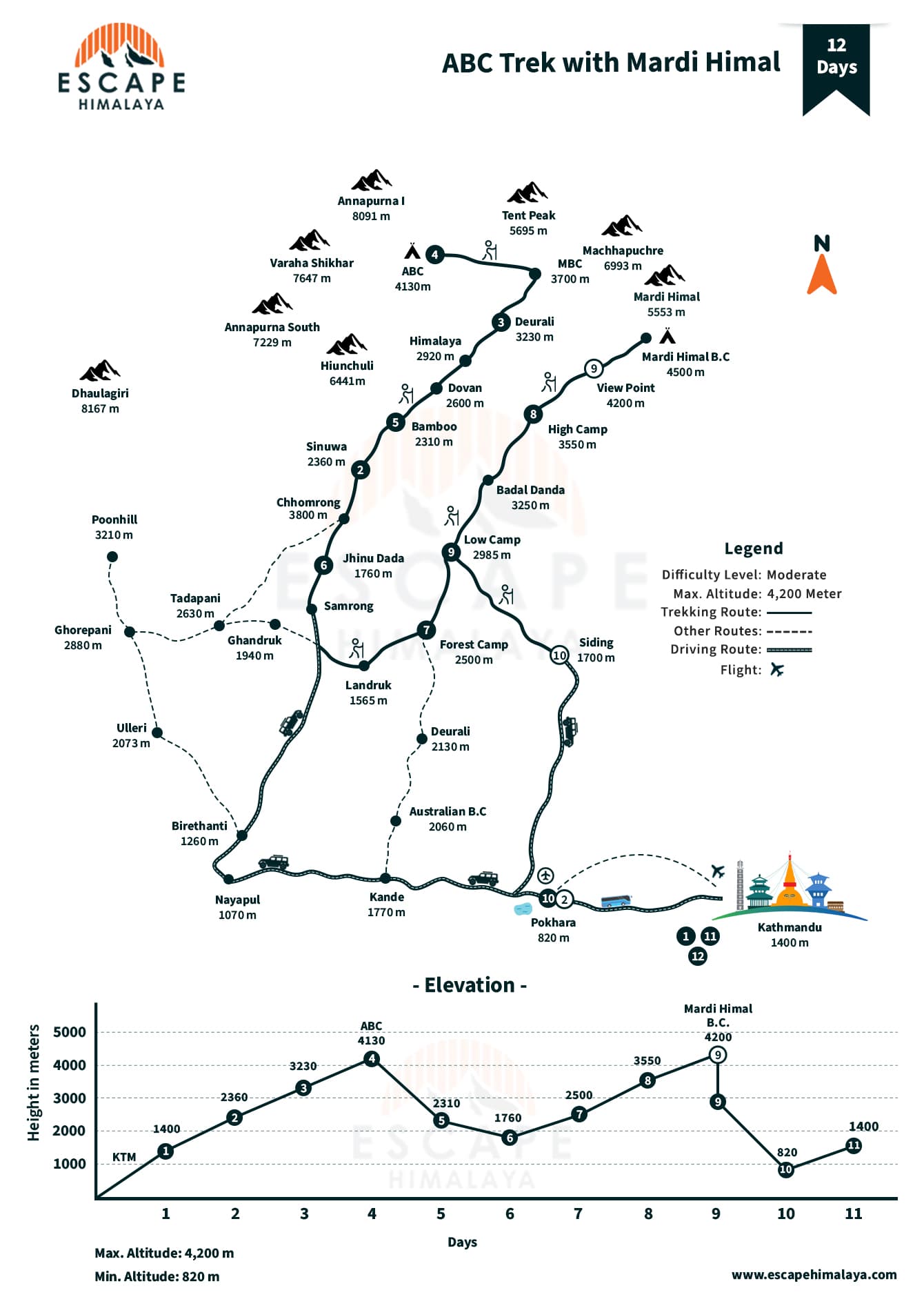
This combined trek is rated moderate to challenging. The ABC section is accessible to fit beginners, but the Mardi Himal section adds an additional high-altitude push to 4,200 metres after the ABC ascent and descent, requiring genuine physical reserves in the second half of the trek. The most demanding single day is Day 8 (Forest Camp to High Camp), which gains over 1,000 metres on a steep ridgeline trail. Day 9 adds the pre-dawn viewpoint hike of a further 620 metres from High Camp.
Recommended preparation: regular hiking with a loaded pack for 4 to 6 weeks before departure, with particular attention to sustained uphill performance. The total trekking distance across 9 active days is approximately 95 kilometres. If you have completed a previous multi-day trek or are regularly active with hills or climbing, you are well positioned for this itinerary.
Why This Combined Trek is Better Than Two Separate Treks
The Annapurna Base Camp Trek and the Mardi Himal Trek are typically sold as separate packages requiring separate trips to Nepal. This combined itinerary connects them via the Jhinu Danda hot springs, a natural geographic link in the Modi Khola valley that makes the transition seamless. The result is a single 12-day journey that visits both the famous Annapurna Sanctuary and the less-visited Mardi Himal ridge, with the hot springs as the perfect physical and psychological rest point between the two. For anyone planning to trek in the Annapurna region more than once, this package saves an entire trip.
The Mardi Himal Section: What Makes It Different
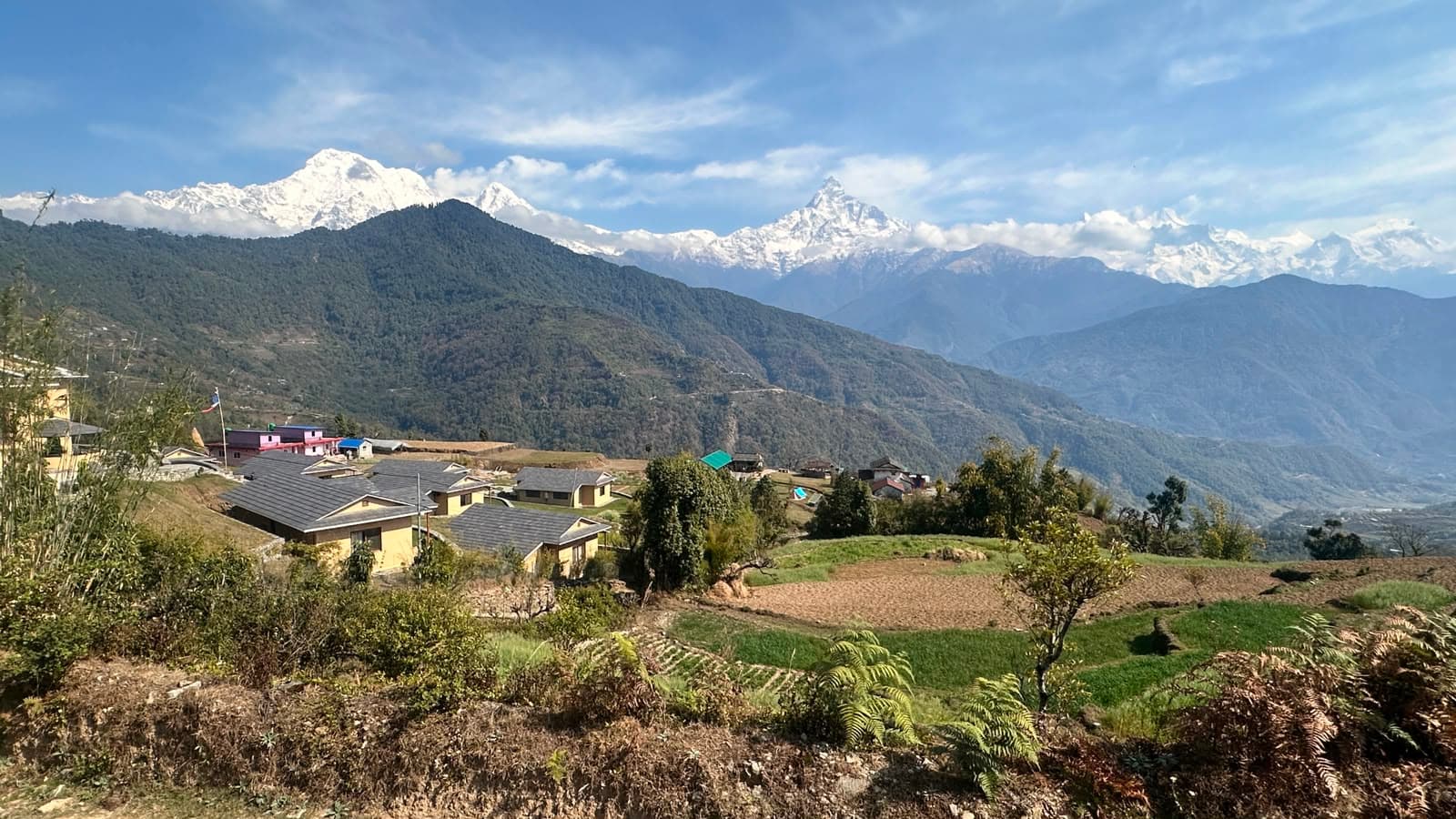
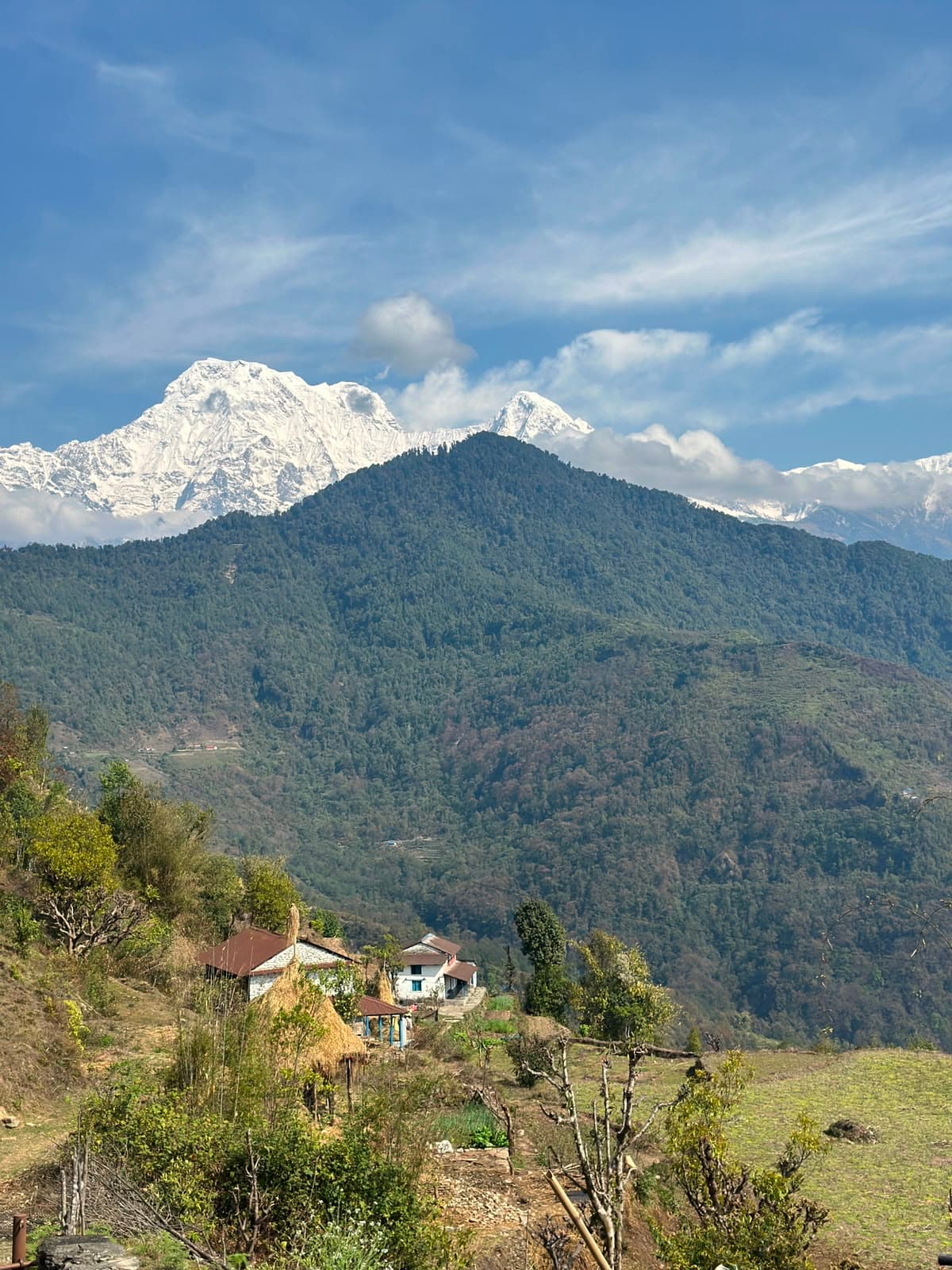
The Mardi Himal trek was officially opened in 2012 and remains significantly less crowded than both the ABC and Poon Hill routes. The trail follows the southeast ridge of Mardi Himal (5,587 m) through dense rhododendron and oak forest to an exposed high ridge above the treeline, offering a close-up perspective of Machhapuchhre's east face and the Annapurna massif from the northeast that is completely different from any view available on the standard ABC trail. In spring, the rhododendron forests on the lower ridge are exceptional and the trail rewards those who choose the less-travelled option in the Annapurna region.
Altitude and AMS
The combined trek reaches 4,200 metres at the Mardi Himal Upper Viewpoint, which comes after several days already at altitude on the ABC route. The itinerary's pacing, with the descent from ABC and the Jhinu Danda rest day before climbing Mardi Himal, provides natural acclimatisation breaks that reduce AMS risk on the second high-altitude push. Mild altitude symptoms (headache, reduced appetite, light fatigue) are common above 3,000 metres and typically resolve with rest and hydration. Your guide monitors your condition throughout and will always prioritise safe pacing over schedule.
Best Season to Trek
Spring (March to May) and Autumn (September to November) are the optimal seasons for both sections of this combined trek. Spring offers the famous rhododendron bloom on the Mardi Himal ridge from late March through April, clear morning mountain views, and the most photogenic conditions on both routes. Autumn delivers the clearest, most stable weather of the year with very low rainfall and excellent visibility from both ABC and the Mardi Himal viewpoint. Mid-October is the single best week of the year for combining reliable weather with the best mountain clarity at both high points.
Tea House Accommodation
Tea houses on both sections of this trek are generally well-developed and comfortable. The ABC approach via Sinuwa and Deurali has good quality lodges with private rooms at most overnight stops. On the Mardi Himal ridge, Forest Camp and Low Camp have solid tea house options while High Camp facilities are simpler and colder. All overnight stops have been personally assessed by Escape Himalaya guides for cleanliness, food quality, and safety. Hot showers are available at a small additional charge at Sinuwa, Chhomrong, and Jhinu Danda.
Responsible Travel
The Annapurna Conservation Area prohibits single-use plastic water bottles throughout the entire trek area. All Escape Himalaya trekkers are provided with a reusable bottle and encouraged to use boiled or filtered water from tea houses. Our porter and guide teams are paid fair wages above the local minimum, receive proper equipment and altitude insurance, and are never subjected to unsafe load sizes. We operate under full Leave No Trace principles with all non-biodegradable waste carried out to Pokhara for proper disposal.
Frequently Asked Questions(FAQs)
1. What makes this package different from a standard Annapurna Base Camp Trek?
Most ABC packages follow the Ghorepani Poon Hill approach and return the same way. This combined itinerary skips Poon Hill in favour of a direct sanctuary approach, then adds the full Mardi Himal ridge experience as the second half of the trek. You visit two high-altitude objectives (ABC at 4,130 m and Mardi Himal Upper Viewpoint at 4,200 m) in a single journey, connected naturally via Jhinu Danda hot springs. The Mardi Himal section is significantly less crowded than ABC and offers a completely different perspective of the Annapurna massif from the eastern ridgeline.
2. Is this trek suitable for beginners?
The ABC section is beginner-friendly, but the combined itinerary is best suited to trekkers with at least some prior hiking or multi-day trekking experience. The Mardi Himal High Camp ascent on Day 8 gains over 1,000 metres in a single day, and the pre-dawn viewpoint hike on Day 9 adds a further 620 metres of climbing after several demanding days already behind you. If you are a fit first-time trekker who prepares properly, the route is achievable, but some experience with sustained uphill hiking is strongly recommended.
3. Why does the itinerary skip Poon Hill?
The 12-day format and the addition of the Mardi Himal section mean the itinerary is structured for a direct sanctuary approach via Sinuwa rather than the longer Poon Hill route via Ghorepani. The Mardi Himal Upper Viewpoint (4,200 m) delivers a panorama of the Annapurna and Machhapuchhre ranges that is in many ways more intimate and rewarding than Poon Hill, and from a higher elevation. For trekkers who specifically want the Poon Hill sunrise, we can arrange a customised extension of 2 to 3 days to include it.
4. How does the connection between ABC and Mardi Himal work?
After descending from ABC through Bamboo, the trail continues to Chhomrong and then branches west to Jhinu Danda in the Modi Khola valley. From Jhinu Danda, the trail climbs northeast onto the Mardi Himal ridge trail toward Forest Camp. This geographic connection is natural and relatively straightforward, though it involves a day of transition trekking (Day 7) that climbs from 1,760 m at Jhinu Danda to 2,500 m at Forest Camp. The Escape Himalaya guide manages the transition route to ensure the connection is smooth and correctly navigated.
5. What is the Mardi Himal Upper Viewpoint like compared to Annapurna Base Camp?
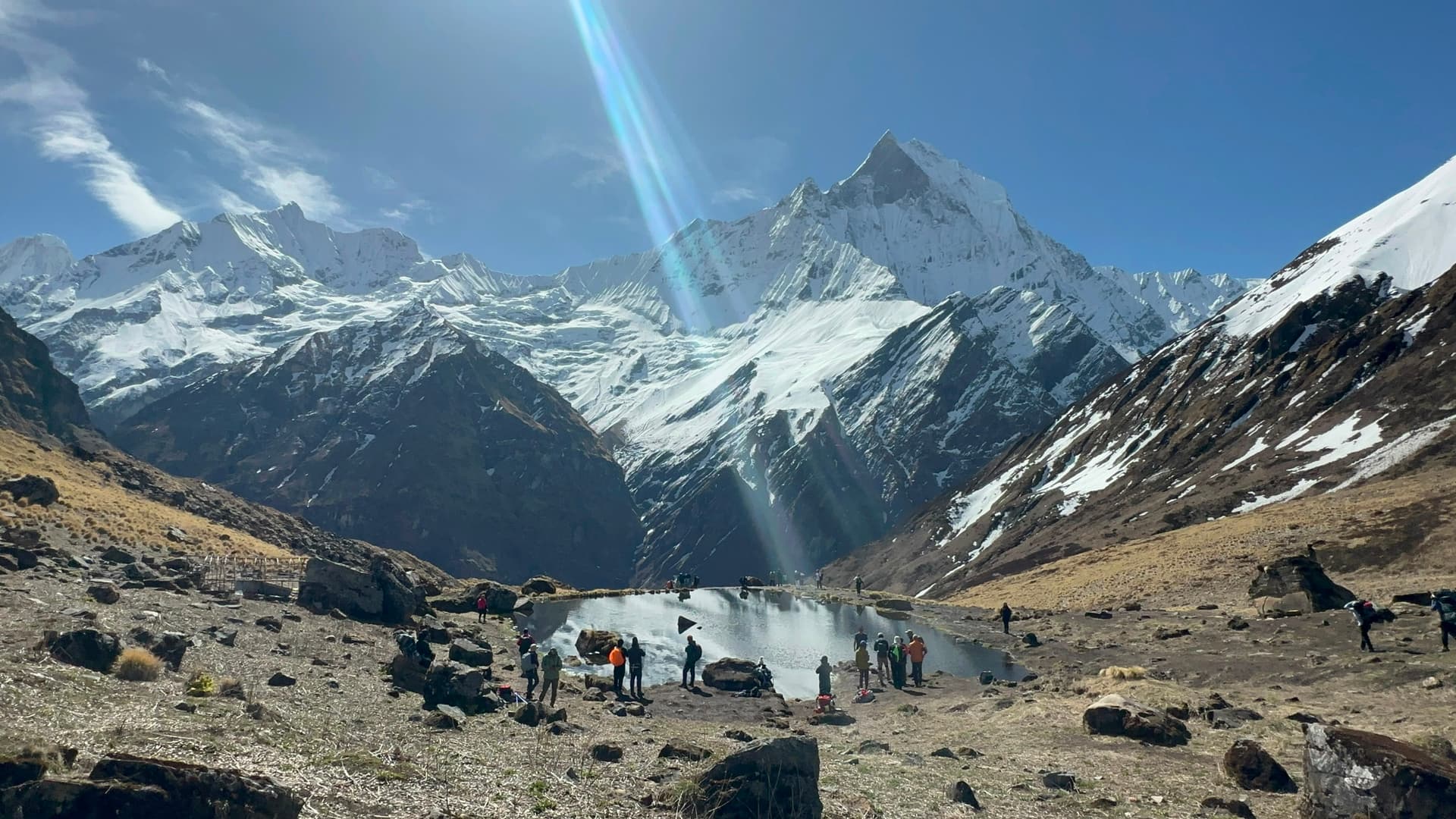
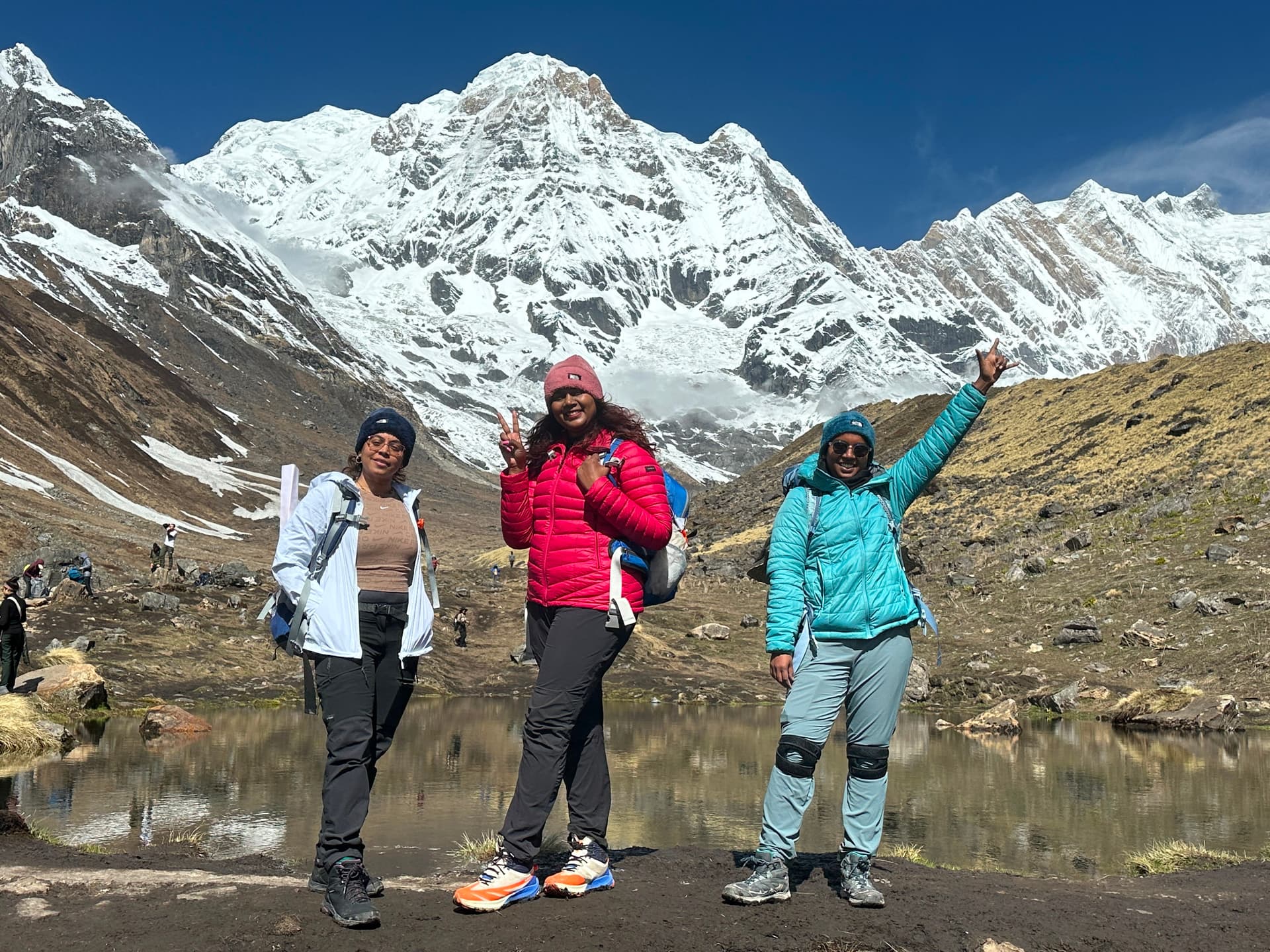
The two experiences are complementary rather than comparable. ABC sits in a wide glacial amphitheatre enclosed by mountains from all sides, giving an immersive, surrounded-by-giants feeling. The Mardi Himal Upper Viewpoint sits on an exposed ridge looking directly at the east face of Machhapuchhre and the full Annapurna massif from the northeast, giving a panoramic, birds-eye feeling. ABC is more dramatic in its enclosure. The Mardi Himal viewpoint is more dramatic in its exposure. Both are exceptional and neither replaces the other, which is precisely why combining them makes such a compelling 12-day itinerary.
6. What are the Jhinu Danda hot springs like?
The Jhinu Danda hot springs are natural thermal pools on the bank of the Modi Khola River, open to trekkers for a small local entrance fee. The pools are open-air stone constructions fed by natural thermal water at a comfortable bathing temperature. They are at their quietest in the early morning before other trekkers arrive from the ABC descent. Soaking here with the river below and the rhododendron hills above, knowing that the second half of the trek still lies ahead, is one of the most genuinely pleasurable moments on this entire itinerary.
7. What permits are required?
Two permits are required for the entire route: the Annapurna Conservation Area Permit (ACAP) and the TIMS Card. Both are fully included in the Escape Himalaya package price and are arranged by your guide in Kathmandu or Pokhara before the trek starts. No additional permits are required for either the ABC section or the Mardi Himal section, as both fall within the Annapurna Conservation Area boundary.
8. What insurance do I need?
Travel insurance with trekking coverage and helicopter evacuation is mandatory. The maximum altitude on this trek is 4,200 metres, within the standard coverage range of most Nepal trekking policies. Helicopter evacuation from the Annapurna region typically costs USD 1,500 to 3,000. We recommend World Nomads, True Traveller, or Battleface for Nepal-specific coverage including both trekking altitude and emergency evacuation.
9. Can this itinerary be customised?
Yes. Escape Himalaya can extend the itinerary to include the Ghorepani Poon Hill approach on the front end, add an extra acclimatisation night at Deurali before reaching ABC, or arrange a Pokhara extension with paragliding, rafting, or a lakeside rest day. Private departures are available on any date with a group of one or more. Contact our team to discuss your specific preferences and schedule.
10. How do I book?
Book directly via the Escape Himalaya website or contact our team by email or WhatsApp. A 20% deposit confirms your reservation with the full balance due 30 days before departure. We accept bank transfer, major credit cards, and PayPal and respond to all enquiries within 24 hours.
11. What is the best time of year to do this combined trek?
Spring (March to May) and Autumn (September to November) are both excellent. Spring is ideal if you want the rhododendron bloom on the Mardi Himal ridge, which is at its best from late March through April and adds extraordinary colour to the forest sections between Jhinu Danda and High Camp. Autumn offers the clearest skies and most stable weather for both the ABC sanctuary views and the Mardi Himal viewpoint sunrise. Mid-October is consistently the best single week of the year for combining reliable clear skies with comfortable temperatures at all altitudes on this route.
12. How difficult is the climb from Forest Camp to High Camp?
The Forest Camp to High Camp day (Day 8) is the most physically demanding single day of the Mardi Himal section, gaining approximately 1,080 metres over 6 to 7 hours of trekking. The trail climbs steadily through Low Camp and Badal Danda before the final push to the exposed ridge at High Camp. The terrain is good trail throughout with no technical sections, but the sustained altitude gain after several days already on the trail requires solid fitness and a steady pace. Most trekkers find it demanding but very manageable with regular rest stops and good hydration.
13. Can I see wildlife on this trek?
Yes. The Annapurna Conservation Area is one of the richest wildlife habitats in Nepal. Himalayan langurs are commonly spotted in the rhododendron forests between Chhomrong and the upper sanctuary. Musk deer and barking deer are occasionally seen on the quieter Mardi Himal ridge trail. The Himalayan monal, Nepal's national bird and one of the most brilliantly coloured pheasants in the world, is regularly spotted on the open ridge sections above Forest Camp on the Mardi Himal trail. The conservation area also supports snow leopards and red pandas, though sightings on the main trail are rare.
14. Is there mobile network and internet access on the trail?
Mobile network coverage is reasonable up to Chhomrong on the ABC section, with NTC and Ncell SIM cards both working at the lower settlements. Above Chhomrong the signal becomes patchy and unreliable. On the Mardi Himal ridge, signal is limited above Forest Camp. Most tea houses on both sections offer Wi-Fi at a small additional charge, though connection speed decreases significantly at higher altitudes. We recommend downloading offline maps, entertainment, and any necessary documents before leaving Pokhara.
15. What happens if I feel unwell at altitude?
Your Escape Himalaya guide is trained in high-altitude first aid and monitors your condition daily throughout the trek. If you develop symptoms of altitude sickness that do not resolve with rest and hydration within 24 hours, descent is the immediate and correct response. On the ABC section, the descent to lower altitude is straightforward via the main trail. On the Mardi Himal section, descent from High Camp to Low Camp and Forest Camp is rapid and effective. Helicopter evacuation can be arranged in genuine emergencies and is covered by your travel insurance. Your guide has the full authority to make descent decisions and will always prioritise your safety over the itinerary.
16. What food is available on the trail?
Tea houses on both sections of this trek offer surprisingly varied menus. Dal bhat, fried rice, noodle soup, pasta, omelettes, pancakes, and porridge are available at every overnight stop. Vegetarian options are plentiful and recommended above Chhomrong where fresh meat supply is limited. All three daily meals are included in the package from Day 2 onwards. Above Forest Camp on the Mardi Himal section, menus become simpler and prices higher, but food quality and hygiene at our selected tea houses are consistently maintained. Boiled or filtered water is available at all overnight stops and is strongly preferable to single-use plastic bottles, which are prohibited in the conservation area.
17. Do I need to book tea houses in advance?
Escape Himalaya handles all tea house reservations on your behalf as part of the package. During peak trekking seasons (October and April especially), tea houses on the ABC route can be fully booked, and advance reservation is essential. On the Mardi Himal ridge, capacity is smaller but the number of trekkers is also fewer, so availability is generally less of an issue. All overnight stops for your trek are pre-booked and confirmed by our team before your departure date.
18. What should I pack for this trek?
Essential items include good quality trekking boots (broken in before the trip), moisture-wicking base layers, a mid-layer fleece, a waterproof outer layer, trekking trousers, warm hat and gloves, sunglasses, sunscreen, a reusable water bottle, headtorch with spare batteries, personal first aid basics, and any prescription medication. A sleeping bag liner adds warmth in the higher tea houses. Trekking poles are strongly recommended for the steep descents on both sections. Your Escape Himalaya guide will provide a full packing list at the time of booking. The duffle bag provided carries up to 15 kg with your porter.
19. Is tipping expected for guides and porters?
Tipping is customary in Nepal's trekking industry and is genuinely appreciated by the guides and porters who work hard to make your trek safe and enjoyable. The standard recommendation for a completed trek is approximately USD 80 to 120 total per trekker, split between the guide and porter team at the end of the journey. Your Escape Himalaya guide will appreciate any tip given directly and warmly, but there is no obligation and the amount is entirely at your discretion.
20. What is the cancellation policy?
Standard cancellation policy: cancellations made 45 or more days before departure receive a full refund less administration fees. Cancellations 30 to 45 days before departure receive a 75 percent refund. Cancellations 15 to 30 days before departure receive a 50 percent refund. Cancellations within 14 days of departure are non-refundable. Cancellations due to a documented medical emergency are handled individually with flexibility. We strongly recommend travel insurance that includes trip cancellation coverage to protect against unforeseen circumstances.