Best Time for the Classic Annapurna Circuit Trek
Spring – March, April, May (Best Season)
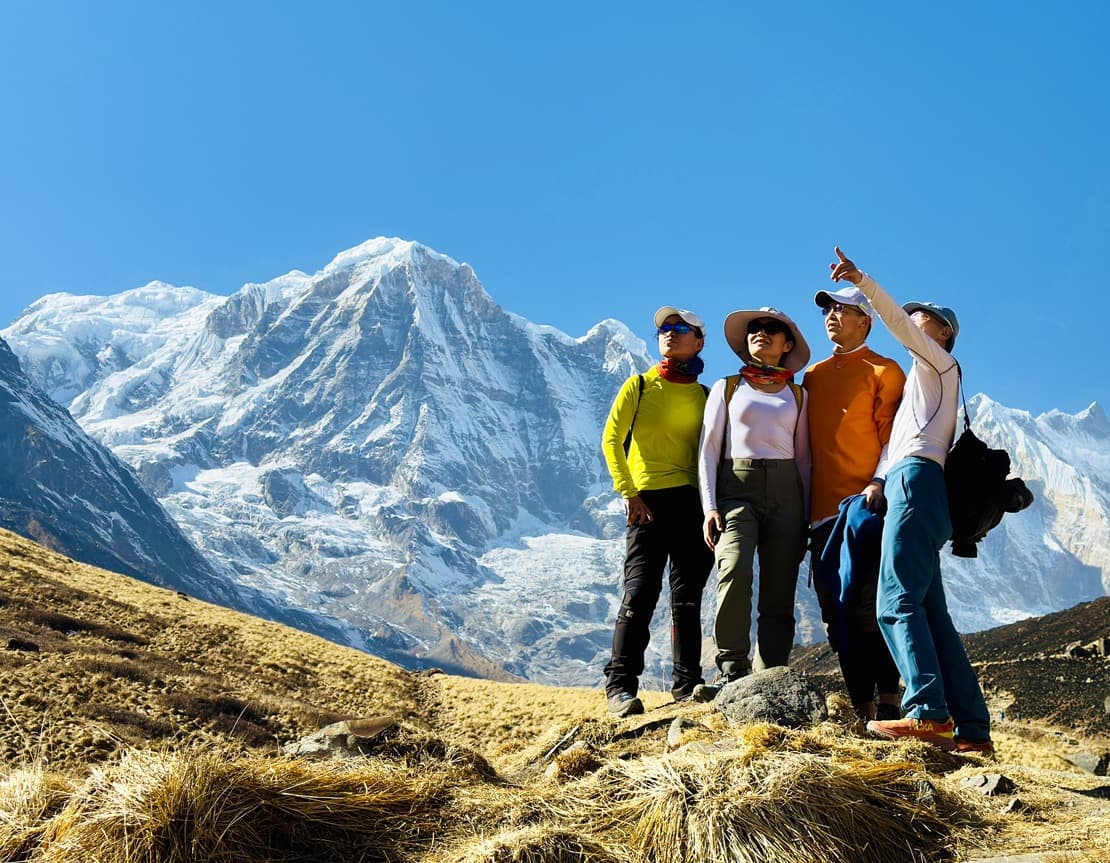
Spring is one of the two premier trekking windows for the Annapurna Circuit and the most visually spectacular. Rhododendron forests across the lower slopes are in full bloom, turning the hillsides crimson, pink, and white. Temperatures are comfortable for walking, cool at altitude, warm in the valleys, and mountain views are consistently clear before the pre-monsoon cloud builds in late May. Spring is especially popular with trekkers who want the full sensory experience of the region.
Autumn – September, October, November (Best Season)
Many experienced trekkers consider October the finest month of the year to be in Nepal. The monsoon clears in late September, washing the atmosphere to crystal clarity. Mountain views are extraordinary. Temperatures are ideal and the trails are in excellent condition after the summer rains. October and early November see the highest trekker numbers of the year; book accommodation and guides well in advance for these dates.
Winter – December, January, February (Possible with Preparation)
Winter trekking on the Annapurna Circuit is possible and offers the reward of near-empty trails and spectacular clear-sky mountain photography. However, Thorong La Pass can be heavily snow-bound and occasionally closed from December through February. Temperatures on the pass can drop to -25°C or below with wind chill. If you choose winter, your guide must be experienced in winter high-altitude trekking and you must be prepared for the possibility of waiting at Thorong Phedi for a suitable crossing window.
Monsoon – June, July, August (Not Recommended for Most)
The monsoon brings heavy daily rainfall to most of the Annapurna region between June and late August. Trails can be muddy, bridges occasionally washed out, and mountain views obscured for days at a time. Leeches are present below 3,000 metres throughout the monsoon. The upper sections of the circuit, particularly around Manang, Thorong La, and the Mustang side, receive significantly less rain due to the Himalayan rain shadow, making this a viable season for confident, experienced trekkers who do not mind wet lower valleys.
Difficulty Level and Required Fitness
The Classic Annapurna Circuit Trek is graded moderate to strenuous. It is not technically difficult, no ropes, climbing equipment, or prior mountaineering experience are required. The challenge comes from sustained daily walking distances (averaging 12–16 km per day), significant cumulative elevation gain, and the demands of high altitude above 4,000 metres.
Who can do it?
Any reasonably fit adult who exercises regularly and has completed multi-day hikes or treks is a strong candidate. Previous high-altitude trekking experience is an advantage but not a requirement if you are willing to follow acclimatisation guidelines carefully.
Physical preparation: Begin cardiovascular training at least eight weeks before departure. Daily stair climbing, long-distance hiking on weekends, and cycling all help build the specific muscle groups and lung capacity required for sustained uphill walking. Your legs, knees, and ankles will carry you 200 kilometres. Give them the preparation they deserve.
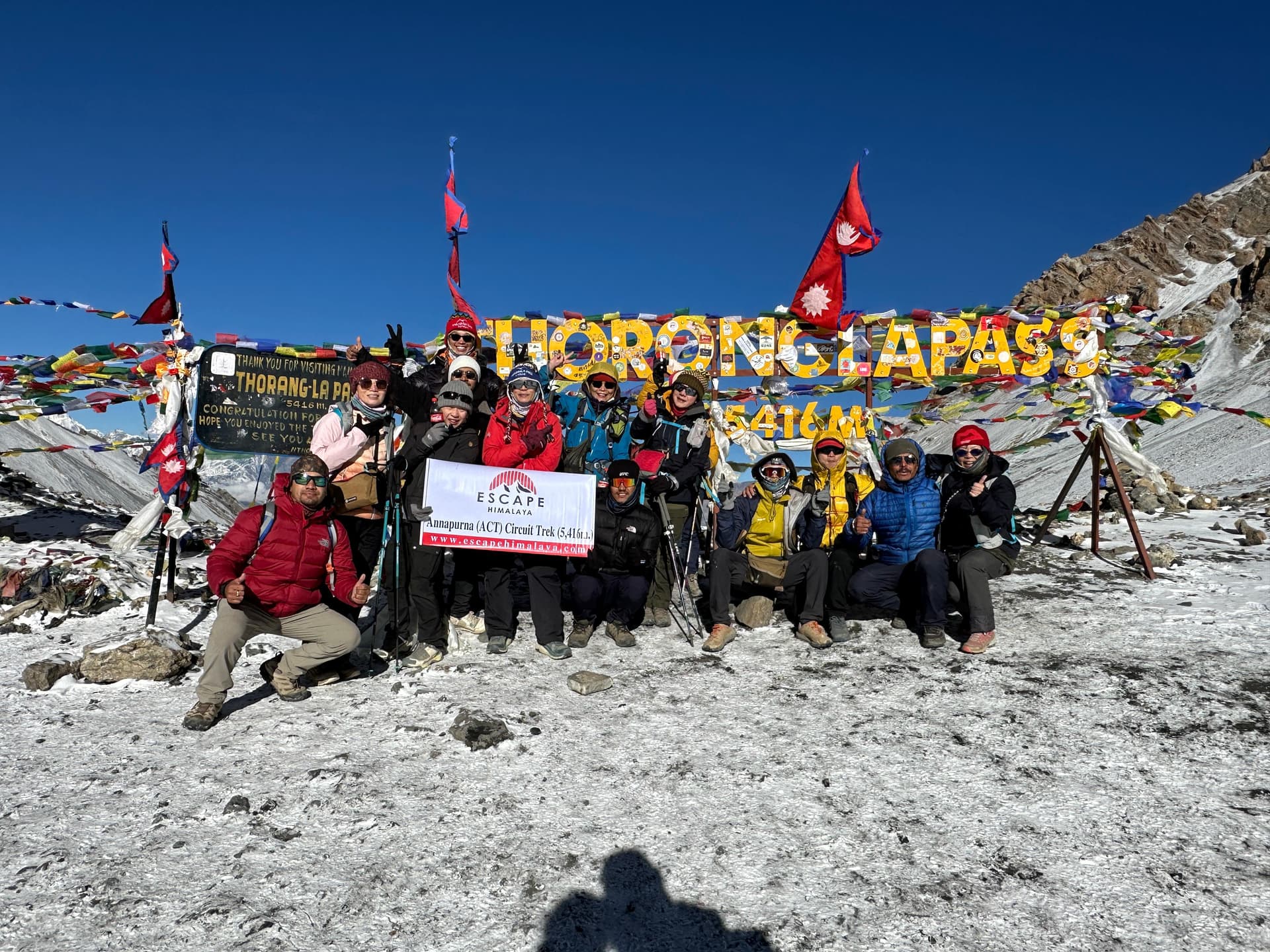
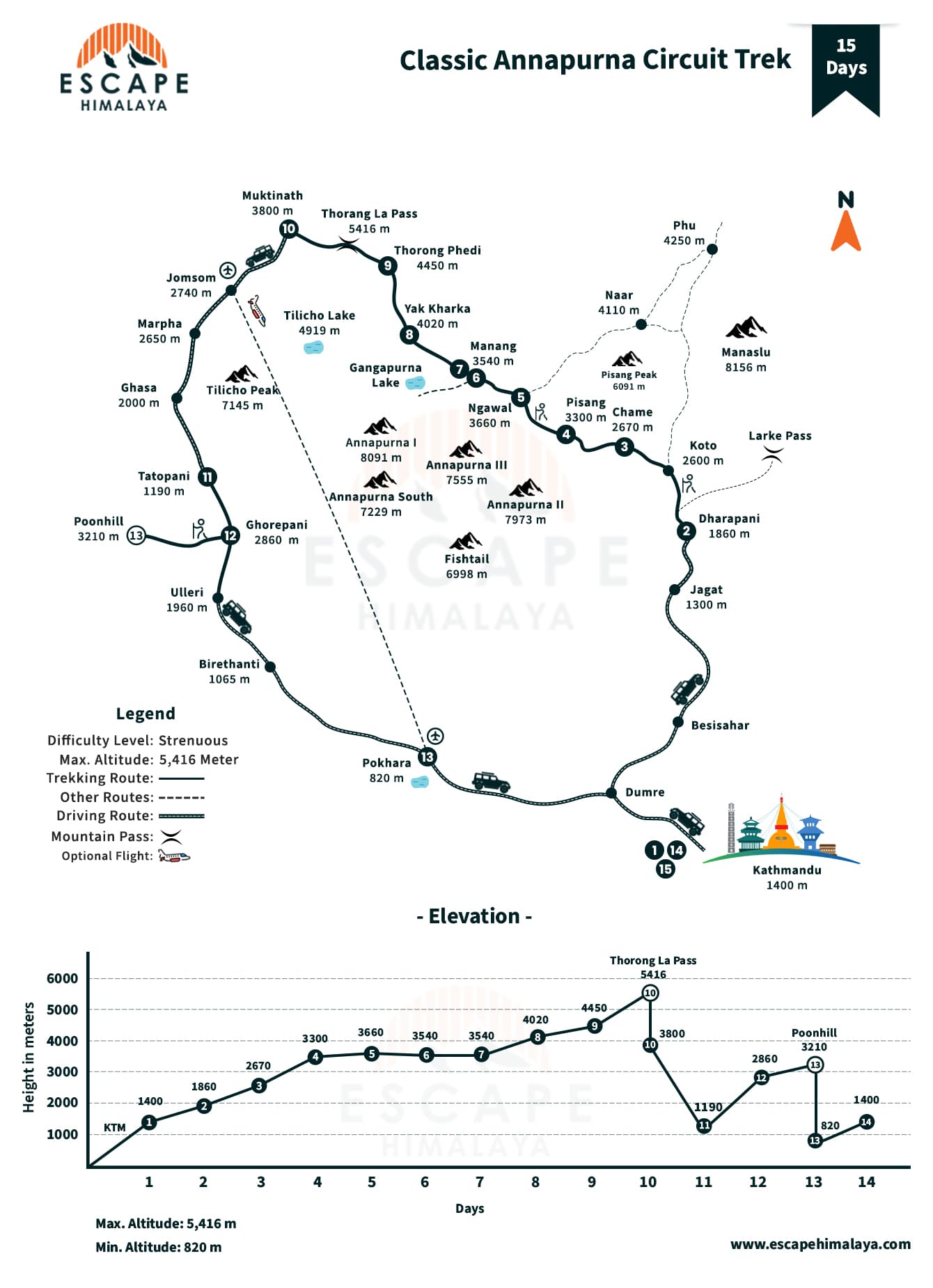
Altitude awareness: The trek reaches 5,416 metres on Thorong La Pass. Altitude sickness (AMS) can affect anyone regardless of fitness level. The 15-day itinerary is specifically designed with proper acclimatisation days built in. Follow your guide's advice, ascend slowly, drink 4–5 litres of water daily, and avoid alcohol at altitude. If you experience persistent headache, nausea, or loss of coordination, tell your guide immediately.
Required Permits for the Classic Annapurna Circuit Trek
Annapurna Conservation Area Permit (ACAP): Required for all trekkers entering the Annapurna Conservation Area. This is the primary protected area fee and supports conservation and community development projects in the region. Current fee: NPR 3,000 per person for foreign nationals (approximately USD 22). Included in your Escape Himalaya package.
TIMS Card (Trekkers' Information Management System): A safety registration system maintained by the Nepal Tourism Board and TAAN. All independent trekkers and guided trekkers must obtain this before starting. Current fee: USD 10–20 per person depending on whether you are trekking with an agency or independently. Included in your Escape Himalaya package.
Both permits are obtained in Kathmandu prior to departure, either at the Nepal Tourism Board offices in Bhrikuti Mandap or through your Escape Himalaya guide as part of the pre-departure briefing. Carry both permits at all times on the trail; police checkpoints at Tal, Ledar, and other points will check them.
Essential Packing List | Classic Annapurna Circuit Trek
Clothing & Layering
- Moisture-wicking base layers (2 sets), wool or synthetic, never cotton
- Mid-layer fleece or softshell jacket
- Down jacket (provided by Escape Himalaya)
- Waterproof outer shell jacket and trousers
- Trekking trousers (2 pairs) and trekking shorts (optional for lower sections)
- Warm hat and sun hat or cap (cap provided by Escape Himalaya)
- Gloves, 1 light liner pair and 1 warm waterproof pair
- Warm socks (4–5 pairs, wool recommended) and 1–2 pairs of inner sock liners
- Gaiters, useful for snow sections near Thorong La
Footwear
- Broken-in waterproof trekking boots with good ankle support — the single most important item
- Lightweight camp shoes or sandals for teahouse evenings
- Crampons (provided by Escape Himalaya for the pass crossing)
Sleep & Carry
- Sleeping bag rated to -15°C (provided by Escape Himalaya)
- 70-litre duffel bag for porter carry (provided by Escape Himalaya)
- 20–25 litre daypack for items you need access to while walking
- Dry bags or heavy zip-lock bags for waterproofing gear inside packs
Health & Safety
- Comprehensive personal first aid kit including blister care and pain relief
- Water purification tablets or a Lifestraw / Sawyer filter
- Sunscreen SPF 50+ and quality UV-blocking sunglasses (UV exposure is extreme above 4,000 m)
- Lip balm with UV protection
- Altitude medication, consult your doctor about Diamox (acetazolamide) before travel
- Personal prescription medications plus a spare supply
- Rehydration salts and electrolyte tablets
Electronics & Extras
- Head torch with spare batteries, essential for 4:30 am Thorong La start
- Fully charged power bank (at least 20,000 mAh, charging at teahouses is unreliable above Manang)
- Camera, the Annapurna Circuit is one of the most photographed treks on earth
- Local SIM card with data pack, available from NTC or Ncell in Kathmandu
- Cash in Nepali rupees, withdraw in Chame (last reliable ATM before Jomsom)
Frequently Asked Questions (FAQs)
What is the difference between the Classic Annapurna Circuit Trek and the 14-day version?
The Classic Annapurna Circuit Trek covers the full original route over 18 days, from Jagat all the way to Pokhara via the Kali Gandaki valley and Poon Hill. The 14-day version ends at Jomsom and either flies or drives directly to Pokhara, skipping the lower gorge section, Tatopani's hot springs, and the Poon Hill sunrise. The classic route is for trekkers who want the complete traditional circuit without missing any of the stages that made it famous in the first place.
How hard is the Thorong La Pass crossing?
Thorong La at 5,416 meters is the most demanding day of the trek. The crossing covers 16.5 kilometers over 7 to 8 hours, starting before dawn from Thorong Phedi at 4,600 meters. The trail is steep on the approach and rocky on the way down to Muktinath. The acclimatization day at Manang and the staged altitude gain from Yak Kharka to Thorong Phedi are built into the itinerary specifically to prepare the body for this day. Most trekkers with a reasonable level of fitness complete it without major difficulty when the pacing is managed correctly.
When should I book Thorong High Camp accommodation?
Book High Camp before leaving Manang, not after. During October and April, the peak months, rooms fill completely days in advance. Late arrivals end up at Thorong Phedi with a longer climb on pass day, or worse, leaving at 2am in the dark with no preparation. Escape Himalaya's guide manages the High Camp booking at Manang as part of standard trip logistics.
Does the Classic Annapurna Circuit Trek include Tilicho Lake?
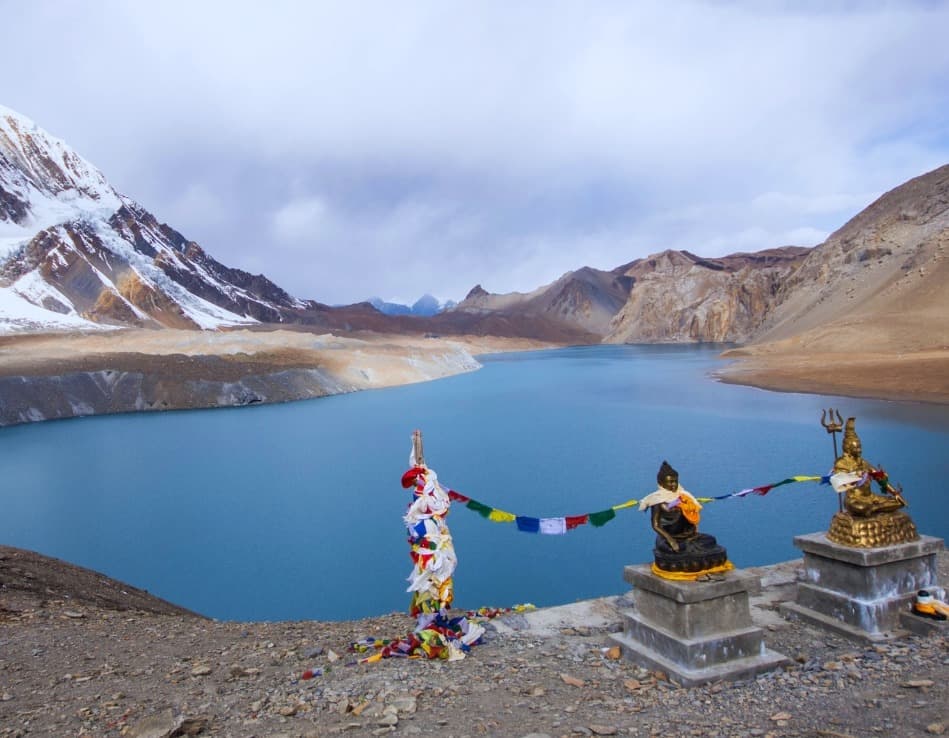
The standard classic route does not include Tilicho Lake. At 4,919 meters, Tilicho is one of the highest glacial lakes in the world accessible by trekking. Adding it requires a 2 to 3 day side trip from the Manang valley section. Escape Himalaya offers the Annapurna Circuit Trek with Tilicho Lake as a separate itinerary for trekkers who want to include it. The side trip also doubles as additional acclimatization before Thorong La.
What is the Kali Gandaki Gorge and why does the classic route include it?
The Kali Gandaki Gorge is the deepest gorge on earth, sitting between Dhaulagiri at 8,167 meters to the west and Annapurna I at 8,091 meters to the east. The trail from Muktinath through Jomsom, Marpha, and Ghasa follows this gorge for several days. The afternoon wind here funnels strongly from the south, which is why mornings are the standard walking window in this section. The classic route includes this stretch because it is geographically extraordinary and connects the upper mountain section to the warmer villages and hot springs below.
What are the natural hot springs at Tatopani and are they worth the extra days?
Tatopani sits at 1,190 meters on the Kali Gandaki River and has geothermal hot spring pools on the riverbank. After days above 4,000 meters in cold, dry conditions, soaking here feels genuinely restorative in a way that a teahouse rest day simply does not. The combination of dropping altitude and warm mineral water makes Tatopani one of the more memorable overnight stops on the entire classic route. It is one of the clearest practical differences between the classic version and the shorter itinerary.
Can I do the Classic Annapurna Circuit Trek as a solo trekker?
Yes. Escape Himalaya runs the Classic Annapurna Circuit Trek with a minimum group size of one person. Solo trekkers can book a private departure without waiting for a group. The Annapurna Circuit is not a restricted zone, so solo trekking is legally permitted. That said, having a guide on the Thorong La crossing and through the Kali Gandaki section adds real practical value, particularly if weather or trail conditions change unexpectedly.
What ATM and cash access is available on the route?
ATMs are available in Chame, Manang, Muktinath, and Jomsom. They are not always reliable during peak season and can run out of cash without notice. Escape Himalaya recommends withdrawing enough Nepali rupees in Kathmandu to cover personal trail expenses for the full duration. Personal costs for Wi-Fi, hot showers, snacks, charging, and guide and porter tips typically run USD 150 to 200 per person across the 18 days.