How the Direct Helicopter Return From Gorakshep to Kathmandu Works
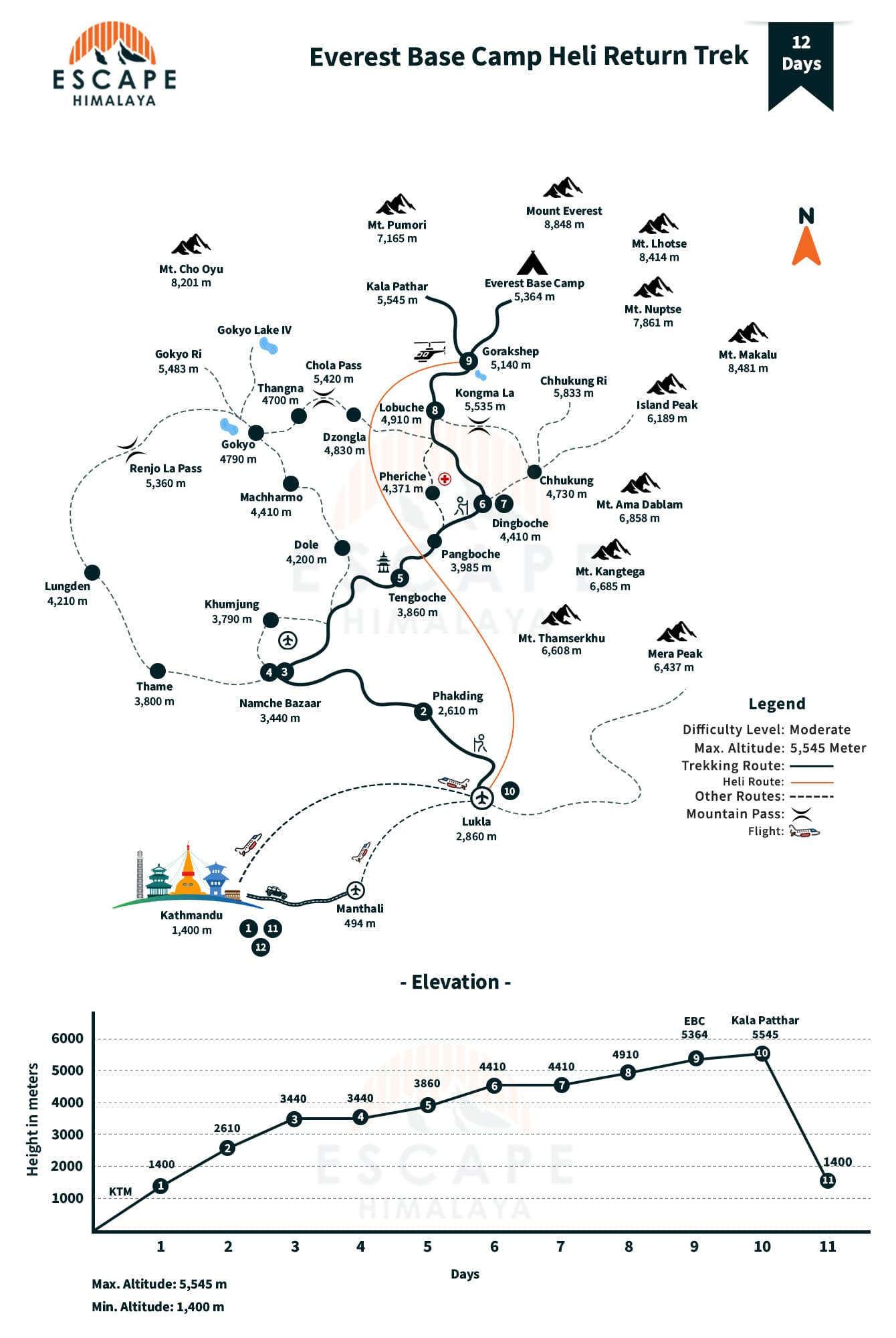
The key thing to understand about this package is that the helicopter flies from Gorakshep directly to Kathmandu without stopping at Lukla. The total flight time is approximately 45 minutes and it happens on the same day as the Kala Patthar summit, meaning Day 10 starts at 4am on a mountaintop and ends in a Kathmandu hotel.
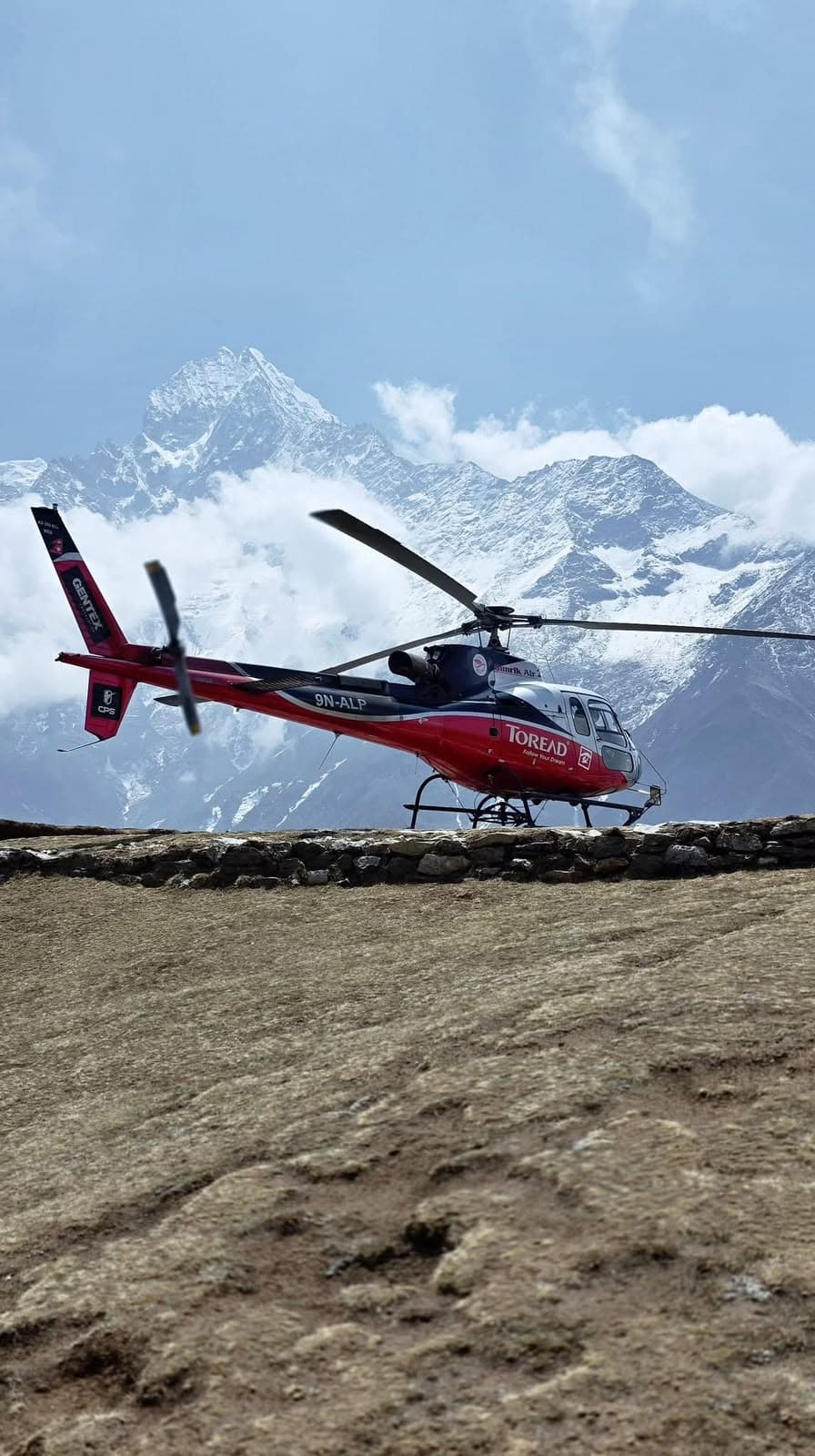
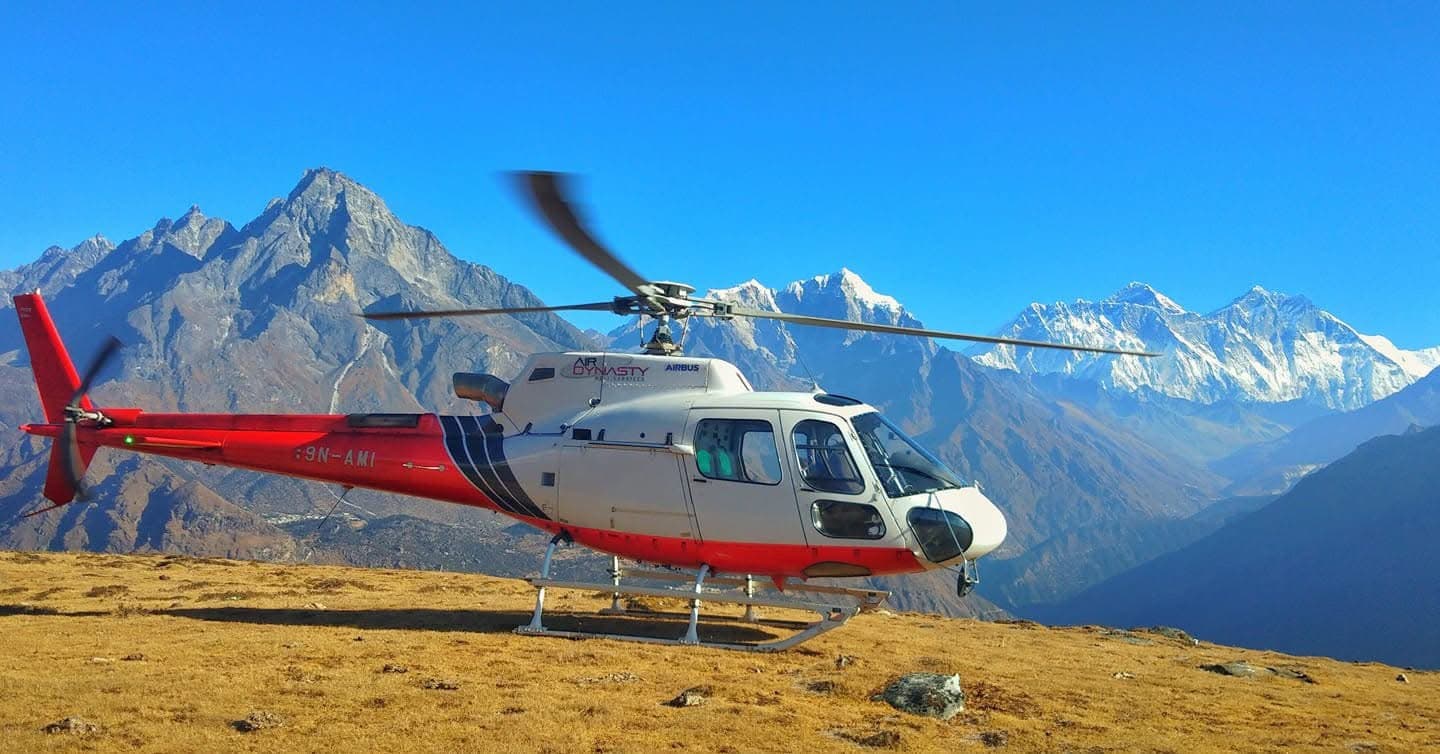
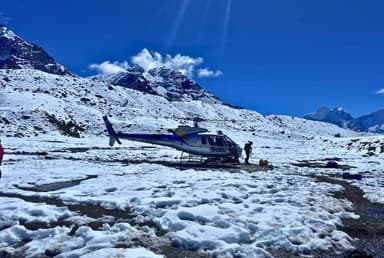
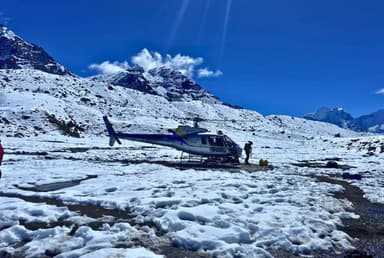
The helicopter operates on a shared basis with up to 5 passengers per aircraft depending on weight. At Gorakshep's altitude of 5,181 meters, the thin air reduces the helicopter's lifting capacity, so individual passenger weight is checked before boarding. The aircraft used are typically the Airbus H125 or similar mountain-rated helicopters, the same type used for Everest rescue operations. Pilots for these flights have thousands of hours of mountain flying time and are trained specifically for high-altitude operations.
Weather controls the departure. Clear morning skies mean the helicopter flies. Cloud cover, wind above safe thresholds, or snowfall means waiting. Delays of one day are not uncommon even in good trekking seasons. Escape Himalaya monitors conditions in real time and manages rebooking directly with the helicopter company. Travel insurance covering flight delays and trip interruption is strongly recommended specifically because of this variable.
This package differs from the Everest Base Camp Heli Shuttle Trek, which flies from Gorakshep to Lukla by helicopter and then takes a separate fixed-wing flight from Lukla to Kathmandu the following morning. If saving the extra Lukla night and the fixed-wing return is important, this is the right package.
Best Season for the Everest Base Camp Heli Return Trek
Season affects three things on this trek: the mountain views, the Lukla flight logistics, and the helicopter departure from Gorakshep. Understanding how each season works across all three helps in choosing the right travel window.
Spring, from March to May, is the busiest season on the Khumbu trail. The rhododendron forest between Namche and Tengboche is in full bloom from late March through April, with the densest flowering in April itself. Morning views are generally clear and the Lukla weather window is stable on most days. Lukla flights during this period operate from Ramechhap, which requires the 1am to 2am vehicle departure from Kathmandu. Helicopter departures from Gorakshep are reliable in spring on clear days. Book guides, flights, and accommodation at least 6 to 8 weeks in advance for spring departures.
Autumn, from October to November, delivers the clearest mountain views of the year. The air is freshly cleaned after the monsoon and the Kala Patthar sunrise is at its sharpest in October. Helicopter flying conditions are excellent in October and generally good in November before early winter weather pushes in from the north. The Ramechhap reroute also applies in this period. October is peak month, so book well ahead.
Winter, from December to February, offers the quietest trails and exceptional clear-sky mornings at altitude. Temperatures at Gorakshep drop to minus 20 degrees Celsius overnight, and the pass at Kala Patthar can be icy before dawn. The package's minus 20-degree down jacket and sleeping bag cover the core warmth requirement. Lukla flights in winter run directly from Kathmandu. Helicopter operations are possible in winter on clear days but more weather-dependent than spring or autumn.
Monsoon, from June to September, is not recommended. Heavy rainfall, persistent low cloud, and disrupted Lukla flights make the trek genuinely difficult to manage in this period. More critically, the mountain views from Kala Patthar and Everest Base Camp, which are the reason for the trek, are frequently obscured. Helicopter departures from Gorakshep are also significantly less reliable during monsoon.
Altitude and How the Trek Is Built Around It
This trek reaches 5,545 meters at Kala Patthar and 5,364 meters at Everest Base Camp. Altitude sickness can affect any trekker regardless of fitness level, age, or previous experience at high elevation. Understanding how the itinerary manages altitude removes a significant amount of pre-trek anxiety.
The structure follows the widely accepted principle of gaining no more than 300 to 500 meters of sleeping altitude per day above 3,000 meters. The progression runs: Phakding at 2,652 meters on Day 2, Namche Bazaar at 3,440 meters on Day 3, two nights at Namche for the day hike to 3,880 meters, Tengboche at 3,860 meters on Day 5, Dingboche at 4,410 meters on Day 6, rest day hike to 5,100 meters returning to Dingboche to sleep, Lobuche at 4,910 meters on Day 8, Gorakshep at 5,181 meters on Day 9. The route gains altitude gradually enough that the two rest days serve as genuine adjustment periods.
Early symptoms worth knowing: a persistent headache that worsens rather than responding to paracetamol, nausea or loss of appetite, breathlessness when sitting still, or poor sleep quality with frequent waking. Any of these should be mentioned to the guide immediately. Escape Himalaya's guides carry a pulse oximeter and check oxygen saturation levels for every trekker each evening above Namche. They also carry a first aid kit and altitude medication.
The more serious conditions, High Altitude Pulmonary Edema (HAPE) and High Altitude Cerebral Edema (HACE), develop when early symptoms are ignored and the person continues gaining elevation. The guide's job is to prevent this by recognizing the signs early. If descent is needed, it is arranged. Escape Himalaya has established helicopter evacuation contacts for medical emergencies and the team maintains 24/7 contact with the Kathmandu office throughout every trek.
Travel insurance must cover helicopter evacuation and medical treatment to at least 6,000 meters for this trek, since both Kala Patthar and Everest Base Camp sit above 5,300 meters. Confirm the altitude ceiling on any policy before purchasing.
Lukla Flight Details and the Ramechhap Peak Season Reroute
The Lukla flight is the variable that affects the first day of the trek most directly, and understanding how it works in peak season prevents it from being a surprise.
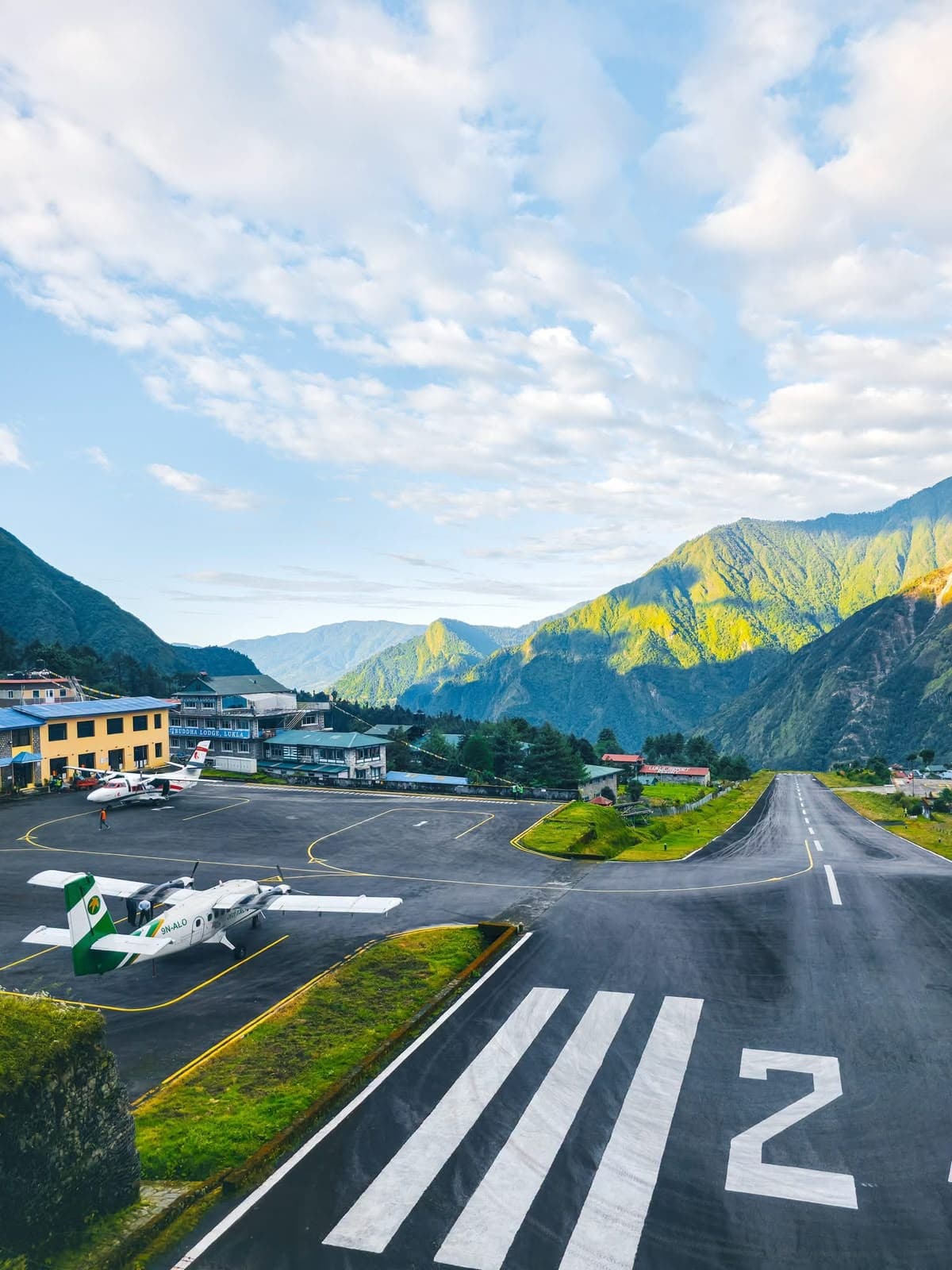
Tenzing Hillary Airport in Lukla sits at 2,860 meters with a 527-meter runway and a 12 percent uphill gradient. There is no radar and no instrument landing system. All flights operate on Visual Flight Rules only, meaning pilots need clear visibility of the runway before committing to the approach. The safe flying window runs from approximately 6am to 9am on most days. If the flight has not landed by mid-morning, it typically does not land that day.
During peak seasons from mid-March to mid-May and from late September to late November, Lukla flights operate from Manthali Airport in Ramechhap, 132 kilometers northeast of Kathmandu. This reduces air traffic congestion at Tribhuvan International Airport and gives pilots a longer clear-weather window since Ramechhap sits at only 474 meters above sea level. The trade-off is an early morning vehicle departure from the Kathmandu hotel between 1am and 2am, a 5 to 6-hour drive to Ramechhap, and then a 15 to 20-minute flight to Lukla. Escape Himalaya manages the vehicle, driver, and timing for this transfer so trekkers do not need to organize it separately.
Outside peak season, flights run directly from Kathmandu in 30 to 40 minutes. Baggage on the Lukla flight is limited to 10 kg checked and 5 kg hand carry, strictly enforced. The 120-liter duffel bag provided by Escape Himalaya is the trekking bag carried by porters on the trail and is not the flight bag. Pack a separate bag of 10 kg or less for the Lukla flight with layers, documents, medication, and a camera. Leave non-trekking items at the Kathmandu hotel storage, which most hotels provide at no charge.
Accommodation on This Trek: What to Expect at Each Stage
Accommodation on the Everest Base Camp Heli Return Trek covers two clearly different standards: the 3-star hotel in Kathmandu at the start and end, and the teahouse network through the Khumbu on the trail.
In Kathmandu, Escape Himalaya uses 3-star hotel accommodation in Thamel with twin-sharing rooms, attached bathrooms, hot water, breakfast included, and Wi-Fi throughout. This is the pre-trek night on Day 1 and the post-helicopter return night on Day 10. Both nights are included in the package.
On the trail, teahouses are the standard. Escape Himalaya's package specifies the best available twin-sharing lodge-to-lodge accommodation, with private bathrooms and hot showers specifically arranged at Lukla, Phakding, and Namche Bazaar. Above Namche, shared bathroom facilities are standard across the Khumbu at all price points. Hot showers are available for an additional fee of NPR 300 to 500 per person at most stops above Namche, with the exception of the highest teahouses near Gorakshep where facilities are most basic.
Teahouse rooms have two single beds with thin foam mattresses, a pillow, and a blanket. There is no in-room heating. The communal dining hall heated by a wood or gas stove is the shared social space each evening. At Namche, the teahouses are noticeably better than the upper villages, with the choice of accommodation reflecting the town's status as the Khumbu's commercial hub. At Gorakshep, the teahouses are the most basic on the entire route, with limited beds and minimal facilities, which is manageable given that only one night is spent there before the helicopter return.
The Kathmandu hotel after the helicopter return on Day 10 is included in the package. Trekkers fly back from Gorakshep, land at Tribhuvan International Airport, and are transferred to the hotel for their final night before the Day 11 airport departure. This closing hotel night gives trekkers a proper bed and shower after the most demanding section of the trek, on the same day.
Cash, Connectivity, and Practical Details
There are no ATMs above Namche Bazaar on this route, and the Namche ATM is not always reliable. Withdraw enough Nepali rupees in Kathmandu before departure to cover all personal trail expenses for the full duration.
Personal expense estimates per day on the trail:
- Hot shower: NPR 300 to 500 (included at Lukla, Phakding, and Namche; charged separately above)
- Device charging: NPR 200 to 500 depending on altitude and power source
- Wi-Fi via Airlink or Everest Link cards: NPR 700 to 800 per 24-hour session
- Bottled water: USD 1 to 3, increasing with altitude
Total personal spend for the 9 trekking days typically runs USD 150 to 250 per person depending on shower and Wi-Fi usage.
For mobile data, NTC SIM cards perform better than Ncell in the Khumbu. Signal is reliable in Lukla and Namche and becomes patchy above Tengboche. At Gorakshep, network coverage is minimal. Download offline maps before departure.
Tipping is given at the end of the trek, typically at the Lukla teahouse before the helicopter departs or back in Kathmandu. Guide: USD 7 to 10 per trekker per day. Porter: USD 4 to 6 per trekker per day.
For a full packing list specific to the Khumbu region, the Escape Himalaya Equipment Checklist covers everything from layering systems to headlamp requirements.
What the Helicopter View Covers That the Trail Does Not
This section is genuinely one of the most underwritten parts of the EBC helicopter return story, and it deserves its own space.
From the trail at ground level, the Khumbu Glacier looks like a flat expanse of moraine and rock below Gorakshep. The icefall above Base Camp is visible but its full scale is hard to judge without a reference point at human height. From the helicopter at altitude above the glacier, the entire system becomes visible at once. The crevasse patterns across the icefall are clear in detail. The flow of ice from the Western Cwm between Everest, Lhotse, and Nuptse makes sense as a geological process rather than just a wall of ice. The seracs, the ice towers that Everest climbers navigate through on their way to Camp 1, are visible as individual structures from above.
Peaks that dominated the skyline from the trail appear at eye level from the helicopter window. Everest's summit pyramid, Lhotse's south face, Nuptse's knife-edge west ridge, Ama Dablam's distinctive horn shape, and Pumori's clean east face are all visible in the same frame as the aircraft gains altitude out of the Khumbu valley. Below, the teahouses of Gorakshep shrink to specks and the trail that took 9 days to walk appears as a thin line threading between the river and the moraine.
Most trekkers describe the helicopter return as the moment the trek makes complete sense. Ten days on the ground gives you the experience of the mountains at human scale. Forty-five minutes in the air gives you the geography of the whole system at once. The two perspectives together are what makes this particular package genuinely different from walking both ways.
Difficulty Level and What You Need Physically
The Everest Base Camp Trek with Helicopter Return is moderate to challenging, so you need to be in good shape and ready mentally. Each day you walk 4-8 hours, covering 8-15 kilometers with elevation gains of 200-800 meters. You're on well-maintained but rocky trails with steep sections, crossing suspension bridges and climbing stone steps worn smooth by years of use.
The altitude is the real challenge, not technical difficulty. Everest Base Camp sits at 5,364 meters, and Kala Patthar at 5,545 meters, where oxygen levels drop to about 50% of sea-level levels. Even super-fit people feel it - you get short of breath when walking, don't feel as hungry, might get headaches, and recover more slowly. The two rest days specifically help your body adjust to this.
You need several months to prepare properly. Build cardio endurance by running, cycling, or swimming four times a week. Practice hiking hills with a backpack, gradually increasing weight from 5kg to 8-10kg. Strengthen your legs with squats, lunges, and step-ups. Practice hiking on back-to-back days on weekends to get used to trekking every day for 10 days straight. Start training at least 12 weeks before you leave.
People from 16 to 70+ complete this trek if they're fit enough. Teenagers need a parent with them and in good physical condition. Senior trekkers in their 60s and 70s do well with excellent fitness, prior hiking experience, and a doctor's clearance. Being in shape matters way more than age - we've guided fit 65-year-olds to the top while watching unfit 25-year-olds struggle.
Permits and Documentation
The Everest Base Camp Trek with Helicopter Return needs two permits. The Sagarmatha National Park Permit costs 3,000 Nepali rupees (about $30) per person and can be obtained in Kathmandu or at the Monjo park entrance. This permit allows you to enter the UNESCO World Heritage Site that protects the Everest region.
The Khumbu Pasang Lhamu Rural Municipality Permit costs 2,000 Nepali rupees (about $20) per person and is available only in Lukla or Monjo, not in Kathmandu. This local permit helps fund community projects in the Khumbu region. You need two passport photos for permits. When you book with Escape Himalaya, we handle all permits for you, but you need to provide the photos during the pre-trek meeting.
Nepal entry visas are available upon arrival at Tribhuvan International Airport. The visa costs $50 for 30 days, and you can pay cash (USD or major currencies) or credit card. You can fill out the visa form online before coming or use the electronic machines at the airport. Bring two passport photos for the visa, though you can also get photos taken at the airport for a small fee.
Travel insurance covering high-altitude trekking and helicopter evacuation is mandatory for this trek. Your policy has to cover medical treatment and emergency evacuation up to at least 6,000 meters altitude, since regular travel insurance often excludes high-altitude travel. Helicopter evacuation from Gorakshep can cost $5,000-10,000, so good insurance is essential. We need proof of proper insurance before the trek starts.
Health and Safety
Altitude sickness, also called Acute Mountain Sickness (AMS), is the main health concern on this trek. Symptoms include headache, nausea, loss of appetite, dizziness, fatigue, and trouble sleeping. Mild symptoms hit about 75% of trekkers at some point, while moderate symptoms affect around 25%. Our careful acclimatization schedule with two rest days significantly reduces the risk of serious altitude sickness.
Prevention strategies include going up gradually (our itinerary follows safe altitude gain guidelines), staying really well hydrated with 3-4 liters of water daily, eating high-carb meals even when you're not hungry, walking slowly and steadily without pushing too hard, avoiding alcohol and sleeping pills, and telling your guide about all symptoms right away, no matter how small. Many trekkers take Diamox (acetazolamide) medication starting the day before going up to Namche, though you should talk to your doctor about this before the trek.
Our experienced guides watch your health throughout the journey using pulse oximeters to check blood oxygen levels. Normal oxygen levels at sea level are 95-100%, dropping to 85-90% at Namche and 75-85% at Everest Base Camp. If your levels drop too low or symptoms worsen despite rest, going to a lower altitude becomes necessary. The helicopter return provides an added safety advantage, ensuring a quick evacuation if altitude sickness becomes severe.
Medical facilities are available at Namche Bazaar (Kunde Hospital, a 45-minute walk) and Pheriche (Himalayan Rescue Association clinic with altitude medicine specialists). No medical facilities exist above Pheriche, making guide experience and proper acclimatization essential. Our guides carry full first aid kits, extra oxygen, and satellite phones for emergency communication. Helicopter evacuation can be arranged from Gorakshep and lower places, weather permitting, usually flying patients to CIWEC Clinic or Teaching Hospital in Kathmandu.
Packing Essentials
We provide three essential items for your trek: a 120-liter waterproof duffel bag carried by porters (maximum 15kg), a down jacket rated to -20°C for high-altitude warmth, and a four-season sleeping bag rated to -20°C. These items get returned after the trek. Your main luggage stays locked up at our Kathmandu hotel during the trek.
For your daypack (30-50 liters), bring water bottles or hydration system (2 liters minimum), snacks and energy bars from home, camera and extra batteries, sunscreen SPF 50+ and lip balm SPF 30+, sunglasses with UV400+ protection, headlamp with extra batteries (essential for Kala Patthar), personal medications, toilet paper and wet wipes, and layers you might need during the day (fleece jacket, rain jacket, warm hat, gloves).
Clothing layers should include moisture-wicking base layers (2-3 shirts, thermal underwear), insulating mid-layers (fleece jacket, provided down jacket), waterproof outer layers (rain jacket and pants), 2-3 pairs of trekking pants, hiking shorts for lower elevations, lightweight and heavyweight gloves, warm beanie and sun hat, neck gaiter or balaclava, and 3-4 pairs of wool hiking socks plus liner socks.
Footwear needs waterproof hiking boots with ankle support (broken in before the trek), camp shoes or sandals for evenings at teahouses, and gaiters for dusty trails or snow. Other essentials include trekking poles (highly recommended for knee protection), a small towel (quick-dry), toiletries (biodegradable soap, toothbrush, hand sanitizer), first aid supplies (blister treatment, pain relievers, any prescription medications), and electronics (phone, power bank, universal adapter for Type C/D/M plugs used in Nepal).
Frequently Asked Questions
What is the difference between the EBC Heli Return Kathmandu and the EBC Heli Shuttle Trek?
The Heli Return Kathmandu package flies directly from Gorakshep to Kathmandu in a single 45-minute flight on Day 10, the same day as the Kala Patthar summit. The Heli Shuttle Trek flies from Gorakshep to Lukla by helicopter, then takes a separate fixed-wing flight from Lukla to Kathmandu the following morning, adding one extra night in Lukla. This package saves that extra day and eliminates the return Lukla flight entirely.
How does the helicopter return from Gorakshep to Kathmandu work in practice?
After the Kala Patthar hike and breakfast at Gorakshep, the helicopter departs on a shared basis with up to 5 passengers depending on weight. At 5,181 meters, thin air limits the aircraft's lifting capacity, so passenger weight is checked before boarding. The flight covers approximately 45 minutes and passes directly over the Khumbu Glacier and icefall before dropping to the Kathmandu Valley. Weather controls the departure; clear conditions mean it flies, cloud or wind means waiting.
What happens if the helicopter is delayed by bad weather?
Escape Himalaya monitors conditions in real time and manages rebooking directly with the helicopter company. A one-day delay means an extra night at Gorakshep at the trekker's expense. Travel insurance covering flight delays and trip interruption is strongly recommended for this specific reason. Most trekkers who build one spare day into their Kathmandu schedule before their international departure handle any delay comfortably.
Is this trek suitable for people without high-altitude experience?
Yes, with the right preparation. The trail is well-marked, no technical equipment is required, and the two rest days at Namche and Dingboche are structured specifically to help the body adjust before the higher sections. Daily walking covers 10 to 15 km over 5 to 8 hours. Trekkers who walk regularly and have done some stair and hill training handle the route well. The helicopter return removes the most physically demanding section, the 4-day downhill walk on already tired legs.
What peaks are visible from Kala Patthar?
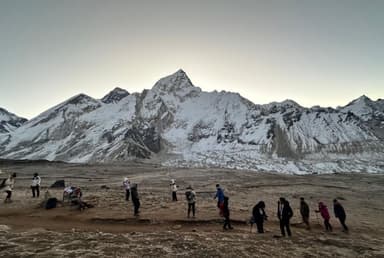
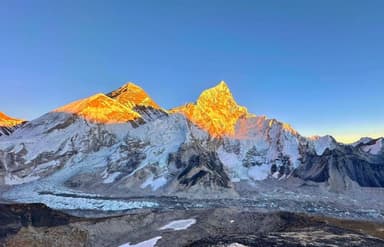
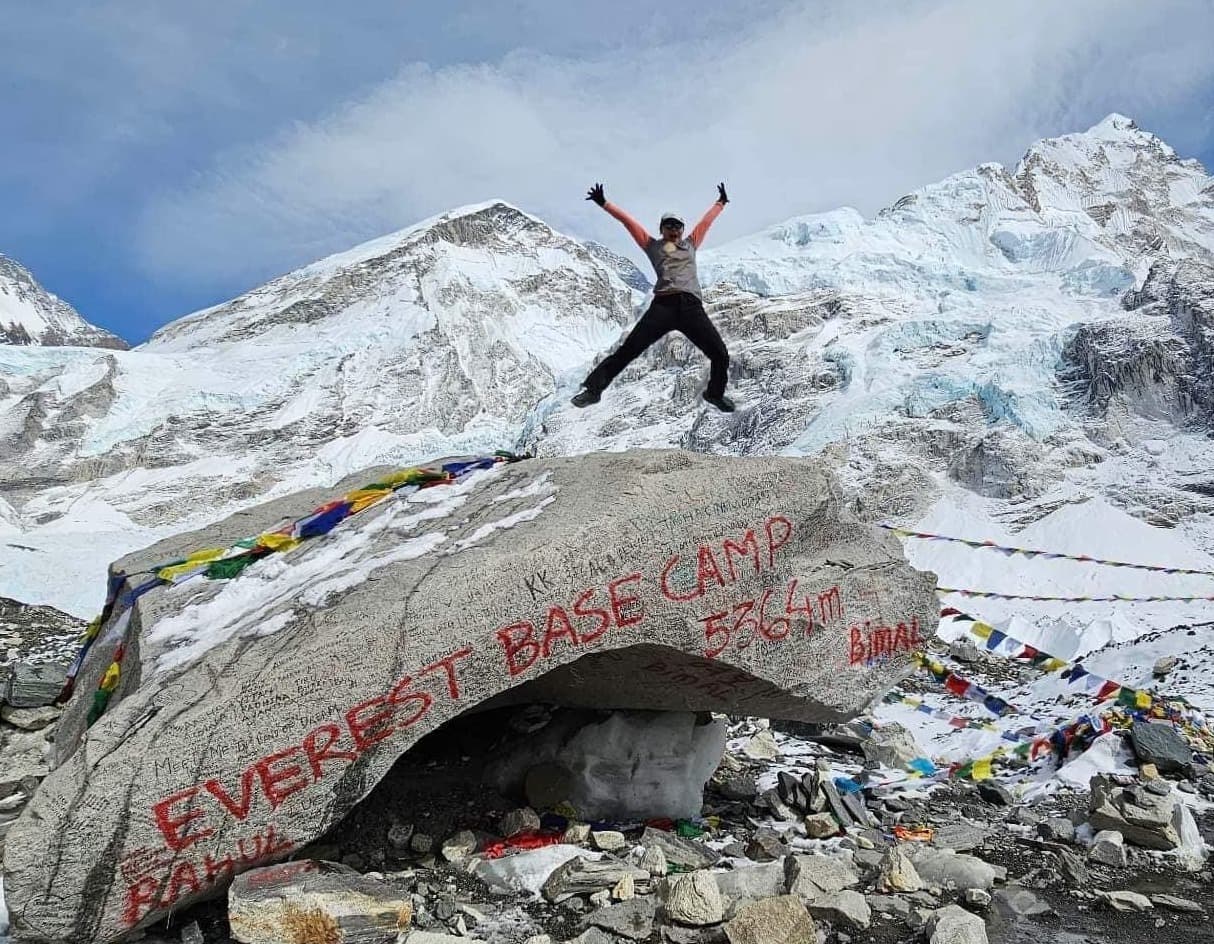
From Kala Patthar at 5,545 meters, the view covers Everest (8,849 m), Lhotse (8,516 m), Nuptse (7,861 m), Changtse (7,543 m), Khumbutse (6,636 m), Lingtren (6,749 m), Pumori (7,161 m), and Ama Dablam (6,812 m). The sunrise here, when each peak catches the first light in sequence over about 20 minutes, is the most complete close-up view of Everest's south face available on any Nepal trekking route without a climbing permit.
What permits are required and are they included in the package?
Two permits are required: the Sagarmatha National Park Entry Permit (NPR 3,000 per person for foreign trekkers) and the Khumbu Pasang Lhamu Rural Municipality Fee (NPR 3,000 per person). Both are fully included in the Escape Himalaya package and managed before arrival. They are checked at the Monjo checkpoint on Day 3 before entering the national park.
Is travel insurance mandatory and what altitude should it cover?
Yes, travel insurance is mandatory for all Escape Himalaya treks. For this package, the policy must cover helicopter evacuation and medical treatment to at least 6,000 meters, covering both Kala Patthar (5,545 m) and Everest Base Camp (5,364 m). It should also cover flight cancellation and trip interruption. Confirm the altitude ceiling before purchasing since many standard policies cap at 4,000 or 5,000 meters.
What accommodation is included and where are private bathrooms available?
Two nights at a 3-star hotel in Kathmandu (Day 1 and Day 10) with private bathrooms, hot water, and Wi-Fi are included. On the trail, private bathrooms with hot showers are specifically arranged at Lukla, Phakding, and Namche Bazaar. Above Namche, shared facilities are standard. Hot showers are available for an additional NPR 300 to 500 at most stops except the highest teahouses.
Can I extend this trek to include Gokyo Lakes or Cho La Pass?
Yes, with a customized itinerary. The standard 11-day package follows the classic EBC route. For trekkers who want to add Gokyo Lakes or cross Cho La Pass, Escape Himalaya offers the Everest Base Camp Chola Pass Gokyo Trek as a separate 17-day package that still includes the helicopter return.
What is the Khumbu Icefall and can I see it from Base Camp?
The Khumbu Icefall is the most technically dangerous section of the standard South Col climbing route to Everest's summit, sitting directly above Base Camp between the Western Cwm and the valley floor. From Everest Base Camp at 5,364 meters, the lower section of the icefall is clearly visible. During climbing season in April and May, fixed ropes and ladders mark the route through it. The helicopter return passes directly over it, giving an aerial view that makes the scale of the icefall fully comprehensible for the first time.
What gear does Escape Himalaya provide for this trek?
The package includes a 120-liter duffel bag (carried by the porter on the trail, not the Lukla flight), a down jacket rated to minus 20 degrees Celsius, and a four-season sleeping bag of the same rating. All three are on loan for the trek duration and returned at the end. A trekking map, Escape Himalaya T-shirt, and trek completion certificate are also included. For a full list of what to bring, see the Escape Himalaya Equipment Checklist.
What is the Thukla Pass memorial?
On Day 8 between Dingboche and Lobuche, the trail passes through Thukla at 4,620 meters and climbs to the Thukla Pass. At the top, stone cairns and memorials mark climbers who have died on Everest and other Himalayan peaks, including those from the 1996 disaster. Memorials to Scott Fischer, Rob Hall, and other members of those expeditions are among them. Most trekkers spend time here. It is one of the more quietly significant stops on the entire Khumbu trail.
What is the cancellation and booking policy?
A 20 percent deposit secures the booking and confirms the departure date regardless of group size. The 20 percent deposit is non-refundable if you cancel. If more than 20 percent has been paid, the cancellation fee remains 20 percent and the balance is refunded via the original payment method. Postponement is available without additional charge if notified at least one day before the scheduled departure. Contact the Escape Himalaya team for any amendments or to check current group availability on specific dates.
What is the Tengboche Monastery and is it open to visitors?
Tengboche Monastery at 3,860 meters is the largest and most significant Buddhist monastery in the Khumbu region. Founded in 1916 and rebuilt after a 1989 fire, it sits on a ridge with a direct view of Ama Dablam and the Everest massif. Morning prayers run around 6am and evening prayers around 6pm, both open to visitors who sit quietly at the back. A visit takes around 30 to 45 minutes and is one of the more culturally distinctive stops on the entire route.
Can solo trekkers book this package?
Yes, but the minimum group size is two people due to the shared helicopter logistics from Gorakshep. Solo trekkers can join a departure with another booked trekker, which Escape Himalaya arranges regularly. Alternatively, a private helicopter charter is available at an additional cost. Contact the Escape Himalaya team to check current availability on specific departure dates.