How Difficult Is This Trek, Really?
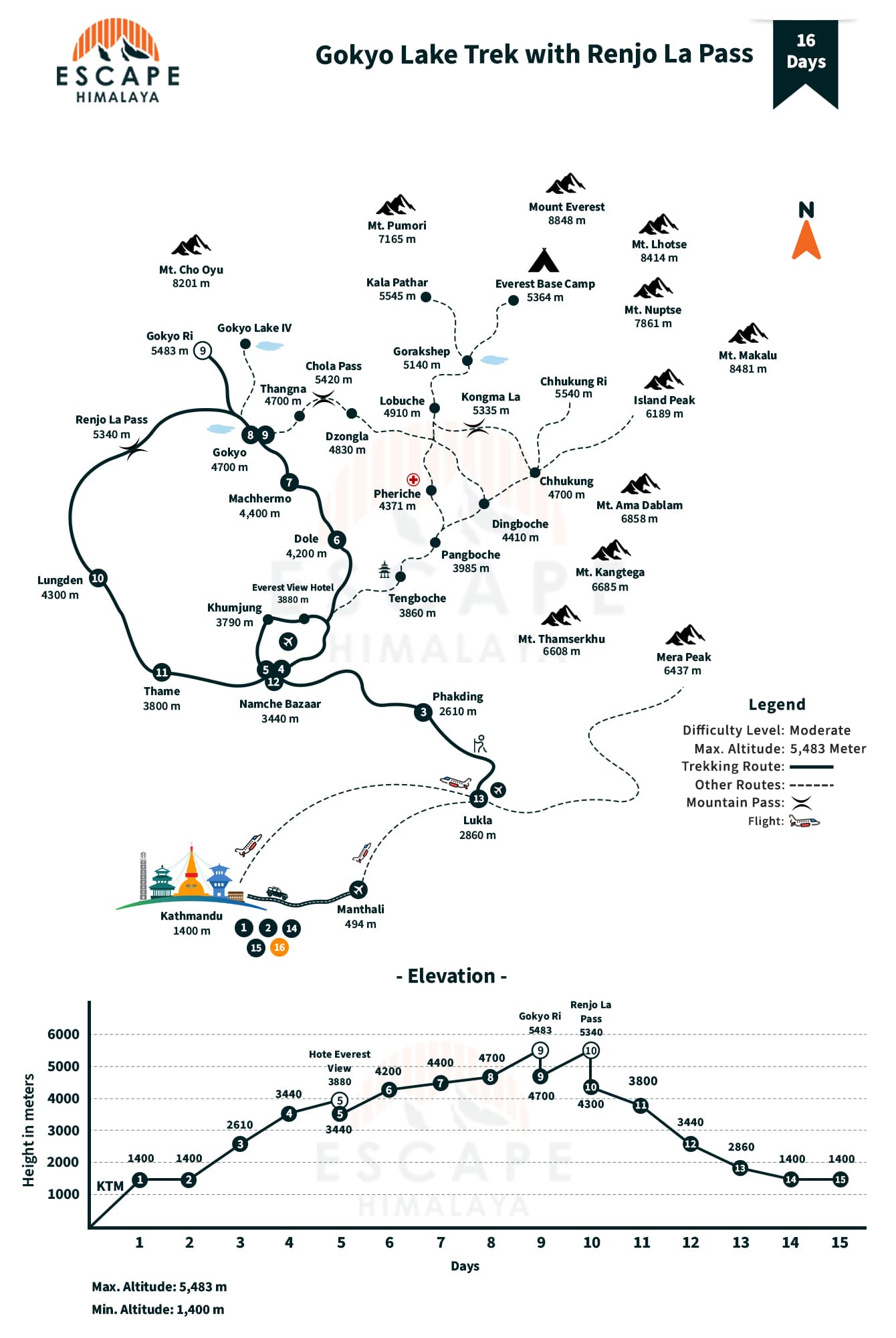
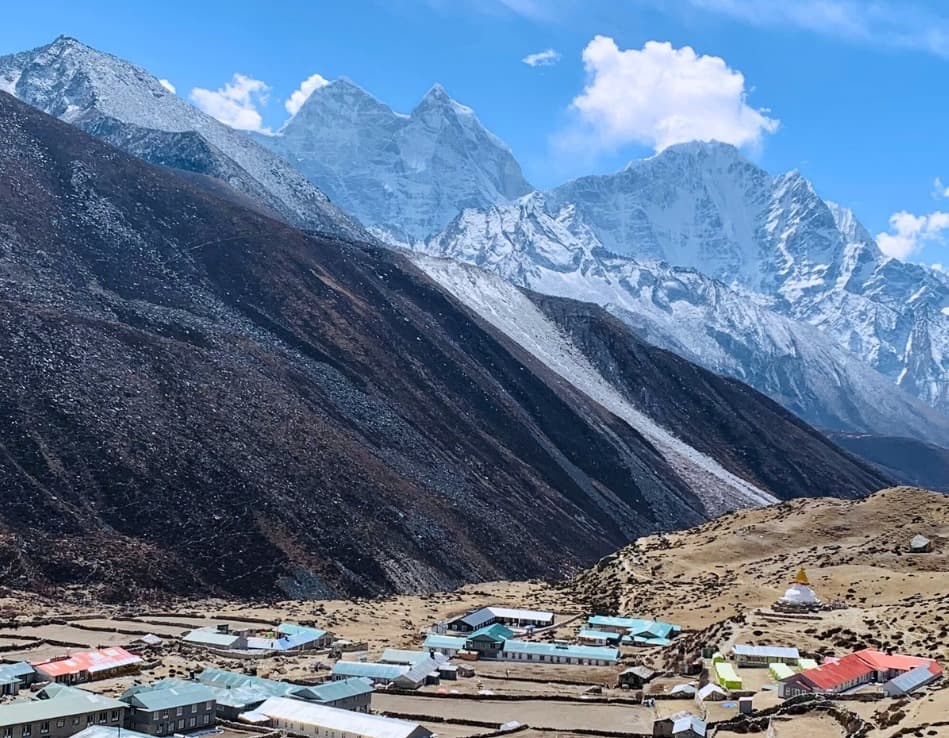
The Gokyo Lake Trek via Renjo La Pass is graded Moderate, but the Renjo La crossing itself is a genuinely demanding high-altitude pass day, not a casual walk. Most days on this route are steady teahouse-to-teahouse trekking on well-established Khumbu trails, similar in effort to the standard Everest Base Camp trek. What sets this itinerary apart is Day 10: the push from Gokyo over Renjo La Pass (5,340 m) to Lunden, which combines a long day (6-7 hours per the itinerary), a significant altitude gain and drop in one push, reduced oxygen availability at over 5,300 m, and trail conditions that can include ice, packed snow, and loose rock depending on the season.
What makes this trek manageable for reasonably fit trekkers rather than only for seasoned mountaineers:
- The itinerary builds altitude gradually over the first week before the pass day.
- The pass is crossed only once, in one direction, rather than as an out-and-back.
- No technical climbing or rope work is involved. It's a high-altitude walk, not a mountaineering route.
What makes it harder than a standard teahouse trek:
- Long trekking days (several are listed at 5-7 hours) with real elevation gain, not flat walking.
- Rocky, uneven trail surfaces typical of the Khumbu, plus exposed, wind-affected terrain right around the pass.
- Reduced oxygen from roughly 4,000 m onward, which affects pace and recovery regardless of fitness level.
- Cumulative fatigue: by the time you reach Renjo La on Day 10, you've already trekked for a week.
Good general fitness (regular cardio training and some hill or stair-climbing conditioning in the 2-3 months beforehand) is genuinely useful preparation, and prior high-altitude experience is a bonus but not a strict requirement for a fit first-time trekker with realistic expectations.
Maximum Altitude and Why It Matters
The highest point of this trip is Gokyo Ri at 5,360 m (17,880 ft), reached on Day 9. Renjo La Pass itself is crossed at 5,340 m (17,843 ft) the following day. Both points sit well above the altitude where reduced oxygen becomes a real physiological factor for almost everyone, regardless of fitness. Expect noticeably harder breathing on climbs, slower pace than at sea level, and the need to drink more water than usual.
Gokyo village, where you'll spend two nights (Days 8-9), sits at roughly 4,700 m, itself high enough that altitude effects are already noticeable before you even climb higher.
Acclimatization: Why the Itinerary Is Built the Way It Is
Acclimatization days aren't just "rest days." They give your body time to increase red blood cell production and adjust to lower oxygen levels before you climb further, which meaningfully reduces the risk of altitude sickness. This itinerary builds that in at two points:
- Day 5, at Namche Bazaar (3,440 m): an acclimatization hike up to Everest View Hotel rather than a full rest day. Gaining altitude during the day and returning to sleep lower is a deliberately used acclimatization strategy ("climb high, sleep low").
- Days 8-9, around Gokyo (4,700 m): two nights at the same base, with the Gokyo Ri climb on the second day serving a similar purpose: pushing higher during the day, then returning to the same elevation to sleep.
Beyond these built-in points, listening to your guide, staying hydrated, ascending at your own sustainable pace rather than the group's fastest pace, and reporting any symptoms immediately rather than pushing through them all matter more than any single acclimatization day on its own.
Best Time to Trek Gokyo Lake Trek via Renjo La Pass
Spring (March-May) and autumn (September-November) are the two most reliable windows for this route, and this is genuinely why they dominate the recommendations, not just convention:
- Spring: Warming temperatures, generally stable weather, and, from April onward, flowering rhododendron forests on the lower sections around Namche and below. Late spring can bring more cloud build-up by afternoon.
- Autumn: Widely considered the clearest and most stable season for mountain visibility, following the end of the monsoon; cooler than spring but typically drier underfoot.
Winter (December-February) is possible but demanding. Lodges above Gokyo may be sparsely staffed or closed depending on the year, temperatures at Gokyo and Renjo La regularly drop well below freezing, and snow at the pass itself is a real and sometimes trip-altering possibility.
Monsoon (June-August) brings the least reliable conditions for this specific route: persistent cloud cover that can hide mountain views for days, wetter trails at lower elevations, and higher risk of snow or poor visibility right at Renjo La, which is exactly the section of this trek where visibility and stable footing matter most.
Whichever season you choose, mountain weather in the Khumbu can shift within hours, so treat any single day's forecast as provisional rather than guaranteed.
Weather and Temperature
As a general guide only (conditions vary year to year and should never be treated as a forecast):
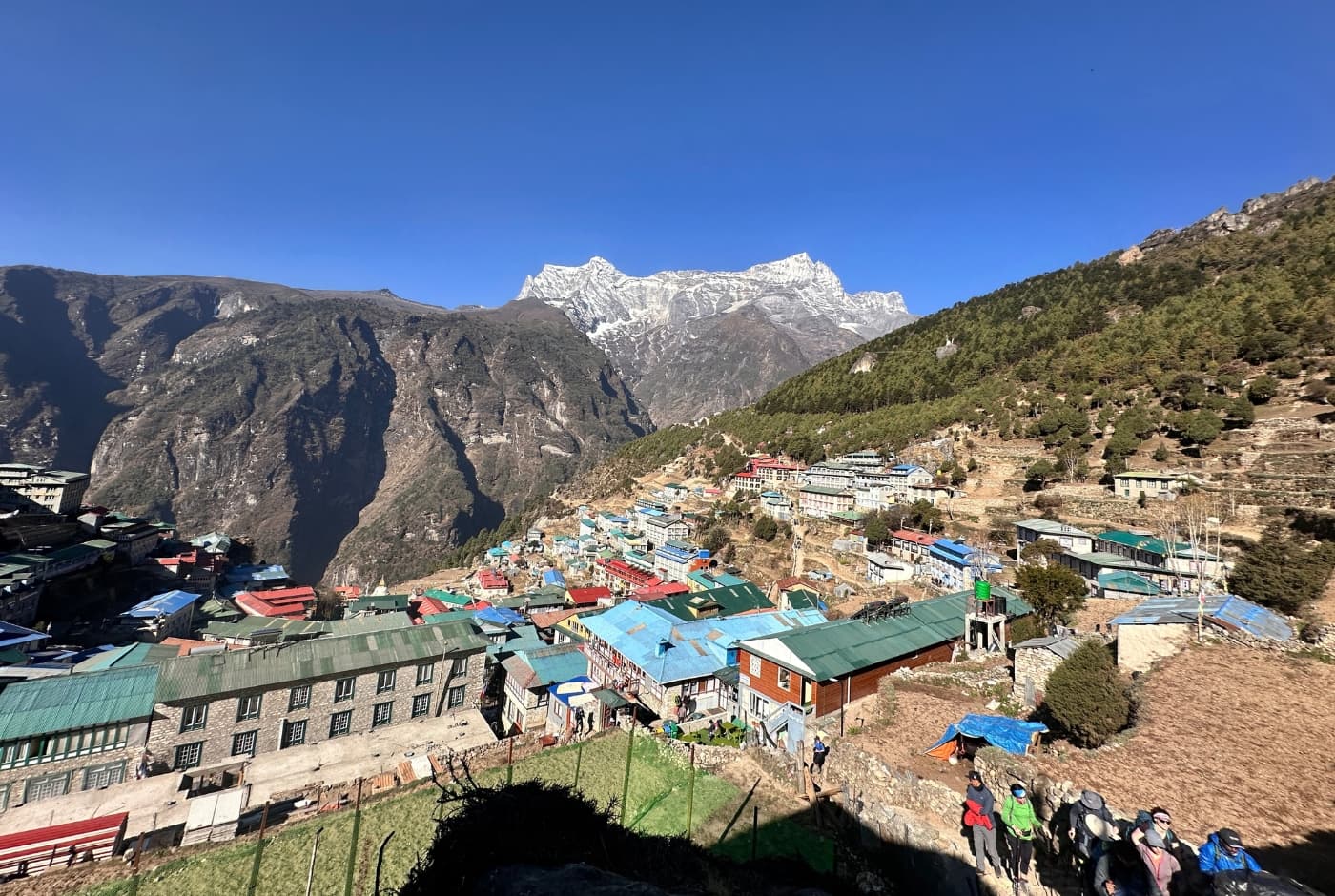
- Namche Bazaar (3,440 m): Daytime temperatures are generally mild in spring and autumn, with cold mornings and nights, particularly in the shoulder months.
- Gokyo (4,700 m): Noticeably colder, with daytime sun that can feel warm in still air but nights that regularly drop below freezing even in the main trekking seasons.
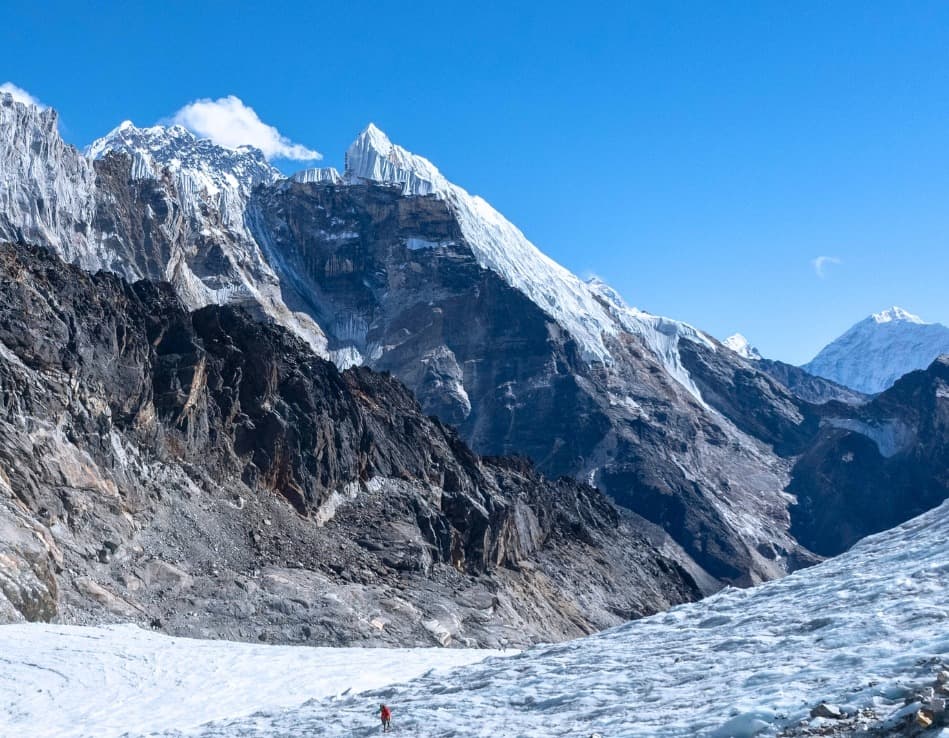
- Renjo La Pass (5,340 m): Cold, often windy, and, depending on season and recent snowfall, potentially icy or snow-covered underfoot. This is the one point on the route where a clear, calm morning start genuinely matters.
Accommodation
Accommodation on this trip is teahouses/lodges on trek and hotels in Kathmandu, as stated in the package's trip facts. Realistically, here's what that means at altitude:
- Rooms are simple, typically twin-share, with basic bedding. Bring your own sleeping bag rated for sub-zero temperatures for the higher stops.
- Bathrooms are commonly shared, especially from Namche upward, and hot showers, where available, usually carry an extra charge that increases with altitude.
- Dining areas are communal and double as the social hub of each lodge in the evening, a good place to warm up near the stove.
- Facilities become simpler the higher you go. Gokyo and Lunden offer more basic conditions than lower stops like Namche or Phakding.
Food and Meals
Breakfast, lunch, and dinner are included on trek. Typical teahouse menus feature dal bhat (rice, lentils, vegetables, often available with free refills), noodle and pasta dishes, fried rice, soup, potato dishes, eggs prepared various ways, and simple Tibetan-style items like momos or Tibetan bread, along with tea and coffee. Menu variety and freshness generally narrow as you climb, and prices for the same dish rise with altitude, reflecting the cost of portering supplies up the trail.
Drinking Water
Bottled water is available to purchase at most lodges but gets pricier, and less environmentally sound, the higher you go. Boiled water is usually available for a smaller fee, and many trekkers use a combination of purification tablets or a filter/UV purifier with a reusable bottle, which is the more reliable and lower-waste approach on a 16-day trip through remote terrain.
Electricity and Charging
Charging phones, cameras, and power banks is generally possible at most lodges but typically comes at an extra cost, and that cost tends to increase with altitude. Availability can also depend on solar or generator conditions on a given day, particularly at higher, more remote stops like Gokyo and Lunden. A power bank is a sensible backup rather than an optional extra on this route.
Internet and Mobile Network
Mobile network coverage (via Nepali SIM/data providers) is generally available through Namche and reasonably reliable at many stops along the standard Khumbu trail, but it becomes patchier and less predictable the higher and more remote you go, particularly around Gokyo, Renjo La, and Lunden. Don't plan around guaranteed connectivity on pass day.
Wi-Fi
Wi-Fi is offered at many teahouses, often for a small fee, but speed and reliability drop noticeably at altitude and can be affected by weather. Treat it as a nice-to-have for checking in occasionally, not a dependable working connection.
Packing List Essentials
A concise, season-appropriate list for this route:
- Well broken-in trekking boots
- Moisture-wicking base layers and warm mid-layers
- Insulated down jacket
- Waterproof/windproof outer shell
- Trekking pants (plus thermal layers for higher, colder stops)
- Warm hat, gloves (a warmer pair for pass day), and a buff or scarf
- UV-protective sunglasses and high-SPF sunscreen
- Reusable water bottle plus purification tablets or a filter
- A sleeping bag rated for sub-zero temperatures
- Trekking poles (genuinely useful on the steeper, looser sections around Renjo La)
- Headlamp with spare batteries
- Personal first-aid kit and any personal medication
- Power bank
- Passport, permit documents, and travel insurance details (physical and digital copies)
Pack according to the season you're travelling in. Winter trips need heavier insulation than spring or autumn.
Travel Insurance
Comprehensive travel insurance is strongly recommended for this trip, and it's worth checking specifically that your policy covers:
- High-altitude trekking up to at least 5,500-6,000 m (to comfortably cover Gokyo Ri and Renjo La)
- Emergency evacuation, including helicopter rescue if required
- Medical treatment abroad
- Trip interruption and delay, including weather-related disruption
Standard travel insurance policies often exclude high-altitude trekking above a certain elevation by default, so this is worth confirming before you travel rather than assuming it's covered.
Lukla Flights and Buffer Days
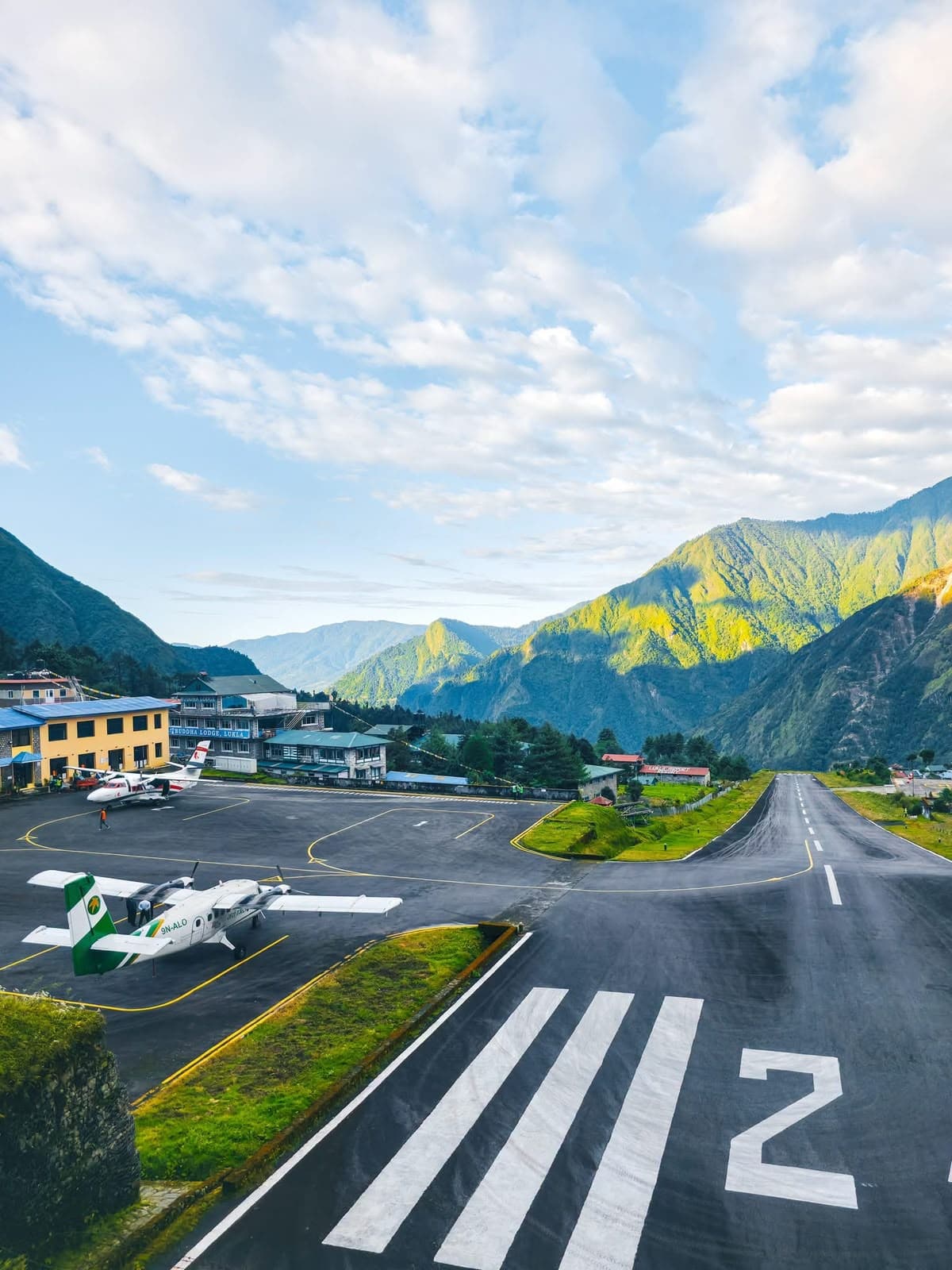
Flights to and from Lukla are notoriously weather-dependent. Fog, wind, and cloud cover can delay or cancel flights on short notice, sometimes for more than one day in a row. This itinerary's flight days (Day 3 out, Day 14 back) sit inside a 16-day trip, but it's still worth building in a personal buffer day around your international departure if your schedule allows, rather than booking an international flight home for the same evening you're due back in Kathmandu.
Permits for Gokyo Lake Trek via Renjo La Pass Trek
Trekkers in the Khumbu region currently need two permits rather than the older TIMS card, which is no longer used for this region:
- Sagarmatha National Park Entry Permit
- Khumbu Pasang Lhamu Rural Municipality Entry Permit
Both are checked at points along the route (commonly at Monjo and in Lukla). Fees for both permits have changed in recent years and can change again, so please confirm current permit inclusion and costs directly with Escape Himalaya rather than relying on this or any other page for an exact figure.
Guide and Porter
Trekking with an experienced local guide brings real practical value on a route like this: route-finding and pacing judgement (especially valuable on pass day), real-time weather and trail-condition awareness, and a level of comfort communicating with lodge owners and, if needed, with local authorities or medical support. A porter reduces physical strain by carrying the bulk of your load, which matters over 16 days and a high pass. Specific guide qualifications and staffing ratios should be confirmed directly with Escape Himalaya.
Responsible Tourism
Small choices add up on a route like this, where everything not produced locally has to be carried in on foot:
- Carry a reusable bottle and purify water rather than buying bottled water at every stop.
- Pack out any non-biodegradable waste you can't dispose of responsibly at a lodge.
- Choose to eat and stay at local teahouses along the route rather than bypassing them, which supports the villages the trek passes through.
- Keep a respectful distance from yaks, pack animals, and any wildlife you encounter.
Cultural Etiquette
The Khumbu is Sherpa homeland and deeply shaped by Buddhist tradition. A few simple habits go a long way:
- Pass mani walls, chortens, and prayer wheels on your left, walking clockwise, as is customary.
- Spin prayer wheels clockwise if you choose to spin them at all.
- Ask before photographing people, ceremonies, or the interiors of monasteries.
- Dress modestly and keep noise levels down when visiting monasteries such as Tengboche or Thame.
- A friendly "Namaste" goes a long way in Sherpa villages along the route.
Photography at Gokyo Lake Trek via Renjo La Pass Trek
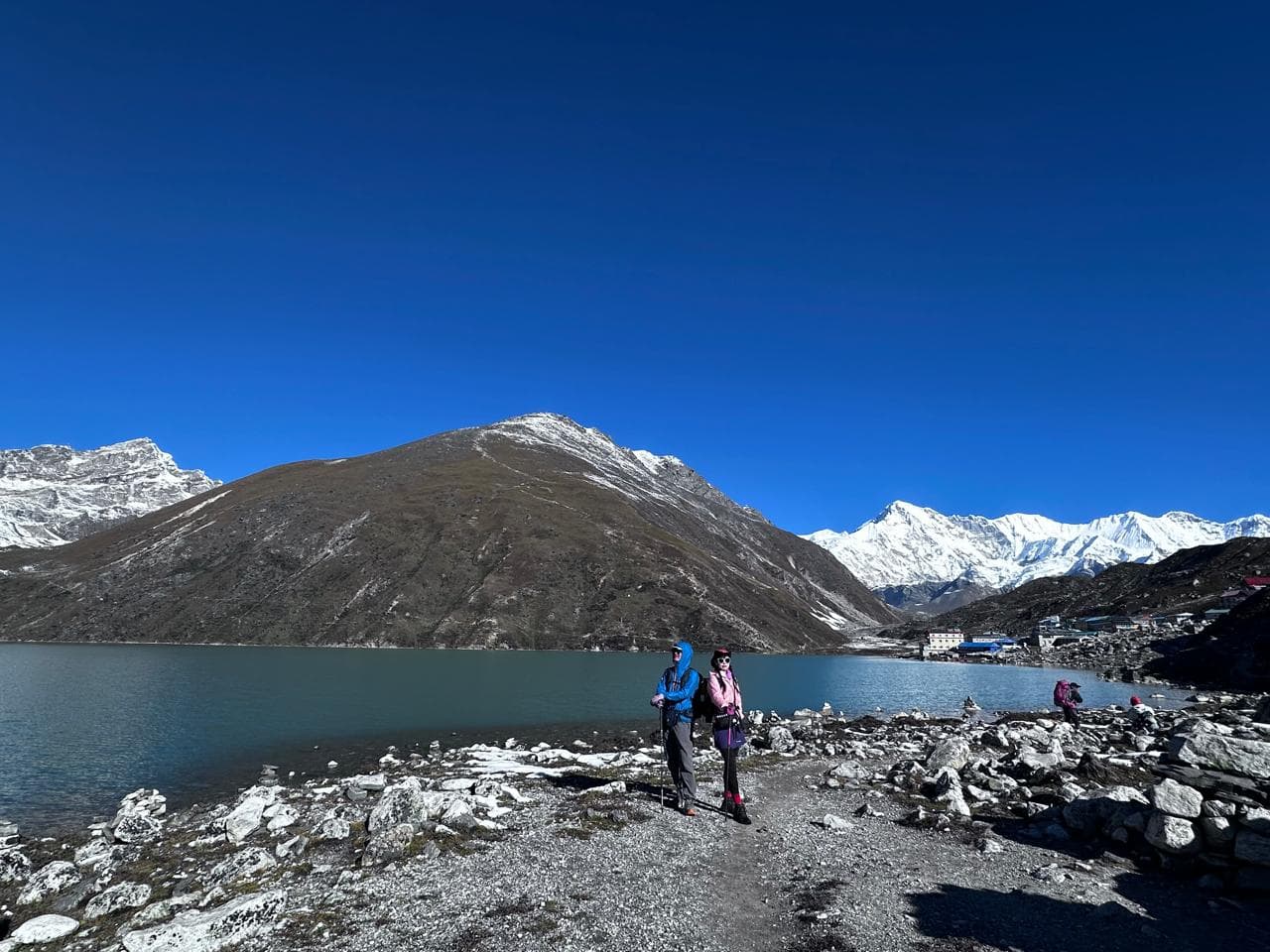
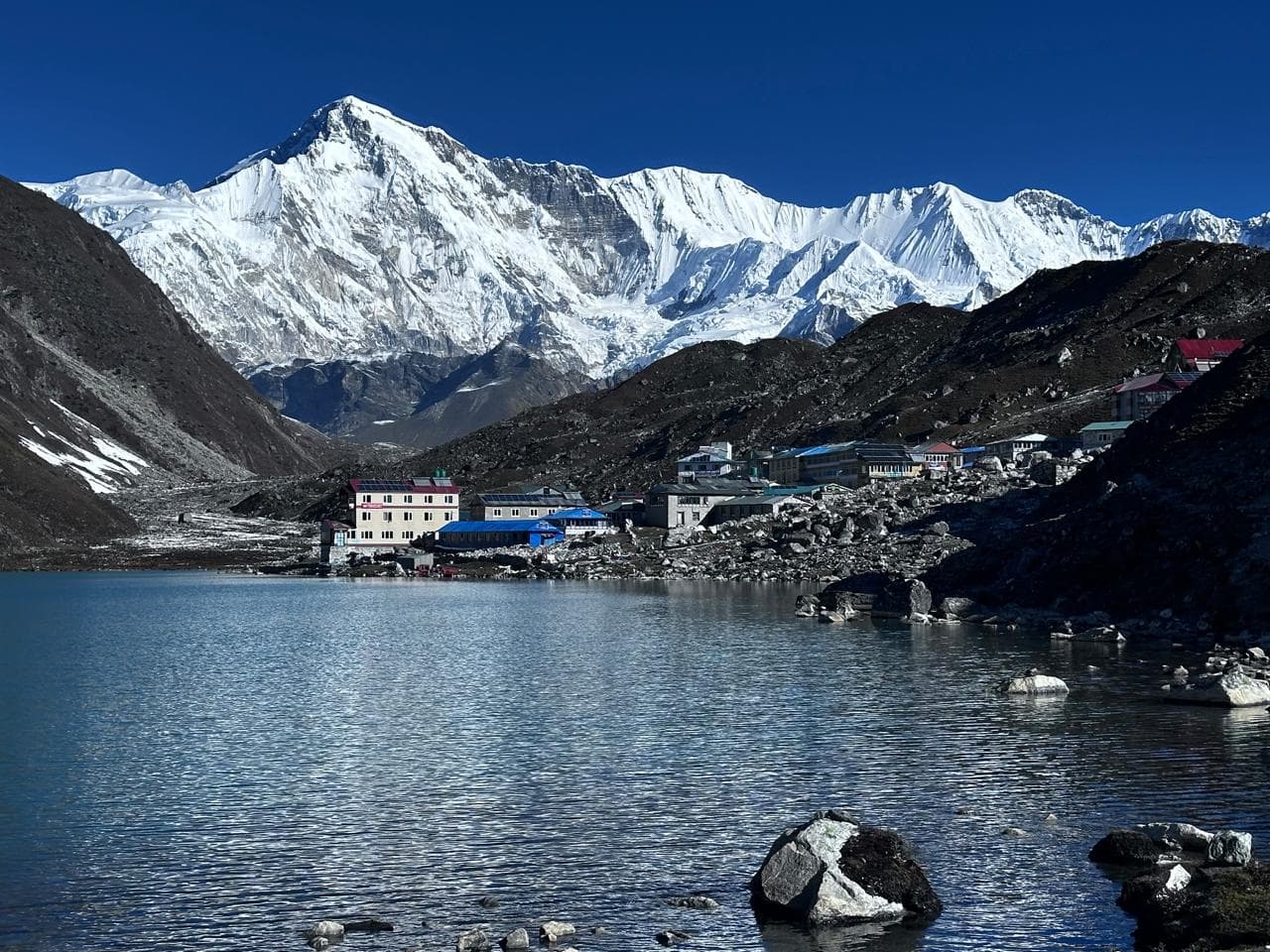
Gokyo Ri at sunrise is one of the standout photography opportunities on this route, with the Gokyo Lakes, Ngozumpa Glacier, and the Everest-Cho Oyu-Makalu skyline all visible in good conditions, though, as with any high-altitude viewpoint, clear conditions are never guaranteed and depend heavily on the day. Renjo La itself offers a genuinely different vantage point, looking back over the Gokyo Valley on one side and toward the Bhote Koshi valley and Tibetan border peaks on the other. Bring spare batteries: cold temperatures at these altitudes drain them fast. Allow a little extra time at both viewpoints in case cloud needs time to clear.
Frequently Asked Questions
What is the Gokyo Lake Trek via Renjo La Pass?
It's a 16-day Everest region trek that combines the turquoise Gokyo Lakes and the viewpoint of Gokyo Ri with a crossing of Renjo La Pass, one of the three main high passes in the Khumbu. Rather than retracing your steps, you complete a loop: up through Namche and Dole to Gokyo, over Renjo La to Lunden and Thame, then back to Namche and Lukla. It follows quieter trails than the main Everest Base Camp route for much of its length.
How difficult is the Gokyo Lake Trek via Renjo La Pass?
It's graded Moderate, reflecting mostly standard teahouse-trekking effort with one genuinely demanding day: crossing Renjo La Pass at 5,340 m. Expect long trekking days, rocky Khumbu trails, and the physical effects of altitude from around 4,000 m upward. It doesn't require technical climbing skill, but reasonable fitness and realistic expectations matter.
How high is Renjo La Pass?
Renjo La Pass sits at 5,340 m (17,843 ft), crossed on Day 10 of this itinerary between Gokyo and Lunden.
How high is Gokyo Ri?
Gokyo Ri, climbed on Day 9, is the highest point of this specific itinerary at 5,360 m (17,880 ft), slightly higher than Renjo La Pass itself.
How many days does Gokyo Lake Trek via Renjo La Pass trek take?
This Escape Himalaya itinerary runs 16 days total, including two days in Kathmandu before flying to Lukla and two days in Kathmandu at the end of the trip.
What is the best time for the Gokyo Lake Trek via Renjo La Pass?
Spring (March-May) and autumn (September-November) offer the most stable weather and best visibility for this route. Winter is possible but cold and more likely to affect lodge availability and pass conditions; monsoon (June-August) brings the least reliable visibility and trail conditions for a route that depends on clear views and stable footing at the pass.
Can beginners do the Gokyo Lake Trek via Renjo La Pass?
Reasonably fit first-time trekkers can complete this route, especially with some pre-trip cardio and hill-walking preparation. Previous high-altitude experience helps but isn't essential. The Renjo La crossing is the one day where fitness and preparation matter most.
Is the Renjo La Pass crossing difficult?
Yes, it's the most demanding single day of the trip: a long day (6-7 hours) with significant elevation change at over 5,300 m, on trail that can include ice, packed snow, or loose rock depending on conditions. It doesn't require technical climbing gear, but it does require fitness, a steady pace, and good weather.
Do I need previous high-altitude trekking experience?
It's not a strict requirement for this itinerary, given the gradual acclimatization built into the schedule, but any prior experience trekking above 3,500-4,000 m is a genuine advantage on pass day.
What is the highest point of Gokyo Lake Trek via Renjo La Pass trek?
Gokyo Ri, at 5,360 m, reached on Day 9, slightly higher than the Renjo La Pass crossing itself at 5,340 m the following day.
Is altitude sickness a risk on this trek?
Yes, altitude sickness is a real possibility above roughly 3,000-3,500 m regardless of fitness level. The itinerary's built-in acclimatization points at Namche and Gokyo are designed to reduce this risk, but trekkers should still watch for symptoms, stay well hydrated, and communicate openly with their guide throughout.
How should I prepare for this trek?
General cardiovascular fitness (running, cycling, or swimming), leg and core strength training, and hiking on uneven terrain with a loaded daypack in the months beforehand all help. Two to five months of preparation is a reasonable general guide, depending on your starting fitness level.
What permits are required for this trek?
Two permits currently apply to the Khumbu region: the Sagarmatha National Park Entry Permit and the Khumbu Pasang Lhamu Rural Municipality Entry Permit. The older TIMS card is no longer used for this region. Confirm with Escape Himalaya whether permits are included in your package price.
What type of accommodation is available?
Hotels in Kathmandu and teahouses/lodges throughout the trek, as listed in the package details. Rooms are simple and typically twin-share, with shared bathrooms becoming more common at higher elevations.
What food is available during the trek?
Breakfast, lunch, and dinner are included on trek. Menus typically include dal bhat, noodles, rice and pasta dishes, soups, potato dishes, eggs, and simple Tibetan-style items, alongside tea and coffee. Variety narrows somewhat at higher elevations.
Is Wi-Fi available during the trek?
Wi-Fi is available at many teahouses, usually for a small fee, but speed and reliability decrease at higher altitudes and in more remote stops like Gokyo and Lunden.
Is mobile network available?
Coverage is generally reasonable through Namche and along much of the standard trail, but becomes patchier the higher and more remote you go, particularly around Gokyo, Renjo La, and Lunden.
Can I charge my phone and camera?
Yes, at most lodges, though usually for an extra fee that increases with altitude. Carrying a power bank is a sensible backup.
Are hot showers available?
Hot showers are available at many lodges lower on the route, generally for an extra charge, and become less consistently available the higher you go.
What should I pack for this trek?
Key items include broken-in trekking boots, warm layering including a down jacket, waterproof shell, trekking poles, a sub-zero-rated sleeping bag, sun protection, a headlamp, a power bank, and personal medication. See the full packing list above for details.
How cold does it get around Gokyo and Renjo La?
Temperatures at Gokyo (4,700 m) and Renjo La (5,340 m) regularly drop below freezing at night and in early morning, even during the main spring and autumn trekking seasons, while daytime sun can feel comparatively warm in calm conditions. Always pack for a wide temperature range rather than a single expected figure.
Why is a buffer day recommended around this trip?
Because Lukla flights are weather-dependent and can be delayed, particularly during and just after the main trekking seasons. Building in a personal buffer day, especially before an international departure, reduces the risk of a missed onward flight if Lukla flights are disrupted.