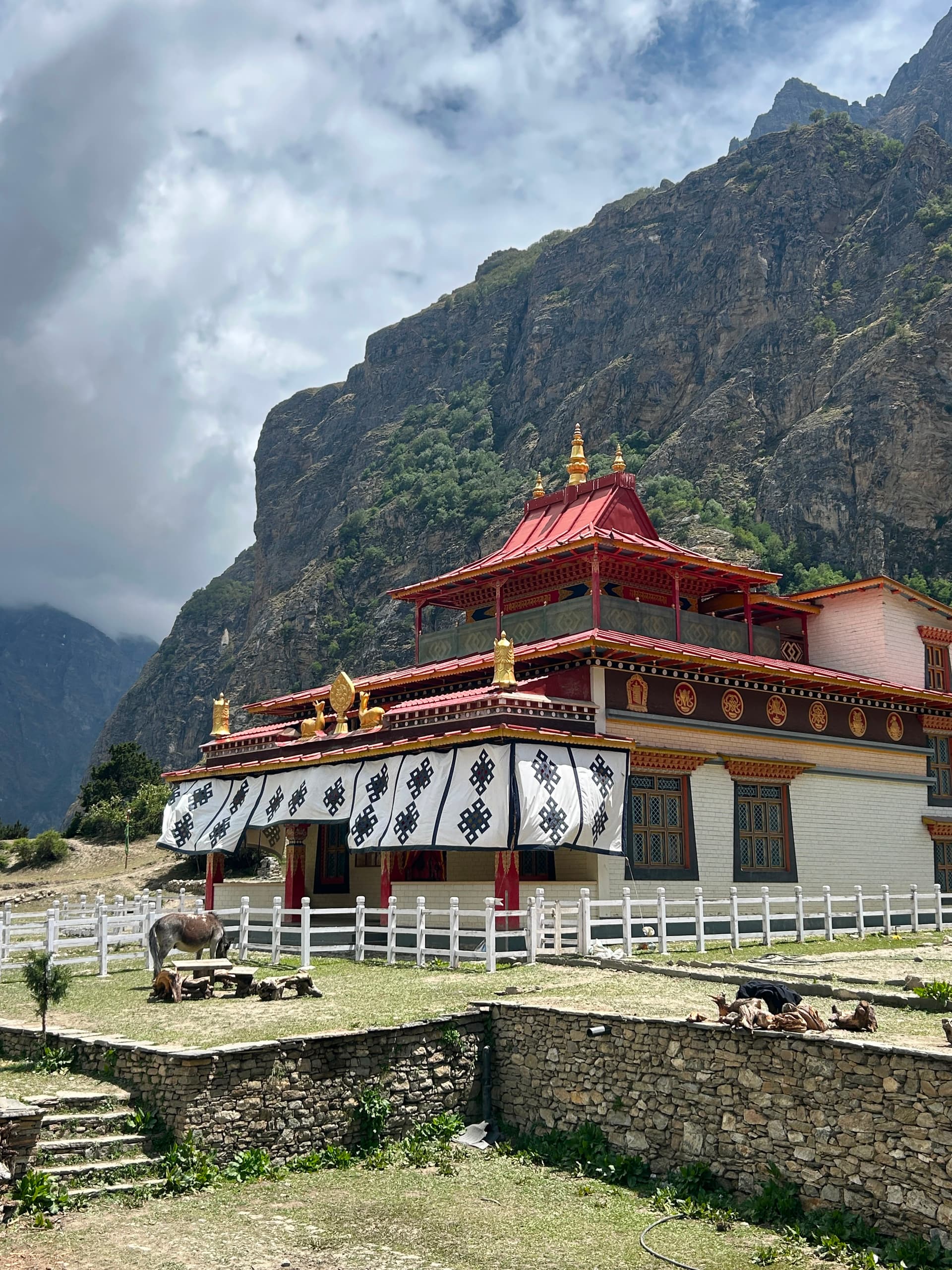
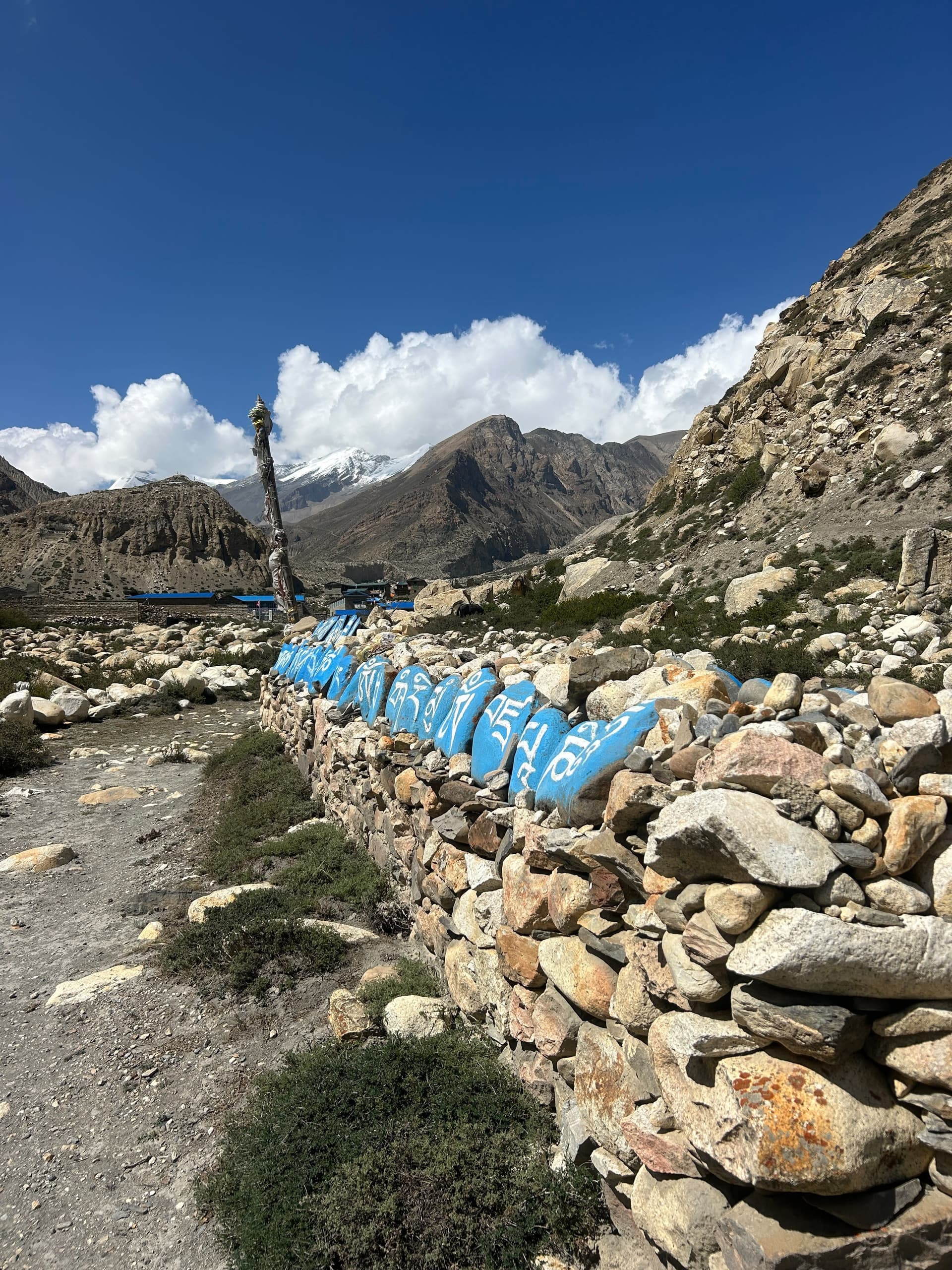
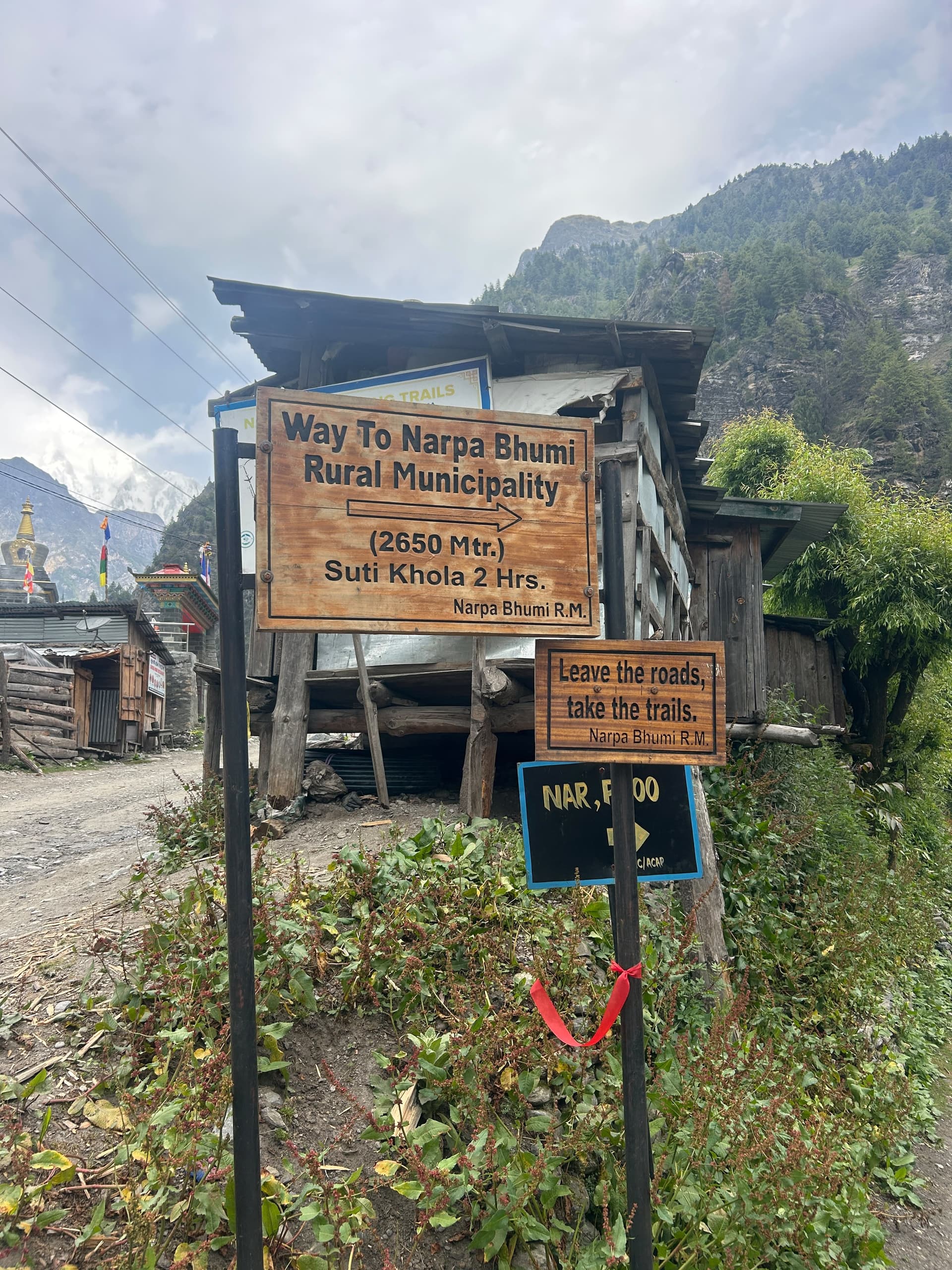
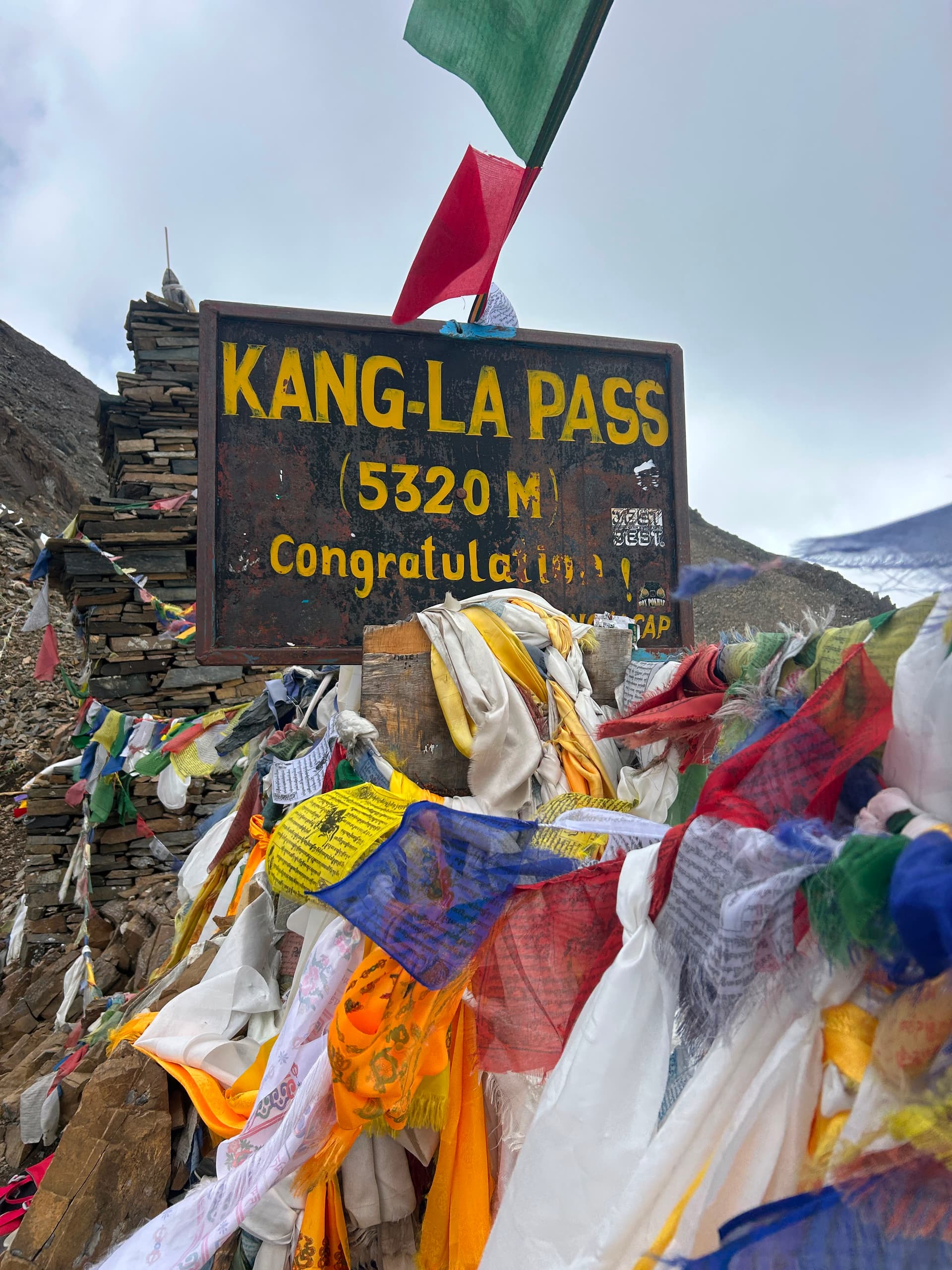
Because Nar and Phu sit close to the Tibetan border and were only opened to foreign trekkers in 2003, the Nepal government still classifies this route as a restricted area. This means independent solo trekking is not permitted here. Every trekker must travel with a licensed guide from a registered trekking agency, and groups must generally consist of a minimum of two people.
You’ll need the following permits to complete the trek, all of which we arrange for you as part of your booking:
| Permit |
Cost |
Notes |
| Restricted Area Permit (RAP) |
US $100 per person/week (Sept-Nov) or US $75 per person/week (Dec-Aug) |
Issued in weekly blocks; extra days beyond the first week are charged per day |
| Annapurna Conservation Area Permit (ACAP) |
US $30 per person |
One-time fee, covers the entire trek including any Annapurna Circuit extension |
| TIMS Card |
US $20 per person (individual) / US $10 (group) |
Arranged through our office along with your other permits |
Permits are checked at several points along the route, including Besisahar, the main entry checkpoint at Koto, and again near Meta/Kyang, where the local administrative checkpost is based. As your trekking agency, we handle all documentation and checkpoint registration for you, so there’s nothing to arrange on your end beyond booking with us in advance.
For context, Nar Phu’s restricted area permit is considerably more affordable than Upper Mustang’s (roughly US $50 per day), while offering a very similar level of remoteness, restricted-area exclusivity, and Tibetan-influenced culture, making it one of the better value restricted treks in Nepal.
Because this is a genuinely restricted area, the number of trekkers on the trail stays low year-round, which is part of what makes Nar Phu feel so different from Nepal’s more crowded routes.
A Sacred, Vegetarian Valley: Local Customs You Should Know
One detail that surprises a lot of first-time Nar Phu trekkers: from Meta onward, the valley is treated as a sacred zone by local custom. Killing animals, eating meat, drinking alcohol, and smoking are all traditionally prohibited once you enter the restricted area proper. This isn’t a rule enforced by a checkpoint sign, it’s a long-standing religious and cultural practice tied to the valley’s Tibetan Buddhist roots, and trekkers are expected to respect it.
In practical terms, this means teahouse menus in Meta, Phu, and Nar are meat-free (though dairy products like yak curd and yogurt are common), and it’s best to leave the alcohol and cigarettes for Manang and beyond. It’s a small adjustment, but it’s also part of what makes walking through this valley feel genuinely different, you’re moving through a living religious landscape, not just scenery.
Difficulty Level of the Nar Phu Valley Trek
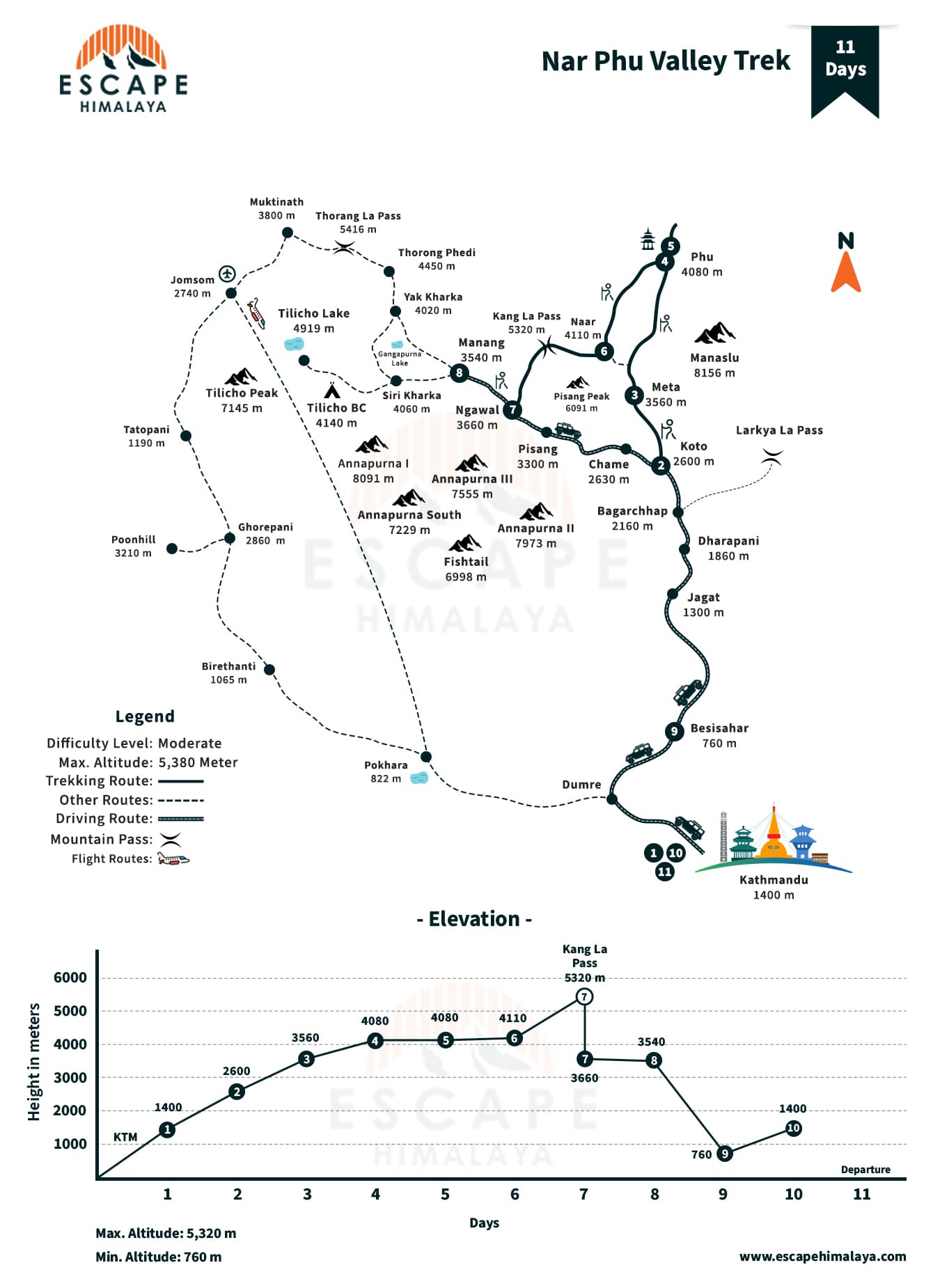
The Nar Phu Valley Trek sits at a moderate level overall, with one genuinely strenuous day: the crossing of Kang La Pass at 5,320 meters. Most days involve five to seven hours of walking on well-defined but sometimes narrow and exposed trails, through forest, canyon, and high alpine terrain.
Trekkers with reasonable fitness, some prior hiking experience, and a sensible, patient attitude toward altitude gain can complete this trek without major difficulty. That said, the remoteness of the region means limited teahouse options and long trekking days between settlements, so a good baseline of stamina genuinely helps.
Best Season for Nar Phu Valley Trekking
Nar Phu Valley sits in a rain shadow behind the Annapurna range, which gives it a somewhat different weather pattern than the rest of Nepal.
- Spring (March to May): Warmer days, blooming rhododendron forests lower down, and generally stable weather make this one of the best windows for the trek.
- Autumn (September to November): Widely considered the best season, with the clearest mountain views and the most stable weather of the year, though this is also when Restricted Area Permit fees are highest.
- Monsoon (June to August): Because of the rain shadow effect, Nar Phu remains relatively drier than most of Nepal’s other trekking regions during monsoon, making it one of the few treks that stays genuinely viable during these months. Lower sections closer to Besisahar may still see rain.
- Winter (December to February): Kang La Pass can close due to heavy snowfall, and temperatures drop well below freezing at higher elevations, so this season is only recommended for well-prepared, experienced trekkers, and even then, the pass crossing isn’t guaranteed.
Kang La Pass
At 5,320 meters, Kang La Pass is both the physical and symbolic high point of this trek. It links the closed valleys of Nar Phu with the far more open, well-trodden terrain of the Annapurna Circuit. The climb is steep and the air thin, so we start early in the morning while the trail is calmer and the visibility is at its best. Strung with prayer flags and offering sweeping views of the Annapurna range, Manaslu, and the peaks surrounding Nar Phu, it’s a genuinely unforgettable moment on the trek.
Accommodation During the Trek
You’ll stay in a 3-star category hotel in Kathmandu’s Thamel area before and after the trek, with hot showers, Wi-Fi, and all standard amenities available.
Along the trail, accommodation is in local teahouses and guesthouses, typically on a twin-sharing basis. Rooms are simple, usually two single beds with basic bedding, and shared bathroom facilities become more common as you move higher into Nar and Phu. In the lower sections and back on the Annapurna Circuit side (Ngawal and Manang), teahouses tend to be more developed, with better food menus and more reliable hot showers.
Because Nar Phu remains a lightly visited region, teahouse options in Meta, Phu, and Nar are more limited than on busier trekking routes, so our itinerary is planned around the villages with the most reliable accommodation.
Food and Meals on the Trek
Your Nar Phu Valley Trek Package includes three meals a day (breakfast, lunch, and dinner) with tea or coffee, ordered from teahouse menus along the route.
Breakfast typically includes Tibetan bread, chapati, toast, porridge, and eggs cooked to your preference. Lunch and dinner usually center around Dal Bhat, Nepal’s staple meal of rice, lentils, and vegetables, along with momos, noodle soups, and simple Tibetan-style dishes. As you move deeper into Nar and Phu, menu options become more limited, so it’s worth arriving with an open mind about food variety.
Vegetarian options are widely available. Please let us know in advance if you have any dietary restrictions so we can plan accordingly.
Altitude Sickness on the Nar Phu Valley Trek
With several days of the trek spent above 3,500 meters and a high point of 5,320 meters at Kang La Pass, altitude sickness is a real consideration on this route. Symptoms typically include headache, nausea, loss of appetite, dizziness, and fatigue, and they usually appear above 2,500 meters.
Our itinerary is built around a proper acclimatization day in Phu Gaon before the trek continues toward Nar and the pass. We recommend staying well hydrated, walking at a steady, unhurried pace, and speaking up immediately if you notice any symptoms. Our guides carry oximeters to monitor your oxygen levels and heart rate throughout the trek, and are trained to make the right call between rest, descent, or evacuation if needed.
Travel Insurance Requirements
Travel insurance is mandatory for the Nar Phu Valley Trek. Because this route reaches over 5,000 meters and passes through genuinely remote terrain far from any road access, your policy needs to cover high-altitude trekking (at least up to 5,500 meters), emergency helicopter evacuation, and trip interruption or delay. Given the remoteness of Nar Phu, evacuation by helicopter is typically the only fast option if something goes wrong, so this isn’t a step worth skipping.
Packing List for the Nar Phu Valley Trek
We provide all trekkers with a duffel bag, down jacket, and sleeping bag during the pre-trip briefing in Kathmandu.
- General Items: Duffel bag (provided), daypack (20-25 litres), down jacket (provided), sleeping bag (provided), headlamp, power bank, trekking poles, universal adapter.
- Clothing: Sun hat, warm hat, sunglasses with UV protection, buff or scarf, base layers, fleece jacket, insulated jacket, waterproof shell, hiking pants, gloves (lightweight and insulated), wool socks, sturdy waterproof trekking boots, gaiters (useful for early or late season snow near Kang La Pass).
- First Aid and Medications: Sunscreen (high SPF), lip balm, personal medications, blister treatment, and any altitude sickness medication prescribed by your doctor.
- Other Essentials: Passport and extra passport photos, reusable water bottle, water purification tablets or filter, toiletries, quick-dry towel, snacks, dry bags for electronics and documents.
Internet, Mobile Network, and Electricity
Wi-Fi is available in some teahouses along the route, particularly in Manang and Ngawal, though it becomes patchy or unavailable in Meta, Phu, and Nar. Mobile coverage follows a similar pattern, reasonably strong in the lower sections and around Manang, but unreliable deeper in the Nar Phu Valley itself.
Electricity for charging devices is available in most teahouses, usually for a small additional fee as you move higher, since many rely on solar power or limited-hour generators. Carrying a power bank is a smart backup.
Solo Trekking in Nar Phu Valley
Independent solo trekking is not permitted in Nar Phu Valley, since it’s classified as a restricted area requiring a licensed guide and, in most cases, a minimum group size of two. This is one of the reasons the region has remained so untouched, and it’s also part of why trekking here with an experienced local team makes such a genuine difference to the experience.
Escape Himalaya organizes fully guided Nar Phu Valley Trek departures, taking care of all permits, logistics, and safety planning so you can focus entirely on the journey.
Can Beginners Do the Nar Phu Valley Trek?
Beginners with a good baseline of fitness and a realistic mindset can complete this trek, but it’s fair to say Nar Phu is not the easiest introduction to Himalayan trekking. Unlike Everest Base Camp or Annapurna Base Camp, the infrastructure here is thinner, teahouse choices are limited, and one day (Kang La Pass) genuinely tests your stamina and altitude tolerance in a way few other treks do this early in an itinerary.
If you’re a first-time trekker who’s serious about taking this on, we recommend a few months of regular cardio and hill-walking training beforehand, and going in with the patience to let your guide set the pace. Trekkers with at least one prior multi-day hike under their belt, at any altitude, tend to have a noticeably easier time with the acclimatization side of this trek.
Physical Preparation for the Nar Phu Valley Trek
Because this itinerary includes several long trekking days in a row and one high-altitude pass, physical preparation genuinely pays off. In the two to three months before departure, we recommend building up your cardiovascular fitness through hiking, running, cycling, or swimming, alongside some basic strength training for your legs and core to handle multi-hour days with a daypack.
If you have access to hills or stairs, practicing sustained uphill and downhill walking is especially useful, since that’s the bulk of what you’ll be doing on the trail. Mental preparation matters just as much: long remote trekking days, basic teahouse comforts, and unpredictable mountain weather all ask for a flexible, patient attitude as much as they ask for fitness.
Drinking Water on the Trek
Staying properly hydrated is essential for avoiding altitude sickness, and we recommend drinking at least three to four liters of water daily while trekking. Boiled water is available for a small fee at most teahouses along the route, and is the safest option. Bringing a reusable bottle along with water purification tablets or a filter is a smart, cost-effective backup, particularly once you’re deeper into Nar and Phu, where bottled water is harder to find and not environmentally ideal to rely on anyway.
Toilet and Bathroom Facilities
Facilities become more basic as you move deeper into the valley. In Koto and Meta, you’ll generally find simple attached or shared squat toilets. In Phu and Nar, expect shared, basic squat-style facilities, with hot showers usually available for a small extra charge where solar or gas heating is running. Once you’re back on the Annapurna Circuit side in Ngawal and Manang, facilities improve noticeably, with more teahouses offering Western-style toilets and reliable hot showers.
Laundry Services
Laundry services are limited to non-existent in Meta, Phu, and Nar, so pack accordingly with a few extra changes of base layers. Once you reach Manang, most teahouses offer either hand-washing facilities or paid laundry services, making it a good spot to freshen up before the final drive back toward Kathmandu.
Money Exchange
We recommend exchanging enough Nepalese Rupees in Kathmandu before setting off, since currency exchange options become scarce once you leave Besisahar. Many teahouses along the route do accept US dollars for larger purchases, but rates are rarely in your favor. Credit cards are not usable anywhere along the trekking route, so carrying enough cash for permits, meals not included in your package, and personal expenses is essential.
Frequently Asked Questions (FAQs)
Is the Nar Phu Valley Trek suitable for beginners?
The Nar Phu Valley Trek is best suited to trekkers with some prior hiking experience, since it involves long trail days, limited teahouse infrastructure, and one genuinely demanding day crossing Kang La Pass at 5,320 meters. That said, beginners in good physical condition, with the right mindset and a well-paced itinerary, can and do complete this trek successfully.
Do I need a permit for the Nar Phu Valley Trek?
Yes. Nar Phu Valley is a government-designated restricted area, so you’ll need both an Annapurna Conservation Area Permit (ACAP) and a Nar Phu Restricted Area Permit (RAP). Solo trekking isn’t allowed here, you must be accompanied by a licensed guide, and groups generally need a minimum of two trekkers. Escape Himalaya arranges all required permits as part of your booking.
How difficult is crossing Kang La Pass?
Kang La Pass, at 5,320 meters, is the most physically demanding day of the trek. It involves an early start, a steep and sustained climb, and several hours of walking in thin air before the descent into Ngawal. With proper acclimatization beforehand and a steady pace, most reasonably fit trekkers cross it successfully.
Can the Nar Phu Valley Trek be done in the monsoon season?
Yes, and it’s one of the few Nepal treks where this genuinely works well. Because Nar Phu sits in a rain shadow behind the Annapurna range, it receives noticeably less rainfall than most other trekking regions during the June to August monsoon, making it a solid alternative for trekkers wanting to avoid the crowds and wet trails elsewhere in Nepal.
What kind of accommodation should I expect?
You’ll stay in a 3-star hotel in Kathmandu before and after the trek, and in local teahouses on a twin-sharing basis throughout the trekking days. Rooms are simple, and facilities become more basic the deeper you go into Nar and Phu, with better comfort available again once you reach Ngawal and Manang.
How does the Nar Phu Valley Trek compare to the Annapurna Circuit?
This itinerary actually combines both experiences. The first half takes you through the closed, restricted Nar Phu Valley, while the second half, after crossing Kang La Pass, rejoins the classic Annapurna Circuit trail through Ngawal and Manang. You get the remoteness and cultural depth of Nar Phu along with a taste of Annapurna’s more established trekking infrastructure.
Is travel insurance mandatory for this trek?
Yes. Given the altitude, the remoteness of the region, and the limited access for emergency evacuation, travel insurance covering high-altitude trekking up to at least 5,500 meters and emergency helicopter rescue is mandatory for anyone joining this trek.
What is the best time of year to do the Nar Phu Valley Trek?
Autumn (September to November) and spring (March to May) offer the most stable weather and clearest mountain views, though autumn also comes with higher Restricted Area Permit fees. Thanks to the region’s rain shadow position, monsoon season remains a viable, less crowded option as well.
Will I have mobile network or Wi-Fi during the trek?
Coverage is inconsistent. You’ll generally have reasonable connectivity in Manang and Ngawal, but signal and Wi-Fi become unreliable or unavailable in Meta, Phu, and Nar. It’s worth informing family or work contacts in advance that you may be difficult to reach for several days.
I’m trekking alone. Can I still do the Nar Phu Valley Trek?
Solo trekkers cannot obtain a Restricted Area Permit alone, Nepal’s government requires a minimum of two permit holders for this route. If you’re travelling by yourself, the usual solution is to join one of our scheduled group departures, or, if you’d prefer a fully private trip, we can arrange a second “companion” permit on your behalf so you can trek privately with just your guide. Either way, trekking here solo without an agency is not an option.
Is alcohol or meat allowed on the trek?
No. From Meta onward, Nar Phu Valley is treated as a sacred zone under long-standing local custom, meat, alcohol, and smoking are traditionally prohibited once you’re inside the restricted area. Teahouse menus in Meta, Phu, and Nar reflect this, though dairy products like yak curd and yogurt are widely available. It’s a detail worth knowing before you pack.
Can the itinerary be customized?
Yes. While this 11-day itinerary is our standard, well-balanced route for the Nar Phu Valley Trek, we’re happy to adjust the pace, add extra acclimatization days, or extend the trip with additional side hikes such as Himlung Himal Base Camp, based on your fitness level, schedule, and interests.