1. What makes Annapurna Circuit Trek special? - Top Reasons to Choose Annapurna Circuit Trek
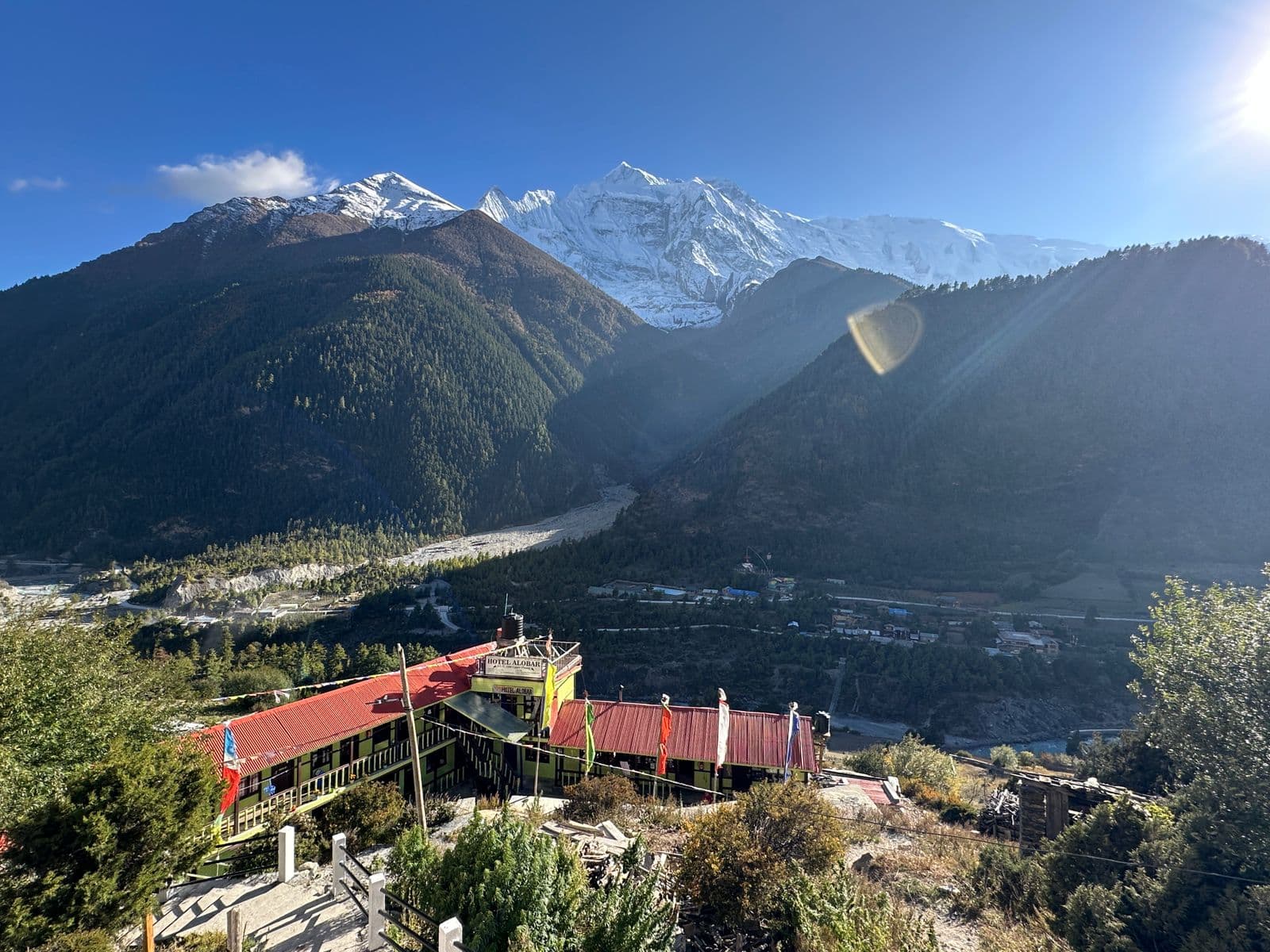
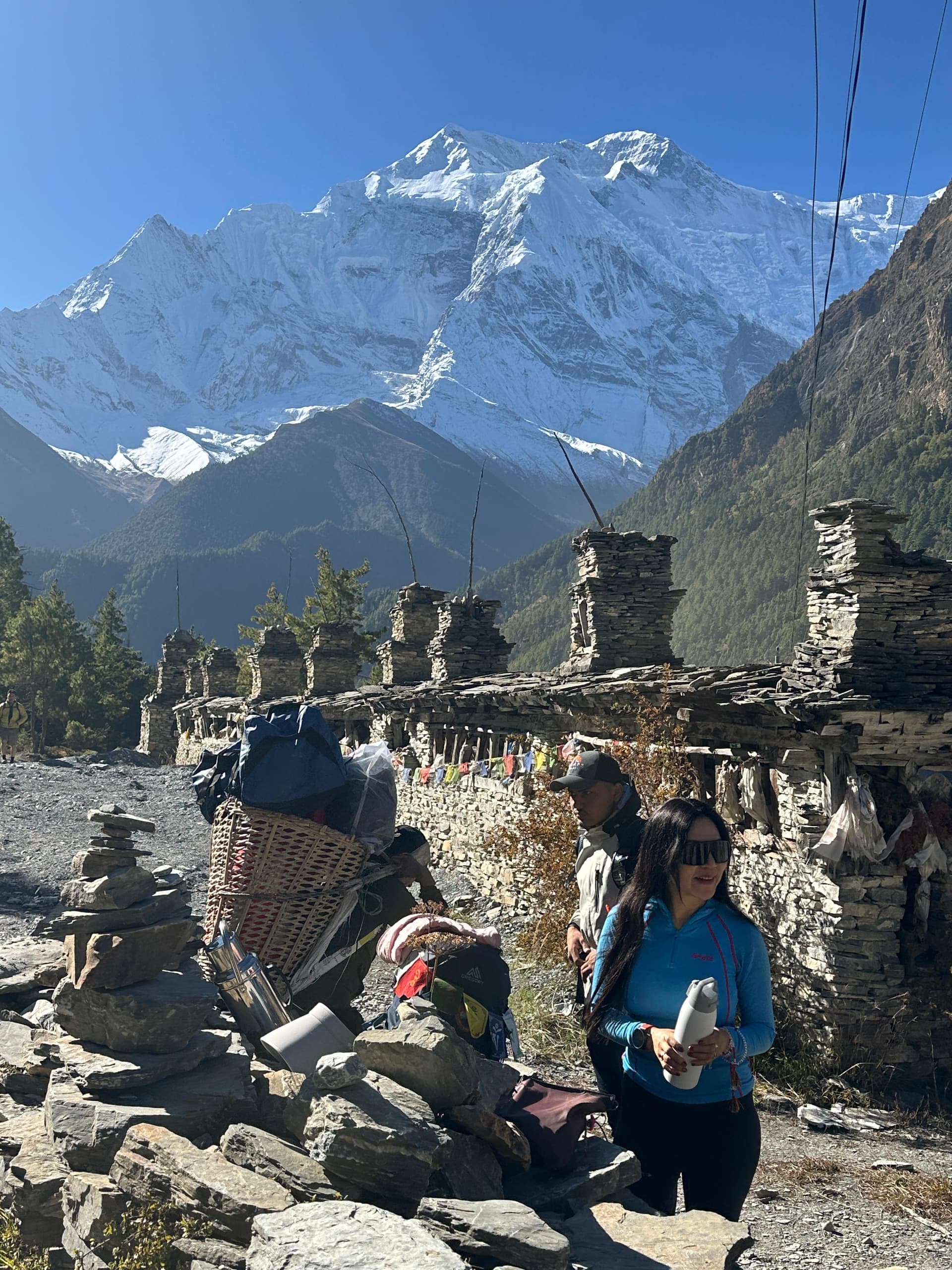
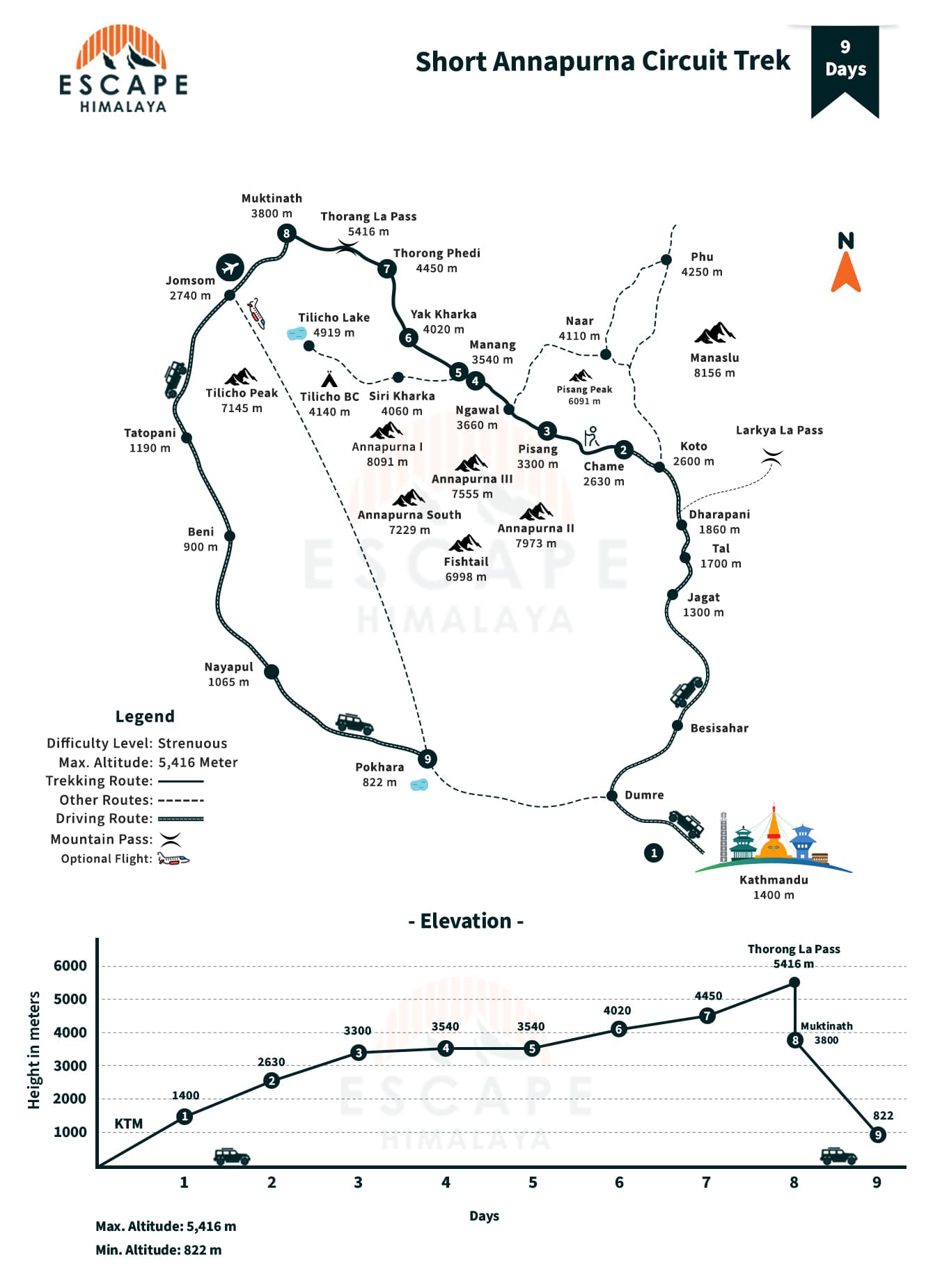
The short Annapurna Circuit Trek trail follows stone paths through Dharapani and climbs slowly toward Pisang. Each village looks a little different, each with its own rhythm. Children wave, mules pass by, and someone always seems to be tending a fire. By the time you reach Manang, the landscape feels open and dry. The valley stretches wide with snow peaks on every side. People move slower here because the air is thin. It is a good place to rest and watch the light move across Annapurna II and Gangapurna.
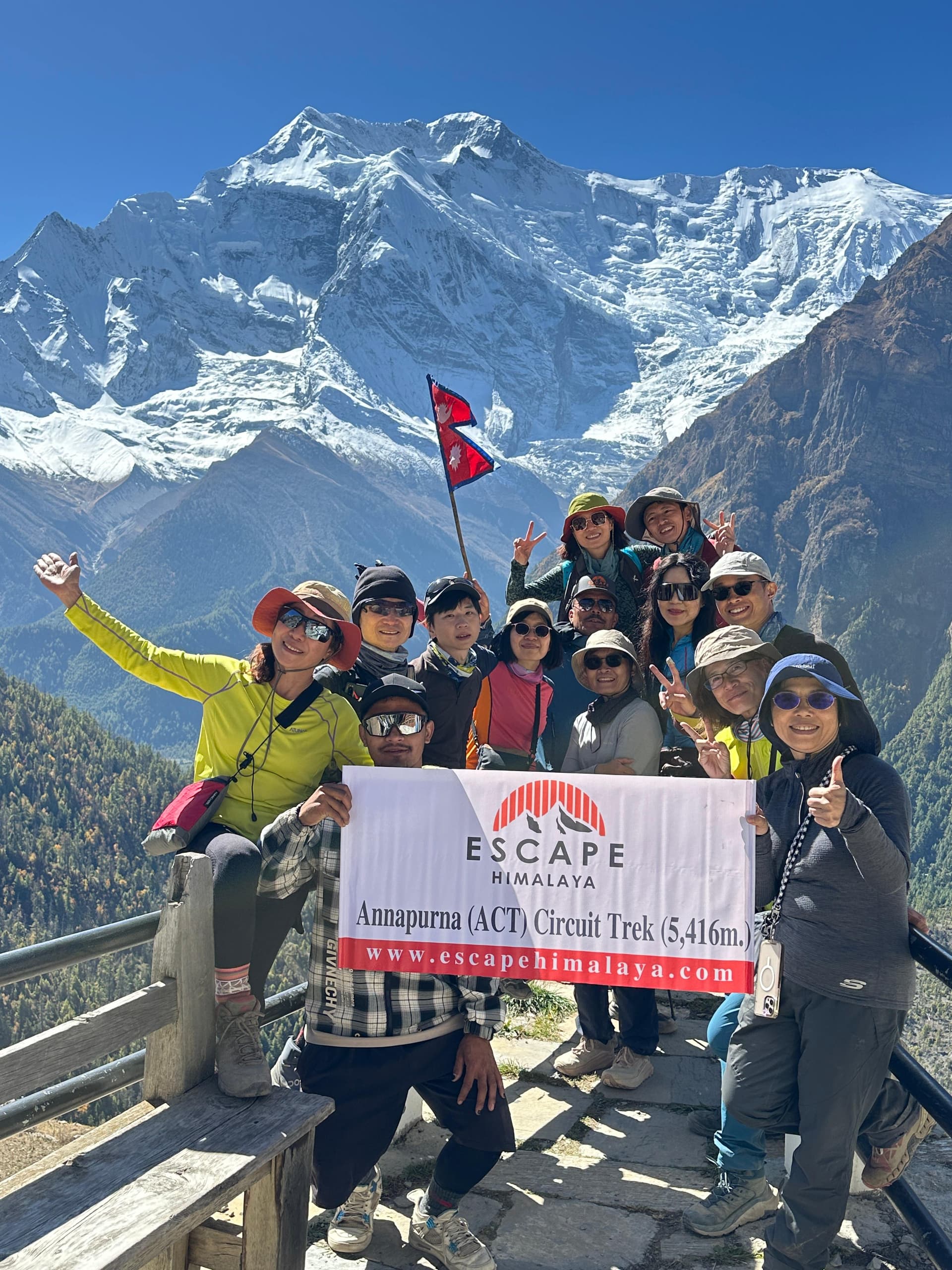
The walk to Thorong La Pass, at 5416 meters, takes strength and patience. The climb is steady and quiet, just the crunch of boots on frozen ground. From the top, the world opens completely. Mountains stand in every direction, and the wind carries the sound of prayer flags snapping in the cold. After the pass, the trail drops into Muktinath, a sacred stop for both Hindus and Buddhists. The dry cliffs and long valleys of Lower Mustang appear ahead. From there, the route follows the Kali Gandaki River toward Jomsom, where planes fly low between the ridges and the journey comes to a gentle close. What makes this trek special is how much it holds in a short time. Forests, deserts, mountain passes, and quiet villages all fit into one clear line through the heart of the Himalaya.
2. Gear & Packing Smart
The Himalayas’ weather may be very different within a few hours; what could be a warm walk in the valley may turn out to be an icy wind on the mountain. Layered clothing (base-layer, fleece, shell jacket), strong waterproof boots, a head torch and sun protection (sunglasses, SPF30+ sunscreen, lip balm) are some of the things that you should pack. Take a water bottle that you can use again along with a water purification method - it is very costly and not good for the environment to buy water in small bottles at high altitudes.
3. Physical Preparation
Although this is the short version of the trekking circuit, the area has steep ascents, long days of walking and air with low oxygen content at great heights. If you get ready in advance, you will be able to take the challenge with a smile on your face. Cardiovascular fitness (hiking, running, stair-climbing), leg and core strength should be your focus, and you should get used to carrying a loaded backpack.
4. Accommodation During Short Annapurna Trek
Places to stay on the Short Annapurna Trek vary from basic teahouses to comfortable lodges. Up to Manang and again after Muktinath, you can find a few higher-end options with private rooms, hot showers, and good meals. From Yak Kharka to Thorong La Pass, including Thorong Phedi and High Camp, the accommodation is simple. Rooms are small, usually unheated, and meals are cooked on wood or gas stoves. As the trail climbs higher, it becomes harder to bring in supplies, so prices go up even though comfort levels go down. All accommodation during the 9-day trek is arranged in advance and covered in the trip cost. You can focus on walking and enjoying the trail while we take care of where you stay.
5. Finances & Logistics
You are to set aside some extra money besides the money already calculated for expenses such as hot showers, bottled drinks, laundry, and souvenirs. ATMs are only available down the lower villages; therefore, make sure you have enough Nepali rupees with you before starting the trail.
6. Permits & Documentation
As a trekker, you are required to have an Annapurna Conservation Area Project (ACAP) Permit and a Trekking Information Management System (TIMS) card. Apart from that, it is a good idea to keep your passport, permit papers and photos in a waterproof pouch in your day backpack as closer to the trail there will be check points where you may be required to show them.
7. Wifi and connectivity during Short Annapurna Circuit Trek
Internet access along the Annapurna Short Circuit is decent in the lower villages and limited higher up. In places like Dharapani, Chame, and Pisang, most lodges have Wi-Fi that works well enough for messages or quick updates. Mobile data also connects in these areas if you use an NTC or Ncell SIM card. Once you pass Manang and start gaining altitude, the signal begins to fade. From Yak Kharka to Thorong Phedi and High Camp, mobile networks often disappear. Some teahouses keep satellite Wi-Fi, which costs around NPR 100 to 200 per device. It’s slow, but usually enough to send a short message home or check the weather. After crossing Thorong La and reaching Muktinath or Jomsom, the connection improves again. Lodges here have steady Wi-Fi and better mobile coverage, so it’s easy to reconnect or upload photos before heading back to Pokhara. In the high parts of the circuit, being offline feels normal. The quiet and the mountains fill the space that screens usually take.
8. Electricity during Annapurna Short Circuit Trek
Electricity is easy to find in most villages on the Annapurna Short Circuit. Up to Manang, every lodge has power, and you can usually charge your phone or camera for free. The supply comes from small hydropower lines or solar panels, and it works fine unless the weather turns bad. From Yak Kharka to Thorong Phedi and High Camp, power becomes limited. These places rely on solar panels, and on cloudy days the charge runs low. Most teahouses ask a small fee, around NPR 100 for each device. It helps them cover the cost of keeping panels and batteries running at that height. After crossing the pass, the situation gets better again. In Muktinath and Jomsom, electricity is stable, and charging is usually free. It’s best to carry a small power bank for the higher days, just in case the solar charge is weak or the lodge is full.
9. Water during Annapurna Short Trek
You can buy bottled water in almost every village on the trek. In the lower parts, one bottle costs around NPR 100. Around Chame, the price goes up to about NPR 150. In the Manang region, it’s usually NPR 200, and near Thorong La Pass, it can reach NPR 250. Prices rise as you go higher because everything has to be carried up by mules or porters. If you want to cut down on plastic, it’s better to refill your bottle. Most lodges can give you boiled or filtered water for a small fee. Many trekkers also bring water purification tablets or filters. It’s safer, cheaper, and better for the trail.
10. Food during Short Annapurna Circuit
The food options stay mostly the same throughout the Annapurna Short Circuit. Every teahouse serves a similar menu with local and simple Western dishes. Dal bhat is the most common meal and always fresh, with rice, lentil soup, and vegetables. You can also find noodles, fried rice, pasta, soups, and pancakes in most places. As you climb higher, the variety stays similar, but prices increase. Everything above Manang has to be carried by mule or porter, so food becomes more expensive with elevation. Meals are cooked fresh in each lodge, and portions are generous enough to keep your energy up for the day’s walk.
11. Trail condition on Annapurna Short Trek
After Manang, the path starts to climb higher. The air feels thinner, and walking gets slower. The trail is clear and easy to follow but needs more care as you go up. From Manang to Yak Kharka, it rises gently through dry grasslands where you sometimes see yaks grazing. From Yak Kharka to Thorong Phedi, the path turns rocky. There are a few narrow parts, and the ground can be loose. Most trekkers walk slowly here to save energy. The climb from Phedi to High Camp is short but quite steep. Many people stop at High Camp for the night before crossing the pass. The walk over Thorong La Pass is the hardest day. It’s cold and windy, and the climb takes a few hours. The trail is marked with poles and prayer flags, so it’s easy to follow even if there’s snow. After the pass, the path goes down a long way to Muktinath. The downhill part can be tough on the knees, but the views of Dhaulagiri and the dry Mustang valley are beautiful. The trail is safe and well-used. If you walk slowly and take breaks, it’s very manageable for most trekkers.
12. Toughest part in Annapurna Trek Circuit
The toughest day is the one over Thorong La Pass. It sits at about 5,416 meters, the highest point on the trail. We start before sunrise from Thorong Phedi or High Camp while it is still cold and dark. Breathing feels slow and heavy right from the start. The path climbs little by little over stones and snow. It is not very steep, only long. Everyone moves slowly and stops often to rest. The wind gets strong near the top, and the air bites at the face. At the pass there are prayer flags, a small sign, and wide white peaks on every side. Most people just stand there quietly for a while. Going down to Muktinath takes a few hours. It is easier to breathe but hard on the knees.
13. Best season for Annapurna Short Trek
The best time to do this trek is in autumn or spring. In autumn, from September to November, the weather stays clear. The mountains look close, and the days are warm for walking. The nights are cooler but still comfortable. There is almost no rain, so it is easier to cross Thorong La Pass. In spring, from March to May, the trail is full of flowers. Rhododendrons cover the hills, and the valley looks bright. The weather is mild, and the sky is mostly clear. It is also a good time to enjoy the walk without much crowd. Both autumn and spring are the best seasons for this 9-day Annapurna Short Circuit Trek. The path is dry, views are open, and the walk feels pleasant from start to end.
14. Helicopter evacuation for Annapurna Short Trek
Helicopter rescue can be done in most places along the Annapurna Short Circuit. Almost every village has an open field or flat space where a helicopter can land if the weather is good. From Thorong La Pass itself, helicopters cannot land because of the height and strong wind. In case of emergency, the person is usually brought down to High Camp or Thorong Phedi. These areas have safe landing spots and are used often for evacuation. If someone feels very sick or cannot continue, the guide will contact the rescue team right away. The helicopter usually flies to Pokhara or Kathmandu, depending on the situation.
15. Muktinath Temple: Religious site during Short Annapurna Circuit Trek (after passing Thorung La pass)
Muktinath Temple is a holy place on the Short Annapurna Circuit Trek. The word Muktinath has a deep meaning. Mukti means freedom or salvation, and Nath means God. So Muktinath means the God of Salvation. People believe that visiting this temple helps bring peace and release from the cycle of life. Both Hindus and Buddhists come here to pray. The temple stands at about 3,800 meters, under the high mountains, with dry hills around it. There are 108 water taps where pilgrims take a cold bath and a small natural flame that never goes out. The place feels quiet and pure. Many trekkers feel thankful to reach Muktinath after the long walk over Thorong La Pass.
16. Acclimatization during short annapurna trek
When you reach Manang, you start to feel the height. The air is thinner, and breathing feels different. Some people get a small headache, feel tired, or sleep lightly. It is normal, and your body just needs time to adjust. Manang is the best place to rest. Most trekkers stay here for one extra day. You can take short walks to Gangapurna Lake or Bhojo Gompa, or just climb a little above the village. Moving slowly helps your body get used to the altitude. Drink plenty of water and eat well. Do not rush. If the headache or tiredness gets worse, it is better to rest or go down. The guides and people in Manang know how to handle altitude problems and will help if needed.
17. Thorung La Pass: Highest elevation for Annapurna Short Trek
Thorong La Pass is the highest point of this trek. It is about 5,416 meters high. The pass lies between Manang and Muktinath and joins the two valleys. Most people start very early from High Camp or Thorong Phedi. The air is thin and cold, so walking feels slow. The trail climbs step by step over rocks and snow. It is not too steep, but it takes time. At the top there are many prayer flags and a small signboard. When you stand there, you can see big white mountains and the dry valley of Mustang far below. The wind is strong, but the place feels quiet. After a short rest, everyone starts going down to Muktinath. The downhill part is long and hard on the legs, but the air gets warmer. Most trekkers say it is the hardest day, and also the best day of the whole trek.
18. Best Viewpoints on the Short Annapurna Circuit Trek
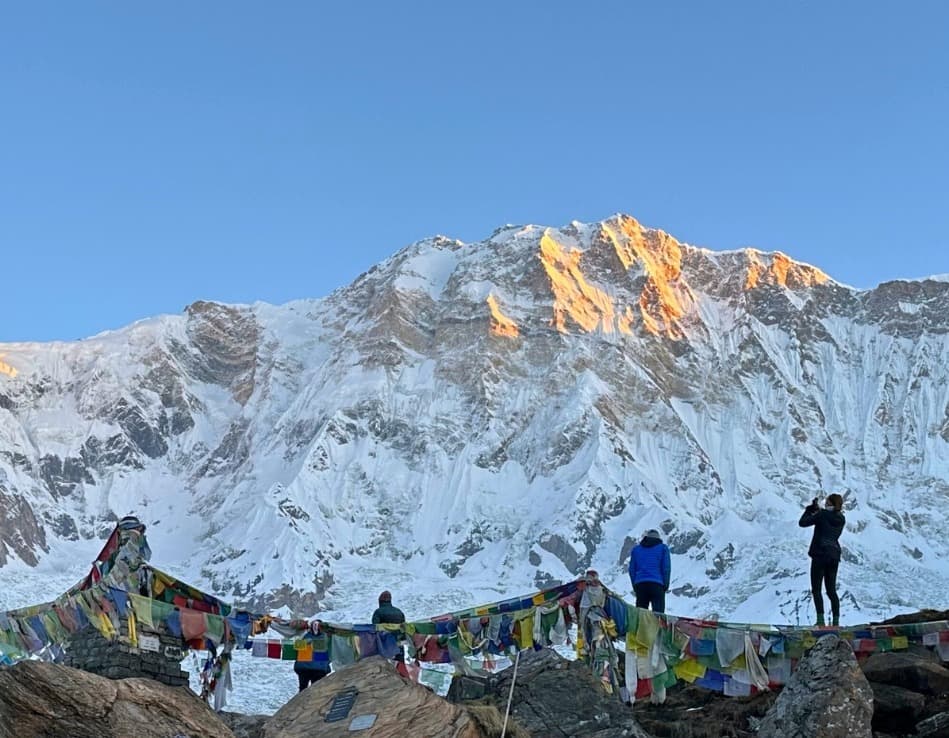
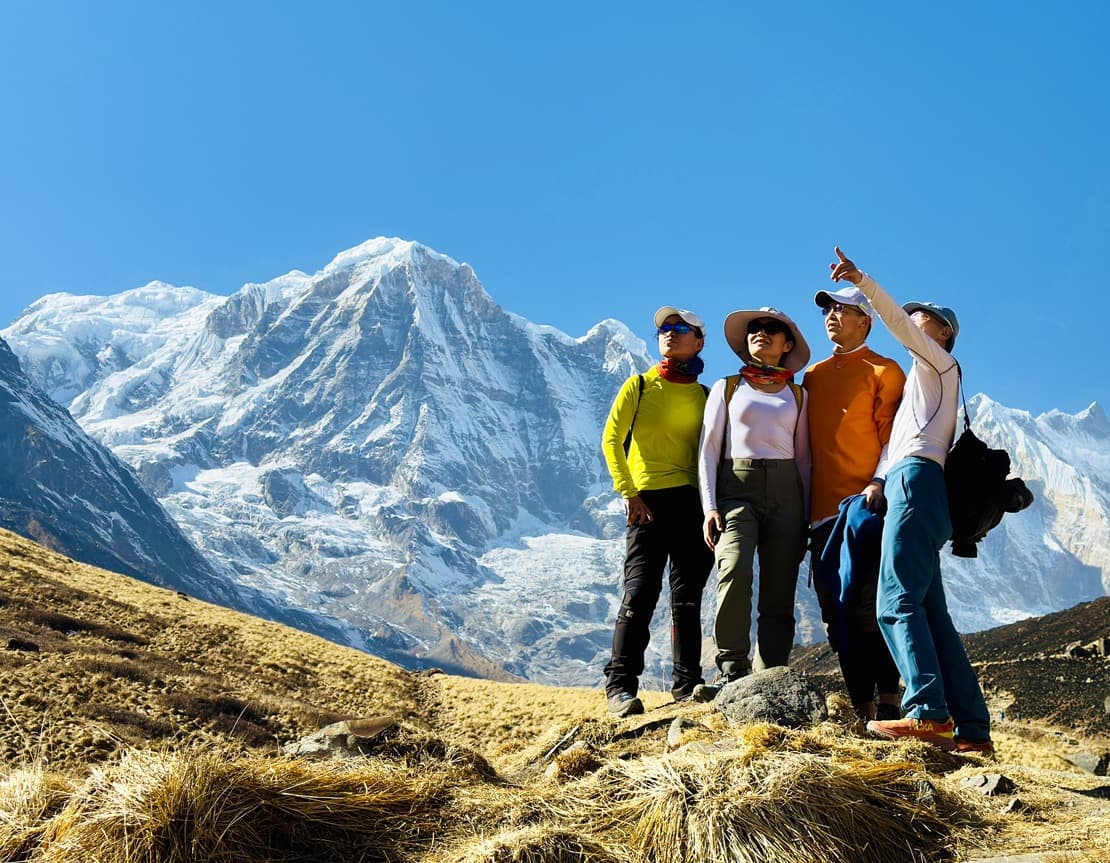
The Short Annapurna Circuit offers some of the best mountain views in the region. Two places stand out the most: the Upper Pisang to Manang trail and the Thorong La Pass. The walk from Upper Pisang to Manang is one of the most scenic parts of the trek. The trail goes through pine forest, small villages, and open fields above the valley. From here you can see Annapurna II, III, IV, and Gangapurna very clearly. The walk usually takes six to seven hours, and the view stays wide and bright most of the way. Many trekkers say this is the most beautiful day of the trek. Thorong La Pass, at 5,416 meters, is the highest viewpoint of the route. From the top, you can see the long Annapurna range on one side and the dry Mustang valley on the other. The wind is cold, but the view is clear and endless. Both spots show the true beauty of the Annapurna mountains, one with green forest and villages, the other high, quiet, and close to the sky.
19. Mountains During the Annapurna Short Circuit Trek
The Annapurna Short Circuit Trek offers close views of some of Nepal’s most famous peaks. Along the trail, you can see Annapurna II, Annapurna III, Dhaulagiri, Manaslu, Nilgiri, and Pisang Peak. From the lower parts of the route, the views start with Annapurna II and III rising high above the valley. As you move toward Upper Pisang and Manang, Pisang Peak stands right in front, with Gangapurna and Tilicho Peak also seen in the distance. Crossing Thorong La Pass opens a new side of the Himalayas. From there, you can see the dry Mustang valley with Nilgiri and Dhaulagiri shining to the west. On clear days, these mountains look so close that you can see their ridges and glaciers clearly. Every turn on the trail shows a different angle of the mountains, making this route one of the most scenic treks in Nepal.
20. Apple heaven: Jomsom, Barga, and Marpha
Jomsom, Barga, and Marpha are famous for their apples. The air here is dry, and the days are sunny, which helps the apples grow well. During harvest time, the trees are full of red apples, and the whole area smells sweet. Marpha is the most popular village for apple products. You can try fresh apples, dried slices, apple pie, and a local apple brandy that people call Marpha Rakshi. Many trekkers stop here to taste these after crossing Thorong La Pass. The apples are usually ready around September and October. That is the best time to see the orchards full and try everything made from them.
Optional Add-on: Return Travel from Pokhara to Kathmandu
You are free to choose among the following options for your return journey after the trek:
• Flight (25 minutes): About US$90 100 per person
• Private car (5 hours): About US$100 120 per vehicle
• Tourist luxury bus (6 7 hours): About US$12 15 per person
Choose the mode that matches your budget, comfort level and schedule.