Most people planning a Nepal trek spend weeks researching gear, fitness routines, and packing lists. The one thing that often gets the least attention? Choosing the right trekking company. And for the Manaslu Circuit Trek specifically, that decision matters more than almost anything else you will prepare for.
The Manaslu Circuit Trek is a restricted area trek. Nepal's government requires every trekker to hire a licensed guide, travel in a group of at least two, and carry three separate permits before stepping onto the trail. There are no ATMs anywhere on the route. Teahouse quality varies dramatically by altitude. And when something goes wrong at 5,000 metres, the nearest road is hours away.
None of this should put you off. The Manaslu Circuit is extraordinary, walking around the world's eighth-highest mountain through Tibetan-influenced villages that were only opened to outsiders in 1991. But it does mean that picking a trekking company with real experience in this region is not optional. It is the foundation on which the entire trip is built on.
This guide covers exactly what to look for and where Escape Himalaya fits into that picture.
Why the Manaslu Circuit Trek Is Different From Any Other Trek in Nepal
Walk into any trekking agency in Kathmandu and you will find the Manaslu Circuit listed alongside Everest Base Camp and Annapurna.
What that listing does not tell you is how different the Manaslu experience actually is to operate.
The trail covers roughly 177 kilometres through genuinely remote terrain. Teahouses in the higher sections offer the basics and nothing more.
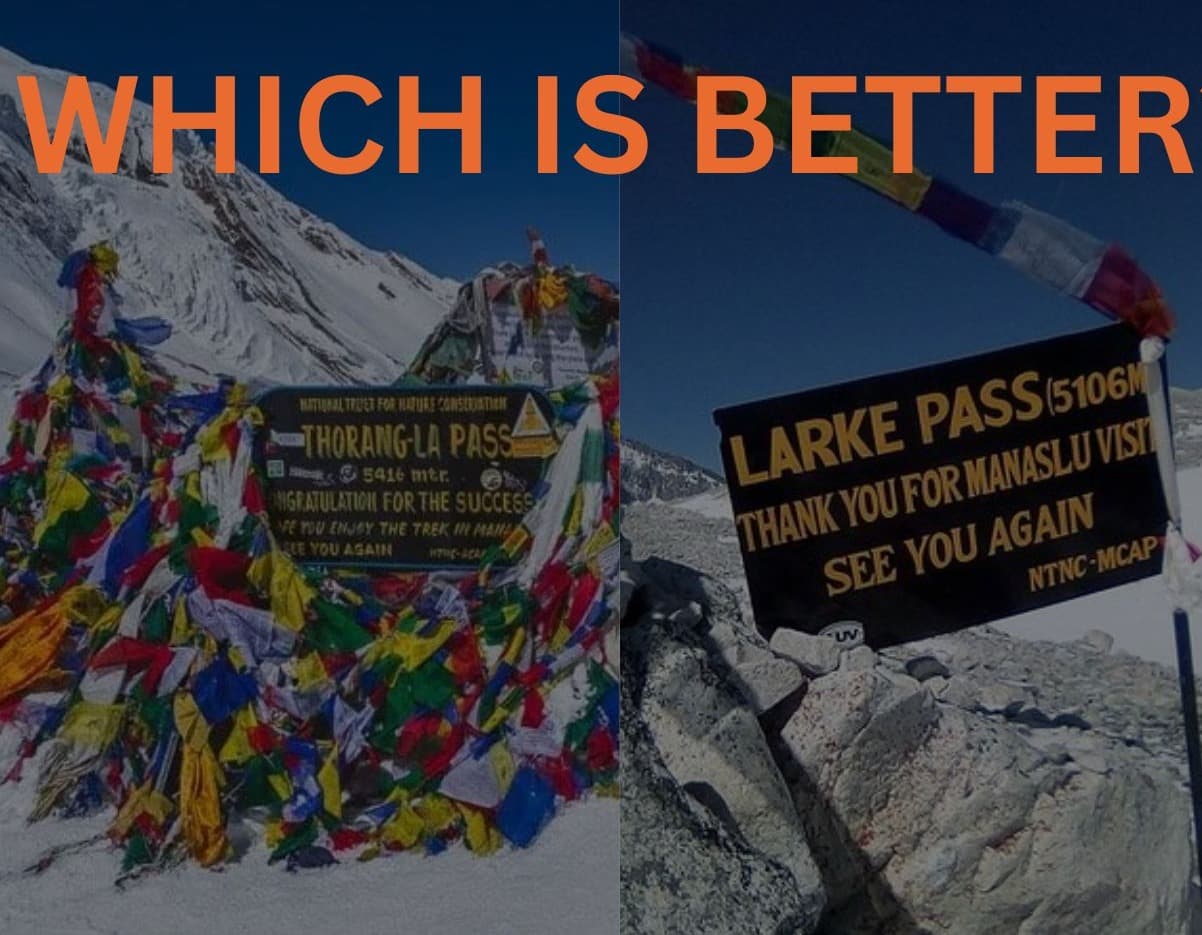
The highest point, Larkya Pass at 5,160 metres, sits above where altitude sickness becomes a serious risk for many trekkers.
And unlike the Everest or Annapurna regions, where you will find tourist infrastructure at almost every turn, the Manaslu circuit asks you to be more self-reliant, more prepared, and more trusting of the people guiding you.
Here is what makes logistics on this trek uniquely complex:
- It is a government-restricted zone, meaning solo trekking is illegal and a licensed Nepalese guide is mandatory by law
- Three permits are required: the Restricted Area Permit (RAP), the Manaslu Conservation Area Project Permit (MCAP), and the Annapurna Conservation Area Project Permit (ACAP)
- There are no ATMs on the route, so all cash for personal expenses must be sorted in Kathmandu
- Mobile network coverage disappears at higher altitudes, including around Samdo and Larkya Pass
- Teahouse availability becomes sparse at higher elevations, especially from Dharamsala onwards
A trekking company that knows the Manaslu Circuit well has already accounted for all of this. One that does not will leave you solving problems mid-trek that should have been handled before you left Kathmandu.
8 Things to Look For When Choosing a Manaslu Circuit Trekking Company
1. Government Registration and Official Licensing
Start here. Any trekking company operating legally in Nepal should be registered with the Nepal Tourism Board (NTB), affiliated with TAAN (Trekking Agencies' Association of Nepal), and recognized by the Nepal Mountaineering Association (NMA).
These registrations confirm the company is authorized to operate in restricted areas, that guides hold valid government licenses, and that the agency is accountable to regulatory bodies.
Ask for proof of registration before booking. A company worth trusting will share this without hesitation.
Escape Himalaya is fully registered with all three bodies. Legal documents are available directly on the website, so you can verify everything before committing to a booking.
2. Real Experience in the Manaslu Region, Not Just Nepal in General
This is the factor that most people overlook. A trekking agency with ten years of Everest Base Camp experience may still be running the Manaslu Circuit for the first time this season. The two treks share a country, not a skill set.
The Manaslu Circuit has its own rhythm. Knowing which teahouses at Namrung are reliable, how to pace the group through the cultural villages of Samagaun and Samdo, and how to read conditions on the Larkya Pass crossing before starting out at 4am, these things come from doing the route repeatedly, not from reading about it.
When speaking with any company, ask:
- How many Manaslu Circuit treks have you guided in the past two years?
- Do your guides have Manaslu-specific experience across multiple seasons?
- Have you operated this trek in both spring and autumn conditions?
Escape Himalaya has been running treks in Nepal for close to a decade, with the Manaslu region forming a consistent and significant part of what they do.
The Manaslu Circuit Trek (14 Days) is one of the most well-reviewed packages in the portfolio, and guides like Phurba Sherpa and Ramhari, who appear repeatedly in verified guest reviews, bring exactly the kind of route knowledge that matters when you are standing on a glacier at dawn trying to figure out whether the weather will hold.
3. Complete Permit Handling Before You Arrive
Permits for the Manaslu Circuit are not complicated once you know the system, but they do require advance planning and proper documentation. A good trekking company handles every permit before you land in Kathmandu, so day one is spent exploring Thamel rather than sitting in a government office.
Here is a breakdown of what is needed:
- Restricted Area Permit (RAP): USD 100 per person (7-day validity) during the September to November peak season, USD 75 during December to August. Extra days cost USD 15 or USD 10 respectively.
- Manaslu Conservation Area Project Permit (MCAP): USD 30 per person, required from Jagat village all the way to Larkya Pass.
- Annapurna Conservation Area Project Permit (ACAP): USD 30 per person, required for the post-pass sections through Bimthang, Tilije, and Dharapani.
Escape Himalaya manages all three permits in advance for every trekker. By the time you check into your hotel in Kathmandu, the paperwork is already sorted.
4. Guides Who Know What They Are Doing at Altitude
A guide on the Manaslu Circuit requires first-aid competency, recognition of altitude sickness, strong English communication skills, and sufficient route familiarity to make sound decisions when conditions change quickly.
Look for these specifics when asking about a company's guides:
- Government-issued guide license from the Nepal Tourism Board
- Wilderness First Aid training or an equivalent certification
- Manaslu-specific experience across multiple seasons, not just general trekking credentials
- The ability to identify early altitude sickness symptoms and respond appropriately
- Honest communication with trekkers about pace, rest days, and risk
Escape Himalaya's guides have earned consistent praise in verified reviews specifically for the Manaslu Circuit.
Trekker Tony W, reviewing the circuit on TripAdvisor after completing it in April 2024, noted that guide Phurba Sherpa was "super knowledgeable and helpful at all times."
Dennis K, who completed the same trek in November 2023, highlighted guide Ramhari as central to the whole experience.
These are real accounts from real trekkers on this specific route, which is exactly the kind of evidence worth looking for.
5. Safety Protocols and Emergency Support
The Manaslu region has no roadside hospitals. In a serious emergency, helicopter evacuation is the primary option, and arranging one requires a company that knows the process and can act quickly.
Beyond evacuation, altitude sickness management in the days leading up to Larkya Pass is where a guide's training makes the biggest difference.
When assessing a company's approach to safety, ask about:
- Whether guides carry first aid equipment on the trail
- How the company coordinates emergency helicopter evacuations when needed
- What the 24/7 contact process looks like during the trek
- How trekkers are briefed on altitude sickness symptoms before departure
Escape Himalaya provides 24/7 WhatsApp support throughout every trek, with direct lines to both senior team members and the guides on the ground.
The company also advises every guest to purchase appropriate travel insurance before departure, covering high-altitude trekking up to at least 5,200 metres and including helicopter rescue as a mandatory component.
6. Transparent Pricing With No Hidden Gaps
The Manaslu Circuit has a wide range of quoted prices across Nepal's trekking agencies. A package listed at USD 950 and one at USD 1,400 can look similar on the surface until you start comparing what each one actually includes.
Common things that disappear from cheaper packages:
- Permit fees (which combined can exceed USD 160 per person)
- Porter services
- Airport transfers in Kathmandu
- Hotel nights in Kathmandu before and after the trek
- Gear loans such as sleeping bags, down jackets, and trekking poles
A complete Manaslu Circuit Trek package should include airport pickup and drop-off, Kathmandu accommodation, all meals during the trek, every required permit, a licensed guide, porter services, and ground transportation to and from the trailhead.
The 14-day Manaslu Circuit Trek with Escape Himalaya covers all of this. Trekkers also receive a sleeping bag, down jacket, trekking poles, and a duffel bag as part of the package, all returned at the end of the trek, along with a trek completion certificate, a Manaslu Circuit pocket map, and an Escape Himalaya t-shirt.
For trekkers with tighter schedules, the Short Manaslu Trek (9 Days) covers a condensed version of the route with the same standard of support at a lower overall cost.
7. Reviews From Trekkers Who Specifically Did the Manaslu Circuit
General Nepal trekking reviews are helpful, but what you really want to read are accounts from people who did the Manaslu Circuit with that company.
Look for reviews that go beyond "great guide, beautiful views" and instead mention specific moments: how the company handled a change in weather, how altitude symptoms were managed, whether the permits were ready on arrival, and how the guide performed on the Larkya Pass crossing day.
Escape Himalaya holds a TripAdvisor Certificate of Excellence for 2025 and is listed on both TourRadar and Viator.
Trekker Ozair, writing after completing the Manaslu Circuit in July 2024, described it as "a remarkable adventure" with "excellent guides and well-organized logistics."
Multiple reviewers specifically mention the Manaslu route, which reflects consistent operational quality across different departures and seasons.
8. Flexibility on Group Size and Itinerary Options
Smaller groups move better on the Manaslu Circuit. They adapt more easily when one trekker needs an extra rest, they create less pressure at crowded teahouses, and they allow for a more genuine connection with the communities along the route.
Ask any company about maximum group sizes for the Manaslu Circuit and whether private treks are available. Also ask whether the itinerary can be adjusted if you need more time at a specific elevation.
Escape Himalaya runs the Manaslu Circuit with a minimum of two trekkers and offers both small group and fully private departures.
For trekkers who want to combine the circuit with the ancient Tsum Valley, the Manaslu Tsum Valley Trek (20 Days) links both regions into a single journey that covers some of the most culturally untouched terrain in Nepal.
Alternatively, the Tsum Valley Trek (13 Days) focuses entirely on the valley itself, following centuries-old pilgrimage paths through villages where traditional Tibetan Buddhist life continues largely unchanged.
The Stages Where Your Trekking Company Makes the Biggest Difference
Knowing where the pressure points are on this trek helps explain why operator experience matters at each specific stage, not just at the beginning and end.
Getting to the trailhead: The drive from Kathmandu to Machhakhola takes eight to nine hours over roads that shift from paved highway to rough mountain track. A reliable company arranges experienced drivers with vehicles suited to the terrain, making an already long day considerably more manageable.
The middle section through Samagaun: From Namrung upward, altitude becomes a real consideration. The acclimatization day built into Escape Himalaya's itinerary at Samagaun on Day 8 gives trekkers the option of hiking to Manaslu Base Camp at 4,800 metres or walking to Birendra Taal for a shorter outing. This day exists for a reason, and a good guide will enforce it even when a trekker feels fine and wants to push on.
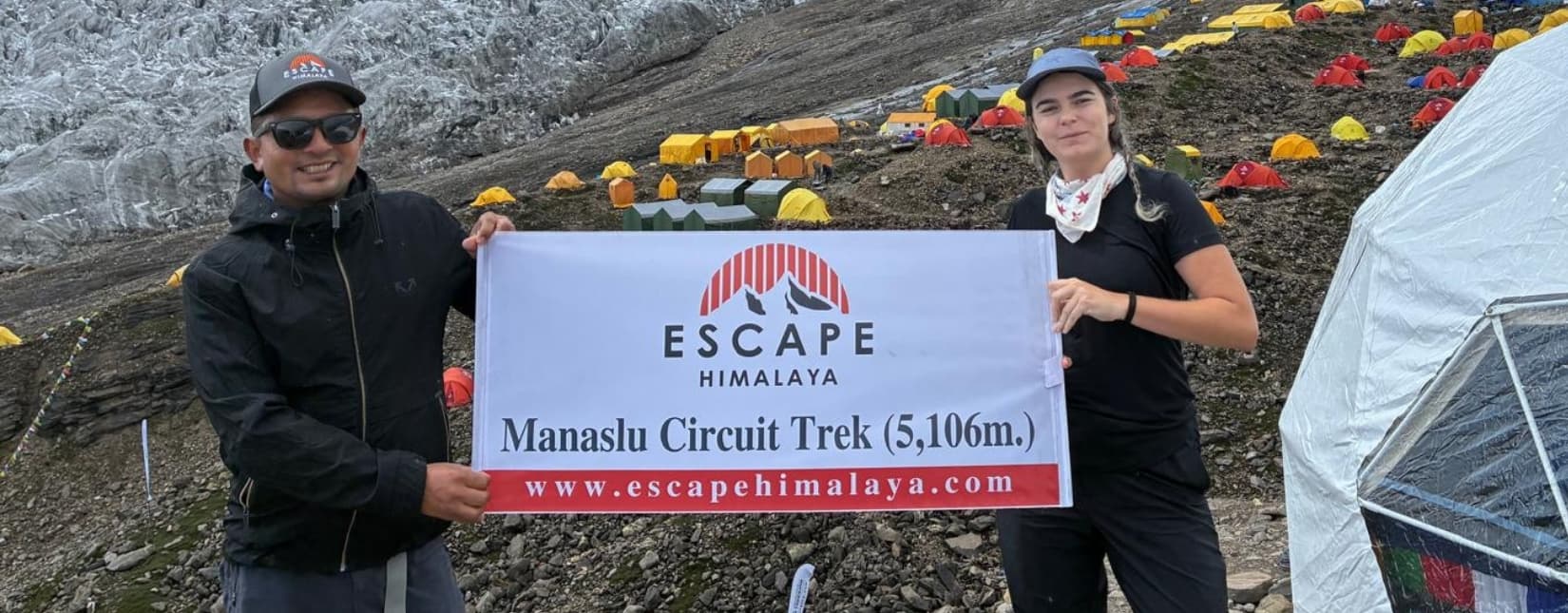
The Larkya Pass crossing: Day 11 is the physical and emotional centrepiece of the trek. Starting before dawn from Dharamsala at 4,460 metres, trekkers cover 24.5 kilometres across the pass at 5,106 metres before dropping down to Bhimthang at 3,590 metres. The day takes eight to ten hours. Ice on the trail is possible in both spring and autumn. A guide who has done this crossing many times knows the pace, the rest stops, and the warning signs to watch for throughout the day.
The final days back toward Dharapani: Once the pass is behind you, the trail drops through Bhimthang and Tilije toward Dharapani. As facilities improve, the temperature rises, and the vegetation comes back. A good company keeps the momentum organized through these final stages so the jeep back to Kathmandu is waiting when you need it.
Why Escape Himalaya Is Worth Booking for This Trek
Putting all of the above together, here is what Escape Himalaya actually brings to the Manaslu Circuit:
- Close to a decade of Nepal trekking experience with a genuine focus on restricted area routes
- Full registration with NTB, TAAN, and NMA, with legal documents available online
- Manaslu-specialist guides with government licenses, first aid training, and multi-season route experience
- Complete permit management for all three required permits, handled before arrival
- Small group and fully private trek options with customizable itineraries
- Packages that include a down jacket, sleeping bag, trekking poles, and duffel bag, plus a trek completion certificate and pocket map
- TripAdvisor Certificate of Excellence 2025, backed by Manaslu-specific guest reviews
- 24/7 WhatsApp support with direct access to the team throughout the trek
The full range of Manaslu options from Escape Himalaya covers different durations, interests, and time constraints:
- Manaslu Circuit Trek (14 Days): the classic full circuit with an acclimatization day at Samagaun and the full Larkya Pass crossing
- Short Manaslu Trek (9 Days): a focused and efficient version of the route for trekkers with limited time
- Manaslu Tsum Valley Trek (20 Days): the full circuit combined with an exploration of the culturally rich Tsum Valley
- Tsum Valley Trek (13 Days): a standalone journey into one of Nepal's most sacred and isolated valleys
Questions to Ask Any Trekking Company Before You Book
Use this list when comparing agencies. Honest answers will tell you quickly whether you are speaking to a Manaslu specialist or a generalist filling a gap in a catalogue.
- Are your guides government-licensed, and do they carry first aid certification?
- Do you handle all three Manaslu permits before I arrive in Kathmandu?
- What exactly is included in the package price, and what will I pay extra for on the trail?
- What is the typical group size on your Manaslu Circuit departures?
- Do you offer private departures, and can the itinerary be adjusted?
- Can I read reviews from trekkers who completed the Manaslu Circuit specifically with your company?
- What happens if someone develops severe altitude sickness near Larkya Pass?
- What gear is included in the package and what do I need to bring myself?
Plan Your Manaslu Circuit Trek With Escape Himalaya
The Manaslu Circuit offers something genuinely rare in Nepal today: a high-altitude trek that still feels remote, culturally alive, and off the beaten path. Crossing Larkya Pass, walking through villages that barely see tourists, and spending nights in teahouses where the stove is the only source of heat, it is the kind of experience that stays with you.
Getting there safely comes down to the company behind you. Permits, guides, logistics, and emergency protocols should be an afterthought.
Bookings for the 2026 and 2027 seasons are open now. Reach out to the Escape Himalaya team on WhatsApp at +977-9851006121 or through the contact Email page to start planning.