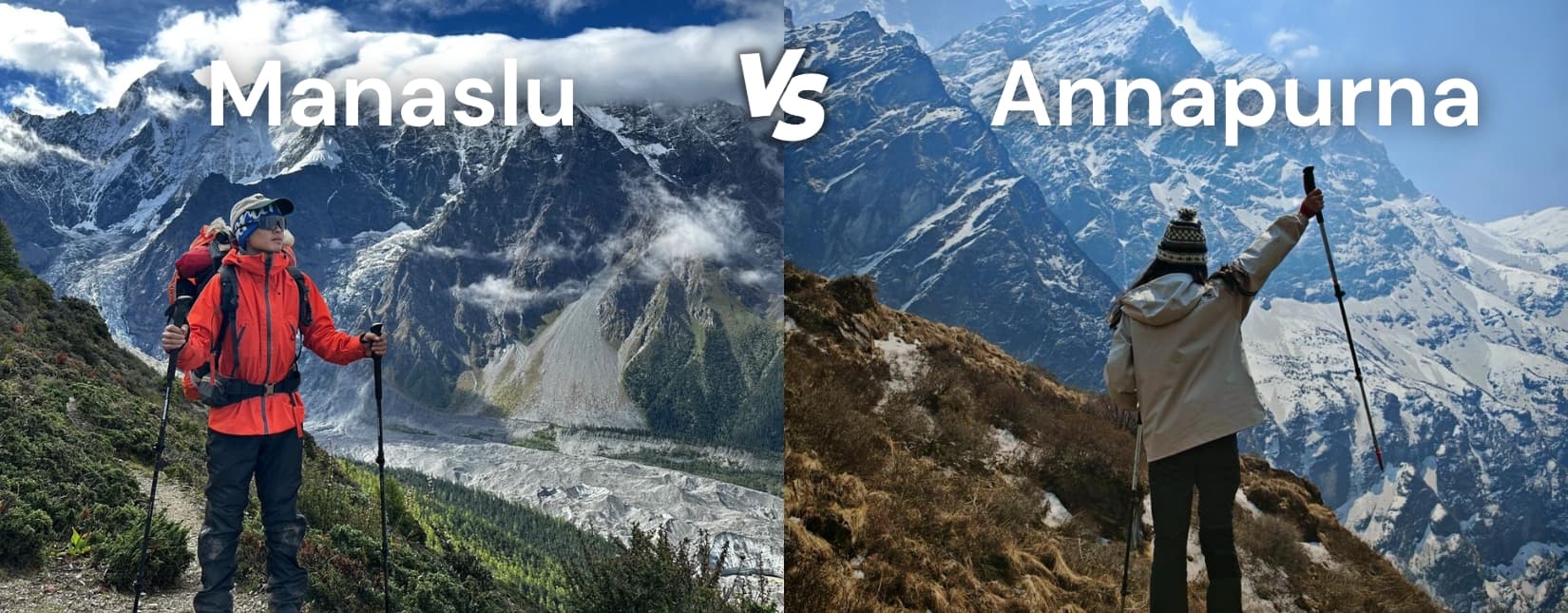
Choosing between the Manaslu Circuit Trek and the Annapurna Circuit Trek is one of the most common dilemmas for trekkers planning a Nepal adventure. Both routes are iconic, both cross high-altitude mountain passes, and both offer unforgettable Himalayan experiences, but they are fundamentally different in character, logistics, and the type of journey they offer.
The Annapurna Circuit has long been regarded as one of the world's greatest treks, drawing thousands of visitors every year with its accessibility, diversity of landscapes, and well-established teahouse network. The Manaslu Circuit, by contrast, is a restricted-area trek that remains far less visited, offering a raw, remote, and more culturally immersive experience for those willing to do a little more planning.
This guide is designed for trekkers who are seriously considering both routes and want an honest, detailed comparison before making their decision. Whether you are a first-time trekker or a seasoned Himalayan adventurer, understanding the real differences between these two circuits will help you choose the trek that fits your experience level, travel style, budget, and goals.
Quick Comparison Overview
The table below provides a quick side-by-side summary of the key facts for both treks.
| Feature | Manaslu Circuit Trek | Annapurna Circuit Trek |
|---|---|---|
| Maximum Altitude | Larkya La Pass — 5,160m | Thorong La Pass — 5,416m |
| Typical Duration | 14–18 days | 12–21 days |
| Difficulty | Moderate to Challenging | Moderate |
| Crowd Level | Low | High |
| Permits Required | Restricted Area Permit, MCAP, TIMS | ACAP, TIMS |
| Guide Required | Yes — mandatory | No — independent trekking allowed |
| Accommodation | Basic teahouses | Wide range of teahouses and lodges |
| Best Season | March–May, September–November | March–May, September–November |
| Starting Point | Soti Khola / Arughat | Besisahar / Jagat |
| Approx. Permit Cost | USD 100+ per week (restricted area) | USD 30–50 total |
Use this snapshot decision guide to orient your choice quickly:
- Choose Manaslu Circuit if you want fewer crowds, a wilder trail, and deeper cultural immersion with Tibetan Buddhist communities.
- Choose the Annapurna Circuit if you prefer flexible logistics, more comfort, a range of landscape types, and the ability to trek independently.
- Choose the Manaslu Circuit if you are an experienced trekker comfortable with remote conditions and basic facilities.
- Choose Annapurna Circuit if you are a first-time or intermediate trekker who wants a well-supported, highly accessible route.
Route Overview and Geography
Manaslu Circuit Trek Route
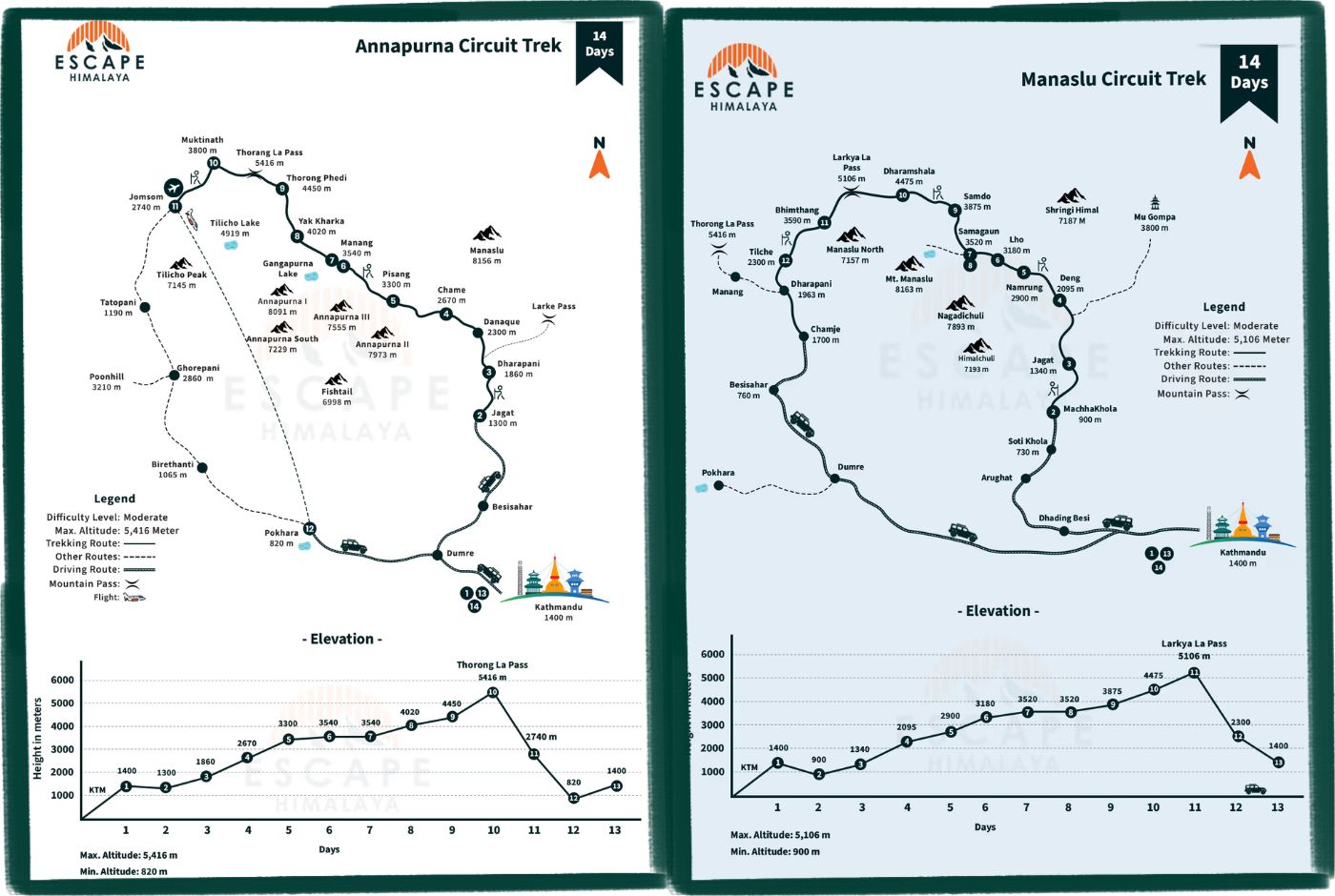
The Manaslu Circuit Trek begins at Soti Khola or Arughat, accessible by road from Kathmandu. The route follows the Budhi Gandaki River valley, climbing steadily northward through dense subtropical forest, terraced farmland, and increasingly dramatic mountain terrain. The trail passes through a series of remote villages including Jagat, Deng, Namrung, Samagaon, and Samdo, each sitting deeper into the high mountain landscape.
The highlight of the route is the crossing of Larkya La Pass at 5,160 metres, one of the most spectacular high passes in Nepal. After the pass, trekkers descend through the Marsyangdi river valley to Dharapani, where the Manaslu Circuit connects with the Annapurna Circuit trail. The entire loop is completed without retracing steps, making it a true circuit through some of Nepal's most isolated terrain.
Annapurna Circuit Trek Route
The Annapurna Circuit Trek traditionally starts from Besisahar or the road-accessible village of Jagat in Lamjung district. It follows the Marsyangdi River valley northward before looping around the Annapurna massif. Key stops include Chame, Pisang, Manang, and the high-altitude acclimatization village of Manang at 3,519 metres.
The route culminates in crossing Thorong La Pass at 5,416 metres, then descends to the sacred temple town of Muktinath. The trail then passes through the Kali Gandaki gorge, one of the deepest in the world, and descends through Jomsom, Marpha, and Tatopani before ending at Nayapul or Pokhara. Road construction along parts of the route has allowed for shorter or modified versions of the trek, giving trekkers flexible start and end point options.
Trekking Experience and Trail Atmosphere
Manaslu Circuit Trek Experience
Trekking the Manaslu Circuit is an experience defined by remoteness. The trail sees a fraction of the foot traffic found on the Annapurna Circuit, and for much of the journey, trekkers will find themselves walking through landscapes that feel genuinely wild and undisturbed. The restricted area permit system keeps tourist numbers intentionally low, which preserves both the natural environment and the authenticity of the communities along the route.
Infrastructure along the trail is basic and practical rather than comfortable. Teahouses are fewer in number and simpler in facilities, meals are limited but nourishing, and the sense of self-reliance is a key part of the appeal. For trekkers who value solitude, challenge, and a less commercialized Himalayan experience, Manaslu is deeply rewarding.
Annapurna Circuit Trek Experience
The Annapurna Circuit is Nepal's most celebrated long-distance trekking route and one of the most famous in the world. Its reputation draws trekkers from every corner of the globe, resulting in a lively, social trail atmosphere, particularly in the peak seasons of spring and autumn. The trail has a well-developed teahouse network that caters to a wide range of budgets and preferences.
For many trekkers, the social dimension of the Annapurna Circuit is a genuine attraction. It is easy to meet fellow trekkers, exchange route information, and find companionship along the way. The trail is also diverse in its landscape, cultural groups, and village character, making each day feel meaningfully different from the last.
Scenery and Landscape Diversity
Manaslu Region Landscape
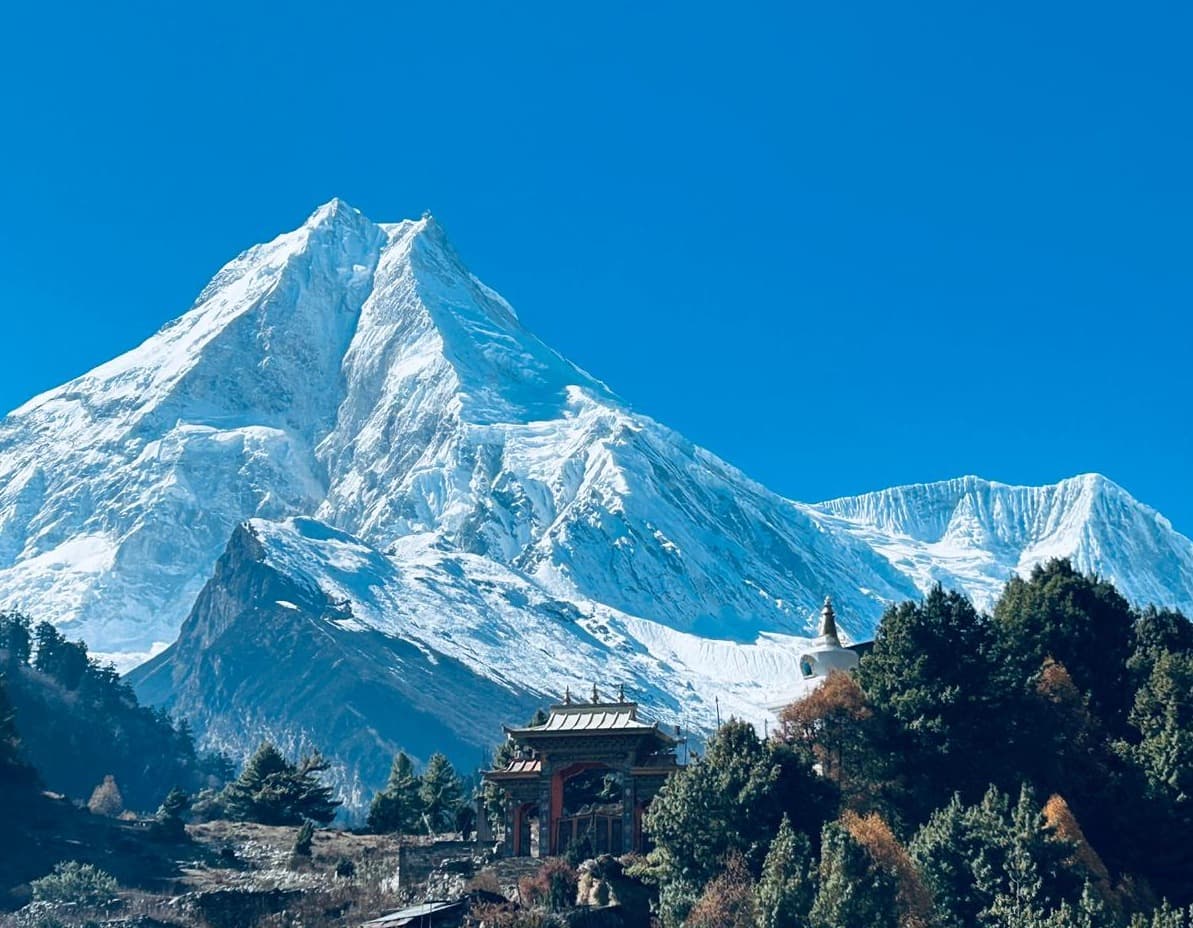
The Manaslu region offers a dramatic progression of landscapes as the trail climbs from subtropical river valleys into high alpine terrain. The Budhi Gandaki River carves through some of Nepal's deepest gorges, creating towering canyon walls draped in forest and waterfalls. As the trail gains altitude, the vegetation thins and the views of glaciated peaks — including the summit of Mount Manaslu at 8,163 metres become increasingly dominant.
The upper reaches of the Manaslu Circuit, particularly around Samagaon and Samdo, open into wide glacial valleys ringed by enormous mountain walls. The crossing of Larkya La Pass offers some of the most expansive and visceral high-altitude scenery on any Himalayan trekking route.
Annapurna Region Landscape
The Annapurna Circuit is justly famous for its extraordinary landscape variety. Within a single trek, walkers pass through subtropical jungle, terraced rice and mustard fields, temperate rhododendron and oak forests, high alpine meadows, and the stark high-altitude desert terrain of the Mustang rain shadow beyond Thorong La Pass.
The route also offers access to optional side trips of remarkable beauty. The trail to Tilicho Lake at 4,919 metres — one of the highest lakes in the world — is a highlight that can be added to the standard itinerary from Manang. The Kali Gandaki gorge section offers simultaneous views of both Dhaulagiri and Annapurna I, two eight-thousanders.
Cultural Experience and Villages
Culture in the Manaslu Region
The upper Manaslu valley is heavily influenced by Tibetan Buddhist culture, and this becomes increasingly apparent as the trail climbs above Deng and into the high mountain villages. Communities such as Namrung, Lho, Shyala, Samagaon, and Samdo maintain strong Tibetan traditions in their architecture, dress, religious practice, and daily life.
Ancient monasteries cling to cliffsides and overlook glacial valleys. Mani walls, prayer flags, and chortens line the trail at regular intervals. Because tourism here is limited, the cultural interaction feels genuine and unperformed. Villagers are welcoming but not accustomed to a constant stream of visitors, and trekkers often find this a far more authentic window into Himalayan Buddhist life than what is available on busier trails.
Culture in the Annapurna Region
The Annapurna Circuit passes through the territories of several distinct ethnic groups, each with its own traditions, architecture, and cuisine. The lower Marsyangdi valley is home to Gurung communities, while higher sections transition through Manangi and Thakali villages, each with its own cultural identity.
The sacred site of Muktinath, revered by both Hindus and Buddhists, is one of the most important religious destinations on the route. The Kali Gandaki valley and towns like Marpha and Jomsom show strong Tibetan Buddhist influence, though with noticeably more tourism exposure. The cultural experience on the Annapurna Circuit is rich, but it has been shaped by decades of trekker traffic, which has inevitably altered some aspects of traditional village life.
Difficulty Level and Acclimatization
Manaslu Circuit Difficulty
The Manaslu Circuit is rated as a moderate to challenging trek. While it does not require technical climbing skills, the combination of remote trail conditions, long daily walking sections, limited trail marking in places, and basic support infrastructure makes it more demanding than the Annapurna Circuit for the average trekker.
Emergency evacuation from the Manaslu region is significantly more difficult and costly than from the Annapurna area. Medical facilities along the route are extremely limited, and helicopter evacuation, while possible, can be complicated by weather and remote location. Trekkers must be in good physical condition, take acclimatization seriously, and be prepared for days where there is no easy option to turn back.
Annapurna Circuit Difficulty
The Annapurna Circuit is generally rated as a moderate trek suitable for fit beginners with adequate preparation. The higher crossing of Thorong La Pass at 5,416 metres makes altitude acclimatization an important consideration, but the trail allows for flexible pacing with multiple rest stop options and side trips built into most itineraries.
One of the significant practical advantages of the Annapurna Circuit is the ease of exit in case of altitude sickness or emergency. Roads have been built into several sections of the route, meaning that if a trekker needs to descend quickly, vehicle transport can often be arranged. Medical facilities at Manang and Jomsom provide better support than anything available on the Manaslu Circuit.
Accommodation and Food
Teahouses in Manaslu
Accommodation along the Manaslu Circuit is basic but adequate. Teahouses in the lower sections of the trail are simple guesthouses with shared facilities. As the trail enters the restricted zone and gains altitude, the teahouses become more limited in number and simpler in provision. Electricity may be intermittent or unavailable, and hot showers are often solar-heated and weather-dependent.
Food options are more limited than on the Annapurna Circuit. Dal bhat, the classic Nepali meal of lentil soup, rice, and vegetable curry, forms the backbone of most menus, supplemented by noodles, soups, and basic bread items. In higher villages, fresh vegetables become scarce, and menu options narrow further.
Teahouses in Annapurna
The Annapurna Circuit has one of the most developed teahouse networks of any trekking route in Nepal. Accommodation ranges from simple single-room guesthouses in smaller villages to well-appointed lodges with private bathrooms, consistent electricity, and Wi-Fi access in larger stops like Manang and Jomsom.
Food quality and variety on the Annapurna Circuit are genuine highlights. Menus regularly include pasta, pizza, momos, apple pie, fresh juices, and international breakfasts alongside traditional Nepali dishes. The Thakali cuisine of the Kali Gandaki valley is particularly well regarded, hearty, flavorful, and served in generous portions.
Accessibility and Transportation
Getting to Manaslu Circuit
The Manaslu Circuit begins at Soti Khola or Arughat, both reached by road from Kathmandu. The drive typically takes seven to nine hours on roads that can be rough, particularly during and after the monsoon season. Jeep hire is the most reliable option, though local bus services are available at a lower cost.
Transport options along the trail itself are essentially nonexistent. Once the trek begins, trekkers are committed to walking every stage of the route. There are no road access points within the restricted area section, which contributes to both its remoteness and its logistical demands.
Getting to Annapurna Circuit
The Annapurna Circuit is highly accessible from both Kathmandu and Pokhara. Besisahar, the traditional starting point, is served by regular public buses from both cities. The drive from Kathmandu takes approximately six to seven hours; from Pokhara, it is around three hours. Private jeep hire is also widely available for more comfortable transport.
Road construction has opened up several sections of the traditional Annapurna Circuit route, allowing trekkers to start or end their trek at various points. This flexibility is ideal for those with limited time who want to focus on specific sections — such as the high-altitude stretch from Manang to Muktinath — without walking the entire circuit.
Permits and Regulations
Manaslu Circuit Permits
The Manaslu Circuit falls within a government-designated restricted area, and trekkers must obtain a Restricted Area Permit (RAP) in addition to the Manaslu Conservation Area Permit (MCAP) and a TIMS card. The Restricted Area Permit is priced per week and is one of the more expensive trekking permits in Nepal.
Crucially, the restricted area designation requires that all trekkers hire a licensed guide through a registered trekking agency. Independent trekking in the Manaslu restricted zone is not permitted. This regulation has a significant impact on the overall cost of the trek and means that planning and agency booking are essential.
Annapurna Circuit Permits
The Annapurna Circuit requires two permits: the Annapurna Conservation Area Permit (ACAP) and the Trekkers' Information Management System card, commonly known as the TIMS card. Both are straightforward to obtain and can be arranged in Kathmandu or Pokhara on relatively short notice.
Unlike the Manaslu Circuit, the Annapurna Circuit allows fully independent trekking. No guide or agency is required by law, and many trekkers, particularly those experienced with teahouse trekking in Nepal, complete the route without any guide or porter. This significantly lowers the overall cost and increases flexibility.
Best Time to Trek
Best Season for Manaslu Circuit
The best time to trek the Manaslu Circuit is during the pre-monsoon spring season from March to May and the post-monsoon autumn season from late September to November. Spring brings warmer temperatures, rhododendron blooms in the lower sections, and stable weather, while autumn offers the clearest skies and the most reliable conditions for crossing Larkya La Pass.
Because the Manaslu region is more remote and its teahouse infrastructure less robust, weather challenges have a proportionally greater impact than on the Annapurna Circuit. Snowfall can close Larkya La Pass outside of peak trekking windows, and there are a few alternative route options if conditions deteriorate. Trekkers should always carry appropriate cold-weather gear and build flexibility into their itinerary.
Best Season for Annapurna Circuit
The Annapurna Circuit shares the same primary trekking seasons, spring and autumn, but benefits from a somewhat wider operational window due to its better infrastructure and more accessible terrain. Some sections of the route can be trekked even during winter months, particularly in the rain-shadow areas beyond Thorong La, where the Mustang climate keeps snowfall limited.
During peak seasons, popular teahouses on the Annapurna Circuit fill up quickly, and booking is advisable at key stops like Manang. The combination of consistent teahouse availability, reliable emergency support, and road access at several points makes weather disruptions on the Annapurna Circuit far more manageable than on Manaslu.
Cost Comparison
Cost of Manaslu Circuit Trek
The Manaslu Circuit is consistently more expensive than the Annapurna Circuit on a per-day basis, primarily because of the mandatory agency and guide requirement. Restricted Area Permit fees are charged per week and represent a significant addition to the permit budget. When combined with agency service fees, guide wages, porter costs if applicable, accommodation, and food along the route, the total cost for a standard Manaslu Circuit itinerary typically ranges from USD 1,200 to USD 2,500 or more, depending on group size and service level.
For solo trekkers especially, the per-person cost of Manaslu can be substantially higher than Annapurna since agency overheads and guide costs are spread across fewer participants. Group travel or joining a shared expedition helps manage costs more effectively.
Cost of Annapurna Circuit Trek
The Annapurna Circuit offers significantly greater budget flexibility. Independent trekkers who arrange their own permits, walk without a guide, and carry their own pack can complete the trek for as little as USD 25 to USD 40 per day once permits are paid. This makes it one of the most accessible long-distance mountain treks in the world from a cost perspective.
Guided and agency-supported options are also available on the Annapurna Circuit for trekkers who prefer added safety and convenience, but these are optional rather than mandatory. This choice between budget independent trekking and a fully guided experience makes the Annapurna Circuit accessible across a much broader range of budgets than Manaslu.
Safety and Risk Factors
Both treks cross passes above 5,000 metres and carry a real risk of altitude sickness if acclimatization protocols are not followed. The Annapurna Circuit's Thorong La Pass is actually higher than Larkya La on the Manaslu Circuit, making altitude management equally important on both routes. However, the Annapurna Circuit's built-in acclimatization stops at Manang and the option to take a rest day at Thorong Phedi give trekkers a more structured and supported altitude adjustment process.
Emergency evacuation is significantly faster and more accessible on the Annapurna Circuit than on the Manaslu Circuit. On the Annapurna route, road access at several points means that a sick trekker can often be transported to Pokhara by vehicle within hours. On the Manaslu Circuit, all evacuations within the restricted zone require helicopter rescue, and the remote location and variable weather can delay operations. This makes travel insurance with comprehensive helicopter evacuation cover essential for Manaslu and strongly advisable for Annapurna as well.
Both routes are vulnerable to sudden weather changes at altitude. Snowfall and high winds can make high pass crossings hazardous if attempted in unsuitable conditions. The Manaslu Circuit's remoteness means weather-related delays have a greater practical impact, with fewer options to shelter in well-equipped teahouses or redirect the itinerary.
Pros and Cons
Manaslu Circuit Trek Pros and Cons
Key advantages of the Manaslu Circuit Trek:
- Genuinely remote and uncrowded trail with a strong sense of wilderness
- Authentic cultural immersion in Tibetan Buddhist communities with minimal tourism impact
- Spectacular and dramatic mountain scenery, including close views of Mount Manaslu
- The restricted permit system preserves the environment and keeps the experience exclusive
- A true adventure trek that challenges and rewards in equal measure
- Fewer trekkers means a more personal connection with local teahouse owners and villagers
Limitations of the Manaslu Circuit Trek:
- Mandatory guide and agency requirement adds significant cost
- Basic and limited teahouse accommodation with fewer menu options
- Emergency evacuation is more complex and potentially slower
- Less flexible — difficult to cut short or exit the route midway
- Requires more planning and cannot be organized on short notice easily
- Not suitable for trekking beginners or those with limited high-altitude experience
Annapurna Circuit Trek Pros and Cons
Key advantages of the Annapurna Circuit Trek:
- Exceptional diversity of landscapes, cultures, and ecosystems in a single route
- Well-developed teahouse infrastructure with comfortable accommodation options
- Independent trekking is permitted, allowing significant cost savings
- Multiple entry and exit points provide flexibility for those with time constraints
- Better emergency support infrastructure and evacuation access
- Suitable for a wide range of trekkers from fit beginners to experienced hikers
- Social trail atmosphere with opportunities to meet international trekkers
Limitations of the Annapurna Circuit Trek:
- High tourist numbers in peak season reduce the sense of remote wilderness
- Road construction has altered the character of some sections of the traditional route
- More commercialized teahouse experience in larger stops like Manang and Jomsom
- Thorong La Pass at 5,416m is higher than Larkya La and requires careful acclimatization
- Some cultural authenticity has been diluted by decades of high tourist traffic
Which Trek Should You Choose?
If you are a first-time trekker in Nepal or someone with limited high-altitude experience, the Annapurna Circuit is the more appropriate choice. Its well-developed infrastructure, flexible pacing options, and easier emergency access make it a forgiving and well-supported introduction to Himalayan trekking. For experienced trekkers who have already completed routes like the Annapurna Circuit, Everest Base Camp, or similar long-distance high-altitude treks, the Manaslu Circuit represents a natural and rewarding progression into more demanding terrain.
Trekkers who prioritize solitude, raw natural beauty, and cultural authenticity will find the Manaslu Circuit deeply satisfying. If you are the kind of traveler who prefers the road less traveled and finds meaning in self-reliance and simple conditions, Manaslu is your trail. If you value social interaction on the trail, comfortable teahouses at the end of a long day, and a greater variety of food and amenities, the Annapurna Circuit will serve you far better.
The Annapurna Circuit wins on logistical flexibility. It can be shortened using road access for sections of the route, is accessible from both Kathmandu and Pokhara, and requires no agency booking. The Manaslu Circuit requires careful advance planning, a minimum committed time of around 14 to 18 days on the trail, and agency coordination for permits and guides. If your travel schedule is flexible and you have the time to plan properly, Manaslu is very manageable. If you are on a tighter schedule or want to arrange a trek more spontaneously, Annapurna is the practical choice.
Final Thoughts
The Manaslu Circuit Trek and the Annapurna Circuit Trek are both extraordinary journeys through the Nepalese Himalayas, but they serve different types of trekkers and different definitions of what a great trek should feel like.
The Annapurna Circuit is a classic for good reason. Its combination of dramatic mountain scenery, cultural diversity, practical accessibility, and well-developed infrastructure makes it one of the finest long-distance treks anywhere in the world. It welcomes a wide range of trekkers and delivers a memorable, well-rounded Himalayan experience.
The Manaslu Circuit is for those who want something more. More remote, more demanding, more culturally immersive, and more exclusive in its access. It is not the easier choice, but for trekkers who are ready for it, it may well be the more rewarding one.
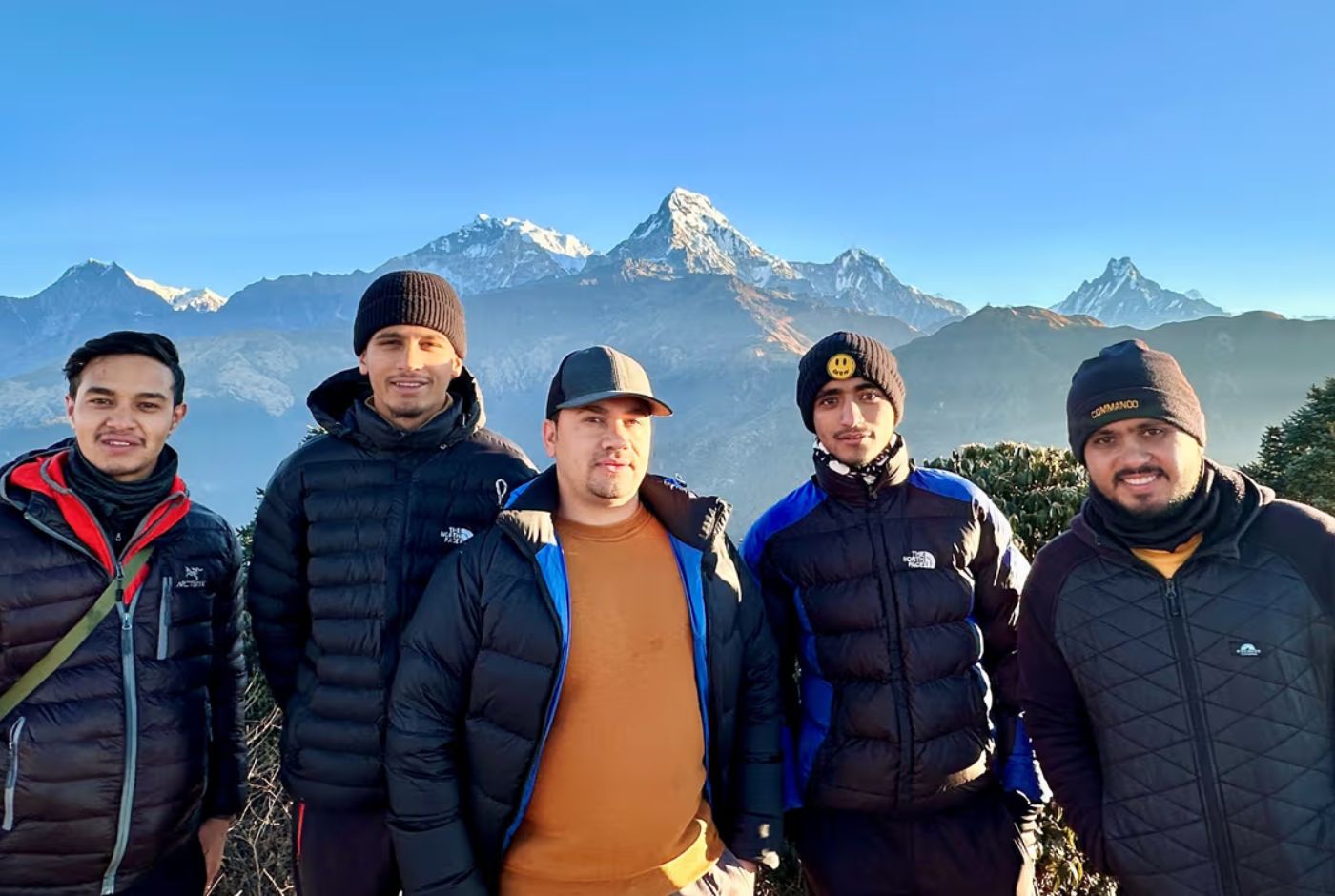
The best trek is ultimately the one that matches who you are as a traveler and where you are in your trekking journey. Both circuits are genuinely world-class. The decision comes down to what you are looking for — and only you can answer that.
Explore our dedicated trek pages for full itineraries, permit details, and booking information: Manaslu Circuit Trek Package | Annapurna Circuit Trek Package
FAQs about
Is Manaslu Circuit harder than Annapurna Circuit?
Yes, the Manaslu Circuit is generally considered harder than the Annapurna Circuit. While the Larkya La Pass on Manaslu (5,160m) is lower than Thorong La on the Annapurna Circuit (5,416m), the overall difficulty of Manaslu is greater due to its remoteness, longer walking days, more basic teahouse facilities, limited emergency support options, and the absence of road access once the restricted zone is entered. Experienced trekkers will find Manaslu a more demanding but highly rewarding challenge.
Which trek is less crowded in Nepal?
The Manaslu Circuit Trek is significantly less crowded than the Annapurna Circuit Trek. The restricted area permit requirement and mandatory guide policy limit annual visitor numbers to a small fraction of those who trek the Annapurna Circuit each year. Trekkers on the Manaslu Circuit often walk for hours or full days without encountering another group, creating a sense of genuine wilderness that is increasingly rare on popular Himalayan trails.
Can beginners do the Annapurna Circuit Trek?
Yes, physically fit beginners can complete the Annapurna Circuit Trek with proper preparation. The trail is well-marked, teahouses are regularly spaced, and the route offers built-in acclimatization stops and multiple exit options if needed. Trekkers should engage in cardiovascular training for several months before the trek, plan for adequate rest days — particularly at Manang — and be alert to the symptoms of altitude sickness. Hiring a guide or porter is optional but can enhance the experience for first-timers.
Why is the Manaslu Circuit restricted?
The Manaslu Circuit passes through a restricted area designated by the Nepalese government due to its location near the Tibetan border. The restriction policy requires trekkers to obtain a Restricted Area Permit and travel with a licensed guide from a registered trekking agency. The policy serves multiple purposes: controlling tourist numbers to reduce environmental impact, preserving the traditional culture of border communities, and maintaining security in a sensitive border zone. The permit system has been effective in keeping the Manaslu region far less commercialized than open trekking areas.
Which trek has better views?
Both treks offer outstanding mountain views, but of different character. The Manaslu Circuit provides dramatic and intimate views of Mount Manaslu (8,163m) — the world's eighth highest mountain — along with surrounding peaks visible through deep gorges and across wide glacial valleys. The Annapurna Circuit offers broader panoramic views of a larger collection of peaks, including Annapurna I, II, III, and IV, Gangapurna, Tilicho Peak, and Dhaulagiri. If dramatic high-mountain intimacy is your priority, Manaslu edges ahead. If panoramic variety and changing scenery are what you seek, Annapurna is the stronger choice.