
There are only a handful of treks in Nepal that challenge the Manaslu Circuit in terms of testing your endurance and capabilities. During your trek, you will pass through subtropical Budi Gandaki river gorges, encounter ancient Tibetan-influenced villages, gaze at a star-studded sky while sleeping at an altitude of 3, 500 metres, and finally, with all your physical and mental strength, cross the famous Larkya La Pass at 5, 160 metres, all in one go. That is why Manaslu is considered magical. Besides, you don't get to pack right for this trek as a choice. It is the single most important thing you can do before your set foot on the trail.
Most of the packing list blogs will give you the same gear chart without even explaining the why. But what they don't tell you is how packing for Manaslu is drastically different from packing for Everest Base Camp or Annapurna Circuit. Manaslu being a restricted area trek through remote terrain with limited resupply options, no reliable ATMs, and the passes where a wrong decision can cost you the summit as well as your safety.
At Escape Himalaya, we have taken several groups to the Manaslu Circuit. This manual comes from actual field experience rather than internet lists. We will guide you through the process of choosing and leaving behind certain items, renting in Thamel, buying in Kathmandu, and understanding the importance of each item at different locations on the trail.
Quick Stats
Distance: ~177 km
Duration: 14–17 days typical
Max altitude: Larkya La Pass 5,160m
Best seasons: Spring (March–May) & Autumn (Sept–Nov)
Difficulty: Strenuous
Why Packing for Manaslu Is Different from Other Nepal Treks
Before we get to the list of gear, consider the special difficulties of this trek because the equipment you bring depends largely on them:
Remote terrain with no bailout resupply option: In the Everest corridor, lodges are so densely spread and especially in Namche Bazaar, you have a full supply point. On the Manaslu route that passes through villages such as Ghap, Namrung and Lho the shops are limited. After you have passed Jagat you should not expect to be able to buy items you have forgotten.
Altitude change of more than 4, 400 metres: At Soti Khola, the trail starts near 700m and goes up to 5, 160m at the highest point. You can get to know tropical humidity, monsoon-carved gorges, high-altitude forest, alpine meadows, and glacial winds, which you may encounter even in one week. Consequently, a real layering system is needed, not just 'warm clothes'.
Requirement for restricted area permits: You have to carry your Manaslu Restricted Area Permit (RAP), Manaslu Conservation Area Permit (MCAP), and Annapurna Conservation Area Permit (ACAP) at all times since checkpoint officers may ask to see your documents anywhere along the route.
No ATMs after Arughat: You should withdraw enough Nepalese Rupees either in Kathmandu or Arughat as the price of food, hot showers, phone charging and Wi-Fi (on availability) increases with altitude.
Porters' load limits are very strictly controlled: Your duffel bag, which you give to your porter, should weigh a maximum of 15 kg. The rest has to go in your daypack. Every single gram you pack is a gram you or your porter will have to carry uphill.
Season-by-Season Packing Overview
The Manaslu region does not follow one weather script. What you pack depends enormously on when you trek. Here is a practical breakdown:
| Season | Key Packing Adjustments |
| Spring (March–May) | Lighter base layers for warm days; waterproof jacket essential for afternoon showers; rhododendron forest means mud below 3,000m — gaiters useful. Larkya La may still have snow — microspikes recommended. |
| Autumn (September–November) | The golden season. Pack insulation for cold mornings and nights at altitude. Post-monsoon clarity means superb views. Down jacket critical for Larkya La (nights drop to -10°C to -15°C above 4,000m). |
| Winter (December–February) | Not recommended for most trekkers. Larkya La frequently closes due to heavy snowfall. If attempting: 4-season sleeping bag rated to -20°C, insulated trekking boots, crampons mandatory. |
| Monsoon (June–August) | Strongly discouraged. If trekking: full waterproofs, extra dry bags, anti-leech socks, quick-dry everything. Views largely obscured. Trails can be washed out or dangerous. |
The Complete Manaslu Circuit Trek Packing List
Below is every item organised by category. Each item includes a field note on why it specifically matters for Manaslu — not just a generic description. Items marked (R) can be rented in Thamel, Kathmandu.
1. Clothing: The Three-Layer System
The climate in Manaslu can change rapidly and unexpectedly, so it is necessary to have a well-organized layering method. The system is divided into three layers: a inner moisture-wicking layer, a middle insulating layer, and a final outer protective layer. The point is to change the combination of these layers during the day, removing clothes while doing very hard work and putting clothes on as soon as you stop moving.
Moisture-wicking base layer top (x2): Merino wool is the best choice, it can keep your body at the right temperature, it doesn't get a bad smell even if you wear it for several days, and it dries fast. Synthetic polypropylene is a cheaper substitute. Do not even think about cotton; it absorbs getting wet and will get you very cold at altitude.
Moisture-wicking base layer bottom (x2): Same principle as tops. Thermal leggings in Merino wool or synthetic material for those chilly mornings and evenings above 3, 000m.
Fleece mid-layer jacket: A 200-weight fleece is the mainstay of your layering system. You can use it for wearing purposes during mild climbs in colder weather or as your main insulation in the valleys below, during the autumn mornings.
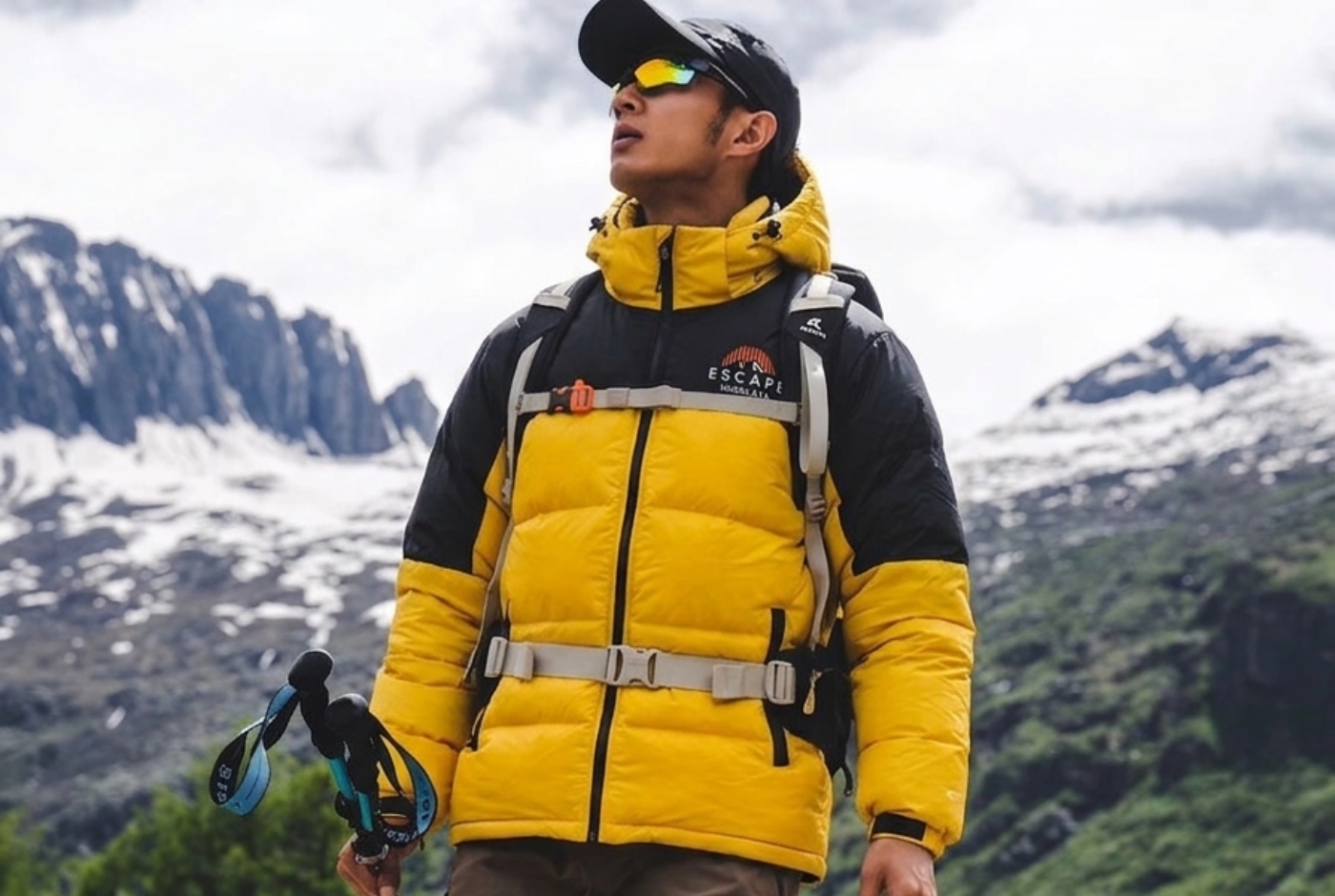
Insulated down jacket (R): This is something that cannot be discussed further for Manaslu. You should have a down jacket with a temperature rating of at least -15°C. Use it for dinner in the teahouses at high-altitude, going through the Larkya La Pass, and resting the stops above 4, 000m. A 700+ fill power is the best recommendation. Can be rented in Thamel but buy if you plan more trekking.
Waterproof hardshell jacket: A Gore-Tex or something similar is needed to be a waterproof hardshell jacket for the rain, wind, and snow on the pass. Do not think of replacing it with a simple rain poncho for Larkya La, you will need your arms free for the steep descent.
Waterproof hardshell pants: To be used during the pass crossing and rainy days in the lower regions. Lightweight and easy to carry.
Trekking shirts, long sleeve (x2): With lightweight, breathable fabric and UV protection. Long sleeves are good for protecting skin from strong UV exposure at high altitudes and the sun-exposed trail sections near Macha Khola and Jagat.
Trekking pants (x2): One lightweight pair for lower elevations and one warm, quick-dry pair for higher sections. Although zip-off pants can be very versatile, they may be less durable on rocky terrain.
Insulated trekking pants (x1): Suitable for Larkya La Pass day, evening at high camp, and morning above 4, 500m when it is cold.
Moisture-wicking underwear (x4-5): Quick-drying synthetic or merino wool. Very important to prevent chafing throughout the long trekking days.
Sports bra (women, x2-3): Good-quality support with high level of moisture-wicking for active days. For the rest days at teahouses, pack a simple and comfortable bra.
Buff / neck gaiter (x2): Without a doubt, buff is one of the most multi-purpose items for the trek. You can use it as a neck warmer, face mask against dust on the lower trail, ear warmer, and even an improvised hat. It is advisable to carry two, one typically gets wet.
Warm hat / beanie: Look for a dense merino wool or fleece beanie. It is a must above 4, 000m, where body heat loss through the head is very significant.
Sun hat / wide-brim cap: When trekking the lower subtropical areas with strong sun, it is good to have a hat to protect you from the sun. A wide brim is ideal as it will not only protect your face but also your neck.
Light gloves (liner gloves): Thin wool or synthetic gloves for cool mornings and evenings up to 3, 500m.
Heavyweight insulated gloves / mittens: For Larkya La Pass and high-altitude sections. Mittens are warmer than gloves; gloves offer more dexterity. Ideally pack both as a liner + outer shell system.
Gaiters (short, optional): Handy in spring for muddy lower sections and on the snowy pass approach. No need in dry autumn conditions.
2. Footwear: The Most Critical Category
Your path on foot will stretch 177 kilometres through a variety of terrain from stone platforms carved by rivers to icy glacial moraine. Footwear is what you cannot skimp on.
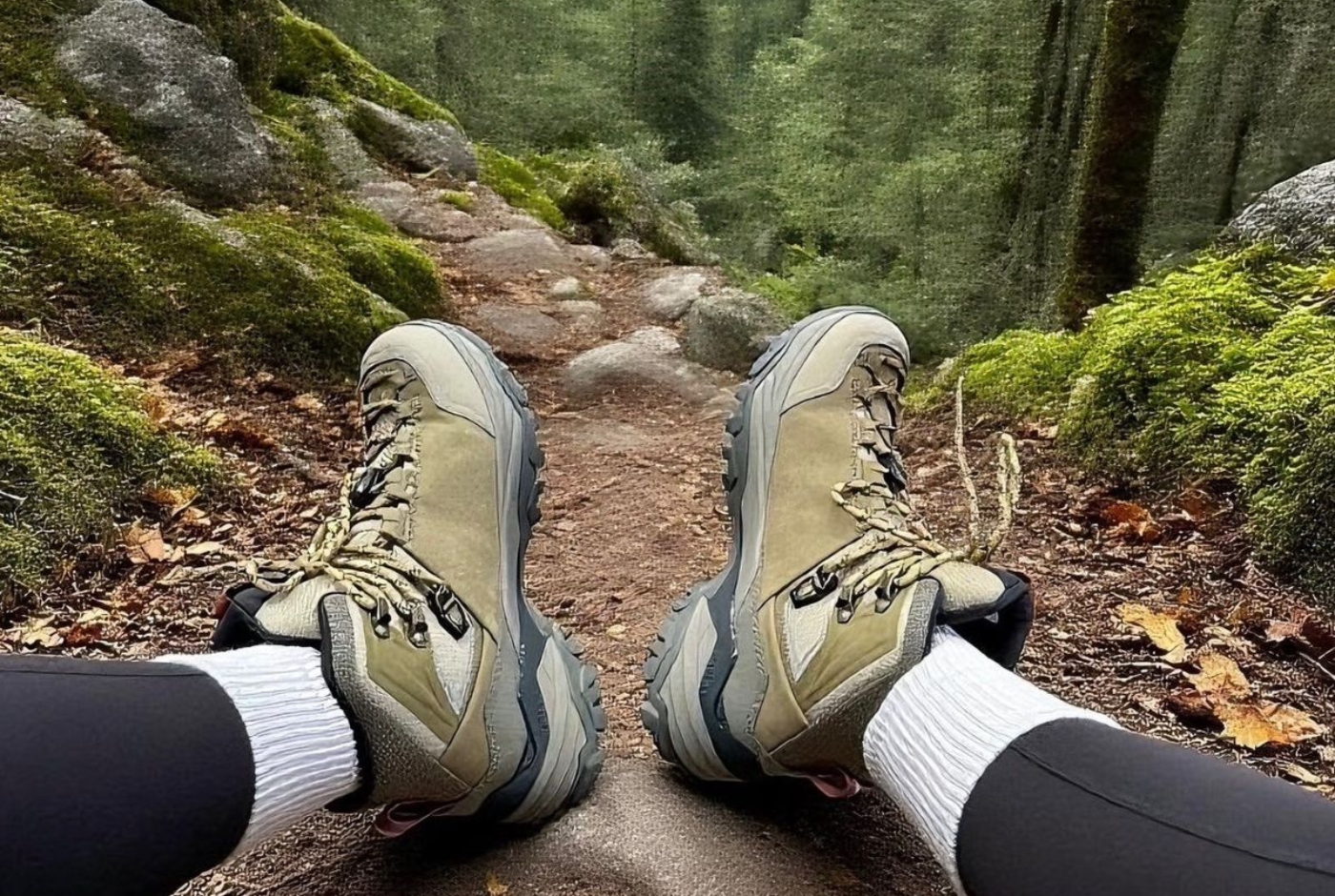
Waterproof trekking boots (broken in): This is your foremost gear choice. You must have boots that give you: ankle support (a must for the rocky descent from Larkya La), waterproof membrane (Gore-Tex or similar), sturdy soles (Vibram is the best), and, most importantly, they should be broken in before you get there. New boots on the very first day of a 14-day trek will mean blisters by the next day and possible abandonment by the fifth day. DO NOT rent trekking boots.
Sandals or camp shoes: Lightweight croc-style or flip-flop sandals are perfect for wearing inside teahouses, during evening rests, and when your feet need some fresh air. On some days, your boots will be wet or damp, having a dry option at camp is nice.
Trekking socks, merino wool (x4-5 pairs): Good merino wool trekking socks (Darn Tough, Smartwool, or Icebreaker are some great brands) are the best single least expensive upgrade you can do. They protect your feet, keep odour at bay for several uses, and help in temperature control. Bring 4-5 pairs so that you can interchange and dry.
Liner socks (x2-3 pairs): Very thin synthetic socks that are worn underneath trekking socks. They make a friction barrier that greatly helps in preventing blisters.
Microspikes / Yaktrax (depending on the season): Required for Larkya La if one is crossing in spring (ice on the north-facing descent slope), early autumn, or winter. Before departure, double-check with your guide as well as Escape Himalaya's staff about the current condition of the trail. If you are uncertain, take them along, they weigh less than 400g.
3. Backpacks and Bags
You are actually going to carry two bags on this trek: a small daypack on your back and a duffel bag for the porter. Knowing this divide is key to packing smartly.
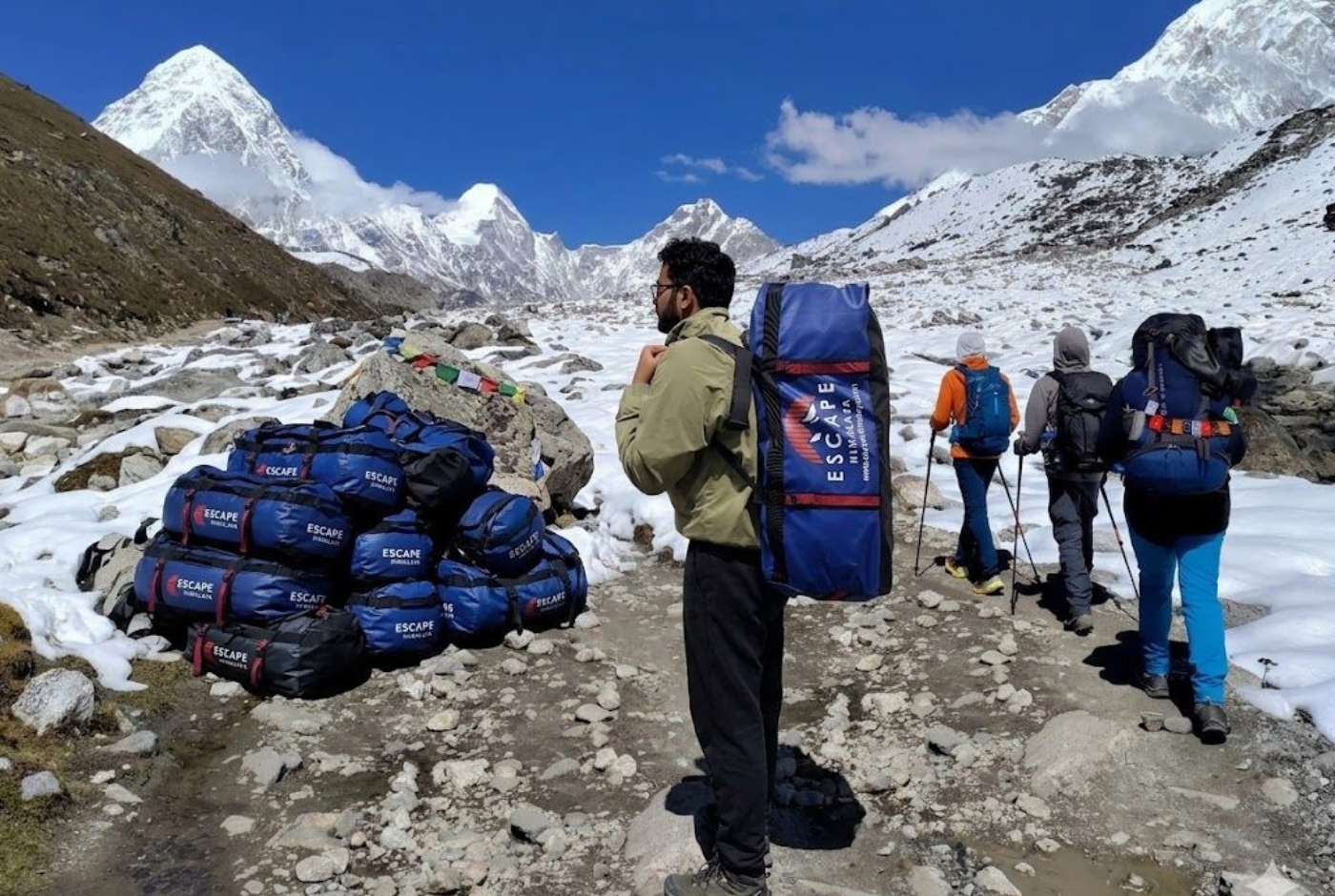
Duffel bag, 80-100L (R): This is the one your porter carries and you won't open it at the time of walking. Place your sleeping bag, spare clothes, slippers, and the items that you don't use daily in this bag. Escape Himalaya gives a duffel bag when you book the Manaslu Circuit Trek through them. Keep the weight strictly under 15 kg, it is the porter's way to earn a living, as well as their safety.
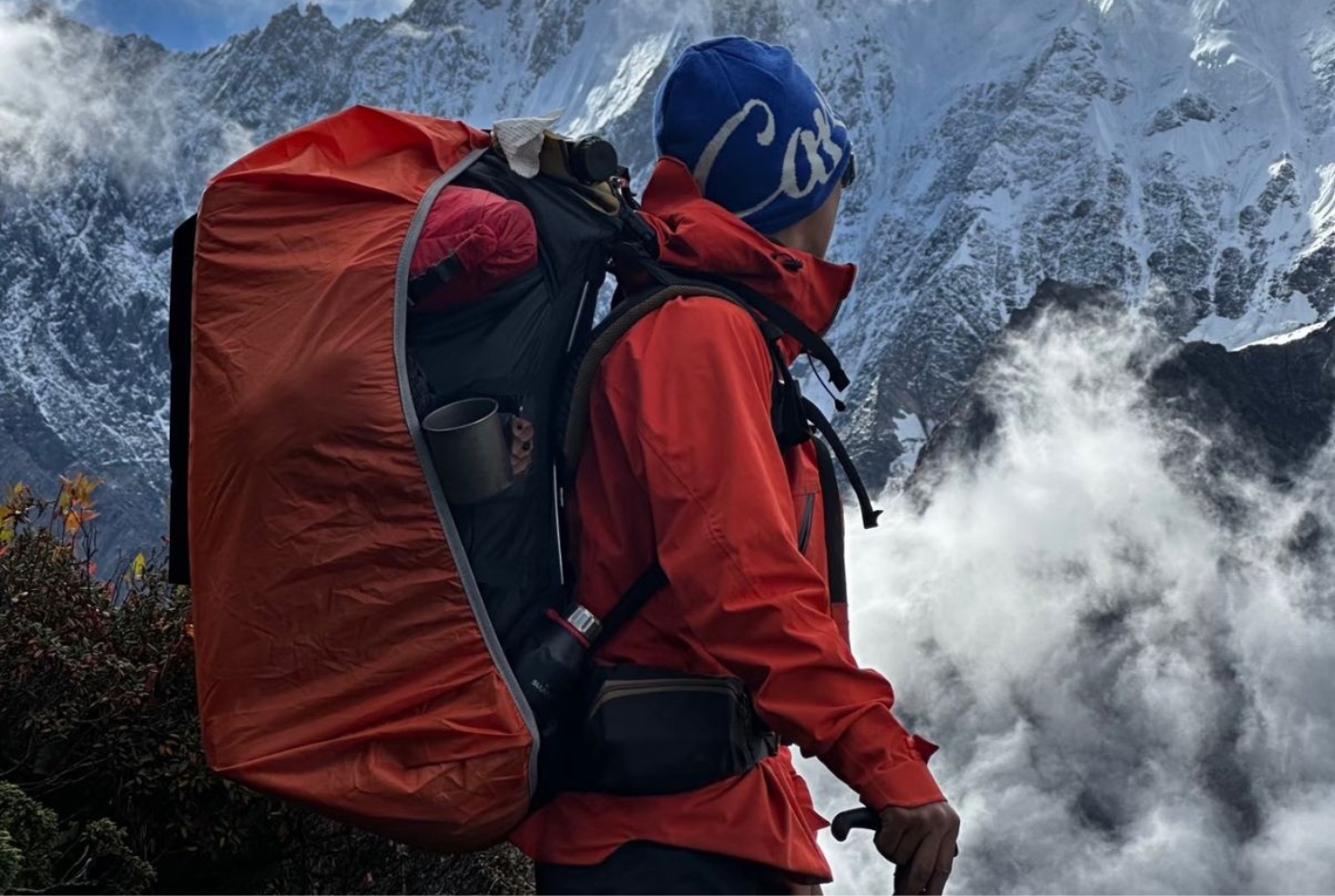
Daypack, 25-35L: This is the one that you keep on your back at every step of every day. It must have: water, snacks, rain jacket, camera, wallet, permits, first aid, warm hat, gloves, sunscreen, and your phone. The one with a built-in rain cover is a must-have. Hip belt and chest strap are needed for weight distribution on long downhill days.
Dry bags / waterproof stuff sacks (multiple): Put these into both bags inside to arrange your stuff and keep them dry. A 5L dry bag is for your gadgets, a 10L one for a spare set of clothes. Extremely helpful if your bag gets into a river while crossing or during heavy monsoon-like rain.
Small padlock: Put a lock on the zip of your duffel bag. Generally, teahouses are quite safe, but it's always good to lower the risk by taking a basic safety precaution.
4. Sleeping Gear
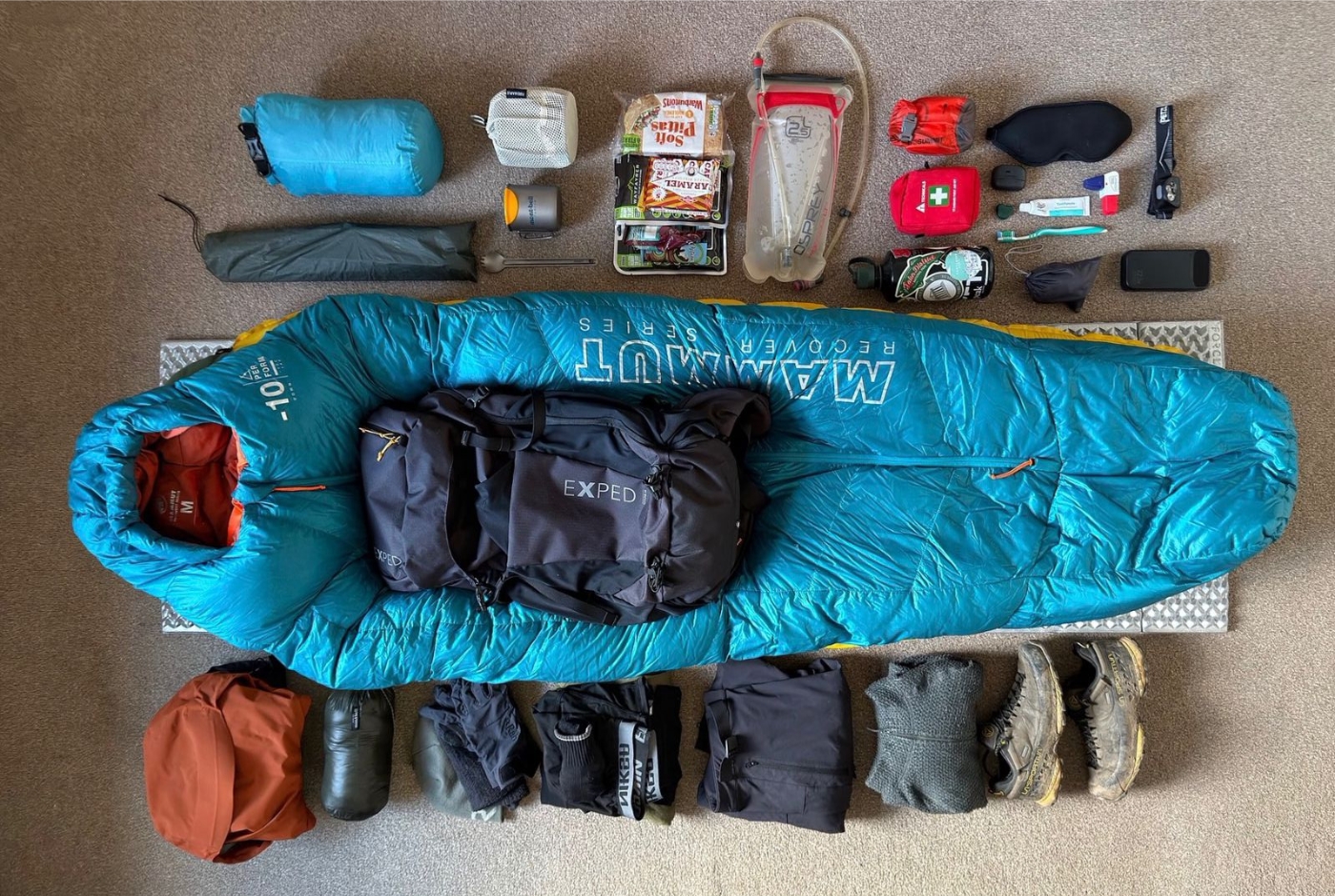
Sleeping bag rated to -15°C (R): The basic blankets offered in Manaslu Circuit teahouses are rarely enough for temperatures above 3, 500m. At Samdo (3, 875m) and Dharmasala (4, 460m the Larkya La high camp), it is quite possible for temperature inside the teahouses to fall during the night to -10°C or lower. From a comfort and safety point of view, a good sleeping bag will be a very wise choice. For those trekking on a budget, one can be rented in Thamel; on the other hand, if buying, a Rab Ascent 700 or a similar one, will be a very good purchase.
Sleeping bag liner: By adding a liner you can increase the warmth of your sleeping bag by 5-8°C. Also, the liner acts as a sleeping bag protector. Among the different types, silk liners are the lightest ones whereas fleece liners are the warmest ones.
Lightweight pillow or inflatable neck pillow (optional): Although you can use a pillow in your sleeping bag, teahouses usually provide pillows. However, the quality varies a lot.
5. Trekking Equipment
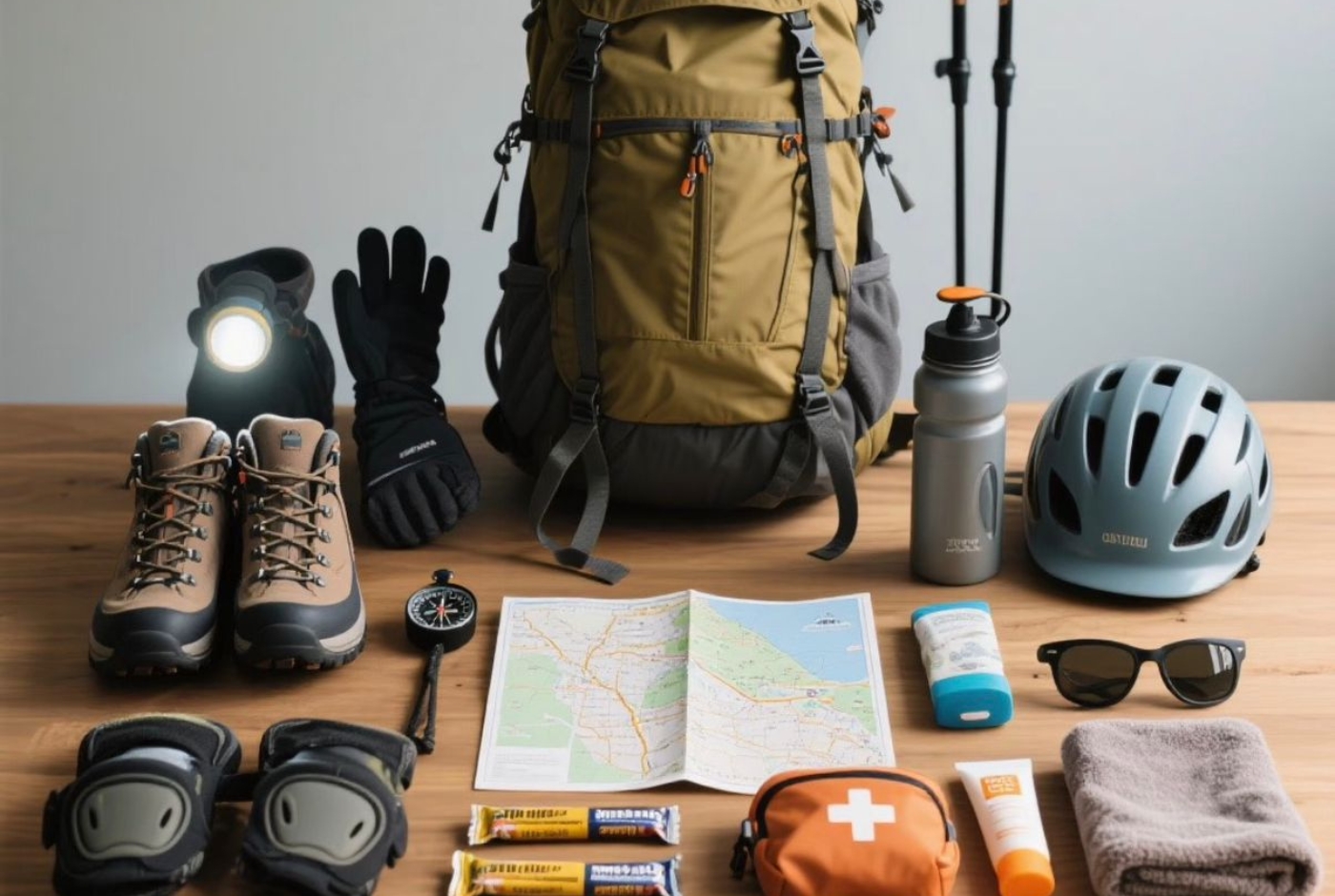
Trekking poles, adjustable (pair) (R): Having trekking poles is not something that you can just ask for a comfort item on Manaslu, actually, they are a safety tool as well. The path down from Larkya La (5, 160m) will be very steep and rocky, and at times, the ground will be icy. Poles take on about 25-30% of the knee load when going down and really help maintain balance. You are advised to carry adjustable carbon or aluminium poles with good wrist straps.
Headlamp with spare batteries: The power supply is often interrupted in teahouses and being that the start of the Larkya La Pass day will be before dawn (most trekking parties leave at 4am, 5am) you will trek in darkness. A headlamp of no less than 200 lumens and a spare set of lithium batteries is a must. The cold temperatures at altitude quickly drain standard batteries.
Water bottles, 2 x 1L (Nalgene or similar): Take two 1L bottles with you so you can be able to purify one while drinking from the other. In the case you use a hard Nalgene bottle, it can be used as a hot water bottle during the night, after filling it with hot water from the teahouse kitchen, you can put it inside your sleeping bag and it will keep you warm.
Water purification tablets or SteriPen: Drinking water directly from the tap or stream along the path is very unsafe unless you have treated the water. Purification tablets (iodine or chlorine-based) will be your most economical and light way to make sure that you are safe. The SteriPen UV purifier is much quicker and does not leave taste, but you will need to have batteries.
Reusable water filter (LifeStraw or Sawyer): These are great additions to chemical tablets as they can filter out sediments, bacteria, and protozoa without the chemical taste.
Satellite communicator (Garmin inReach), highly recommended: There is no mobile signal for a great part of the Manaslu route. Above Siri Gaon, NTC signal is very patchy. A Garmin inReach or a SPOT device will enable you to send an SOS in case of emergency and also text your family. Escape Himalaya guides are equipped with radios but it is always wise to have personal emergency communication.
Map and compass / downloaded offline maps: Before you leave, make sure to download the Manaslu Circuit trail on Maps.me or Gaia GPS. Also, carrying a GPS with the route loaded is helpful in case of poor visibility at high altitudes.
6. Health, First Aid & Altitude Sickness
Small issues can quickly escalate into major ones when you are high up in the mountains. Most of the route is so remote that the closest hospital can only be reached by jeep after hours. Therefore, plan your first aid kit carefully, it could be useful for you, your co-travelers, or the locals with whom you interact.
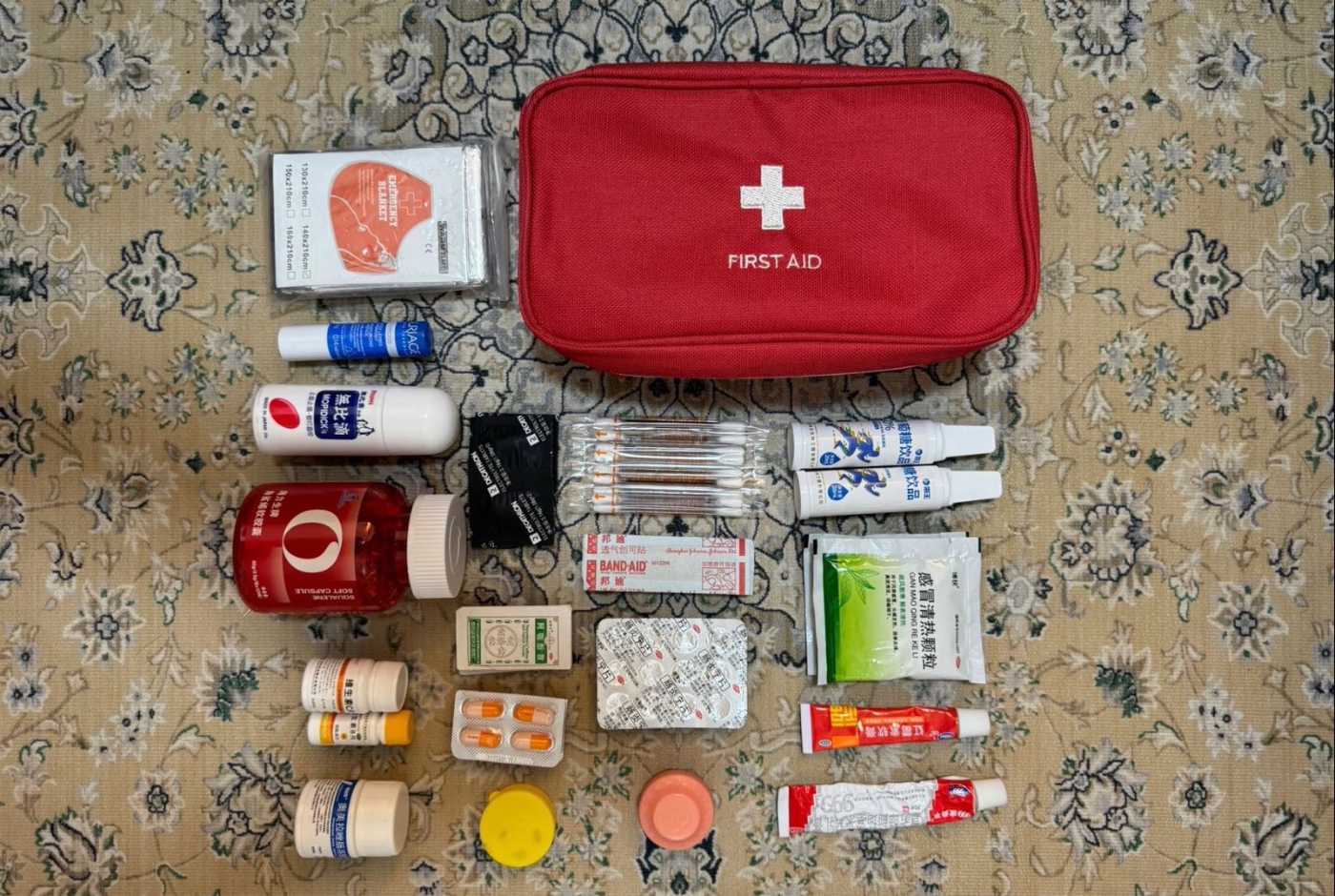
Diamox (Acetazolamide), speak with your doctor: This drug is generally the medicine of choice both to prevent and treat Acute Mountain Sickness (AMS). If you wish, your doctor might suggest that you commence taking 125mg twice a day from 2, 500m. The guide of your Escape Himalaya is knowledgeable about the symptoms of AMS and is capable of overseeing your acclimatisation on a daily basis. AVOID diagnosing yourself or medicating yourself without professional help.
Ibuprofen (400mg) and/or Paracetamol: These medicines are often used to relieve pain, including headaches, muscle aches, and fever. Besides, Ibuprofen has a moderate anti-inflammatory effect that is beneficial for pain in joints after a long day of walking downhill.
Antihistamines: Used for mild allergic reactions, irritations from dust, insect bites and stings at lower elevations.
Oral Rehydration Salts (ORS): Very important if you have diarrhoea, vomiting, or excessive sweating. Dehydration worsens altitude sickness.
Anti-diarrhoeal medication (Imodium): From changes in food and water, stomach problems are a common complaint. Be very careful with this medicine, in some infections, it is dangerous to stop diarrhoea; your guide can give you advice.
Antiseptic wipes and cream (Betadine): Mainly to clean cuts and scrapes. Small wounds can get infected very quickly in the countryside.
Bandages, medical tape, and gauze: For management of wounds and treatment of blisters.
Elastic bandage (ACE bandage): Mainly for sprained ankles as walking on a bumpy and uneven trail is a real risk.
Personal prescription medications: Take twice as much as you will need just in case the trek will be prolonged due to weather or acclimatisation days.
Pulse oximeter: A tiny, inexpensive instrument used to measure the oxygen saturation of your blood (SpO2). Any level below 80% at altitude is a serious matter and must be discussed with your guide. Escape Himalaya guides, for example, will check your oxygen level at the high camps, but having your own device is always reassuring.
Dexamethasone (prescription only): A very serious high-altitude medication for the treatment of High Altitude Cerebral Edema (HACE) / severe AMS symptoms. This medicine should only be given as a rescue drug and under the doctor's supervision.
7. Hygiene & Personal Care
Showers above 3,500m are cold and infrequent. Teahouses at Dharmasala and high camp sections often have no shower at all. Pack light and embrace the mountains.
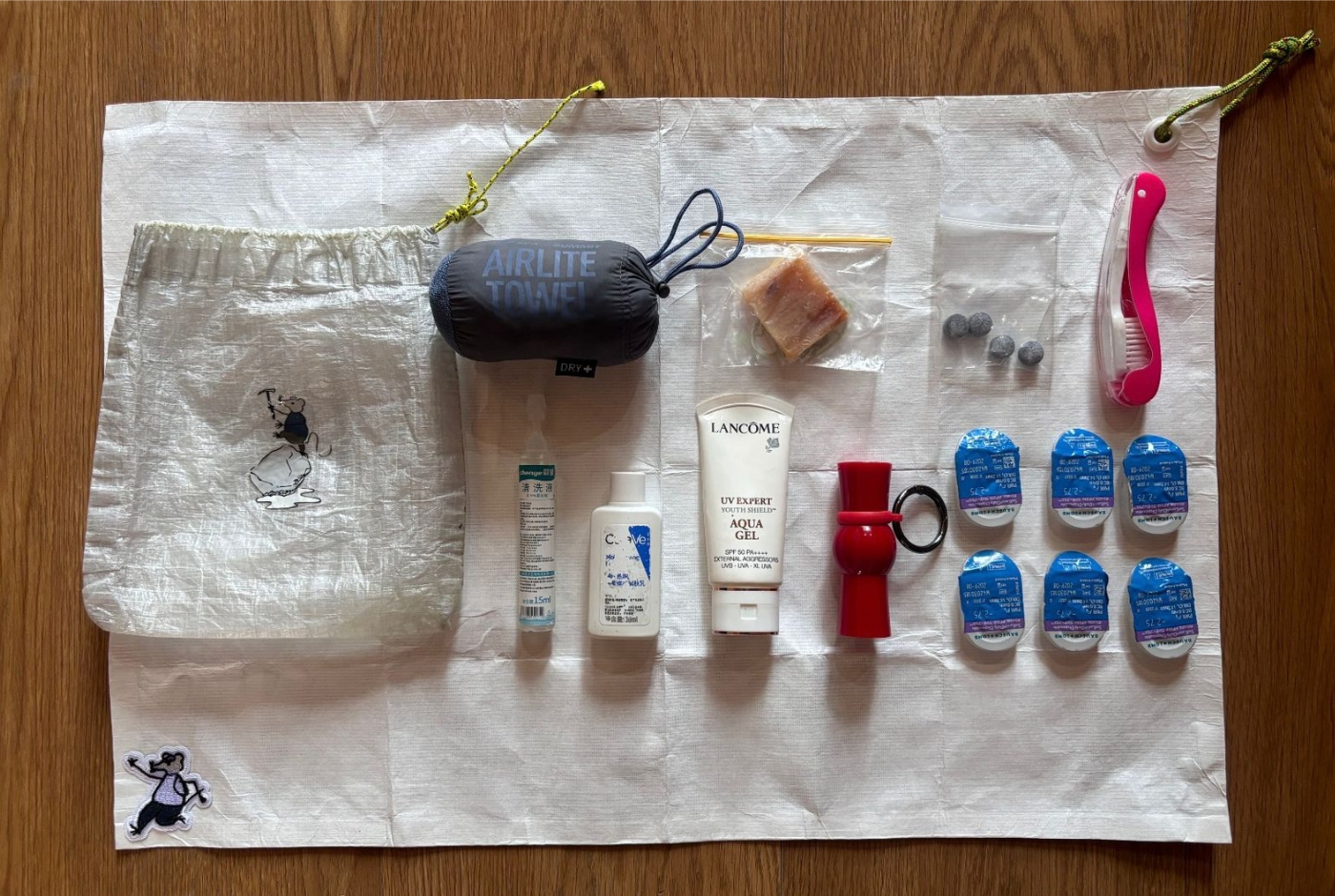
Biodegradable soap and shampoo (small bottles): Only use biodegradable products, you are hiking through a conservation area where the water is used by the local communities downstream.
Quick-dry microfibre towel (small): Tourist class towel is not provided; a quick drying microfibre towel is small and very light.
Toothbrush and toothpaste: The size suitable for a trip.
Hand sanitiser (x2): Use always before eating especially in the most isolated teahouses. It is proven that gastrointestinal illness will be minimized if you use hand sanitizers.
Sunscreen SPF 50+ (x2 tubes): The intensity of the UV radiation at the altitudes of 3, 000, 5, 000m is 3, 4 times stronger than that at sea level. You should reapply it every 2, 3 hours especially if you are on a snowy surface. When the lips get chapped as a result of altitude and wind, the condition can be made worse, therefore add an SPF lip balm to your packing list.
Lip balm with SPF (x2): Do without this and your lips will become dry and cracked within a few days even if you are below 4, 000m.
Wet wipes: When the showers are not available quick cleaning can be done with wet wipes. The pack of unscented biodegradable wipes is very useful.
Toilet paper and small trowel: In the area above Sama Gaon, the teahouses will have very basic outdoor drop toilets. At and below treeline the trowel is mainly used for burying poo in an eco-friendly way (far from any water source). Bring menstrual products inside a zip-lock bag.
Menstrual hygiene products (women): Bring a sufficient quantity of products for the entire trip to the mountains, you will not be able to get more along the way. A menstrual cup is the bravest and most eco-friendly of all bra cups; however, you should bring the supplies needed to keep it clean.
Insect repellent (DEET-based): For the lower subtropical parts (Soti Khola to Jagat) there are mosquitoes and sand flies. You won't need it if you are above 3, 000 m.
8. Documents, Money & Permits
This is the category trekkers most commonly mismanage. Lost permits or insufficient cash can derail a trek entirely.
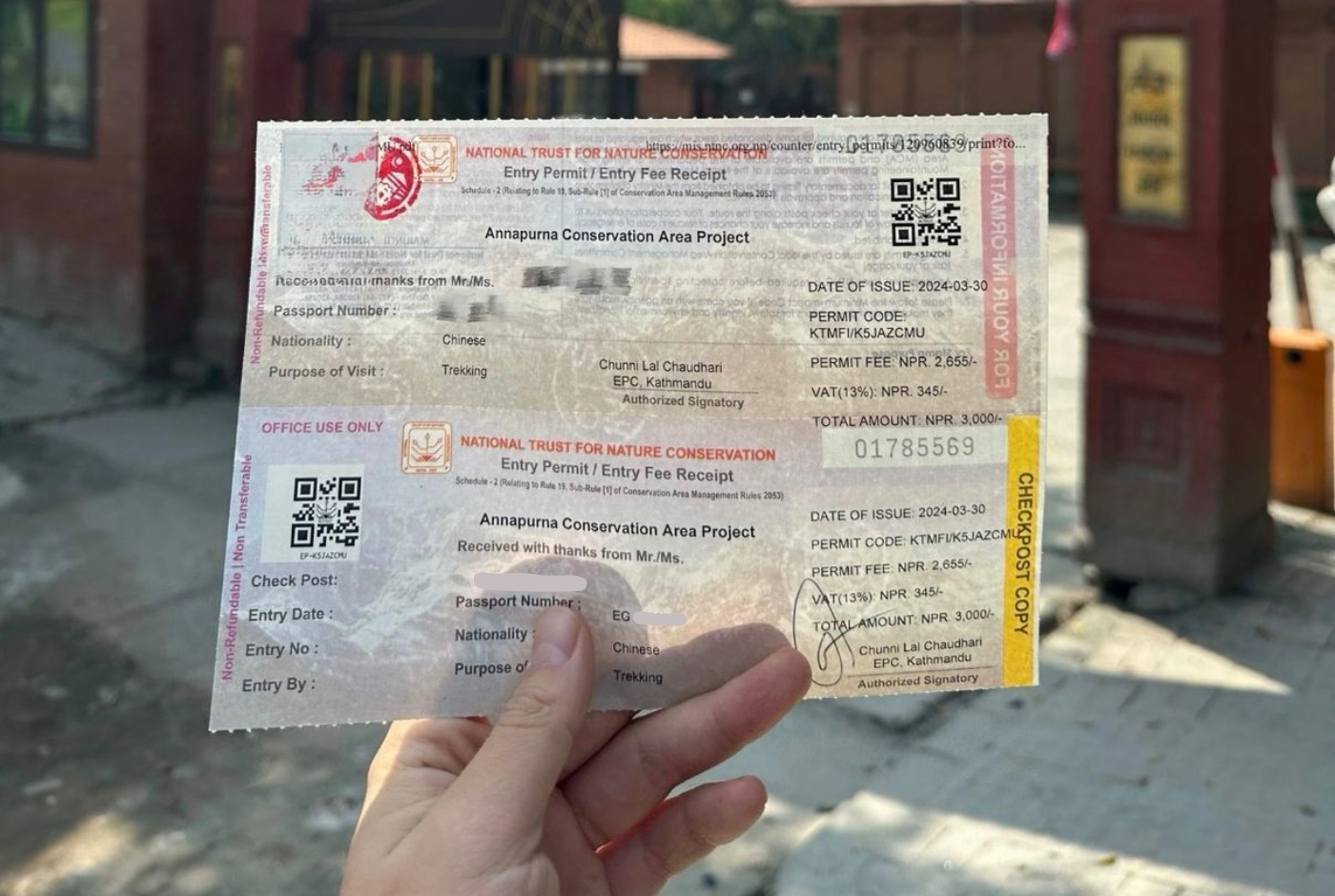
Passport (original): You will need your original passport when passing through each permit checkpoint along the trekking route. Also, make sure your passport is at least 6 months valid after your planned travel dates.
Nepal visa: Check that the validity of your visa extends to the whole period of your trekking including the extra days.
Manaslu Restricted Area Permit (RAP): This is the key permit that cannot be issued unless you have a Nepalese trekking guide with a valid license and from a registered agency, in fact it's a legal requirement that you book with a company like Escape Himalaya to get this permit. The fee depends on the season.
Manaslu Conservation Area Permit (MCAP): Needed for trekking through the Manaslu Conservation Area.
Annapurna Conservation Area Permit (ACAP): Necessary when the trekking trail leads through the Annapurna Conservation Area on the way to Dharapani.
TIMS card (Trekkers' Information Management System): To be used in conjunction with your agency permits.
Travel insurance policy (printed copy + digital): NECESSARY. You must have insurance coverage for: high altitude trekking (up to 5, 500m), emergency helicopter evacuation, medical treatment within Nepal, trip cancellation, and loss of equipment. You can expect to pay USD 2, 000, 4, 000 for a helicopter evacuation from Manaslu. Do not rely on rescue being free of charge.
Cash (Nepalese Rupees): The last place where you can withdraw money from ATM is Arughat. After that, the trail is strictly cash only. Plan to spend about NPR 2, 000, 4, 000 a day on food, lodging, and other needs. Prices tend to rise with the altitude. It's advisable to bring enough for your whole trek including a 3-day safety buffer.
Emergency contact card: It's best to have a laminated card which indicates your blood group, any allergies you have, emergency phone numbers, the hotline of your insurance company, and the satellite number of your guide.
Photocopies of all documents: It's wise to keep the duplicate copies of documents separate from the originals. In addition, upload one set to the cloud storage.
9. Electronics & Power
Power availability diminishes significantly above Sama Gaon. Teahouses charge a fee for device charging (typically NPR 200–500 per device). Plan accordingly.
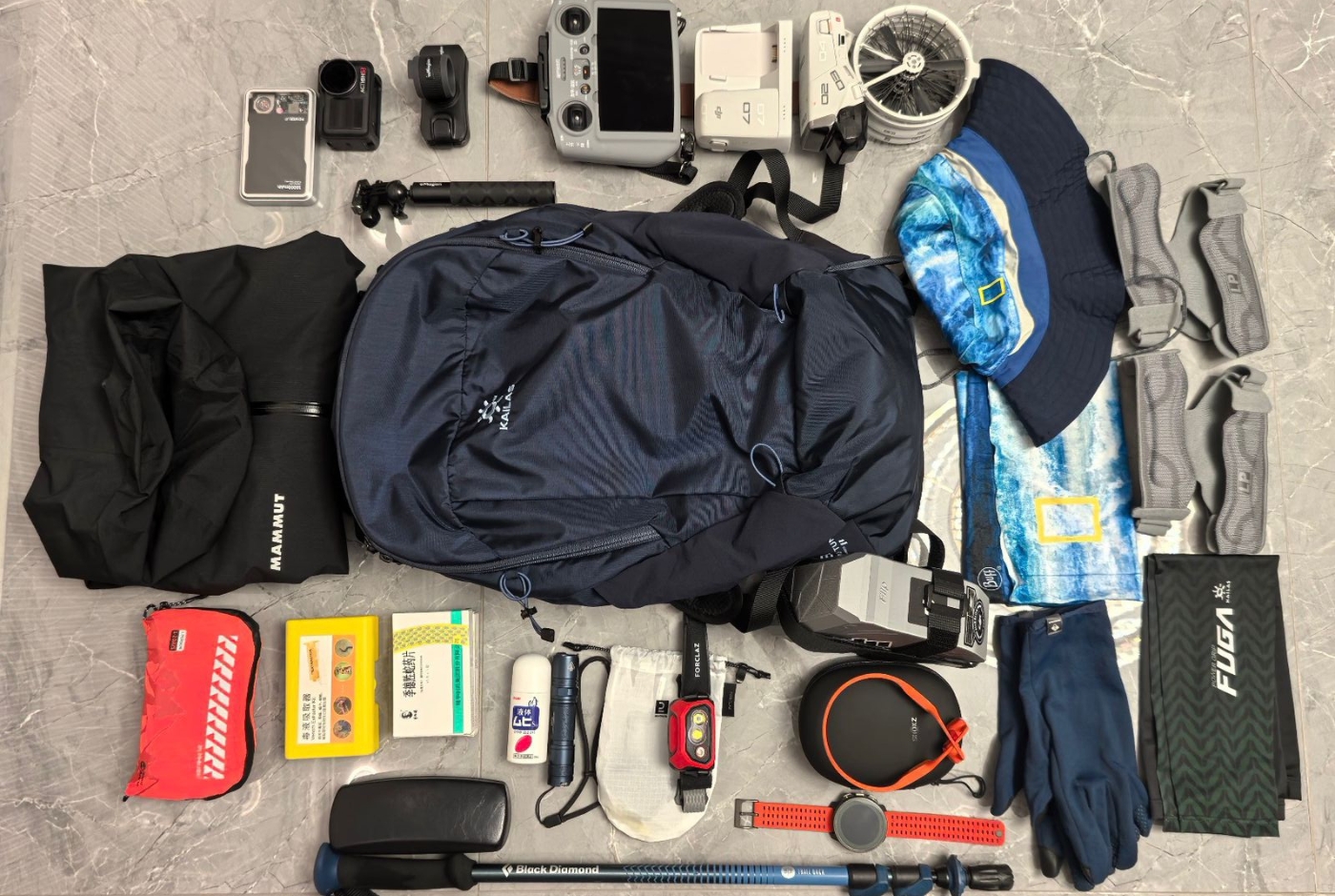
Smartphone: Download offline maps such as Maps.me for the Manaslu route, first aid guides, and translation apps prior to your journey. NTC SIM is functional in some villages, but the signal is quite unreliable above Deng.
Power bank (20, 000+ mAh): It is very important to have a large capacity. Your phone GPS, camera, and headlamp batteries will all be fighting for limited charging opportunities. A 20, 000 mAh bank supports a phone 5+ times.
Camera (optional): Manaslu Circuit is less known and less visited but that's why it's a paradise for photographers.
A mirrorless camera with a wide-angle lens works great for the beautiful gorge sections as well as the high altitude panoramas of Manaslu (8, 163m), Ganesh Himal, and Himalchuli.
Warm up the camera batteries in your jacket during the cold mornings since the batteries run out quickly in the freezing temperatures.
Solar charger (optional for extended trips): When the weather is sunny, and you are above 3, 000m a solar panel that can be folded helps you charge your devices during the time of your hike. Weight vs. utility trade-off for most trekkers.
Universal plug adapter: Nepal uses three types of plugs: C, D, and M. Using a multi-type travel adapter will make things easier.
Lightweight e-reader or book: At Manaslu, you can be at the teahouses for up to 12 hours (sunset to sunrise above 4, 000m in autumn). An e-reader with a lot of books helps keep you sane.
Cards or small travel game: The relaxing nights by the teahouse fire with the other trekkers and your guides will be reminiscences for a lifetime. A deck of cards only weighs 80 grams.
10. Snacks and Trail Food
Teahouses serve meals, typically dal bhat, noodles, soups, pasta, and eggs, but their menus shrink and prices rise significantly above Lho and Sama Gaon. Pack your own trail snacks to supplement and for the long Larkya La pass day when you may be trekking 10+ hours.
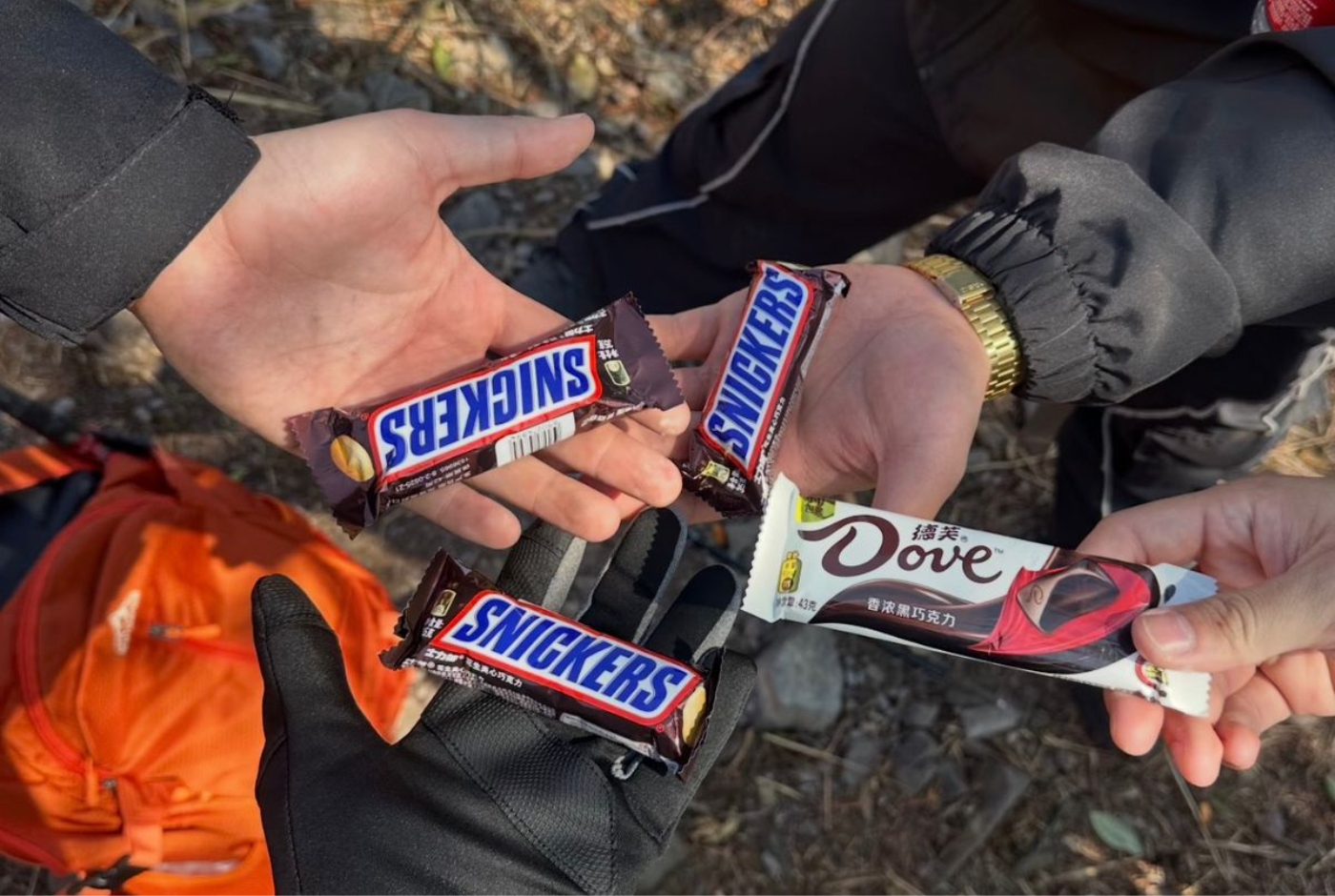
Energy bars or protein bars (10-15): These have a high caloric density, are light in weight, and can be eaten easily even when moving. Some of the popular brands like Clif or Larabar, while Nepalese peanut-based bars are also good.
Trail mix and nuts: Trail mix which includes mixed nuts, dried fruit, and dark chocolate is an excellent source of energy. It is advisable to carry these items in zip-lock bags.
Instant porridge / oats packets: These are especially handy for starting early in the morning when you are out at high altitudes and the tea houses may not have many breakfast options.
Electrolyte powder sachets (10-15): These can be added to water for rehydration and replacement of salts that are lost not only through sweating but also due to the effects of high altitude. These powders also help in preventing altitude sickness symptoms like headaches and muscle cramps.
Hard sweets / glucose tablets: Use these for a quick energy boost during the final effort of the summit on Larkya La day. Simple sugars are absorbed rapidly, which is very beneficial when you are at around 5, 000m or higher and need an instant energy boost.
What NOT to Pack: Items That Will Slow You Down
Overpacking is as dangerous as underpacking on Manaslu. Every unnecessary kilogram comes at a real cost in energy, speed, and porter welfare. Here is what experienced Manaslu trekkers leave behind.
- Bulky hardcover books, switch to a Kindle or e-reader
- Numerous pairs of jeans or heavy cotton garments
- Complete set of toiletries, only small size products
- Laptop computer, store it in your hotel at Kathmandu
- Jewelry or electronic valuables other than the essentials
- More than 2-3 tops or 2 pairs of trekking trousers, teahouses do laundry
- Large camera tripod, use a small GorillaPod if necessary
- Hairdryer or styling tools, no electricity, no use
- Large sleeping pad, teahouses offer mattresses
What to Rent vs Buy in Kathmandu (Thamel Guide)
Thamel, Kathmandu's trekking hub, is stocked with both genuine gear brands and good-quality rental options. Here is the strategic breakdown:
| Rent in Thamel (saves money) | Buy or bring from home (quality matters) |
| Down jacket (-15°C rated) | Trekking boots — must be broken in before Manaslu |
| Sleeping bag (-15°C rated) | Merino wool base layers — Thamel merino quality varies |
| Trekking poles | Moisture-wicking socks (Darn Tough, Smartwool) |
| Duffel bag (Escape Himalaya provides) | Headlamp — buy a quality brand (Black Diamond, Petzl) |
| Crampons / microspikes | Waterproof jacket — Thamel shells may leak; buy a real Gore-Tex |
| Rain poncho (lower sections only) | Sunscreen and medications — brand reliability matters |
| Gaiters (if not owned) | Water purification supplies |
Rental costs in Thamel are typically USD 1–3 per day per item. For a 14-day trek, renting a sleeping bag and down jacket can save you USD 150–400 compared to buying. Escape Himalaya's team can recommend trusted rental shops in Thamel with hygienically cleaned equipment.
Packing Weight Guide: Hitting Your Target
The 10-15 kg total for your porter duffel is a real limit, not a suggestion. Here is how to think about weight distribution:
| Item | Approximate Weight |
| Sleeping bag (-15°C) | 1.0 – 1.5 kg |
| Down jacket (600-fill) | 0.5 – 0.8 kg |
| Trekking boots (on your feet) | 0.8 – 1.2 kg |
| Trekking poles (pair) | 0.4 – 0.7 kg |
| Clothing full set (all layers) | 3.0 – 4.5 kg |
| Electronics and power bank | 0.8 – 1.2 kg |
| First aid kit | 0.3 – 0.5 kg |
| Snacks and trail food | 0.5 – 1.0 kg |
| Daypack (empty) | 0.8 – 1.2 kg |
| TOTAL target range | 8 – 12 kg in daypack; 5-7 kg in duffel |
Altitude by Altitude Packing Logic: Day by Day
Manaslu is quite special because your equipment will greatly differ depending on the altitude zone. A quick look at how you can approach your backpack at each step of the trekking route:
Zone 1: Soti Khola to Jagat (700m, 1, 340m)
This part of the hike is hot, humid and there may be times when it rains. It is the subtropical section of the gorge following the Budi Gandaki. Dress in your lightest thermal shirt and outermost trekking shirt. A raincoat must be handy in your daypack. Also, keep insect repellent in the side pocket. Avoid bringing your down jacket out here, you won't need it and it will only get sweaty.
Zone 2: Jagat to Sama Gaon (1, 340m, 3, 530m)
The path goes up gradually and the climate changes from subtropical to temperate forest. Mornings will be somewhat chilly; however, the sun might make afternoons heat up when you're exercising. Bring a fleece as your middle layer and wear it at the breakfast time, remove it and go to a trekking shirt only by late morning. It is also the place where you may encounter altitude-related problems for the first time, keep an eye on your SpO2, drink a lot of water and don't forget that the rest day at Sama Gaon is highly recommended.
Zone 3: Sama Gaon to Dharmasala High Camp (3, 530m, 4, 460m)
Definitely, it will be freezing at any time if the elevation is above 4, 000 meters. Use your down jacket when you have your outdoor activities at the start and the end of the day. One day you won't be sleeping without a sleeping bag at all, and that will be one of the times when it shows its true worth to you. Gloves, beanie, and buff are great. The amount of sun power reaching the earth is great on clear days after Samdo, so if you want to take a solar charging, do not miss the opportunity. Comparing to the earlier sections of the trail, teahouse accommodations become very basic here.
Zone 4: Larke La Pass Day (4, 460m, 5, 106m, 3, 520m Bimthang)
The physically most challenging face of the whole trek. Start walking in the dark at about 4 am, 5 am. You have to prepare the backpack by the night time, and the headlamp must be on your head, while microspikes are to be put in the top pocket of your bag, down jacket and waterproof shell should be on your body, insulated gloves, beanie, and buff. Put all your snacks and drinks, which replenish your electrolytes, in the pockets of your jacket, so you can have an easy reach at any moment. The next stage after the pass, which is descending to Bimthang, is so steep that it will put a strain on your knees. Besides that, the place may be icy at some points, hence, it is not optional but a must that you have poles with you. Reward yourself by eating dal bhat when you get to Bimthang.
Zone 5: Bimthang to Dharapani (3, 520m, 1, 960m)
The temperature is increasing rapidly because of the big drop in height so you get rid of your warm clothes. Also at Bimthang you will find yourself back in the forest and the quality of the accommodation available in the teahouses will be better. You will need to have your ACAP permit ready as you will be entering the Annapurna conservation area. This is also the zone where the mobile signal is the strongest and most reliable so you can make a last call home.
Larke La Pass: Essential Equipment for a Safe Crossing
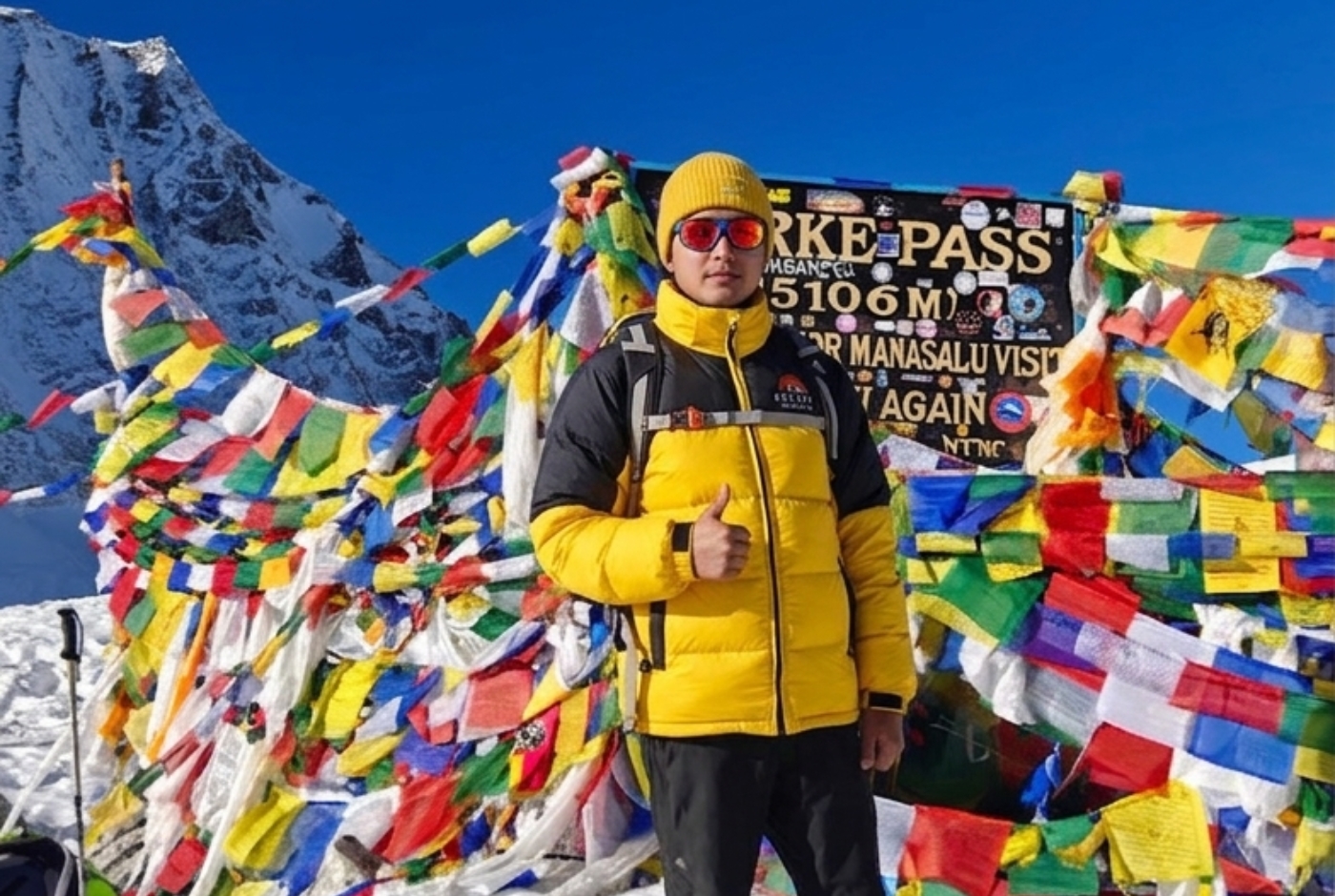
Standing at 5, 106 meters, this crossing is geographically and emotionally the climax of the Manaslu Circuit. These are the clothing & equipment you absolutely need on pass day. Without them, you may face serious trouble:
Microspikes or crampons: The north-facing slope to the pass and the first two km of descent are typically icy especially in spring and early autumn. Every year, many trekkers reach the pass without the right equipment for ice. Don't fall among them.
Down jacket + waterproof hardshell: Worn at the same time at the summit. The wind at the pass can cause -20°C or lower effective temperatures. The shell blocks the wind; the down is your heater.
Insulated gloves or mittens: Thin liner gloves don't really cut it. Picture yourself gripping poles on icy terrain with wind at your face.
Balaclava or face cover: I know some trekkers only use their buff, but you'll really see the difference at the pass where the wind and the cold you can be absolute zero. In that case, a full balaclava or a face-covering buff is the way to go.
High-calorie snacks: You will be on the move for 10+ hours. Follow the rule: eating at least once every 90 minutes whether or not you feel like it. At height, loss of appetite is normal but the risk of running out of energy is serious.
Emergency shelter (SOL bivouac bag): An ultra-light 250g emergency bivy bag. If the partner who is descending with you gets injured and you both have to wait for the rescue, this bag could be a lifesaver. One piece per group at least.
Packing Tips for Female Trekkers
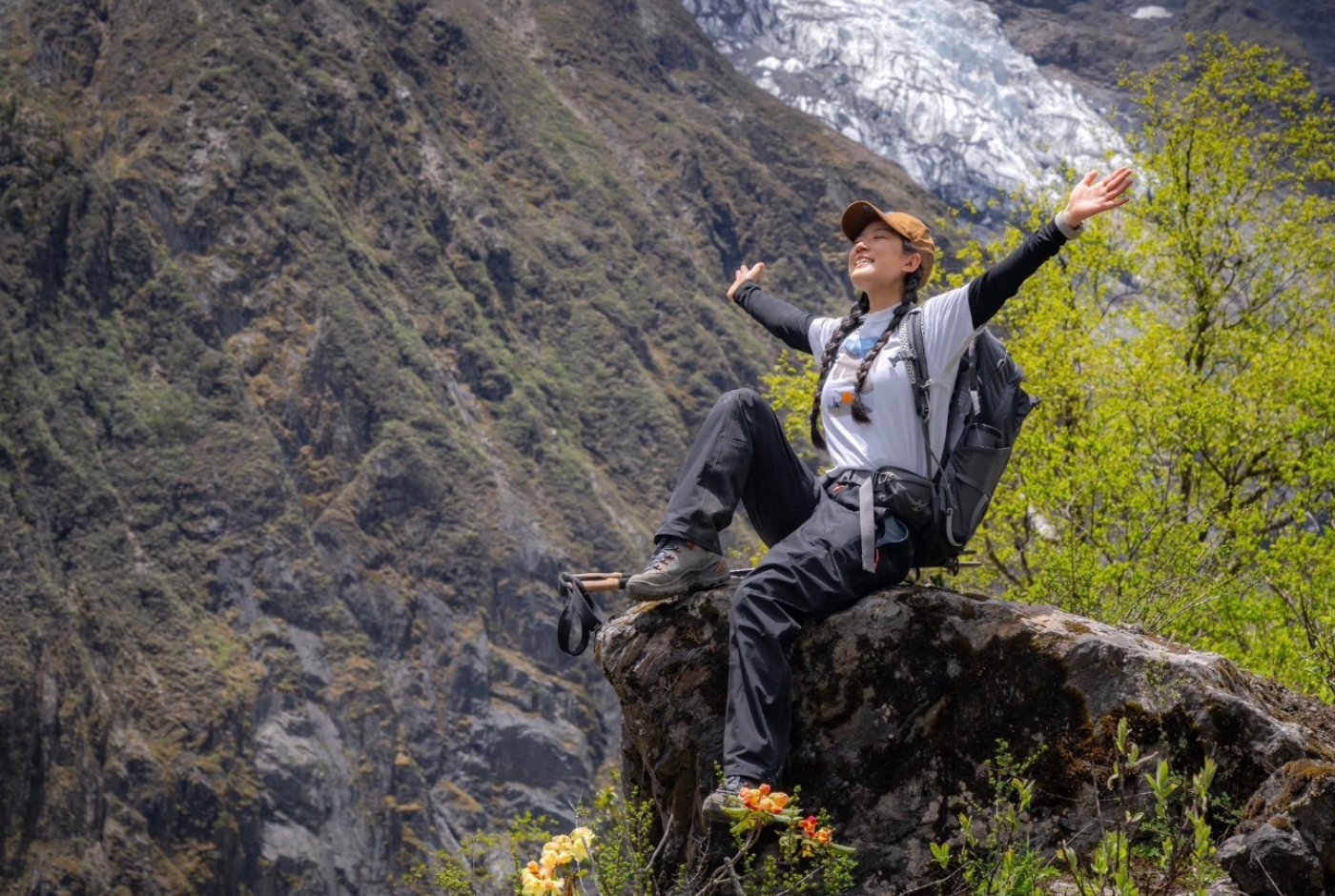
Female trekkers make up a significant and growing proportion of Manaslu trekkers, and a few specific considerations make the experience far more comfortable:
Menstrual hygiene: Carry the entire set of menstrual supplies for your trekking period plus 3-4 days in case of delay. Remember to pack-out all waste in sealed bags. Above the lower villages, teahouses do not provide any sanitary waste disposal facilities.
Sports bras: Consider taking 2-3 high-impact sports bras with you. The best materials are quick-dry synthetic fabrics or merino wool. Regular bras can cause discomfort during a daily 6-8 hour hike.
Pee funnel (e.g., Shewee): Several female trekkers consider them a lifesaver on the days of crossing cold passes when it is almost impossible to change your clothes for outdoor toilet breaks.
Personal safety: Escape Himalaya offers local guides that are not only highly skilled but also thoroughly vetted. With female solo trekkers' feedback, Manaslu route which is less commercialized and trafficked than Everest or Annapurna, is perceived as quite safe.
Skin care: Skin gets damaged quickly at high altitude due to wind and UV rays. Having an SPF50 moisturiser and lip balm along with the sunscreen application twice a day is the way to go right from the first day.
Pack Light, Trek Responsible: Sustainability Notes
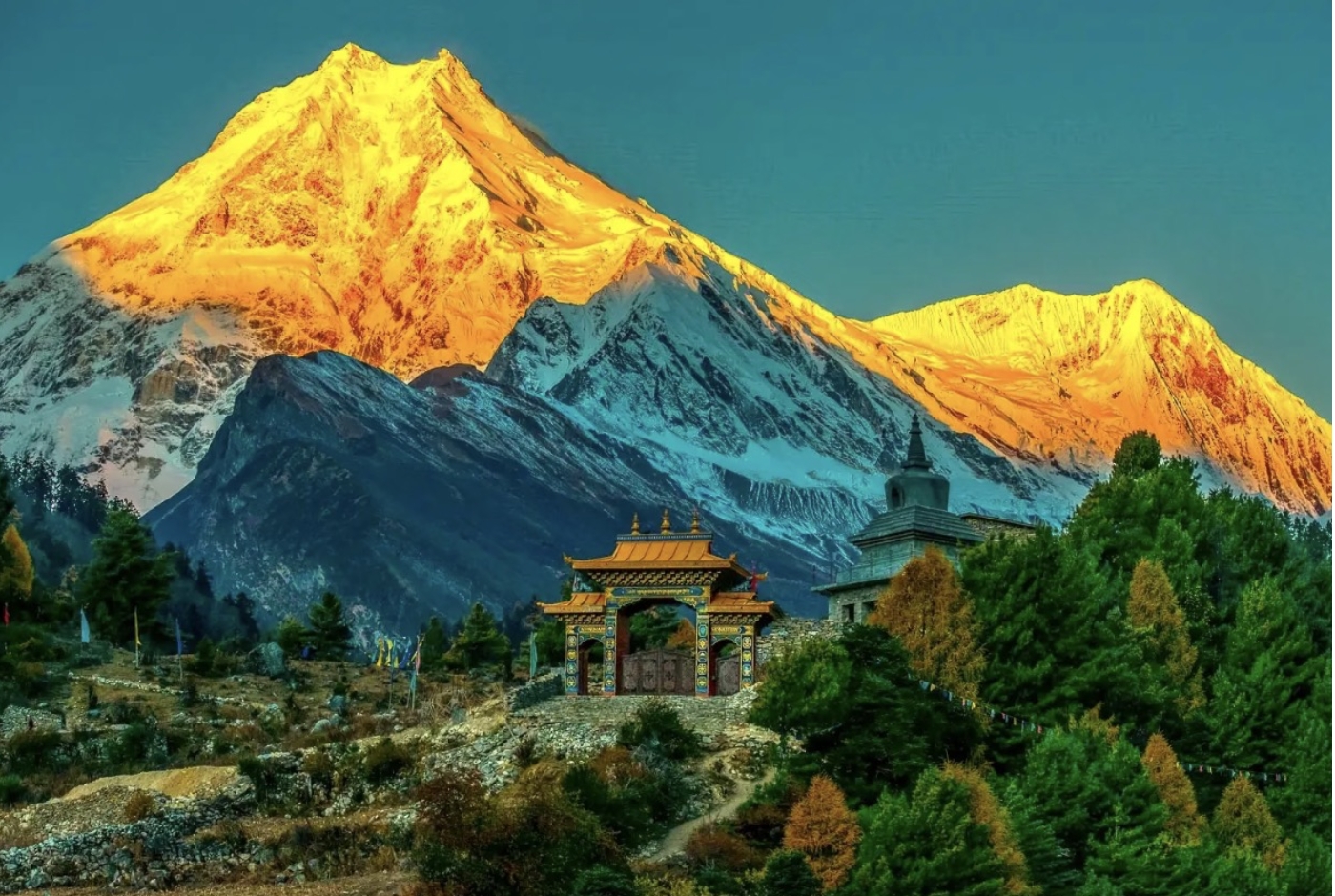
The Manaslu Conservation Area is one of Nepal's most pristine ecosystems, home to snow leopards, Himalayan tahr, and red pandas. How you pack reflects your commitment to preserving it.
- Get yourself a durable water bottle and a purification system to reuse the bottle as well as purify water. Never use single-use plastic water bottles because they are a disaster for the environment especially in Arughat and beyond where even waste collection services do not exist.
- Carry biodegradable soap and shampoo only. The use of regular ones might pollute mainly children's water sources.
- Take a small trash bag with you in your daypack to pack out all non-biodegradable waste that you will come across during your visit including food wrappers, batteries, and blister packs.
- Wherever you encounter dry compost toilets, make use of them; if not, bury human waste 100m away from water sources with the help of a spade.
- Buy your food from teahouses as they offer mainly local produce rather than processed food items from Kathmandu which indirectly helps in supporting the mountain communities by buying local.
What Escape Himalaya Provides for Your Manaslu Circuit Trek
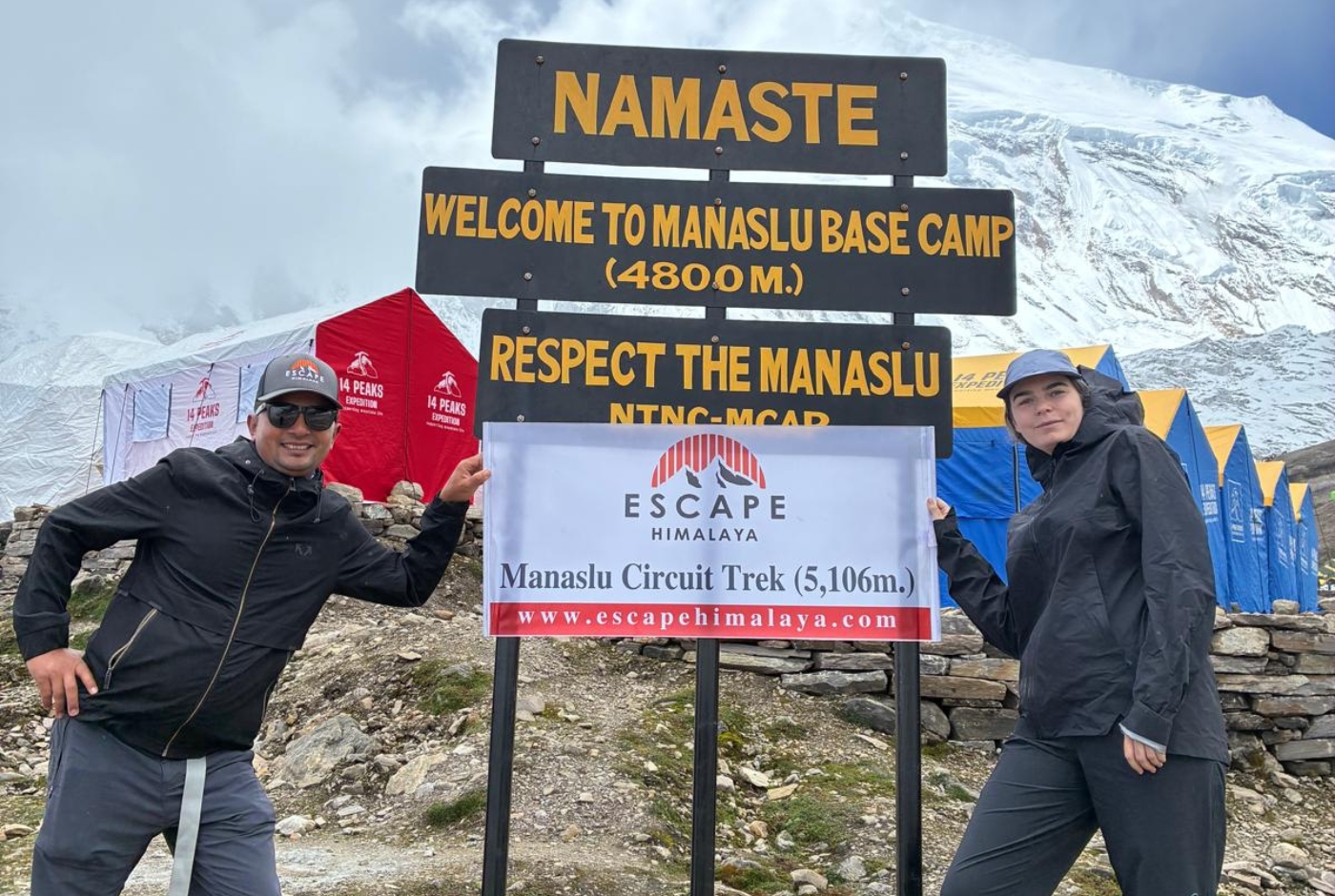
When you book the Manaslu Circuit Trek with Escape Himalaya, you are not starting from scratch on equipment. Here is what our team provides and arranges:
- Licensed, government-registered guide (mandatory by law for Manaslu restricted area)
- Trained, experienced porter with fair wage and insurance
- Manaslu RAP, MCAP, and ACAP permits arranged and processed
- Duffel bag for porter carry
- All teahouse accommodation booked in advance during peak season
- Airport pick-up and Kathmandu hotel assistance
- Emergency protocol and satellite communication through our guides
- Acclimatisation day scheduling built into itinerary
- Pre-trek gear consultation with our Kathmandu team
Our local knowledge means we know which teahouses have reliable charging, which sections require microspikes in a given season, and which permits require which passport photos. Book your Manaslu Circuit Trek with us at escapehimalaya.com and our team will send you a personalised pre-departure packing consultation.
Frequently Asked Questions About Manaslu Packing
How heavy should my daypack be on Manaslu?
If you are asking about the weight of your daypack that you will carry during the trekking days, it is best to pack 6-8 kg. However, if you are planning for the day when you will cross Larkya La pass then pack them less than 7 kg.
One method to lessen your load is to hand over items that you won't use the next day in your porter's duffel bag when you're going to bed.
Can I wash clothes on the trek?
Absolutely! Many teahouses will even do your laundry for you at approximately 50-100 NPR per item. Usually they will have your clothes ready the same day if you give them in early in the morning. That means you really can get away with only two or three sets of trekking clothes, since you can wash the rest while on the trail.
Is a sleeping bag liner necessary if I have a -15°C bag?
In the villages below Lho teahouses, a liner only may be adequate, especially in spring and autumn. However, at heights over 4, 000 meters, the combination of the bag plus the liner will be necessary since wooden walls of teahouse rooms are thin and heat escapes very quickly. Additionally, the liner keeps your sleeping bag clean through a long trek.
What should I leave in Kathmandu?
You should keep your extra gear, valuable items, and other luggage at your Kathmandu hotel (most hotels offer left-luggage service). Additionally, bring with you only the things that are necessary to the trek. It will be a real enhancement that two weeks in the mountains you return to fresh clothes and a hot shower.
Do I need Diamox for the Manaslu Circuit?
Diamox (Acetazolamide) is a medicine that can prevent and treat Acute Mountain Sickness symptoms. It is not obligatory to use it, however, it is a good idea to bring it together with a prescription and a doctor's advice. The route to Manaslu is a relatively slow ascent and with good acclimatisation days (Sama Gaon, Samdo), the majority of healthy trekkers do not face any issues. Talk to your doctor 4-6 weeks prior to departure.
Where does the last ATM throw up before the wilderness?
Arughat (roughly a 6 hours jeep ride from Kathmandu) is the last dependable ATM here. A few trekkers have mentioned the presence of an ATM in Soti Khola but it should not be your expectation. Make sure that you get enough money in Kathmandu, before leaving. We suggest you take around 50, 000, 80, 000 NPR along for food, stay, tips, unexpected things, and others during 14 days trekking.
Final Thoughts: Pack Smart, Trek Far
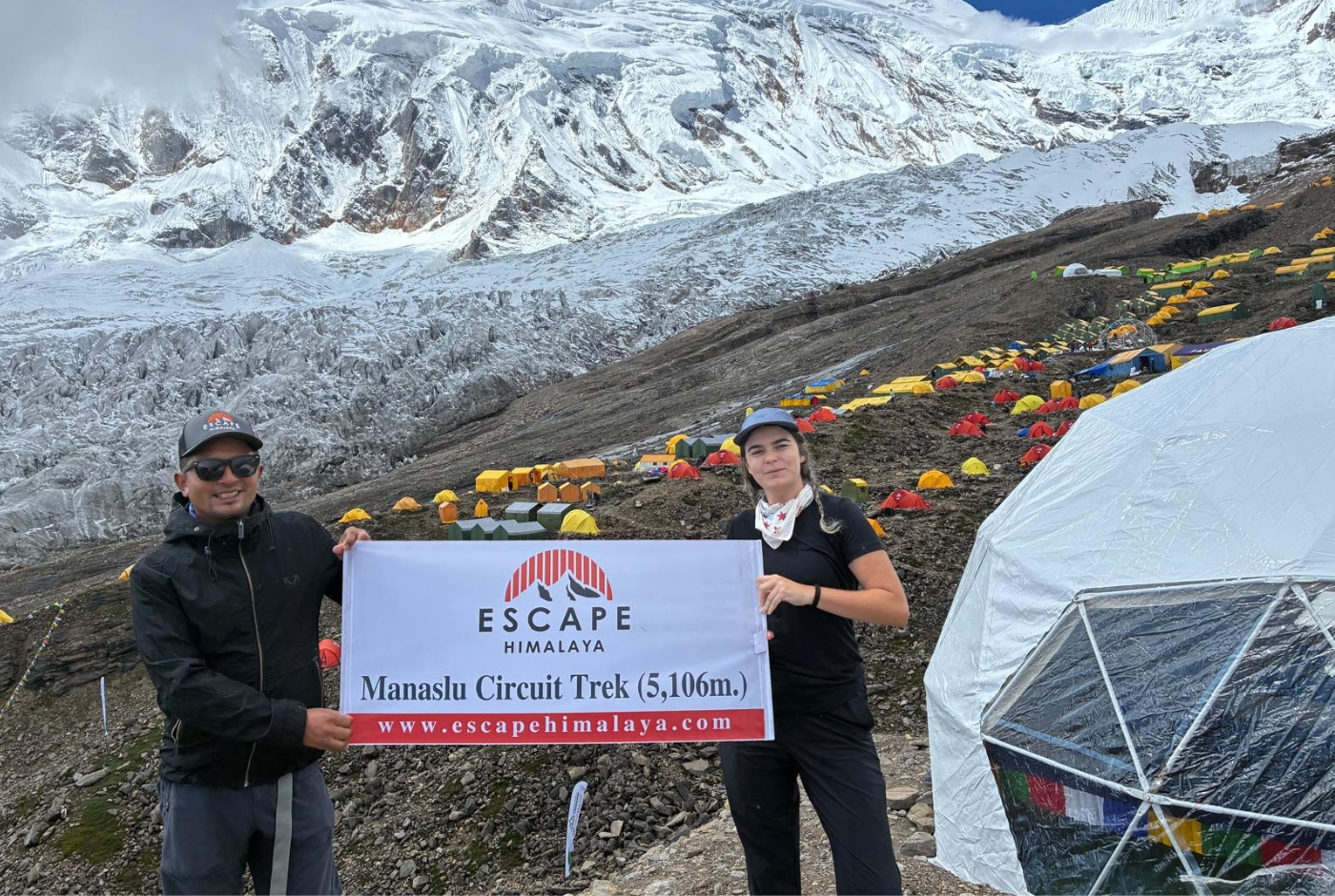
Manaslu Circuit Trek demands some preparation, and it is a great way to reward yourselves. Those trekkers who made it through, and came back telling different wonderful stories, these are the ones who brought with them the best gear, the best attitude, and the best team to support them. Those who were at their limits, blistered, cold, insufficiently equipped, they usually wish that they had spent a little more time on this packing list.
This is not the Everest Base Camp well-known path. Manaslu is not only wilder, culturally more genuine, but also it is more challenging. It will take you to the faces of Nepal that majority of tourists never see: the old monasteries at Lho, the Tibetan-style villages at Samdo, the total silence at 5, 000 metres before dawn on pass day. Proper preparation, and it will rank among the best memories of your life.
Our Escape Himalaya team will be at your disposal to help you throughout from processing permits and arranging guides to that very last gear check at our Kathmandu office the night before your jeep leaves for Soti Khola.